Mumbai's Next Growth Corridors: Where Smart Buyers Look in 2026
Skip the overpriced SoBo trap. Discover Mumbai's emerging real estate corridors where a ₹1.2 cr budget buys real growth in 2026.
Here's the trap most Mumbai homebuyers fall into: they fixate on the same five or six locations everyone talks about at Diwali parties, then walk away crushed when a modest 2BHK in Bandra or Lower Parel quotes ₹4.5 crore. The result is either analysis paralysis or a rushed purchase in a place that's already priced its next decade of growth into today's rate.
The reality on the ground is different. According to ANAROCK's tracking of the Mumbai Metropolitan Region, peripheral micro-markets have consistently outperformed the island city on price appreciation over the last few years, precisely because they started from a lower base and are now catching infrastructure tailwinds. Corridors along the Metro lines, the Navi Mumbai airport, and the coastal and eastern freeways are quietly compounding while everyone stares at SoBo.
This post is a practitioner's map of Mumbai emerging real estate corridors for 2026. I'll walk you through which micro-markets have genuine upside versus which are already hype, a worked example of how a buyer stretched a ₹1.2 crore budget into a better asset by shifting 18 km east, a comparison table of five corridors, and a due-diligence checklist you can hand to any broker. No jargon dumps. Just what actually moves value.
Key Takeaways
- Follow the infrastructure, not the hype. The Navi Mumbai International Airport (NMIA), Metro Line extensions, and the Coastal Road/Atal Setu are the three biggest value drivers through 2028.
- Panvel, Taloja, Dombivli-Kalyan, Ulwe, and Wadala are the corridors where entry prices still leave room for double-digit appreciation.
- Buy near a completed or near-completion trigger, not one that's "announced." Announced-but-unfunded projects can sit for a decade.
- RERA registration, clear title, and an escrow-backed project are non-negotiable — verify before you pay a rupee of booking amount.
- Factor GST (5% on under-construction, nil on ready) and stamp duty (6% in Mumbai, plus 1% metro cess) into your real cost, not just the sticker price.
- A ₹1.2 cr budget in a smart corridor can buy what ₹2.5 cr buys in a saturated zone — with better appreciation runway.
Why are Mumbai's traditional zones a bad bet for growth in 2026?
Let me be blunt. Areas like Bandra, Worli, Lower Parel, and Andheri West are wonderful places to live if you already have the money. As investments in 2026, they're mostly done appreciating at the rate that made early buyers wealthy.
The math is simple. When a market trades at ₹40,000–₹70,000 per square foot, the buyer pool that can absorb further price hikes shrinks dramatically. Rental yields in these zones sit around 2.5–3% gross, which after society maintenance, property tax, and vacancy barely beats a fixed deposit. You're buying prestige and stability, not growth.
The growth premium has moved to the edges. Not the far, disconnected edges where you're betting on a road that may never get built, but the transitional corridors where a Metro station opened last year or an airport terminal is now visibly rising out of the ground. That's where the gap between current price and fair value is widest.
The three infrastructure triggers that actually matter
- Navi Mumbai International Airport (NMIA): Phase 1 is targeting commercial operations, and the entire Panvel-Ulwe-Kharghar belt orbits its economic gravity. Airports create jobs, hotels, logistics parks, and office demand — all of which pull residential prices up.
- Atal Setu (MTHL): The Mumbai Trans Harbour Link has collapsed the commute between South Mumbai and Navi Mumbai to roughly 20 minutes. That single bridge repriced the entire eastern waterfront.
- Metro expansion: Lines connecting the western and central suburbs to previously car-dependent nodes reduce the "time cost" of living further out, which is the real currency of real estate value.
Which Mumbai emerging real estate corridors have the best 2026 upside?
I'll rank these by the combination of current entry price, infrastructure certainty, and appreciation runway. These aren't stock tips, so do your own verification, but this is where the smart money and genuinely useful advice point.
1. Panvel and Ulwe (the airport belt)
This is the headline story. Ulwe was farmland-adjacent CIDCO land not long ago. Now, with the airport and Atal Setu connectivity, ready-to-move 1BHK units that once sold in the ₹35–45 lakh range have moved up meaningfully, and 2BHKs in decent projects still sit well below Mumbai proper. Panvel benefits from being a rail junction plus the airport's southern approach.
2. Taloja
Metro connectivity and an industrial base make Taloja the affordable-entry play. You can still find genuinely cheap per-square-foot rates here. The tradeoff is that it feels raw today, so you're buying patience.
3. Dombivli–Kalyan (the central corridor)
Massive residential supply, strong rail connectivity, and ongoing ring-road and Metro works. This is where mid-income Mumbai actually lives and buys. Rental demand is genuine and driven by real occupiers, not speculators, which protects you on the downside.
4. Wadala
Wadala is the "inside" pick. It's not peripheral at all — it's central Mumbai — but it has been undervalued relative to its neighbours because it was historically an industrial/transit zone. With Metro connectivity and the eastern freeway, it's the corridor that gives you central-Mumbai address economics with a slightly better entry point than Parel.
5. Vasai–Virar (the western budget frontier)
The most affordable of the lot and the one requiring the most patience and diligence. Connectivity is improving but slower. Only for buyers who are genuinely long-horizon and can verify project fundamentals carefully.
| Corridor | Indicative entry (2BHK ready) | Key trigger | Rental yield (gross) | Risk profile |
|---|---|---|---|---|
| Panvel / Ulwe | ₹75L – ₹1.3 cr | NMIA + Atal Setu | ~3.5–4.5% | Moderate — airport timeline dependent |
| Taloja | ₹45L – ₹75L | Metro + industrial jobs | ~3.5–4% | Higher — early-stage micro-market |
| Dombivli / Kalyan | ₹55L – ₹95L | Rail + Metro + ring road | ~3–4% | Lower — proven occupier demand |
| Wadala | ₹1.6 cr – ₹2.5 cr | Metro + eastern freeway | ~2.5–3% | Low — central location |
| Vasai / Virar | ₹40L – ₹70L | Slow-improving connectivity | ~3.5–4.5% | Higher — patience required |
Prices are indicative ranges for illustration and vary sharply by project, floor, and view. Always verify current rates on the ground.
Worked example: how a buyer stretched ₹1.2 crore into a better asset
Let me give you a concrete case, anonymised but based on a real pattern I've seen repeatedly.
A dual-income couple — one in a fintech firm, one running a small MSME trading business — had a hard budget of ₹1.2 crore including registration. Their initial fixation was a 2BHK in Chembur, where they were being quoted around ₹2.4 crore for anything liveable. Completely out of reach. They were about to settle for a cramped 1BHK just to "own something in Mumbai."
Here's how the numbers reworked when they shifted focus 18 km east toward the airport belt:
- Chembur 2BHK (their original target): ~₹2.4 cr sticker. Unaffordable, full stop.
- Ulwe 2BHK, ready-to-move, RERA-registered project: agreement value ₹1.05 cr. Stamp duty at 6% plus 1% metro cess = ₹73,500 approx. Registration ~₹30,000. GST nil because it was ready possession. Total landed cost: roughly ₹1.16 cr.
They stayed under budget, got a full 2BHK with a balcony, and positioned themselves in a corridor with the NMIA and Atal Setu as appreciation catalysts. The husband's commute to his office in the eastern business district actually improved via the Trans Harbour Link. The rental fallback — if they ever relocated — was a realistic ₹22,000–₹26,000/month, a yield close to 3.5% versus the sub-3% they'd have scraped in Chembur.
The lesson isn't "buy in Ulwe." It's this: when your budget hits a wall in a saturated zone, don't downgrade the asset — relocate along a growth corridor and upgrade the runway. You can browse comparable listings and understand fair pricing on eDarpan Properties, and if you're weighing rent-versus-buy for the interim, our rental property listings help you calculate the real cost of waiting.
How do you verify a corridor project before you pay a booking amount?
This is where most buyers get burned. A corridor can be genuine and a specific project within it can still be a disaster. Here's the walkthrough I use, in order.
- Check MahaRERA registration first. Every under-construction project in Maharashtra must be registered. Go to the MahaRERA portal, enter the project name or promoter, and confirm the registration number is valid and not lapsed. If a broker can't produce the number, walk away.
- Read the RERA disclosures. The portal shows the approved plan, completion timeline, and any legal cases against the promoter. A project three years past its declared completion date is telling you something.
- Verify the escrow arrangement. Under RERA, 70% of buyer money must sit in a separate escrow account for construction and land cost. This is exactly what protects you when a builder stalls. We covered how to check this in detail in RERA Escrow Rules: How Buyers Verify a Project Is Safe.
- Confirm title and encumbrance. Ask for the title search report and a 30-year encumbrance certificate. For CIDCO-allotted land in Navi Mumbai, verify the lease and transfer permissions specifically.
- Understand the paperwork stage. Know whether you're signing an agreement to sell or a sale deed, because the legal protections differ significantly. Our guide on Sale Deed vs Agreement to Sell breaks this down.
- Model the total cost, not the sticker. Add stamp duty (6% + 1% metro cess in Mumbai region), registration, GST if under-construction, brokerage, and society formation charges. For the GST piece specifically, see GST on Under-Construction Flats: What Buyers Actually Pay in 2026.
Common Mistake: Buyers chase the lowest per-square-foot rate and ignore the carpet-to-built-up ratio. A ₹6,500/sq ft "super built-up" quote can be more expensive per usable square foot than a ₹8,000/sq ft "carpet area" quote. Since RERA mandates carpet-area pricing in agreements, always convert every quote to price-per-carpet-square-foot before comparing. That single step reveals which "cheap" deal is actually overpriced.
Should you buy in an emerging corridor or invest through REITs instead?
Not everyone wants the illiquidity and management headache of direct property. If your primary goal is exposure to real estate returns without the paperwork, escrow tracking, and tenant management, REITs are a serious alternative worth weighing.
Direct property in a growth corridor gives you leverage (the home loan magnifies your equity return), potential rental income, and the emotional utility of an owned home. REITs give you liquidity, professional management, and diversification across commercial assets. We laid out the full comparison in REITs vs Direct Property: Where Indian Investors Win in 2026, which is worth reading before you commit a large amount.
One honest gut-check before you take a loan: run the salary-to-EMI math so you know the income you actually need to service the debt comfortably. A corridor with great appreciation potential does you no good if the EMI strangles your monthly cash flow.
What's the smart buyer's action plan for a corridor purchase?
Here's the sequence I'd follow if I were buying in a Mumbai emerging real estate corridor this year.
- Shortlist two corridors, not ten. Pick one lower-risk (Dombivli-Kalyan or Wadala) and one higher-upside (Panvel-Ulwe or Taloja) based on your risk appetite.
- Visit on a weekday morning. Test the actual commute during rush hour, not on a quiet Sunday visit that hides the traffic reality.
- Talk to existing residents, not just the sales office. Water supply, power reliability, and society maintenance quality are things brokers never volunteer.
- Verify RERA, escrow, and title using the walkthrough above.
- Negotiate on landed cost. Ask the builder to absorb some charges or offer a possession-linked payment plan. In slower-moving corridors, builders have more flexibility than they admit.
- Get your loan pre-approved so you can move fast on a genuinely good unit. In hot micro-markets, the good inventory clears quickly.
If you're relocating a business alongside a property move — say your MSME needs a registered address in a new node — remember you can separate the two decisions. A virtual office address for GST and company registration lets you establish a compliant business presence in Mumbai without locking up capital in commercial property while you evaluate residential corridors at your own pace.
How eDarpan helps you buy in the right corridor
eDarpan started as a technology and consulting firm, and that engineering mindset carries into how we approach property. On properties for sale in India we focus on verified listings and transparent pricing rather than the inflated quotes you'll find scattered across generic portals.
If you want a second opinion before you commit, our team can help you sanity-check RERA status, compare landed costs across corridors, and model rental yields. Reach out through our contact page, or read more about how we work. We treat a property purchase the way we treat any major client project: verify the fundamentals, quantify the tradeoffs, and only then move.
Frequently Asked Questions
Which is the best affordable area to buy a flat near Mumbai in 2026?
For genuine affordability with upside, Taloja and Vasai-Virar offer the lowest entry prices, while Dombivli-Kalyan gives you proven occupier demand at mid-range pricing. Panvel and Ulwe cost more but sit directly in the airport growth belt. Your best choice depends on your budget and how much appreciation runway versus stability you want.
Will property prices rise near Navi Mumbai International Airport?
Historically, major airports pull up surrounding residential and commercial values because they create jobs, logistics demand, and hospitality investment. Prices in the Panvel-Ulwe-Kharghar belt have already moved on the anticipation. The remaining upside depends on how quickly operations scale, so buy near completion triggers rather than distant announcements.
How much stamp duty and registration do I pay on a Mumbai flat?
In the Mumbai region, stamp duty is typically 6% of agreement value plus a 1% metro cess, with registration charges of roughly ₹30,000. Under-construction flats also attract 5% GST (1% for affordable housing), while ready-to-move properties with a completion certificate carry no GST. Always calculate the full landed cost, not just the quoted price.
Is it safe to buy an under-construction flat in a new corridor?
It can be, provided the project is MahaRERA-registered, the developer maintains the mandated escrow account, and the title is clear. The bigger risk in new corridors is delayed possession, so scrutinise the developer's track record and completion timelines. When in doubt, prefer ready-to-move inventory even at a modest premium.
What rental yield can I expect in Mumbai's emerging corridors?
Emerging corridors like Panvel, Ulwe, and Vasai typically offer gross rental yields of roughly 3.5–4.5%, better than the sub-3% common in established central zones. Actual yields depend on occupier demand, which is why corridors with real employment bases hold up better. Always net out maintenance, property tax, and vacancy before comparing to other investments.
Should I buy property or invest in REITs for real estate exposure?
Buy direct property if you want leverage, rental income, and a home to live in, and you're comfortable with illiquidity and paperwork. Choose REITs if you value liquidity, professional management, and diversification without managing tenants. Many investors do both, and the detailed tradeoffs are worth reviewing before you decide.
How do I verify a builder's RERA registration in Maharashtra?
Visit the MahaRERA portal and search by project name, promoter name, or registration number. Confirm the registration is active, review the approved plans and declared completion date, and check for any complaints or legal cases listed against the promoter. If a seller cannot provide a valid registration number, treat that as a serious red flag.
The bottom line: the smart move in 2026 isn't chasing the same crowded addresses at record prices. It's identifying the Mumbai emerging real estate corridors where infrastructure has already arrived or is visibly arriving, verifying the specific project rigorously, and buying the appreciation runway rather than the prestige. Do the diligence, run the real numbers, and let the growth corridors work in your favour.
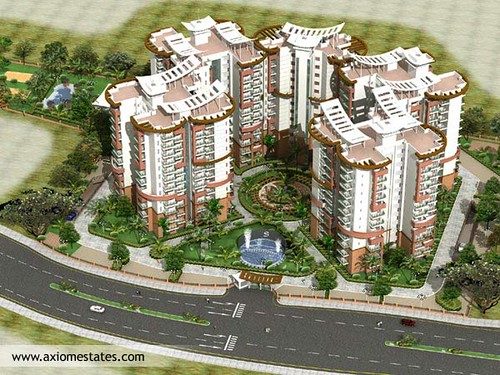
Image credit: Bangalore Properties - Real Estate India - Shriram Symphony by nancyarora2020 via flickr (BY-SA 2.0), sourced through Openverse.
Written by
Rajesh Tiwari
Real estate analyst covering property markets across Delhi NCR, Mumbai, and Bangalore. Rajesh tracks pricing trends, RERA compliance, and investment opportunities for residential and commercial buyers.
Looking for a technology partner?
From IT consulting to virtual office to custom software — eDarpan can help.
Continue reading
Home Prices Up, Rents Steady: Dwarka Buyer vs Renter Math for 2026
Home prices are outpacing salaries in Dwarka. Here's a break-even framework to work out whether renting or buying wins for your numbers, with worked examples and hidden costs.
Tier-2 Cities Up 63% in 5 Years: Where Should You Invest in 2026?
Tier-2 cities have grown up to 63% in five years. Here's how to separate real rental-backed growth from hype before you put ₹80 lakh into property.
Rent or Buy in Noida 2026: Break-Even Math for Indian Homebuyers
Buying in Noida costs far more than the EMI suggests. Here's the break-even math Indian homebuyers need before committing to a flat.