Sale Deed vs Agreement to Sell: What Property Buyers Must Know
Confused between a sale deed and agreement to sell? Learn when ownership actually transfers, payment triggers, stamp duty, and mistakes that cost buyers crores.
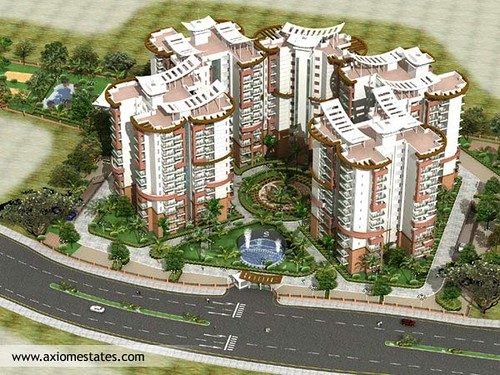
Here's a scene I've watched play out too many times. A first-time buyer in Noida hands over ₹18 lakh as "booking amount" to a builder, signs a document they barely read, and walks away thinking they own the flat. Two years later the project is stalled, the builder is dodging calls, and when they finally consult a lawyer, they learn a hard truth: what they signed was an agreement to sell, not a sale deed. They never owned anything. They had a promise, and a weak one at that.
The confusion between these two documents costs Indian buyers crores every year. According to data cited in various RERA proceedings, a significant chunk of homebuyer disputes trace back to buyers not understanding what stage of ownership they were actually at. The gap between "I agreed to buy" and "I legally own" is where fraud, double-selling, and endless litigation live.
This post breaks down sale deed vs agreement to sell in plain language, with the real payment triggers, stamp duty math, registration steps, and the exact mistakes that turn a dream purchase into a decade in civil court. If you're buying property in India, read this before you sign anything or transfer a single rupee.
Key Takeaways
- An agreement to sell is a promise to transfer property in the future on agreed terms. A sale deed is the actual transfer of ownership. Ownership passes only on the registered sale deed, never before.
- Never pay more than 10–20% before the agreement to sell is signed, and never pay the full amount until the sale deed is executed and registered.
- Stamp duty and registration charges (typically 5–7% + 1% across most states) are paid at the sale deed stage. The agreement to sell attracts nominal stamp duty in most states.
- An unregistered agreement to sell gives you very limited rights. Insist on registration where your state requires it, and always get a lawyer to verify the title chain first.
- For under-construction property, you'll usually sign an agreement to sell (or builder-buyer agreement) first and the sale deed only at possession. This is normal, but the terms protect you only if drafted carefully.
- Check RERA registration, encumbrance certificate, and the seller's clear title before either document. A bad title poisons everything downstream.
What is the difference between a sale deed and an agreement to sell?
Let's settle the core distinction, because everything else flows from it.
An agreement to sell (sometimes called a sale agreement or, for builders, a builder-buyer agreement) is a contract where the seller agrees to transfer the property to you at a future date, once certain conditions are met. Those conditions are typically full payment, clearance of dues, obtaining the occupancy certificate, and so on. It is a promise. It creates a contractual right, not ownership.
A sale deed is the instrument that actually conveys ownership from the seller to you. When it's executed, signed by both parties, and registered at the sub-registrar's office, you become the legal owner. The property is now yours in the eyes of the law.
The legal backbone here is the Transfer of Property Act, 1882. Section 54 is explicit: an agreement to sell "does not, of itself, create any interest in or charge on such property." In other words, signing an agreement to sell does not make you an owner. It only gives you the right to demand that the sale happens as agreed, and if the seller backs out, to sue for specific performance or compensation.
Think of it like a wedding. The agreement to sell is the engagement, the sale deed is the marriage. You can call off an engagement and there are consequences, but you're not legally married until the ceremony is done and registered.
Why builders and sellers exploit the confusion
Many buyers pay large sums at the agreement stage because the document "feels" final. It has stamps, signatures, and legal language. But if the builder later sells the same flat to someone else, or the project collapses, an unregistered agreement to sell puts you in a weak position. You'll be one creditor among many, chasing money you already handed over.
Sale deed vs agreement to sell: a side-by-side comparison
Here's the practical breakdown that matters when you're at the negotiating table.
| Criteria | Agreement to Sell | Sale Deed |
|---|---|---|
| What it does | Promises future transfer on agreed conditions | Actually transfers ownership now |
| Ownership transferred? | No, only a right to buy | Yes, full legal ownership |
| Governing provision | Section 54, Transfer of Property Act (executory contract) | Section 54 (executed conveyance) |
| Stamp duty | Nominal in most states (often a few hundred to a couple thousand rupees) | Full stamp duty, typically 5–7% of value depending on state |
| Registration | Optional in many states; mandatory in some (e.g. Maharashtra for certain agreements) | Mandatory under Registration Act, 1908 |
| Risk if other party defaults | Sue for specific performance or refund; recovery can be slow | You already own it; minimal risk |
| When you pay full price | Never pay 100% here | Balance paid at or just before registration |
Notice the payment pattern. The agreement to sell is where you commit a small advance and lock the terms. The sale deed is where the big money moves and ownership follows. Any deal structure that flips this, asking for near-full payment before the sale deed, is a red flag worth investigating.
How does the payment flow work in a typical property purchase?
Let me walk you through a real-world example so the sequence is concrete.
Worked example: buying a ₹90 lakh resale flat in Pune
Suppose Rohan is buying a 2BHK resale flat in Wakad, Pune, for ₹90 lakh. Here's how a clean transaction typically runs:
- Token / booking amount: Rohan pays ₹1 lakh as a token to hold the deal, backed by a simple receipt or token agreement.
- Agreement to sell: After his lawyer verifies the title chain and encumbrance certificate, both parties sign the agreement to sell. Rohan pays 10%, so ₹9 lakh (less the token already paid). The agreement fixes the price, timeline, penalty clauses, and completion date.
- Home loan processing: Rohan submits the agreement to sell to his bank. The bank sanctions a loan of ₹63 lakh (70% of value) and does its own legal and technical verification.
- Sale deed execution: On the agreed date, Rohan (and the bank, disbursing the loan) pays the balance. The sale deed is executed, stamp duty and registration charges are paid, and it's registered at the sub-registrar's office.
- Mutation: Post-registration, Rohan applies for mutation to update municipal and revenue records in his name.
In Maharashtra, stamp duty on a ₹90 lakh property runs around 5% (6% in some municipal areas including metro cess), plus 1% registration (capped at ₹30,000 for properties above ₹30 lakh). So Rohan budgets roughly ₹4.5–5.4 lakh in stamp duty and ₹30,000 registration on top of the purchase price. That is a big number people routinely forget to plan for.
Common Mistake: Buyers often calculate their budget on the sticker price alone. On a ₹90 lakh flat you can easily add ₹5–7 lakh in stamp duty, registration, GST (for under-construction), brokerage, and legal fees. Always budget 7–9% over the quoted price for a resale, and more for a fresh purchase. Ask for the all-in number before you commit.
What about under-construction property and builder agreements?
This is where most first-time buyers get burned, so let's be specific.
When you buy an under-construction flat, the builder cannot give you a sale deed on day one, because the property doesn't exist yet in a completed, occupiable form. So you sign an agreement to sell or a builder-buyer agreement, and you pay in a construction-linked or time-linked schedule. The sale deed comes only at possession, after the occupancy certificate is issued.
Under RERA, the builder must register the project and cannot take more than 10% of the cost as advance or application fee without first executing a written, registered agreement for sale. That single rule protects you. If a builder demands 30% before any registered agreement, they're breaching RERA, full stop.
Also remember GST. Under-construction property attracts GST (currently 5% for non-affordable and 1% for affordable housing, without input tax credit). A ready-to-move property with occupancy certificate does not attract GST. This alone can shift your effective cost by lakhs.
If you're weighing an under-construction buy in a market with heavy stock, read our breakdown of Pune's ₹92,000 crore unsold inventory and whether it's a smart buy or a red flag before you commit. Oversupply changes your negotiating power dramatically.
Pro tip on possession-linked clauses
Pro Tip: In your agreement to sell with a builder, insist on a specific possession date and a penalty clause that mirrors the interest rate you'd pay them for delayed payments. Builders happily charge you 18% for late installments but write vague "force majeure" escape hatches for their own delays. Make the penalty symmetric, and get it in writing before signing. RERA lets you claim interest for delayed possession, but a clear contractual clause makes recovery far faster.
What documents and checks must happen before you sign either document?
Neither the agreement to sell nor the sale deed protects you if the underlying title is defective. Do this due diligence first, ideally through a property lawyer.
- Title chain: Trace ownership for at least the last 30 years (or 13 years minimum) to confirm the seller has clear, marketable title.
- Encumbrance certificate (EC): Obtain the EC from the sub-registrar to confirm no existing mortgage, lien, or charge on the property.
- RERA registration: For any under-construction or newly launched project, verify the registration on your state RERA portal. No RERA number, no deal.
- Approved building plan and occupancy certificate: Confirm the construction is sanctioned and, for ready property, that the OC is issued.
- Property tax receipts and society NOC: Check dues are cleared and, for apartments, get a no-objection certificate from the society.
- Seller identity and capacity: Verify PAN, Aadhaar, and that the seller has legal authority (power of attorney sales need extra scrutiny).
A lawyer's title verification typically costs ₹15,000 to ₹40,000 depending on the city and complexity. Skipping it to save that money is the most expensive mistake buyers make.
What are the registration steps for a sale deed in India?
Registration is what makes the sale deed legally enforceable and puts the world on notice that you own the property. Here's the walkthrough.
- Draft the sale deed: A lawyer prepares the deed with accurate property description, sale consideration, party details, and payment mode.
- Calculate stamp duty: Based on the higher of the transaction value or the state's circle rate (ready reckoner value). Pay via the state's e-stamping portal (e.g. SHCIL or state treasury).
- Book a sub-registrar appointment: Many states allow online slot booking. Both buyer and seller must appear, along with two witnesses.
- Execute at the sub-registrar's office: Sign the deed, provide biometrics and photographs, and pay the registration fee (usually 1%, often capped).
- Collect the registered deed: You'll receive the registered document, typically within a few days to a couple of weeks depending on the state.
- Apply for mutation: Update the municipal and land revenue records so future tax bills and utility connections reflect your name.
Whether you're buying to live in or to invest, browsing verified listings first saves time. You can explore properties for sale across Indian cities or, if you're not ready to buy, look at rental properties on eDarpan while you build your budget and complete due diligence.
What happens if the agreement to sell is breached?
Say the seller refuses to execute the sale deed after you've paid the advance and met your obligations. What are your options?
Under the Specific Relief Act, you can sue for specific performance, asking the court to compel the seller to complete the sale. Since the 2018 amendment, specific performance is now the default remedy rather than a discretionary one, which strengthens buyers. Alternatively, you can seek a refund of your advance with damages.
But litigation is slow. A specific performance suit can run several years across Indian courts. This is precisely why a registered agreement to sell matters. A registered document is far stronger evidence and, in states where registration is mandatory, an unregistered agreement may not even be admissible for enforcing the transfer. Don't rely on a photocopy and a handshake.
If you're comparing markets and thinking about where the enforcement and paperwork culture is stronger, our comparison of Indians buying Dubai property versus investing at home is worth a read for the process contrasts alone.
Frequently asked questions
Does an agreement to sell give me ownership of the property?
No. An agreement to sell only creates a right to demand the transfer in the future on the agreed terms. Ownership passes only when the sale deed is executed and registered. Until then, the seller remains the legal owner.
Is it mandatory to register an agreement to sell?
It depends on your state. In Maharashtra, for example, agreements for sale of immovable property require registration and full stamp duty. In many other states registration is optional, but a registered agreement is far stronger evidence and better protects you. Always register where the value is significant.
Who pays the stamp duty on a sale deed, the buyer or the seller?
In almost all Indian states the buyer pays stamp duty and registration charges on the sale deed. Rates typically range from 5% to 7% of the higher of transaction value or circle rate, plus around 1% registration fee. Some states offer a small concession for women buyers.
Can a property be sold to someone else after an agreement to sell is signed?
Legally the seller has agreed to sell to you, and a later sale can be challenged. But if your agreement is unregistered and the second buyer registers a sale deed in good faith, recovering the property becomes messy and slow. Registering your agreement and, in some states, lodging a notice reduces this risk significantly.
Is GST payable on both the agreement to sell and the sale deed?
GST applies to under-construction property (5% standard, 1% affordable, without input tax credit) and is charged on the installments as construction progresses, not on the document per se. Ready-to-move property with an occupancy certificate attracts no GST. Stamp duty is separate and is paid mainly at the sale deed stage.
How long does sale deed registration take in India?
The execution and registration at the sub-registrar's office is usually completed in a single appointment lasting a few hours. The registered document is returned within a few days to two weeks depending on the state's digitization. Mutation afterward can take a few weeks more.
What is the difference between a sale deed and a conveyance deed?
They are closely related. A sale deed is the most common type of conveyance deed used when property is transferred for money. Conveyance deed is a broader term that also covers transfers like gifts, exchanges, or society-to-member conveyance. In a normal purchase, the sale deed is your conveyance.
The bottom line on sale deed vs agreement to sell
Get the sequence right and you protect yourself from the vast majority of property disasters. Understanding sale deed vs agreement to sell comes down to one rule: an agreement to sell is a promise, a sale deed is ownership. Pay small at the promise stage, pay big only when ownership actually transfers, and never let anyone pressure you to reverse that order. Verify the title first, register your documents, and budget honestly for stamp duty and taxes.
At eDarpan, our real estate platform helps buyers and investors find verified listings and understand the paperwork before they commit, so decisions are made with clear eyes rather than under builder pressure. If you're navigating a purchase and want to talk through your specific situation, reach out to our team or learn more about how we work. And if the market you're considering is one of the hotter ones, our guides on Delhi-NCR premium housing and where to buy and Chandigarh's price surge will sharpen your timing.
Buy the house. Just make sure the paperwork says you actually own it.
Image credit: Bangalore Properties - Real Estate India - Shriram Symphony by nancyarora2020 via flickr (BY-SA 2.0), sourced through Openverse.
Written by
Rajesh Tiwari
Real estate analyst covering property markets across Delhi NCR, Mumbai, and Bangalore. Rajesh tracks pricing trends, RERA compliance, and investment opportunities for residential and commercial buyers.
Looking for a technology partner?
From IT consulting to virtual office to custom software — eDarpan can help.
Continue reading
Housing Sales Fall in 7 Cities: Should You Buy, Rent or Wait in 2026?
Housing sales are softening across seven Indian cities. Here's how to read the slowdown, weigh total ownership cost, and decide whether to buy, rent, or wait.
Rent vs Buy in Delhi-NCR 2026: A Break-Even Calculator Guide
Renting or buying in Delhi-NCR? Use this break-even framework, with a worked example, to decide with numbers instead of gut feel before 2026.
UP Model Building Rules 2026: Impact on Noida & Greater Noida Properties
UP's new 2026 building rules will reshape Noida & Greater Noida real estate, with major impacts on FAR, costs, and project approvals.