Rent or Buy in Noida 2026: Break-Even Math for Indian Homebuyers
Buying in Noida costs far more than the EMI suggests. Here's the break-even math Indian homebuyers need before committing to a flat.
Your landlord just sent a renewal notice with a 12% hike, your colleague bought a 2BHK in Sector 137 last year and is already talking about a 40% gain, and your parents are asking why you're still paying rent at 32. Sound familiar? If you're a first-time buyer in Noida or running a small business that's deciding whether to lease or purchase its office, the question "rent or buy Noida 2026" has become impossible to answer from headlines alone. Every news cycle swings between "prices are booming" and "the bubble is about to pop," and neither framing tells you whether the numbers work for your life.
Here's a fact worth sitting with. In most Indian metros, the upfront cost of buying (stamp duty, registration, brokerage, and the 20% down payment you're expected to have) is far larger than people assume, and that cash doesn't earn anything while it sits locked in brick. A family that buys at ₹90 lakh with ₹18 lakh down, then pays ₹6 to 7 lakh in one-time costs, has committed roughly ₹25 lakh of capital before their first EMI. Put that same money in a liquid debt fund at 6.5% and it grows meaningfully, a fact that's invisible in the sales pitch.
This guide gives you a practical break-even method you can run on your own numbers. We'll walk through the full cost stack for Noida, a worked example, how to think about your timeline, a comparison of financing options, and a checklist you can take to your bank or your CA. By the end you should be able to say, with a spreadsheet and not a gut feeling, which path is cheaper for you over the next five, seven, or ten years.
Key Takeaways
- Buying is not "paying rent to yourself." Your true cost of ownership includes the return you give up on your down payment and one-time transaction costs, often ₹6 to 8 lakh on a ₹90 lakh flat.
- Your break-even horizon is the single most important number. Below roughly five to six years of expected stay, renting usually wins in Noida once you account for transaction costs.
- Compare the rent-plus-invest path against the buy path using the same starting capital, not the buy path against an imaginary zero-cost rent.
- Appreciation assumptions drive most of the result. Model a flat, a moderate, and a poor scenario rather than betting on one headline number.
- Tax benefits under Sections 80C and 24(b) only help if you are in a high enough bracket and itemize under the old regime, so check your actual tax position first.
- Run the numbers on a 2BHK and a 3BHK in your target sectors separately, since rent-to-price ratios vary a lot within the same city.
How Do You Calculate the True Cost of Buying a Home in Noida?
Most buyers start with the EMI and stop there. That's the most common reason the buy decision looks better on paper than it turns out to be. The real calculation has four layers, and you need all of them.
The one-time costs you cannot avoid
In Uttar Pradesh, stamp duty for a registered sale deed is generally 7% for men and 6% for women buyers, with a further 1% registration fee in most cases. Some joint registrations and female-owner rules shift this slightly, so verify the current circle rate and rules with the Noida registrar or your advocate before you finalize a number. On a ₹90 lakh flat, stamp duty plus registration alone can run to roughly ₹6 to 6.5 lakh. Add brokerage (often 1 to 2% for resale), a home loan processing fee of around 0.25 to 1% of the loan, legal and documentation fees, and society transfer or maintenance deposits, and your one-time cost easily reaches ₹7 to 8 lakh.
Under-construction purchases carry GST on the under-construction value, which for affordable housing has been 1% and for other residential projects has been 5%, with input tax credit rules that have changed over time. Check the current rate applicable to the specific project and whether it is shown separately in your demand letter. Also check whether your builder has passed through any GST on land, since builders sometimes bundle costs in ways that aren't obvious until you read the agreement.
The opportunity cost of your down payment
This is the cost most people forget entirely. If you use ₹25 lakh of your savings (down payment plus one-time costs) to buy, that money can't earn returns elsewhere. Model it conservatively. A liquid or short-duration debt fund, a fixed deposit, or a balanced allocation might earn somewhere in the 6 to 8% range depending on market conditions and your risk appetite. Be honest about what you would actually have done with the cash. If you would have invested it in equities with higher risk, your opportunity cost is different. Pick one realistic return and stick with it across the whole model.
Recurring ownership costs
Society maintenance in Noida's mid-range group housing typically runs from around ₹2 to ₹4 per square foot per month, depending on the society, amenities, and whether it is a gated society with a clubhouse. Property tax is smaller but real. Add a repair reserve, because a roof leak or a geyser replacement is inevitable, and most people underestimate this.
The EMI and the interest you pay
Your home loan EMI is the largest recurring cost, but the important number is the total interest paid over the loan life, and how much of each EMI in the early years goes to interest rather than principal. In the first five years of a 20-year loan, a huge share of your payments is interest. That's why selling early often leaves you with less equity than you expect.
Rent or Buy Noida 2026: A Worked Break-Even Example
Let's make this concrete. Consider a dual-income couple in Noida considering a 2BHK in a mid-tier society in Sector 150 at ₹90 lakh, against renting a comparable flat at ₹32,000 per month with an annual 6% escalation.
The buy scenario:
- Price: ₹90 lakh. Down payment 20%: ₹18 lakh.
- One-time costs (stamp duty, registration, brokerage, loan fees, legal): ₹7.5 lakh.
- Loan: ₹72 lakh at 8.5% for 20 years. EMI is roughly ₹62,000 per month.
- Society maintenance: ₹3,000 per month, growing at 5% per year.
- Assumed property appreciation: 5% per year (a moderate scenario; we'll test others below).
The rent scenario:
- Rent: ₹32,000 per month, escalating 6% per year.
- The ₹25.5 lakh you would have used for the buy (down payment plus one-time costs) is invested at 7% in a debt-oriented allocation.
- The monthly gap between the EMI-plus-maintenance outflow and the rent is invested too, to keep the comparison fair.
Run this over a 7-year horizon with a simple spreadsheet. In the moderate-appreciation case, the buyer's equity at year 7 is the sale price (roughly ₹1.27 crore after appreciation) minus the outstanding loan (around ₹62 lakh) minus selling costs of about 2% and a deduction for the one-time costs already sunk. The renter's portfolio at year 7 is the invested down payment and monthly savings compounded at 7%. In most realistic inputs at this horizon, the two land close to each other, and the outcome flips depending on whether appreciation stays near 5% or slips to 2 to 3%.
The lesson is not that buying is bad. It's that at seven years the decision is genuinely sensitive to assumptions, and the sensitive assumption is appreciation. That's exactly why you should test the range rather than picking a single number.
Pro Tip: The Rent-to-Price Ratio Check
Before you build any model, divide the annual rent by the purchase price of the same property. If the ratio is much below about 3 to 3.5% (annual rent divided by price), buying is typically harder to justify on pure financials unless you expect strong appreciation. Many buyers skip this single sanity check and then wonder why their spreadsheet looks poor. Use it as a gut filter before the detailed model.
Which Financing and Ownership Structure Actually Suits Your Situation?
The buy-versus-rent question is not binary. How you finance and structure a purchase changes the break-even materially. Here is how the common options compare for a typical Noida buyer.
| Option | Upfront Cash Needed | Typical Cost Profile | Best Suited For | Main Risk |
|---|---|---|---|---|
| Full-cash buy (no loan) | Full price plus one-time costs | No interest, but heavy opportunity cost on capital | Buyers with large liquid savings and low return needs | Capital locked in a single illiquid asset |
| Standard home loan (80% LTV) | About 20% down plus one-time costs | Interest over 15 to 20 years; tax benefits if eligible | Most first-time buyers with stable income | Rate changes and long-term interest burden |
| Under-construction via builder plan | Staged payments, often lower initial cash | Possible GST and delay risk; price may escalate | Buyers who can wait 3 to 4 years for possession | Possession delays and RERA disputes |
| Joint ownership with a family member | Shared down payment and EMI | Splits costs; tax deductions can be shared | Families or co-borrowers with aligned goals | Disagreements on exit and sale timing |
| Rent and invest the difference | Minimal upfront commitment | Rent escalation; returns depend on discipline | Buyers with uncertain job location or short horizon | Behavioral: failing to actually invest the savings |
Step-by-Step: Building Your Own Break-Even Model
You don't need expensive software. A spreadsheet with a few tabs will do. Here's the order to build it in so you don't miss anything.
- Pick your horizon. Write down how many years you realistically expect to stay in the city or the property. Be honest. Job changes, family plans, and relocation are the most common reasons buyers sell early.
- Get the current rent and price. Collect at least three comparable listings in your target sector for both rent and sale. Use the median, not the best case.
- Compute one-time buy costs. Use the current stamp duty and registration rules, plus brokerage and loan fees. Add a separate line for GST if you are buying under construction.
- Model the loan. Enter the principal, rate, and tenure. Extract the EMI and, critically, the outstanding balance at each year end.
- Model the rent path. Apply your expected annual escalation to the current rent.
- Model the invested alternative. Compound your down payment and any monthly savings gap at a realistic return.
- Model appreciation in three scenarios. Run flat (2%), moderate (5%), and strong (8%) to see the range.
- Calculate net worth at horizon. For the buy path, equity equals sale value minus outstanding loan minus selling costs. For the rent path, equals the investment portfolio value. Compare.
- Stress-test rates. Rerun with the interest rate 1% higher and lower, because floating-rate loans reprice.
Common Mistake: Comparing Buy Against Zero-Cost Rent
The most frequent error in these analyses is comparing the buyer's full ownership cost against a renter who spends everything they earn on rent with no savings. That's an unfair comparison. A disciplined renter invests the difference between their total housing outflow under buying and their rent. If you don't model that investment, you tilt the analysis toward buying and you may end up buying when renting was actually better.
Where Does Noida's Market Stand, and What Does That Mean for Timing?
Noida's appreciation has not been uniform. Sectors near the Yamuna Expressway, the Film City corridor, and areas with strong metro connectivity have behaved differently from older sectors and from parts of Greater Noida where supply has been heavy. Before you finalize assumptions, look at recent registered transaction data for your specific sectors and avoid relying on developer brochures, which naturally emphasize upside. For a broader view of how the national market is moving and what that signals for buyer strategy, you can read our analysis of Hyderabad property registrations and the buyer strategy that follows, which applies similar reasoning across cities.
Timing matters less than many buyers fear. Trying to time the market perfectly usually costs more than it saves, because you pay rent during the wait. A better question is whether the break-even works at your current price and rent, given your horizon. If it does, delay carries a real cost. If it doesn't, no timing trick will rescue the decision.
If you are comparing Noida against neighboring micro-markets, the reasoning transfers. Our guide on renting or buying in Dwarka under current rate conditions walks through a similar break-even structure, and the Delhi-NCR rent-or-buy analysis covers how price growth across the region shifts the math. For buyers weighing Noida against Gurugram, our piece on where your money goes further across Dwarka and Gurugram is useful for seeing how the same budget stretches differently.
What Checklist Should You Take Before You Commit?
Before you sign a booking form or a token agreement, verify the following. This list has saved many buyers from expensive surprises.
- Confirm the project's RERA registration number and check the status on the UP RERA portal. For Noida projects, the Yamuna Expressway and Noida Authority registrations are relevant depending on location.
- Read the builder's payment schedule and check whether it is linked to construction milestones or time-based, and what penalty applies for delayed possession on each side.
- Get the circle rate and confirm the stamp duty you will actually pay, since the government valuation can exceed the agreed price.
- Check the society's dues, maintenance policy, and any pending transfer charges before you buy a resale unit.
- Obtain an encumbrance certificate and confirm a clean title chain through your advocate.
- Compare at least two loan offers on the effective annual cost, including processing fees, prepayment rules, and whether the rate is fixed or floating.
- Run the break-even model with your own inputs and save the spreadsheet so you can revisit it at each major decision point.
Frequently Asked Questions
Is it better to rent or buy in Noida in 2026?
It depends on your expected stay and the rent-to-price ratio in your target sector. Buying usually needs a horizon of around five to seven years or more to recover transaction costs, while renting plus disciplined investing can win for shorter stays. Run the break-even model with your own numbers before deciding.
How much does it cost to buy a flat in Noida apart from the price?
On a typical ₹90 lakh property, one-time costs including stamp duty, registration, brokerage, loan processing, and legal fees commonly total ₹7 to 8 lakh. Under-construction purchases may add GST depending on the applicable rate. Always confirm the current rules for your specific transaction.
Does a home loan really save tax in India?
Principal repayment can qualify under Section 80C and interest under Section 24(b), but only if you opt for the old tax regime and your total deductions exceed the standard deduction. If you are on the new regime, these deductions generally aren't available, so factor that into your model.
What appreciation rate should I assume for Noida?
Avoid relying on one number. Model a flat scenario near 2%, a moderate one around 5%, and a stronger one near 8%, then see whether buying still makes sense across the range. Use recent registered transaction data for your specific sector rather than broad city averages.
Should I buy under construction or a ready-to-move flat?
Under-construction units often have lower entry prices and staged payments, but they carry possession delay risk and may attract GST. Ready-to-move properties let you see the actual quality and remove that risk, usually at a higher price. Weigh the delay risk against the price difference using your own timeline.
How do I know if my rent is too high to justify renting?
Compare your annual rent to the purchase price of a similar property. If the ratio is well below about 3 to 3.5%, buying is typically harder to justify on financials alone. It's a rough filter, not a verdict, so follow it with a full model.
Can I get professional help running this analysis?
Yes. If you want a second pair of eyes on the numbers, or help comparing specific properties and financing options, you can contact eDarpan and our team will walk through your situation. You can also explore properties for sale in India or rental properties in India through eDarpan Properties to compare live listings against your model.
Whether you rent or buy in Noida in 2026 should come out of your numbers, your horizon, and your honest tolerance for risk, not out of whatever is trending this quarter. Build the model, test the scenarios, and let the spreadsheet tell you what the headlines can't. If you'd like help putting that analysis together for your own shortlist, reach out through our team at eDarpan and we'll work through it with you.
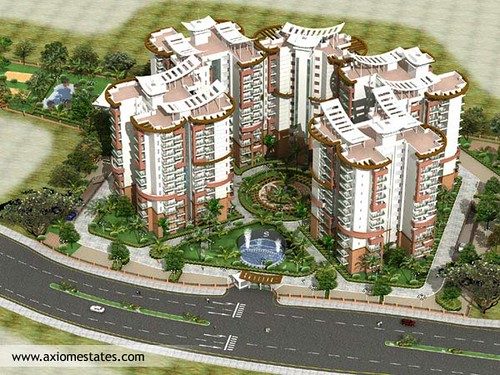
Image credit: Bangalore Properties - Real Estate India - Shriram Symphony by nancyarora2020 via flickr (BY-SA 2.0), sourced through Openverse.
Written by
Rajesh Tiwari
Real estate analyst covering property markets across Delhi NCR, Mumbai, and Bangalore. Rajesh tracks pricing trends, RERA compliance, and investment opportunities for residential and commercial buyers.
Looking for a technology partner?
From IT consulting to virtual office to custom software — eDarpan can help.
Continue reading

Hyderabad Property Registrations Fell 15%: What Buyers Should Do Now
Registrations dropped 15% in Hyderabad. Here's how to read the signal and decide whether to buy, rent, or wait, with a practical framework for each buyer type.
Rent or Buy in Dwarka Under 2026 Rate Cuts? Break-Even Guide
Buying looks cheaper than renting only when you count the full cost of ownership. This break-even guide shows Dwarka buyers how to compare the real numbers.
Delhi-NCR Home Prices Up 12%: Rent or Buy in 2026?
Delhi-NCR prices jumped 12%. Before you buy, run the real numbers: true ownership costs, break-even horizon, and when renting and investing wins.