Tier-2 Cities Up 63% in 5 Years: Where Should You Invest in 2026?
Tier-2 cities have grown up to 63% in five years. Here's how to separate real rental-backed growth from hype before you put ₹80 lakh into property.
If you have ₹80 lakh to put into property this year, the question that matters is less "should I invest?" and more "where does my money actually compound?" Metro prices in Mumbai, Bengaluru and Delhi-NCR have climbed fast, but rental yields in many of them sit stubbornly near 2 to 3 percent, which barely beats a fixed deposit once you subtract maintenance, society charges, property tax and the months a flat sits empty. Meanwhile, the CII-Knight Frank residential price index has shown that several tier-2 markets have grown considerably faster over the last five years, with some cities recording cumulative gains that look like a different asset class altogether.
That gap is exactly why so many first-time investors and mid-career professionals are now asking for the best tier-2 cities for property investment India 2026. The headline numbers are seductive. The risks are less visible: a city can post strong price growth while its rental demand is thin, its RERA compliance record is patchy, or the metro line that justified the appreciation is three years behind schedule.
This guide walks through how to compare tier-2 options against metros using the price growth data, then gives you a practical checklist covering rental yield, RERA compliance and infrastructure pipelines. It is written for someone who will actually sign a registry, not someone reading a market report for fun. Where it helps, I have included worked numbers so you can run the same math on your own shortlist.
Key Takeaways
- Headline price growth tells you what already happened. Rental yield and absorption rates tell you whether the next five years will reward you.
- Calculate net yield after property tax, society maintenance, vacancy and a realistic management cost, not the gross figure quoted in listings.
- Verify every project on the RERA portal of the state, check the registration number, and read the complaints and litigation history before paying a booking amount.
- Price infrastructure by sanctioned status and funding, not announcements. A metro with a sanctioned DPR and approved budget is a different bet from one that appeared in a state speech.
- Compare cities on the cost of your specific ticket size. A ₹60 lakh flat in one city and a ₹60 lakh flat in another can have very different liquidity on resale.
- Budget for stamp duty, registration, GST on under-construction purchases and loan processing. These can add 8 to 10 percent to your effective cost.
Which tier-2 cities are worth a serious look against the metros?
The useful way to read the CII-Knight Frank data is to separate two things: how much a market appreciated, and how much of that appreciation was supported by genuine end-user and rental demand. A city that rose sharply on the back of a single township launch or speculative buying is a riskier proposition than one where price growth tracked job creation and household formation.
When I advise clients on shortlists, I look at four things before I look at price momentum: employment base (IT parks, manufacturing clusters, state capital administration, university ecosystems), population inflow, the ratio of rental to purchase demand, and the pipeline of new supply. A city with heavy new supply and weak absorption will punish late buyers no matter how good the growth chart looks.
Here is a comparison of five options commonly shortlisted for 2026. Figures are indicative ranges for mid-segment apartments and should be verified against current listings and the latest index releases before you decide.
| City | Typical price band (per sq ft, mid-segment) | Gross rental yield (indicative) | Employment anchor | Main risk to watch |
|---|---|---|---|---|
| Pune | ₹7,000 to ₹10,000 | 2.5% to 3.5% | IT, auto, manufacturing, education | Price already high in prime pockets; traffic and peripheral supply |
| Hyderabad (outer ring) | ₹6,000 to ₹9,000 | 2.5% to 3.2% | IT, pharma, GCCs | Registration slowdown and concentrated new launches in select corridors |
| Ahmedabad | ₹4,500 to ₹6,500 | 3% to 4% | Manufacturing, trade, GIFT City ecosystem | Uneven micro-market quality; verify connectivity closely |
| Lucknow | ₹4,000 to ₹5,500 | 3% to 4% | State government, services, healthcare | Thinner resale liquidity; government-linked demand cycles |
| Chennai (Sriperumbudur–OMR belt) | ₹5,500 to ₹8,000 | 2.5% to 3.5% | Auto, electronics, IT, logistics | Flood-prone pockets; infrastructure quality varies by corridor |
For comparison, metro micro-markets in Mumbai suburbs or Gurugram frequently show gross yields closer to 2 to 3 percent, with higher entry prices. That does not make metros a bad choice. A prime Mumbai or South Delhi address is a store of value with deep liquidity. But if your objective is yield plus appreciation on a fixed budget, the arithmetic often tilts toward well-chosen tier-2 pockets.
If you are weighing a specific pair, the same break-even logic applies whether you are looking at Noida or Dwarka. Our earlier analysis of Noida rent-or-buy break-even math and Dwarka versus Gurugram walks through the same method on NCR numbers.
How do I calculate the real rental yield before I commit?
Listing portals quote gross yield: annual rent divided by purchase price. Almost nobody keeps that number. The figure that matters is net yield after everything the property costs you to hold, and it is usually two to three percentage points lower than the headline.
Here is a worked example with round numbers. Suppose you buy a 1,000 sq ft flat in a tier-2 city at ₹5,500 per sq ft, so the price is ₹55 lakh. Market rent is ₹18,000 per month.
- Annual gross rent: ₹18,000 × 12 = ₹2,16,000. Gross yield: ₹2,16,000 ÷ ₹55,00,000 = 3.93 percent.
- Assume one month of vacancy per year, which is conservative for a well-located flat. Effective rent drops to ₹1,98,000.
- Society maintenance at ₹2,500 per month is ₹30,000 per year. Municipal property tax, which varies widely, let's say ₹6,000 per year here.
- Agent or management fee at roughly one month's rent per year, or ₹18,000, if you use a manager.
- Net operating income: ₹1,98,000 − ₹30,000 − ₹6,000 − ₹18,000 = ₹1,44,000. Net yield: ₹1,44,000 ÷ ₹55,00,000 = 2.62 percent.
Note that rental income is taxed at your slab rate after a 30 percent standard deduction, so your post-tax yield will be lower still. The point is not that yield is poor. It is that you should judge a city by net yield and total return together, expecting appreciation to do much of the work.
Pro Tip: Check whether the rent you are assuming is backed by actual leases. Ask a local broker for the last five completed rentals in the same tower or within a 1 km radius, with unit size and rent. Listings are asking prices; leases are reality. Many investors discover a 15 to 20 percent gap between the two only after the flat sits vacant for four months.
What does RERA compliance actually require, and how do I verify it?
The Real Estate (Regulation and Development) Act, 2016 requires most residential projects of more than 500 square metres or eight apartments to register with the state RERA authority before marketing or selling. Most states run their own portal. Registration gives you a project number, sanctioned plan details, the promised completion date, and a legal obligation for the builder to keep 70 percent of collections in a separate escrow account for that project.
Verification is quick, but people skip it. Here is the routine I use:
- Ask the builder for the RERA registration number in writing. If they hesitate or say it is "in process" for a project already selling, walk away.
- Open the relevant state RERA portal and search by project name and number. Confirm the promoter name matches the entity on your agreement and the RERA project matches the tower, phase and layout you are buying.
- Check the approved completion date and any extensions granted. Extensions are common; undisclosed delays are not.
- Read the complaints section and any adjudication orders against the promoter across other projects.
- Ask for the carpet area as per RERA, which is the legally defined measure, and compare it with the super built-up area in the brochure. The gap is where many price disputes start.
- Confirm the layout and sanctioned plan with the local development authority, and check land title with an independent advocate's search report before booking.
Under-construction purchases also attract GST at the affordable or regular rate depending on the segment, and the rules changed recently. Ask your builder for the exact GST treatment in the agreement and whether any input tax credit is passed on. Ask your CA to confirm the figure before you pay.
How should I judge infrastructure pipelines without getting fooled by announcements?
Every tier-2 city has a metro, ring road, airport expansion or industrial corridor on a press release. Most of them will arrive eventually, and some arrive a decade late. The question is how much of the price you are paying already reflects a project that may not finish on time.
I use a simple three-stage test. A project is announced when it appears in a speech or budget. It is sanctioned when the government approves the detailed project report and budget. It is under construction with contracts awarded when tenders are closed and work has begun on the ground. Price a project at the stage it has actually reached, and discount announced projects heavily. Check the state's transport or urban development department website, the project's tender listings, and the concessionaire's public filings where applicable.
A practical example: when an outer ring road is sanctioned and land acquisition is complete, an interchange 4 km away will likely add value over three to five years. When the same road is only mentioned in a district plan draft, expect the appreciation to be speculative until tenders appear.
Is it better to buy in a tier-2 city or in a metro suburb for a first home?
It depends on whether the property is your home or your investment. For a first home where you will live for many years, convenience to your workplace, schools and healthcare usually outweighs a modest yield advantage. A two-hour commute will erase any savings in mental and financial terms within a year or two.
For a pure investment, tier-2 pockets with an employment anchor and a sanctioned infrastructure link often outperform. For a mid-career buyer who plans to relocate for work within the next five years, be honest about resale liquidity. A flat in a city where you will struggle to find ten buyers at the end of your holding period is not a good investment regardless of its price growth.
What is the step-by-step plan for a first tier-2 purchase?
- Set your numbers first. Decide your all-in budget including stamp duty (commonly 5 to 7 percent depending on state), registration (around 1 percent), GST where applicable, legal fees and loan processing. Keep a 3 to 6 month cash reserve for EMIs and maintenance.
- Shortlist two or three cities using absorption data, employment base and new supply, not just price growth.
- Calculate net yield for three representative micro-markets in each shortlisted city using actual leases.
- Verify RERA, title and approvals for every project you consider, before any booking amount.
- Get a pre-approved home loan from your bank and compare rates. Check the processing fee, prepayment terms and whether the bank's valuation matches the agreement value.
- Negotiate the agreement. Ask for the possession timeline, delay penalty clause, carpet area measurement method and the maintenance deposit amount in writing.
- Register the sale deed at the sub-registrar office, confirm mutation in municipal records, and transfer utility connections into your name.
What is the most common mistake tier-2 investors make?
Common Mistake: Buying a unit in a new tower because the brochure shows a metro station "nearby," without checking whether the station is sanctioned and funded, or how long the walk actually is. Several investors I have worked with paid a premium of ₹300 to ₹500 per sq ft for proximity that did not exist for another four years. The fix is to visit the site at the time of day you would commute, walk the route, and check the project's status on the transport department's website before you pay anything beyond a nominal token.
The second mistake is ignoring the resale market. Before you buy, ask a local broker how many flats of your size and price band have sold in the last six months, and at what discount to asking price. A healthy market has transactions. A quiet one means your exit depends on finding one motivated buyer.
Frequently asked questions
What are the best tier-2 cities for property investment in India in 2026?
There is no single answer, because the right city depends on your budget, holding period and whether you need rental income. Cities with a strong employment base, sanctioned infrastructure and steady rental demand, such as Pune, Ahmedabad and select Hyderabad corridors, are often shortlisted. Verify current absorption and price data before deciding.
How do I check whether a builder's project is RERA registered?
Ask the builder for the RERA registration number and search it on the relevant state RERA portal. Confirm that the promoter name, project name and tower or phase match your agreement. Read any complaints or orders against the promoter.
What is a good rental yield for a residential property in India?
Gross yields of 3 to 4 percent are common in many tier-2 cities, while metro prime areas often sit lower. What matters more is net yield after maintenance, property tax, vacancy and management costs, which is usually two to three points below gross.
Is it better to buy under-construction or ready-to-move property?
Under-construction units are often cheaper but carry possession delay risk and staggered payment exposure. Ready-to-move properties give certainty and immediate rental income but usually cost more. Choose based on your cash flow and tolerance for delay.
How much extra should I budget beyond the purchase price?
Plan for stamp duty, registration, legal fees, loan processing and, for under-construction units, applicable GST. Together these commonly add 8 to 10 percent to the effective cost, though the exact figure depends on your state and property type.
Does infrastructure development always raise property prices?
Not always, and not immediately. Prices tend to respond when a project is sanctioned and funded, and they often rise further as construction progresses. Announced projects that never get funded do not reliably lift values, so price only what is actually approved.
Should I hire a consultant before buying property in a new city?
For a first purchase in an unfamiliar city, an independent advisor who checks title, RERA status and realistic rents can save far more than their fee. Make sure they are not paid a commission by the developer you are buying from.
Where eDarpan fits in
If you are working through this checklist for a specific city, we can help you run the numbers. Our eDarpan Properties team covers buying, renting and investment across Indian markets, and you can browse current properties for sale in India or rental properties in India to test your yield assumptions against real listings. For investors who also run a business and want a registered address for GST or company registration in their chosen city, our virtual office service is a practical option. And if you are a company deciding how to manage property records, leases or tenant communication digitally, our IT consulting team can help you design that workflow. You can learn more about how we work at eDarpan or get in touch to talk through your shortlist.
The short version: judge tier-2 markets by net yield, verified compliance and infrastructure that is actually funded, then buy only what survives that test. Growth stories are easy to find. Projects that deliver rent, liquidity and clean title are the ones worth your capital.
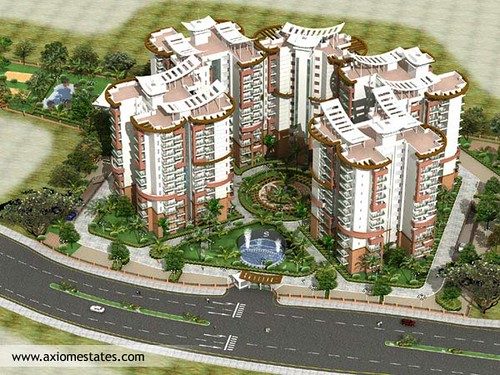
Image credit: Bangalore Properties - Real Estate India - Shriram Symphony by nancyarora2020 via flickr (BY-SA 2.0), sourced through Openverse.
Written by
Rajesh Tiwari
Real estate analyst covering property markets across Delhi NCR, Mumbai, and Bangalore. Rajesh tracks pricing trends, RERA compliance, and investment opportunities for residential and commercial buyers.
Looking for a technology partner?
From IT consulting to virtual office to custom software — eDarpan can help.
Continue reading
Rent or Buy in Noida 2026: Break-Even Math for Indian Homebuyers
Buying in Noida costs far more than the EMI suggests. Here's the break-even math Indian homebuyers need before committing to a flat.

Hyderabad Property Registrations Fell 15%: What Buyers Should Do Now
Registrations dropped 15% in Hyderabad. Here's how to read the signal and decide whether to buy, rent, or wait, with a practical framework for each buyer type.
Rent or Buy in Dwarka Under 2026 Rate Cuts? Break-Even Guide
Buying looks cheaper than renting only when you count the full cost of ownership. This break-even guide shows Dwarka buyers how to compare the real numbers.