RERA Escrow Rules: How Buyers Verify a Project Is Safe
Learn how RERA escrow account rules protect homebuyers and get a step-by-step process to verify any under-construction project before you pay.
Every few months I get the same panicked message from a friend or client: "I booked a flat three years ago, paid ₹40 lakh, and the tower is still just a foundation pit. What do I do now?" By the time they call, the money is already gone into a project that may never finish. And the hard truth is that most of these disasters were avoidable at the booking stage, with about two hours of homework.
Here's a number that should worry any under-construction buyer. As of 2024, market research firms like ANAROCK have repeatedly flagged that roughly 4.5 to 5 lakh homes across the top seven Indian cities have been either delayed or stalled, with a significant chunk stuck for five years or more. RERA was supposed to fix this, and the single most powerful tool it created is the escrow mechanism. But the law only protects you if you know how to check whether the developer is actually following the RERA escrow account rules before you sign anything.
This post walks you through exactly how to verify escrow compliance and RERA filings for any under-construction project in India. You'll get a step-by-step verification process, a real case study of how one buyer dodged a stalled project, a comparison of what a compliant versus non-compliant developer looks like, and a checklist you can use the next time a broker pushes you to "block the unit before the price goes up."
Key Takeaways
- RERA mandates that 70% of every buyer's payment must go into a dedicated project escrow account, usable only for construction and land cost of that specific project.
- Always verify the project's RERA registration number on your state RERA portal before paying even the booking amount, not after.
- Ask for the developer's CA, engineer, and architect certificates that authorise each withdrawal from the escrow account. These are legally required and expose diversion of funds.
- Check the quarterly progress updates on the RERA portal. A gap between reported construction stage and actual site condition is your biggest red flag.
- A missing or expired RERA registration, or a project that isn't listed at all, is a hard no. Walk away regardless of the discount offered.
- Never rely on the builder's brochure or the broker's word. The RERA portal is the source of truth, and it's free to access.
What are RERA escrow account rules and why do they exist?
Before RERA (the Real Estate Regulation and Development Act, 2016), a developer could take your money for the Whitefield project and quietly use it to buy land in Chennai or pay off debt from a stalled tower in Noida. This "fund diversion" is what killed thousands of projects. Buyers paid for one building and unknowingly financed the developer's entire troubled portfolio.
The RERA escrow account rules attack this directly. Under Section 4(2)(l)(D) of the Act, a developer must deposit 70% of the amount collected from allottees into a separate bank account maintained in a scheduled bank. This money is ring-fenced. It can only be withdrawn to cover the land cost and construction cost of that same project, and nothing else.
The remaining 30% can be used more freely, for marketing, overheads, and profit. But even that comes later. The genius of the mechanism is the withdrawal condition: the developer can only draw money from the escrow account in proportion to the construction actually completed, and each withdrawal must be certified by three independent professionals.
The three certificates that protect your money
Every time a developer wants to pull funds out of the project escrow account, three sign-offs are required:
- A Chartered Accountant certifies that the withdrawal is proportionate to the cost incurred and that money isn't being over-drawn.
- An Engineer certifies the actual physical progress of construction on site.
- An Architect certifies the stage of the project against the sanctioned plan.
If a developer is fudging these or can't produce them, that tells you far more than any glossy brochure ever will. These certificates are meant to be uploaded periodically to the state RERA portal, and you have every right to ask for them.
How do I check if a project is registered with RERA?
This is the first gate, and it's non-negotiable. Any project with more than 8 units or land area over 500 square metres must be registered with the state RERA authority before the developer can advertise, market, or sell a single unit. Many builders quietly sell "pre-launch" inventory before registration to raise cash, and that is exactly where buyers get trapped.
Each state runs its own RERA portal. Here's where the big ones live:
- Maharashtra: MahaRERA at maharera.maharashtra.gov.in
- Karnataka: RERA Karnataka at rera.karnataka.gov.in
- Uttar Pradesh: UP-RERA at up-rera.in
- Haryana: HRERA (separate portals for Gurugram and Panchkula)
- Tamil Nadu: TNRERA at rera.tn.gov.in
- Telangana: TS-RERA at rera.telangana.gov.in
Step-by-step: verifying a project on the RERA portal
- Get the exact RERA registration number. By law it must appear on every advertisement, hoarding, and brochure, usually in the format
P52100012345for MahaRERA. If the ad doesn't show one, that's a violation in itself. - Go to your state's RERA portal and open the "Registered Projects" search. Enter the registration number, project name, or promoter name.
- Match the promoter entity. Confirm the legal company name on RERA matches the one on your allotment letter and agreement. Builders often use different SPVs (special purpose vehicles) for different projects.
- Check the project validity date. RERA registration has a completion date. If the original date has passed and there's no extension filed, the developer is in breach.
- Download the registration certificate and approved plans. These are public documents. Compare the approved number of floors and units against what the sales team is promising you.
- Read the quarterly progress reports. Registered projects must file updates on construction status, money received, and money spent. This is gold.
A Pro Tip from years of watching these deals: don't just check that the project is registered. Check the promoter's other projects on the same portal. If the same builder has three other projects all showing "delayed" status or a pile of complaints filed against them, that pattern will repeat on yours. RERA portals list complaints and orders against promoters, and most buyers never bother to look.
How can I verify the developer is actually following escrow rules?
Registration is table stakes. The harder question is whether the escrow account is being operated honestly. Here's how to dig in.
- Find the escrow bank details in the RERA filing. The developer must declare the separate bank account. Note the bank and account details listed.
- Ask for the CA certificate on funds. Under RERA, the promoter must get their accounts audited within six months of the end of every financial year by a CA, confirming that amounts collected were used only for that project and that withdrawals matched the percentage of completion. Request the latest one.
- Compare "amount collected" vs "amount spent" in quarterly filings. If a developer has collected ₹200 crore but only shows ₹40 crore spent on a project that's supposedly 60% complete, something is off.
- Physically visit the site and compare with the reported stage. If the RERA portal says the project is at "10th floor slab" but you see only three floors standing, the engineer's certificate is either stale or false.
- Check for RERA orders and penalties. Search the promoter name under the "Orders" or "Complaints" section. Repeated escrow violations show up here.
Common Mistake: Buyers assume that because a project is RERA-registered, their money is automatically safe. Registration is a filing, not a guarantee. The protection only kicks in if you actively check the quarterly reports and the audit certificate, and if you insist that your payments go into the declared escrow account rather than some "collection account" the sales team quotes. Always cross-check the account number on your payment challan against the escrow account declared on RERA.
A real case study: how a Pune buyer avoided a ₹65 lakh trap
Let me share a case that stuck with me. A software engineer in Hinjewadi, Pune, was about to book a 2BHK in an under-construction tower priced at ₹65 lakh. The broker offered a ₹3 lakh "pre-launch discount" if he blocked the unit within the week by paying ₹5 lakh as booking amount. Attractive on paper.
Before paying, he did the RERA homework, which took him about ninety minutes on MahaRERA. Three things jumped out:
- The project's RERA completion date had lapsed the previous year, and the extension application was still "pending."
- The quarterly progress report claimed the podium and two floors were complete, but the site photos and his own visit showed only excavation and one floor of columns.
- The same promoter had two other registered projects, each with more than a dozen buyer complaints filed for delay and non-refund of amounts.
He walked away. Six months later, that project was flagged by MahaRERA for financial irregularities and construction had halted entirely. The buyers who paid are now in a queue for arbitration that could run years. He instead bought a ready-to-move flat from a developer whose RERA filings matched reality, paying about ₹4 lakh more but avoiding a bottomless pit.
The lesson isn't complicated. The information was public, free, and sitting on a government website. The only thing standing between him and a bad decision was ninety minutes of reading. If you're weighing under-construction against ready inventory, our breakdown of Pune's ₹92,000 crore unsold inventory is worth reading alongside this.
What does a compliant developer look like vs a risky one?
After you've done a dozen of these checks, patterns emerge. Here's how the two ends of the spectrum compare on the things that actually matter.
| Criteria | Compliant developer | Risky developer | Why it matters |
|---|---|---|---|
| RERA registration | Valid number on every ad, current completion date | No number, expired date, or "registration in process" | Selling without valid registration is illegal |
| Escrow account | Declared account; payments routed there | Payments to "collection account" or personal/other entity | Only the escrow account protects your 70% |
| Quarterly progress reports | Filed regularly, match site reality | Missing, stale, or wildly optimistic | Reveals fund diversion and stalling early |
| CA audit certificate | Available, clean, confirms fund usage | Unavailable or qualified with concerns | Independent proof money stayed in project |
| Complaint history | Few or none, resolved promptly | Multiple delay/refund complaints, RERA penalties | Past behaviour predicts future delivery |
If a developer scores clean across all five columns, you're dealing with a serious operator. If they slip on even the escrow or the progress reports, treat the discount as a warning label, not a bargain.
What documents should I collect before booking an under-construction flat?
Beyond RERA verification, assemble a paper trail. This protects you if things go wrong and gives you leverage in any dispute. Here's the working checklist I hand to clients:
- RERA registration certificate and approved layout/floor plans downloaded from the portal.
- Title documents and encumbrance certificate confirming the land is clear and the developer has the right to build.
- Commencement certificate and building plan approvals from the local municipal body.
- The escrow account details in writing, and confirmation that your payments will be deposited there.
- Latest CA audit certificate on fund utilisation.
- Draft agreement to sell reviewed before you pay a rupee. The difference between this and the final sale deed matters a lot, and our guide on sale deed vs agreement to sell explains exactly what to watch for.
- GST clarity in writing. Under-construction flats attract GST, and you should know the rate and whether input tax credit applies. See our detailed piece on GST on under-construction flats in 2026.
One more practical note. Before you commit to an under-construction EMI schedule, run the affordability math honestly. Our salary-to-EMI rule for an ₹80 lakh home lays out what income you actually need so you don't get squeezed if possession is delayed and you're paying both rent and EMI.
Should I even buy under-construction, or is ready-to-move safer?
Under-construction property is typically cheaper and offers a staged payment plan, which is why buyers keep gravitating to it. But every rupee of that discount is a premium you're paying for construction risk. Ready-to-move eliminates that risk and, importantly, ready flats don't attract GST, which can save you 5% straight away.
If you have the appetite for construction risk and you've done thorough RERA and escrow verification, under-construction can genuinely deliver better returns. If you don't have the stomach or the time to monitor filings, ready-to-move or a resale unit is the sensible path. And if you want property exposure without any of this operational headache, it's worth understanding how REITs compare with direct property ownership for Indian investors.
At eDarpan, our property team helps buyers cut through exactly this kind of noise. Whether you're browsing properties for sale in India or exploring rental options, we push for RERA-verified inventory and flag the red flags most brokers would rather you not see. You can explore listings and get guidance through eDarpan Properties.
Frequently asked questions
What percentage of my payment goes into a RERA escrow account?
Under RERA, the developer must deposit 70% of the amount collected from buyers into a separate escrow account maintained in a scheduled bank. This money can only be used for the land and construction cost of that specific project, and withdrawals must be certified by a CA, an engineer, and an architect.
How do I find a project's RERA registration number?
By law, the RERA registration number must appear on every advertisement, brochure, hoarding, and website for the project. If you can't find it, ask the developer directly, and if they refuse or stall, treat that as a serious red flag. You can also search by project or promoter name on your state RERA portal.
Can a builder legally sell flats before RERA registration?
No. Any project above 8 units or 500 square metres must be registered before the developer advertises, markets, or sells any unit. "Pre-launch" sales without registration are illegal and are one of the most common ways buyers get trapped in projects that later stall.
What happens to my money if a RERA-registered project gets stalled?
You can file a complaint with your state RERA authority seeking a refund with interest or possession. Because 70% of collected funds should be sitting in the project escrow account, there's a better chance of recovery than in the pre-RERA era, though disputes can still take months or years to resolve. This is exactly why verifying escrow compliance before booking matters so much.
Is a RERA-registered project automatically safe to buy?
No. Registration is a filing, not a guarantee of delivery. You still need to check the quarterly progress reports, the CA audit certificate, the complaint history against the promoter, and whether your payments actually flow into the declared escrow account. Many registered projects still get delayed.
How often should I check the RERA portal after booking?
Check every quarter, because that's how often developers must file progress and financial updates. Compare the reported construction stage with what you see on site during periodic visits. Any widening gap between the two is an early warning worth acting on.
Do ready-to-move flats need RERA verification too?
If a project has received its completion or occupancy certificate, it no longer falls under ongoing RERA construction obligations, and it doesn't attract GST. You should still verify the title, the occupancy certificate, and the encumbrance status, but the escrow and construction-progress risks that plague under-construction projects don't apply.
The bottom line
The RERA escrow account rules are one of the strongest consumer protections the Indian real estate sector has ever seen, but they only work for buyers who use them. The 70% ring-fence, the three-certificate withdrawal process, and the mandatory quarterly filings all exist to keep your money tied to the building you're actually buying. Yet most disasters happen because buyers skip the ninety minutes of checking and trust a brochure instead.
Before you pay a single rupee on an under-construction flat, verify the registration, confirm the escrow account, read the progress reports, pull the CA certificate, and check the promoter's complaint history. If any of those raise doubts, walk away no matter how tempting the discount. There will always be another flat. There won't always be another ₹40 lakh.
If you'd like a second pair of eyes on a project before you commit, or you want help finding RERA-verified inventory in your city, get in touch with the eDarpan team. You can also learn more about how we work and why we built our property advisory around due diligence rather than hard selling.
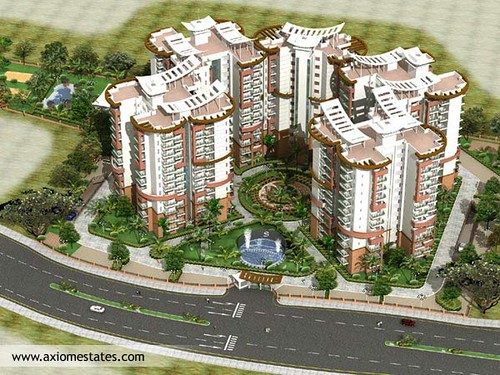
Image credit: Bangalore Properties - Real Estate India - Shriram Symphony by nancyarora2020 via flickr (BY-SA 2.0), sourced through Openverse.
Written by
Rajesh Tiwari
Real estate analyst covering property markets across Delhi NCR, Mumbai, and Bangalore. Rajesh tracks pricing trends, RERA compliance, and investment opportunities for residential and commercial buyers.
Looking for a technology partner?
From IT consulting to virtual office to custom software — eDarpan can help.
Continue reading
Home Prices Up, Rents Steady: Dwarka Buyer vs Renter Math for 2026
Home prices are outpacing salaries in Dwarka. Here's a break-even framework to work out whether renting or buying wins for your numbers, with worked examples and hidden costs.
Tier-2 Cities Up 63% in 5 Years: Where Should You Invest in 2026?
Tier-2 cities have grown up to 63% in five years. Here's how to separate real rental-backed growth from hype before you put ₹80 lakh into property.
Rent or Buy in Noida 2026: Break-Even Math for Indian Homebuyers
Buying in Noida costs far more than the EMI suggests. Here's the break-even math Indian homebuyers need before committing to a flat.