Home Prices Up, Rents Steady: Dwarka Buyer vs Renter Math for 2026
Home prices are outpacing salaries in Dwarka. Here's a break-even framework to work out whether renting or buying wins for your numbers, with worked examples and hidden costs.
Home prices in Delhi-NCR have been climbing faster than most salaries, and if you're a first-time buyer or a small business owner trying to decide where to park your savings, that gap is the whole story. Last year a friend of mine, who runs a 12-person digital agency out of a rented floor in Okhla, told me he'd been "waiting for prices to fall" for three years. In that time, the flat he was eyeing in Dwarka went up by a figure he could have covered with a decent bonus. He wasn't wrong to be cautious. He was wrong to assume that waiting was free.
The question of whether to rent or buy in Dwarka in 2026 is not a moral one, and it isn't a simple yes or no. It's a cash-flow and opportunity-cost calculation that most people do badly, usually by comparing the EMI against the rent and stopping there. That shortcut ignores down payment, stamp duty, maintenance, the rent you'd otherwise have invested, and how long you'll actually live in the place. This post builds a break-even framework you can run on your own numbers, with worked examples, the costs people forget, and the things that quietly change the answer.
By the end you should be able to calculate your own break-even year, know which costs to include and which to skip, and walk into a conversation with a builder or a bank knowing exactly which figure matters. If you want the broader market context first, our piece on Delhi-NCR home prices and the 2026 rent-or-buy question covers the regional picture, and this Dwarka-specific break-even guide goes deeper on sub-locality pricing.
Key Takeaways
- Never compare EMI to rent directly. Compare total cost of ownership over your expected holding period against total cost of renting plus what you invest instead.
- Stamp duty, registration, brokerage, and the GST layer on under-construction flats can add 8 to 12 percent upfront. Budget for it or your break-even year moves out by years.
- The "rent money invested" side of the math is where most calculations go wrong. Be honest about what you'd really invest, and assume the returns are taxed.
- If you expect to move within 5 to 7 years, renting almost always wins in Dwarka. Beyond 10 years, buying with a reasonable down payment usually wins unless prices stagnate.
- Your loan tenure, interest rate, and the price you negotiate matter more than the headline rate. A 0.5 percent rate difference can shift the answer.
What is the real break-even point for renting vs buying a flat in Dwarka?
Break-even is the year when the cumulative cost of owning becomes lower than the cumulative cost of renting plus the returns you'd have earned by investing the difference. Before that year, renting is cheaper. After it, buying pulls ahead, provided prices hold or rise.
The reason people get this wrong is that they treat the EMI as the cost of owning. It isn't. A chunk of each EMI is interest, which is a real cost, but another chunk is principal, which is not a cost at all because you still own that value. Meanwhile, the money you spent on the down payment could have been invested. A proper calculation handles all of this explicitly.
The framework in plain terms
- Total cost of buying = down payment + stamp duty and registration + brokerage and legal + cumulative interest paid + cumulative maintenance and property tax − expected sale value at end of horizon.
- Total cost of renting = cumulative rent paid + cumulative renter's insurance and moving costs (if any).
- Opportunity cost = the return you'd earn investing the down payment (and, for the renter, the monthly difference between EMI-plus-costs and rent) over the same period.
- Compare the two totals at each year. The first year the buyer's position is better is your break-even.
That's the logic. Now let's make it concrete.
Worked example: a ₹1.1 crore flat in Dwarka
Consider a 2 BHK in a mid-segment society in Dwarka Sector 12 priced at ₹1.1 crore, with a comparable rental of ₹38,000 a month. These numbers are illustrative, and you should replace them with quotes from actual listings. Assume you have ₹22 lakh (20 percent) as down payment, you take a ₹88 lakh loan at 8.6 percent over 20 years, and you expect the property to appreciate at 5 percent a year, with rents rising 5 percent a year as well.
Upfront costs most people underestimate
- Stamp duty in Delhi is generally around 6 percent for women buyers and 6 percent for men in many cases, with a registration fee of 1 percent. On a ₹1.1 crore circle rate, that's roughly ₹6.6 lakh stamp duty plus ₹1.1 lakh registration, which is a total near ₹7.7 lakh. Verify the current circle rate and any concession with the registration office, since these change.
- Brokerage typically runs around 1 to 2 percent. On ₹1.1 crore, that's ₹1.1 to ₹2.2 lakh.
- Legal due diligence, title search, and documentation: budget ₹50,000 to ₹1.5 lakh depending on complexity.
- Loan processing fee: often 0.5 to 1 percent of the loan, so around ₹44,000 to ₹88,000.
Add these up and your true upfront outlay is closer to ₹31 to ₹32 lakh, not ₹22 lakh. That single correction pushes break-even out noticeably.
The rent side of the ledger
Here's where the renter's money goes. Each month, the renter pays ₹38,000 in rent. The owner pays an EMI of roughly ₹74,000 on the ₹88 lakh loan at 8.6 percent over 20 years, plus maintenance and property tax. So the owner is paying about ₹36,000 more per month, and that difference, plus the ₹31 lakh that the owner tied up, can be invested by the renter. For the purposes of this model, assume the renter invests the upfront capital and the monthly gap at 9 percent pre-tax, which is a conservative assumption for a balanced portfolio, and keep in mind that equity returns are volatile.
What happens at year 5, year 10, and year 15
Running the numbers roughly, the buyer's cumulative cash outflow is heavy early because of the upfront costs and the front-loaded interest component of the EMI. At year 5, the renter's invested portfolio, having received the ₹31 lakh plus monthly surpluses, is often ahead in net worth terms, even though the buyer's property has appreciated. At year 10, the picture is closer. At year 15 or later, under these assumptions, buying typically wins, because the EMI ends its heavy interest phase, the property value compounds, and rent escalation catches up with the renter.
In this illustrative case, the break-even lands somewhere between year 8 and year 11, depending on appreciation and returns. Change the appreciation assumption to 2 percent and break-even moves past year 15. Change it to 7 percent and it moves closer to year 7. This sensitivity is the entire point of the exercise.
Pro Tip: Run your model three times: a pessimistic case with flat prices and 7 percent returns, a base case, and an optimistic case. If buying only wins in the optimistic case, that's a sign to rent. If it wins in the pessimistic case, you have a genuinely strong buy decision.
How do I calculate my own break-even year without a spreadsheet expert?
You don't need a financial modeling background. A basic spreadsheet with one row per year and the following columns will do it: year, cumulative rent paid, cumulative EMI paid, cumulative interest, cumulative maintenance and tax, property value, loan outstanding, and net equity (property value minus loan outstanding). Then add a column for the renter's invested portfolio, which grows from the upfront capital plus monthly surpluses.
Compare two net-worth lines. For the buyer: property value minus loan outstanding, minus the sunk costs (stamp duty, brokerage, interest and maintenance paid, which are gone). For the renter: the invested portfolio, minus cumulative rent paid. Whichever line is higher at the end of your horizon is the better choice under those assumptions.
The most common error is forgetting that interest and maintenance are sunk costs. Equity is not the same as profit. If you sell in year 6 for a gain of ₹20 lakh on paper, but you've paid ₹35 lakh in interest, stamp duty, and brokerage along the way, you're down, not up.
Comparison: which housing decision fits which buyer?
Not every buyer is the same, and the right answer changes with your situation. The table below compares four common profiles on the criteria that actually drive the decision.
| Profile | Expected stay | Down payment available | Income stability | Likely better choice |
|---|---|---|---|---|
| Early-career professional, job may relocate | 2 to 4 years | Under ₹15 lakh | Variable | Rent, and invest the difference |
| Mid-career family, stable employer in NCR | 7 to 12 years | ₹20 to ₹30 lakh | Stable | Buy, if the price is near market |
| Business owner with cash-flow volatility | Undecided | Large but illiquid | Irregular | Rent, keep liquidity for working capital |
| Investor buying for rental yield | 10+ years | Flexible | Strong | Buy, but model rental yield net of vacancy and tax |
The business owner row deserves emphasis. If your working capital is tied up in receivables and you're one delayed payment from a cash crunch, locking ₹30 lakh into a flat can be the wrong move even when the long-run math favors buying. Liquidity has value that a break-even spreadsheet doesn't capture.
What compliance and tax details should I check before buying in Dwarka?
A few items cause real trouble if overlooked. Check the title chain through the Delhi registration records and the society's no-objection certificates. For under-construction properties under RERA, confirm the project is registered with the Delhi RERA authority and check the registration number against the project. RERA registration protects your deposit and timelines, and it's one of the few reliable early warnings for a stalled project.
On tax, interest on a home loan for a self-occupied property is deductible under Section 24(b) of the Income Tax Act up to ₹2 lakh a year under the old regime, and principal repayment qualifies under Section 80C up to ₹1.5 lakh. These benefits change with tax regime choices and legislation, so confirm the current position with a chartered accountant. If you're buying as an investment, rental income is taxable, and you can claim a standard deduction of 30 percent of net annual value along with municipal taxes and loan interest, subject to the rules in force.
If you're a business owner buying in the company's name, the accounting treatment, depreciation, and GST implications differ significantly. Don't assume your personal case applies. Get this checked before signing.
How do I sanity-check a Dwarka listing price?
Start with recent registered transactions rather than asking prices. Asking prices in NCR often run well above what finally closes, and the gap is widest in slower markets. Compare against two or three recent sales in the same sector and building age, and adjust for floor, facing, parking, and whether the unit is under construction or ready.
Then check rental yield. Divide the annual rent by the price. A yield of 2.5 to 3.5 percent is common for residential property in many Delhi-NCR localities, which means buying at a high price relative to rent will compress your returns and push break-even out. Yield is the single most useful sanity check on whether a price is stretched.
Common Mistake: anchoring on the EMI
Many buyers choose the house whose EMI fits their budget and then rationalise the decision. The EMI tells you whether you can afford the loan, not whether buying beats renting. A property with an affordable EMI can still be a poor purchase if the price is high relative to rent. Always run the break-even model before you commit, not after.
Should a first-time buyer in Dwarka wait for prices to fall?
Waiting is a bet, and you should price it. If you're waiting for a 10 percent correction, you need to know what you'd lose by waiting if prices instead rise 8 percent. Each year of waiting also means another year of rent paid without building equity. A reasonable approach is to set a target price based on your break-even model, not on what you hope the market will do. If the price you can justify hits, buy. If it doesn't, keep renting and keep investing.
Also be realistic about rate cycles. Lower interest rates make EMIs more affordable and can support prices, which can offset some of the benefit of lower rates. Don't expect a rate cut to deliver the price drop you're hoping for.
A practical checklist before you sign anything
- Build a break-even model with pessimistic, base, and optimistic cases.
- Get all upfront costs in writing: stamp duty, registration, brokerage, legal, and loan fees.
- Check RERA registration for under-construction projects and confirm the title chain.
- Compare the price to recent registered transactions and compute the rental yield.
- Confirm your expected stay. If it's under five years, lean toward renting unless the numbers are unusually favourable.
- Keep at least six months of expenses liquid after the down payment. Do not drain your emergency fund.
- Have a chartered accountant review the tax position, especially if buying in a company or as an investment.
- Read the loan agreement for prepayment penalties and floating-rate reset terms.
Frequently asked questions
Is it better to rent or buy in Dwarka in 2026?
It depends on how long you'll stay, the price you can negotiate, and your liquidity needs. Short horizons usually favour renting. Stable buyers planning to stay ten years or more often come out ahead by buying at a sensible price. Run the break-even model with your own numbers before deciding.
What is the break-even period for buying a house?
There's no universal answer. In many realistic scenarios, break-even falls somewhere between seven and eleven years, but it moves considerably with appreciation, interest rates, and returns on invested rent savings. Use a year-by-year model rather than a rule of thumb.
How much down payment do I need to buy a flat in Dwarka?
Lenders typically require at least 10 to 20 percent of the property value depending on the loan amount and the borrower's profile. Remember to add stamp duty, registration, brokerage, and legal costs, which can together reach 8 to 12 percent of the price. Plan for the total outlay, not just the down payment.
Are home loan EMIs better than rent for a salaried employee?
Not necessarily. An EMI includes interest and principal, and only the principal builds equity. Compare the total cost of owning, including interest and maintenance, against the total cost of renting plus what you'd invest. For many salaried employees with strong job security and a long horizon, buying wins. For others, renting and investing the difference is the better path.
Does buying a house give better tax benefits than renting?
Buying can provide deductions on loan interest and principal, but the benefit depends on your tax regime and eligibility. Renters can claim HRA in the old regime if they qualify. Check the current rules with an accountant rather than relying on general statements, since the regime choices have changed.
Should I buy an under-construction flat in Dwarka or a ready one?
Under-construction flats often come at a lower headline price but carry delivery risk and may attract GST on the under-construction component, depending on the structure. Ready-to-move flats cost more upfront but reduce timeline and possession risk. Check the RERA registration, the builder's track record, and the GST treatment before comparing prices.
How do I know if a Dwarka property price is too high?
Compare the asking price with recent registered transactions in the same area, check the rental yield, and compare the price-to-rent ratio against your break-even model. If the price only works under optimistic appreciation assumptions, it's probably too high for your situation.
Where eDarpan fits in
If you'd rather not build the model yourself, eDarpan's property team can help you compare current listings in Dwarka and across Delhi-NCR, and browse properties for sale in India or rental properties if renting is the better fit for now. For business owners who need to set up a registered address for company purchases or GST filings, our virtual office service is one practical option. And if you want a second opinion on your numbers or a structured review of a property deal, get in touch with us or learn more about eDarpan.
The honest answer to whether to rent or buy in Dwarka in 2026 is that the arithmetic decides it, not the mood of the market or the pressure of a neighbour's new flat. Build the model, use honest numbers for every cost, stress-test the assumptions, and be willing to walk away from a price that only works if everything goes right. Done carefully, the decision becomes a sound financial choice rather than a leap of faith, whichever way it lands.
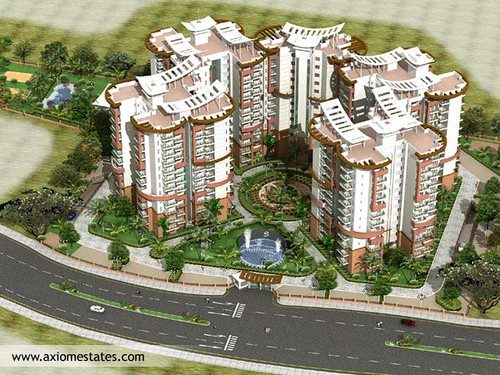
Image credit: Bangalore Properties - Real Estate India - Shriram Symphony by nancyarora2020 via flickr (BY-SA 2.0), sourced through Openverse.
Written by
Rajesh Tiwari
Real estate analyst covering property markets across Delhi NCR, Mumbai, and Bangalore. Rajesh tracks pricing trends, RERA compliance, and investment opportunities for residential and commercial buyers.
Looking for a technology partner?
From IT consulting to virtual office to custom software — eDarpan can help.
Continue reading
Tier-2 Cities Up 63% in 5 Years: Where Should You Invest in 2026?
Tier-2 cities have grown up to 63% in five years. Here's how to separate real rental-backed growth from hype before you put ₹80 lakh into property.
Rent or Buy in Noida 2026: Break-Even Math for Indian Homebuyers
Buying in Noida costs far more than the EMI suggests. Here's the break-even math Indian homebuyers need before committing to a flat.

Hyderabad Property Registrations Fell 15%: What Buyers Should Do Now
Registrations dropped 15% in Hyderabad. Here's how to read the signal and decide whether to buy, rent, or wait, with a practical framework for each buyer type.