Salary-to-EMI Rule: What Income You Need for an ₹80L Home
Chasing an ₹80L flat in Noida or Gurgaon? Here's the real down payment, EMI, and take-home salary you need to buy without a decade of financial stress.
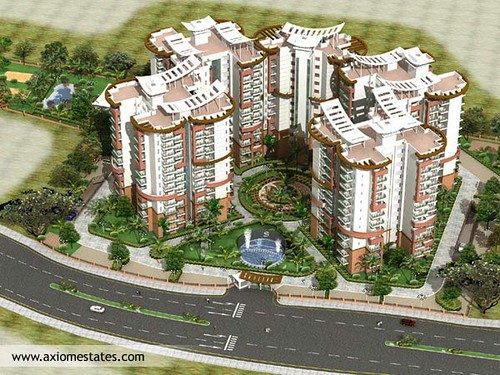
Last month a couple in Sector 150, Noida walked into a builder's sales office expecting to book a 3BHK at ₹80 lakh. Their combined take-home was ₹1.4 lakh a month, and the sales guy told them, "Sir, easily approved, no problem." They almost signed. What nobody told them was that after the EMI, GST on their under-construction flat, the maintenance deposit, and the club charges, they'd be left with about ₹22,000 a month to run a household in NCR. That's not a budget. That's a slow-motion default.
This is the single most common mistake I see when middle-class buyers chase an ₹80 lakh flat in Noida, Greater Noida West, or Gurgaon. They anchor on the sticker price and the EMI the bank is willing to give, not the EMI their life can actually absorb. The gap between "loan approved" and "loan survivable" is where families get trapped for a decade.
So let's do the honest math. In this post I'll break down exactly what income needed to buy home in India at the ₹80 lakh mark really looks like: the down payment you must arrange, the EMI you'll pay, the salary the bank wants, and the very different salary you actually need to sleep at night. I'll use real NCR numbers, a worked case study, and a checklist you can take straight to your lender.
Key Takeaways
- For an ₹80 lakh flat, budget a real all-in cost of ₹92–96 lakh once you add stamp duty, registration, GST (on under-construction), and interiors.
- Banks fund up to 80% of the property value, so plan a down payment of ₹16 lakh plus another ₹8–12 lakh for charges the loan won't cover.
- The EMI on a ₹64 lakh loan (20 years, ~8.75%) is roughly ₹56,500 a month.
- Banks approve if EMI stays under ~50–55% of income, but the safe rule is EMI ≤ 40% of net take-home. That means you want a household net income of around ₹1.4–1.6 lakh/month.
- Keep a 6-month EMI emergency buffer (₹3.4 lakh) separate from your down payment. Do not raid it.
- Fixed retail rates barely exist now; you'll get a floating rate linked to the repo rate, so stress-test your EMI at 2% higher.
What is the salary-to-EMI rule, and why does it matter?
The salary-to-EMI rule is a simple guardrail: the portion of your monthly income that goes toward all loan EMIs should stay within a limit. Banks call their version the FOIR (Fixed Obligation to Income Ratio) or DTI (debt-to-income). Lenders in India will typically stretch FOIR to 50–55% of gross income for salaried applicants with clean records.
Here's the trap. The bank's ceiling is designed to protect the bank, not you. FOIR is calculated on gross income and only counts formal obligations like existing loans and credit card minimums. It does not count your child's school fees, your parents' medical bills, the ₹18,000 rent you'll keep paying until possession, or the SIP you promised yourself you'd never stop.
My working rule for clients, built from watching too many people over-leverage, is this: keep your home EMI at or below 40% of your net (in-hand) monthly income. If you have other EMIs, all of them together should stay under 50% of net. The 40% number leaves room for the real cost of living in NCR and, crucially, for the years when your income doesn't grow the way LinkedIn told you it would.
What does an ₹80 lakh flat in Noida actually cost you?
The advertised price is never the price. On an ₹80 lakh flat, here's what really lands on your bank statement in NCR:
- Base price: ₹80,00,000 (agreement value)
- Stamp duty (UP, ~7%): ₹5,60,000. Note: UP offers a 1% rebate on stamp duty if the property is registered in a woman's name or jointly, which can save you ~₹80,000.
- Registration charges (~1%, capped): around ₹30,000–₹40,000
- GST (only on under-construction): 5% without input credit on non-affordable homes = up to ₹4,00,000. Ready-to-move flats with a completion certificate attract no GST. I've written more on this in GST on under-construction flats and what buyers actually pay in 2026.
- Interest-Free Maintenance Deposit (IFMS), club, and one-time charges: ₹2,00,000–₹3,50,000 depending on the project
- Interiors, modular kitchen, basic furnishing: ₹6,00,000–₹12,00,000 realistically for a livable 3BHK
Add it up and a headline ₹80 lakh flat becomes a real outlay of ₹92–96 lakh before you hang a single curtain. If it's ready-to-move, drop the GST and you're closer to ₹88–92 lakh. This is why the price tag alone tells you almost nothing.
Pro Tip: Register the property jointly with your spouse and claim the woman's-name stamp duty rebate. Beyond the ₹80,000 saving, a co-applicant with income increases your loan eligibility, and both of you can separately claim home loan tax deductions under Section 24(b) and 80C. Two working spouses on one loan is the single biggest eligibility lever most couples ignore.
How much down payment do you need for an ₹80 lakh home?
RBI norms cap the loan-to-value (LTV) ratio. For loans above ₹75 lakh, banks fund up to 75%; below that, up to 80–90%. On an ₹80 lakh property, most lenders sanction on 80% of the agreement value, so:
- Maximum loan: ₹64,00,000
- Down payment (20% of value): ₹16,00,000
- Plus charges the loan won't cover (stamp duty, registration, GST, IFMS): another ₹8–12 lakh
So the cash you need upfront is not ₹16 lakh. It's closer to ₹24–28 lakh. Banks fund the property value, not stamp duty and GST. Buyers routinely forget this and end up scrambling for a personal loan at 14% to cover registration, which is exactly the wrong way to fund your dream home.
What's the EMI on a ₹64 lakh home loan?
Let's run the actual numbers at a realistic 2026 floating rate. Most public and private banks are quoting salaried borrowers somewhere between 8.5% and 9.25% depending on credit score and relationship. I'll use 8.75%.
| Loan Amount | Tenure | Rate | Approx. EMI | Total Interest Paid |
|---|---|---|---|---|
| ₹64,00,000 | 15 years | 8.75% | ₹63,900 | ₹51.0 lakh |
| ₹64,00,000 | 20 years | 8.75% | ₹56,500 | ₹71.6 lakh |
| ₹64,00,000 | 25 years | 8.75% | ₹52,600 | ₹93.7 lakh |
| ₹64,00,000 | 30 years | 8.75% | ₹50,300 | ₹117.2 lakh |
Look at that interest column. Stretching from 20 to 30 years shaves ₹6,200 off your monthly EMI but costs you an extra ₹45 lakh in interest over the life of the loan. The longer tenure is a tempting way to "afford" the flat, but you're mortgaging your fifties to book a flat in your thirties.
My recommendation for the ₹80 lakh buyer: take the 20-year tenure for eligibility comfort, then use annual bonuses to prepay. Even one extra EMI a year knocks roughly 3–4 years off the loan.
What income do you need to buy this home in India, really?
Here's where the salary-to-EMI rule earns its keep. Two numbers matter: the salary the bank wants, and the salary you actually need.
What the bank wants
At a FOIR of 50%, a lender will accept an EMI of ₹56,500 if your net monthly income is around ₹1,13,000 (assuming no other EMIs). That's the "loan approved" number. It's aggressive, and it's why the sales guy in Sector 150 said "no problem."
What you actually need
Apply the 40% rule instead. To keep a ₹56,500 EMI at 40% of take-home, you want a net household income of about ₹1,41,000 a month. Round it up and you're looking at a combined in-hand of ₹1.45–1.6 lakh for a genuinely comfortable ₹80 lakh purchase in NCR.
| Scenario | EMI | Net Income Needed | EMI as % of Income | Comfort Level |
|---|---|---|---|---|
| Bank maximum (FOIR) | ₹56,500 | ₹1,13,000 | 50% | Stretched |
| Safe rule (40%) | ₹56,500 | ₹1,41,000 | 40% | Comfortable |
| Conservative (33%) | ₹56,500 | ₹1,71,000 | 33% | Very safe |
If your combined take-home is below ₹1.4 lakh, an ₹80 lakh flat isn't off the table, but you should either increase your down payment (to reduce the loan) or look at the ₹60–65 lakh range instead. There is no shame in buying the flat you can hold comfortably. The families I've seen thrive are the ones who kept the EMI boring.
Worked example: The Bansal family, Greater Noida West
Let me walk through a real-shaped case (details anonymized). Rohit and Priya Bansal, both salaried, were eyeing a ₹80 lakh 3BHK in Greater Noida West, under construction, possession in 20 months.
- Rohit's take-home: ₹92,000/month (IT project manager)
- Priya's take-home: ₹58,000/month (HR, mid-size firm)
- Combined net: ₹1,50,000/month
- Existing car loan EMI: ₹12,000/month (14 months left)
- Savings available: ₹22 lakh
Their all-in cost worked out to ₹93 lakh (base ₹80L + stamp duty ₹5.6L + registration ₹0.35L + GST ₹4L + IFMS/club ₹3L). Loan sanctioned at 80% = ₹64 lakh. That left them needing ₹29 lakh in cash against ₹22 lakh saved. Gap: ₹7 lakh, plus they'd have zero buffer left.
Here's what we actually did:
- Closed the car loan early using ₹1.5 lakh, freeing up FOIR and removing a ₹12,000 monthly drag before the home EMI kicked in.
- Chose a ready-to-move alternative in the same corridor at ₹78 lakh. This killed the ₹4 lakh GST entirely (completion certificate in hand) and meant no double-outgo of rent-plus-EMI during construction.
- Registered jointly in Priya's name first to claim the 1% UP stamp duty rebate, saving ~₹78,000.
- Deferred interiors to phase two, doing only the essential modular kitchen and two wardrobes for ₹3.5 lakh instead of ₹9 lakh upfront.
New math: all-in ₹85 lakh, loan ₹62 lakh, EMI ~₹54,700 on 20 years. Against their ₹1.5 lakh net (now with no car loan), the EMI sat at 36% of take-home. They kept ₹3.5 lakh as a pure emergency buffer. They moved in without the sword of double outgo hanging over them, and both claimed full tax benefits.
Common Mistake: Buying under-construction to "save money" while continuing to pay rent. You end up paying rent and pre-EMI interest for 18–36 months, plus 5% GST. For a first home where cash is tight, a ready-to-move flat is often cheaper on a total-cost basis even at a slightly higher sticker price. Run both numbers before you decide.
How to prepare before you apply: a practical checklist
Do this in order, ideally three months before you approach a builder:
- Pull your CIBIL score. Anything above 750 gets you the best rate. Below 700, fix it first; a 0.5% rate difference on ₹64 lakh is roughly ₹4 lakh over 20 years.
- Clear or reduce short-term EMIs (car, personal, consumer durable loans). Every ₹10,000 EMI you kill improves your home loan eligibility by roughly ₹11–12 lakh.
- Build the full cash pool: down payment + charges + a 6-month EMI buffer. For this deal that's ₹16L + ₹10L + ₹3.4L.
- Get pre-approved from two lenders so you can negotiate. Loan sanction letters are also leverage with the builder.
- Verify the title and approvals. Check the RERA registration number on the UP-RERA portal. Understand the paperwork; our explainer on sale deed vs agreement to sell is worth ten minutes of your time.
- Stress-test the EMI at a rate 2% higher. If ₹56,500 becomes ₹64,000 and your household still functions, you're safe.
If you're weighing whether to buy at all versus renting for now, browse current listings and rental yields side by side on eDarpan Properties. You can compare flats for sale across Indian cities against rental options in the same locality to see whether an ₹80 lakh purchase or a ₹28,000 rent makes more sense for your stage of life.
Should you even buy, or invest differently?
Not every ₹80 lakh belongs in a self-occupied flat. If this is primarily an investment rather than a home, the math changes. Rental yields in NCR hover around 2.5–3%, which is below your home loan rate, so you'd be running a negative carry hoping capital appreciation bails you out. For pure investors, it's worth reading REITs vs direct property and where Indian investors actually win in 2026 before locking ₹64 lakh of debt into a single asset.
And if you're an NRI comparing markets, the pull of Gulf real estate is real. Our guide to Indians buying Dubai property versus investing at home lays out the tax and currency trade-offs honestly.
Frequently asked questions
What salary is needed for an 80 lakh home loan in India?
For a ₹64 lakh loan (80% of an ₹80 lakh property) at around 8.75% over 20 years, the EMI is roughly ₹56,500. Banks approve this at a net income near ₹1.13 lakh, but for comfort you want a household take-home of ₹1.4–1.6 lakh per month so the EMI stays at 40% or less of your income.
How much down payment is needed for an 80 lakh flat?
Plan for at least ₹16 lakh (20% of value), since banks cap the loan at 75–80% for properties in this range. Add another ₹8–12 lakh for stamp duty, registration, GST on under-construction flats, and maintenance deposits, so your real upfront cash requirement is closer to ₹24–28 lakh.
Is a 30-year home loan a good idea to reduce EMI?
It lowers your monthly EMI by a few thousand rupees but massively increases total interest. On ₹64 lakh, moving from a 20-year to a 30-year tenure adds around ₹45 lakh in interest. Take a shorter tenure if eligibility allows, and use prepayments to shorten it further.
Do I pay GST on a ready-to-move flat?
No. GST applies only to under-construction property, at 5% for non-affordable homes (1% for affordable). A ready-to-move flat that already has a completion certificate attracts no GST, which can save you ₹4 lakh on an ₹80 lakh purchase.
Can two spouses combine income for a home loan?
Yes, and it's one of the smartest moves. A co-applicant's income raises your eligibility, both borrowers can claim separate tax deductions under Sections 24(b) and 80C, and in states like UP registering in a woman's name earns a stamp duty rebate.
What credit score do I need for the best home loan rate?
Aim for a CIBIL score above 750. Below 700, lenders either reject the application or price it 0.5–1% higher, which on a ₹64 lakh loan can mean several extra lakhs over the tenure. Check and fix your score at least three months before applying.
Should I buy an under-construction flat or ready-to-move?
If cash is tight, ready-to-move is often cheaper on total cost because it avoids the 5% GST and the burden of paying rent plus pre-EMI during construction. Under-construction can make sense if the price gap is large and you don't have parallel rent to pay.
The bottom line
The real income needed to buy home in India at the ₹80 lakh level in NCR isn't the number the bank will approve, it's the number that lets your family live without counting rupees on the 25th of every month. For a comfortable ₹80 lakh purchase, aim for a household net income of ₹1.4–1.6 lakh, arrange ₹24–28 lakh in cash, keep the EMI at or below 40% of take-home, and hold a six-month buffer you never touch. Get those four right and the flat becomes an asset, not an anchor.
If you'd like a second pair of eyes on the numbers or help shortlisting the right property and locality across NCR, eDarpan Properties works with buyers on exactly this kind of realistic budgeting. Reach out through our contact page and we'll help you set a budget you can actually live with, not just one a bank will sign off on.
Image credit: Bangalore Properties - Real Estate India - Shriram Symphony by nancyarora2020 via flickr (BY-SA 2.0), sourced through Openverse.
Written by
Rajesh Tiwari
Real estate analyst covering property markets across Delhi NCR, Mumbai, and Bangalore. Rajesh tracks pricing trends, RERA compliance, and investment opportunities for residential and commercial buyers.
Looking for a technology partner?
From IT consulting to virtual office to custom software — eDarpan can help.
Continue reading
Rent or Buy in Noida 2026: Break-Even Math for Indian Homebuyers
Buying in Noida costs far more than the EMI suggests. Here's the break-even math Indian homebuyers need before committing to a flat.
Hyderabad Property Registrations Fell 15%: What Buyers Should Do Now
Registrations dropped 15% in Hyderabad. Here's how to read the signal and decide whether to buy, rent, or wait, with a practical framework for each buyer type.
Rent or Buy in Dwarka Under 2026 Rate Cuts? Break-Even Guide
Buying looks cheaper than renting only when you count the full cost of ownership. This break-even guide shows Dwarka buyers how to compare the real numbers.