GST on Under-Construction Flats: What Buyers Actually Pay in 2026
A Pune buyer nearly overpaid ₹4.7 lakh in tax. Here's exactly how GST on under-construction property works in 2026, with real numbers and rates.
Last month a client in Pune forwarded me his builder's demand letter. He was buying a 2BHK for ₹68 lakh in an under-construction project, and the builder had slapped 12% GST on the entire amount. That's ₹8.16 lakh in tax. When I pointed out the correct rate was 5% with no input tax credit, the builder's accountant went quiet, then blamed "old software." The buyer had almost paid ₹4.7 lakh extra because nobody in that sales office understood their own tax structure.
This happens more often than you'd think. Ever since the GST Council overhauled real estate rates in April 2019, there's been widespread confusion about who pays what. Builders quote different numbers, some still reference pre-2019 rates, and buyers rarely get a straight explanation. The gap between the 1% affordable-housing rate and the 5% standard rate can mean lakhs of rupees on a single flat, and getting the ready-to-move exemption wrong can cost even more.
This post breaks down exactly how GST on under-construction property works in 2026, with real numbers you can plug your own purchase into. You'll learn the 1% versus 5% split, why input tax credit disappeared and what that means for your price, when GST becomes zero, and how to catch a builder who's overcharging you.
Key Takeaways
- Under-construction flats attract 5% GST (standard) or 1% GST (affordable housing), both without input tax credit, effective April 2019.
- Ready-to-move flats with a completion certificate carry zero GST. This is the single biggest lever on your tax bill.
- Affordable housing means carpet area up to 60 sq m in metros / 90 sq m in non-metros, and value up to ₹45 lakh. Both conditions must be met.
- GST is charged on the property value, not on stamp duty or registration, which are separate state levies.
- Builders cannot pass on 12% or 18% rates on residential units anymore. If you see those, question it in writing.
- Always demand a GST-compliant tax invoice with the builder's GSTIN and the applicable rate clearly stated.
Why is GST so confusing on under-construction flats?
The confusion is historical. Before April 1, 2019, residential real estate attracted 12% GST (effectively, after a one-third land deduction from the headline 18%) for standard homes and 8% for affordable housing. Crucially, builders could claim input tax credit (ITC) on the cement, steel, tiles, contractor invoices and other GST they paid during construction, and were supposed to pass that benefit to buyers.
In practice, that pass-through rarely happened cleanly. The anti-profiteering complaints piled up. So the GST Council introduced a new structure: lower headline rates of 5% and 1%, but with ITC completely removed. Simpler for buyers to understand, but it changed the underlying economics for builders, who now bake their un-creditable input tax into the base price.
The result is a market where three regimes coexist in buyers' minds: pre-2019 rates, the new rates, and outright exemption for completed flats. Sales teams often don't distinguish between them, and that's where overcharging creeps in. Understanding the timeline is the first defence.
What GST rate applies to under-construction property in 2026?
Here's the clean version that applies to any residential purchase in 2026 where you're buying before the building receives its completion certificate or occupancy certificate.
- Affordable housing: 1% GST, no ITC.
- Other residential (non-affordable): 5% GST, no ITC.
- Commercial units in a residential project (up to 15% of area): 5% GST, no ITC.
- Ready-to-move with completion/occupancy certificate: 0% GST.
The 1% versus 5% distinction hinges on the definition of affordable housing, and this trips up a lot of buyers. A unit qualifies as affordable only when both of these are true:
- Carpet area is up to 60 square metres (about 645 sq ft) in metro cities, or up to 90 square metres (about 968 sq ft) in non-metro cities.
- Gross value is up to ₹45 lakh.
Metros here mean Bengaluru, Chennai, Delhi NCR (Delhi, Noida, Greater Noida, Ghaziabad, Gurugram, Faridabad), Hyderabad, Kolkata and Mumbai (the whole MMR). Everywhere else is non-metro for this rule.
Note the ₹45 lakh cap is on the total consideration, and it's a hard ceiling. A flat priced at ₹45.5 lakh does not get the 1% rate even if it's tiny. It jumps straight to 5%. I've seen builders in Tier-2 cities price units at ₹44.9 lakh specifically to keep them inside the affordable bracket, which is a legitimate and buyer-friendly move.
How does the removal of input tax credit affect what I actually pay?
This is the part most buyers never think about, and it matters. The 5% rate looks lower than the old 12%, but the builder can no longer offset the GST they paid on materials and services. That un-recovered input tax gets absorbed into the base price of the flat.
So when you compare a 2018 launch at 12%-with-ITC against a 2026 launch at 5%-without-ITC, you're not comparing apples to apples. The base prices are constructed differently. What the new regime gives you is certainty: you know your tax outgo is exactly 5% (or 1%) of the agreement value, with no murky "ITC benefit passed on" adjustments that were impossible to verify.
Pro Tip: If a builder tells you they're "passing on ITC savings" on a project registered after April 2019, be sceptical. Post-2019 residential projects at 1% or 5% have no ITC to pass on. That language is either outdated boilerplate or a soft-sell tactic. Ask them to show the tax structure in writing on the allotment letter.
What does this look like in real rupees? A worked example
Let me run the Pune case I opened with, plus a couple of variations so you can see the pattern.
Case: 2BHK in an under-construction project, Wakad, Pune. Agreement value ₹68,00,000. This is a non-metro for the affordable definition (Pune isn't on the metro list), but the value exceeds ₹45 lakh, so it's not affordable housing. Correct rate: 5%.
- Correct GST at 5%: ₹3,40,000
- Builder's wrong quote at 12%: ₹8,16,000
- Overcharge: ₹4,76,000
Nearly ₹4.76 lakh, on a single flat, from one line item being wrong. When the buyer pushed back with the notification reference, the builder corrected it. Had he not questioned it, that money was gone.
Now compare the same buyer's cost across scenarios:
| Scenario | Property Value | Category | GST Rate | GST Payable |
|---|---|---|---|---|
| Under-construction 1BHK, Nagpur | ₹42,00,000 | Affordable (non-metro, <90 sqm, <₹45L) | 1% | ₹42,000 |
| Under-construction 2BHK, Pune | ₹68,00,000 | Non-affordable residential | 5% | ₹3,40,000 |
| Under-construction 3BHK, Bengaluru | ₹1,20,00,000 | Non-affordable residential | 5% | ₹6,00,000 |
| Ready-to-move 2BHK with OC, Pune | ₹68,00,000 | Completed, OC received | 0% | ₹0 |
| Resale flat (secondary market) | Any | Not a supply under GST | 0% | ₹0 |
Look at the bottom two rows. The exact same Pune 2BHK carries ₹3.4 lakh in GST if bought under-construction and ₹0 if you buy it after the occupancy certificate is issued. That's the biggest single decision affecting your tax bill, and I'll come back to it.
When is GST zero on a flat, and how do I confirm it?
GST does not apply to the sale of a completed property. The trigger is the completion certificate (CC) or occupancy certificate (OC) issued by the competent local authority. Once that's issued and you buy the flat, the transaction is treated as a sale of immovable property, which falls outside GST. You only pay stamp duty and registration.
Same logic applies to resale flats in the secondary market. If you buy from an existing owner rather than the builder, there's no GST, regardless of whether the building is new. GST attaches to the builder's supply of an under-construction unit, not to a person reselling their home.
To confirm a flat is genuinely GST-free, do this:
- Ask the builder for a copy of the occupancy certificate or completion certificate, with its date and issuing authority.
- Cross-check that the certificate covers your specific tower and wing, not just phase 1 of a large township.
- Verify the date is before your agreement date. If you booked while under-construction and paid instalments before the OC, GST applies to those instalments even if possession comes later.
- For added assurance, check the project status on your state RERA portal (MahaRERA, K-RERA, UP-RERA and so on).
Common Mistake: Buyers assume "possession-ready" or "ready to move" in the ad means zero GST. Those are marketing phrases. The legal trigger is the completion or occupancy certificate. A flat can be physically finished and habitable yet still legally under-construction because the builder hasn't obtained the OC. In that state, GST at 5% or 1% still applies. Always ask to see the certificate before you accept a zero-GST claim.
How do I check whether my builder is charging GST correctly?
Treat this like a compliance audit on your own purchase. Here's the step-by-step I give clients before they sign anything.
- Confirm the category. Check carpet area (in sq m, not the inflated super built-up figure) and total value against the affordable thresholds. This decides 1% vs 5%.
- Confirm the construction status. Under-construction (no OC/CC) means GST applies. Completed with OC means zero. Get documentary proof either way.
- Get the builder's GSTIN. A legitimate builder charging GST must have a valid GST registration. Verify the 15-digit GSTIN on the GST portal's "Search Taxpayer" tool. No valid GSTIN, no legitimate GST charge.
- Demand a tax invoice, not just a receipt. It must show the GSTIN, the rate applied, the taxable value, and the CGST/SGST split.
- Check that GST is calculated on the right base. It applies to the agreement value of the unit. It should not be applied on stamp duty, registration charges, or on the pure land component where separately identified.
- Watch the instalment schedule. GST is charged on each construction-linked instalment as it's raised. Confirm every demand letter uses the correct rate.
- Keep every invoice. If a dispute arises, your paper trail is what protects you.
Buyers who go through this checklist tend to catch problems early. And if you're weighing whether to buy under-construction at all, our breakdown of Pune's ₹92,000 Cr unsold inventory is worth a read, since that glut is exactly why so many ready-to-move (and therefore GST-free) options exist right now.
What other charges get confused with GST?
Plenty of buyers lump every tax and fee into one mental bucket. They're separate, and each has its own rules.
- Stamp duty: A state levy on the registration of the sale document, typically 5% to 7% depending on the state and buyer gender. Payable on both under-construction and ready-to-move purchases. This is not GST.
- Registration charges: Usually around 1% of value, capped in some states. Also a state charge, separate from GST.
- Preferential location charges, floor rise, parking, club membership: These form part of the composite supply and typically attract the same 5% or 1% GST as the unit when charged by the builder before completion.
- Maintenance deposits and society charges: Treated separately, with their own GST implications once the society takes over.
Because GST and stamp duty behave differently across under-construction versus ready flats, understanding your purchase paperwork matters. If you're unclear on the documents themselves, our guide on Sale Deed vs Agreement to Sell explains which document triggers what, and when.
Under-construction vs ready-to-move: the real cost comparison
The 5% GST on under-construction is real money, but don't optimise for tax alone. Under-construction flats are usually priced 10% to 20% below comparable ready inventory, and offer construction-linked payment plans that ease cash flow. Ready flats cost more upfront but carry zero GST, zero construction risk, and immediate rental or occupancy potential.
Run both scenarios fully. On our ₹68 lakh Pune example, the under-construction route adds ₹3.4 lakh GST but might save ₹8 to ₹12 lakh on base price versus a ready unit in the same locality. In that case, under-construction still wins on total outgo even after tax, provided the builder is credible and the RERA timeline is sound.
The math flips when ready inventory is discounted (as in oversupplied micro-markets) or when the builder has a shaky delivery record. If you're comparing markets, our analysis of Chandigarh property prices in 2026 and the trade-off between buying Dubai property versus investing at home can help frame the broader decision.
How eDarpan can help you buy right
At eDarpan we help buyers cut through exactly this kind of confusion. Whether you're comparing properties for sale across Indian cities, exploring rental options, or evaluating a specific builder's tax and pricing structure, our real estate team can sanity-check the numbers before you commit lakhs of rupees.
And if you're a business rather than an individual buyer, GST touches far more than property. We help SMBs get their compliance footing right, from a virtual office address for GST and company registration to broader IT and process consulting. Have a specific question on a builder's demand letter? Reach out to us and we'll help you read it correctly.
Frequently Asked Questions
Is GST applicable on under-construction flats in 2026?
Yes. Under-construction residential flats attract 5% GST (standard) or 1% GST (affordable housing), both without input tax credit. GST applies to each construction-linked instalment raised before the building receives its completion or occupancy certificate.
Do I have to pay GST on a ready-to-move flat?
No. If the flat has received its completion certificate or occupancy certificate before you buy it, there is zero GST. You only pay stamp duty and registration charges. The same applies to resale flats bought from an existing owner.
What is the GST rate on affordable housing?
Affordable housing attracts 1% GST with no input tax credit. To qualify, the carpet area must be up to 60 sq m in metros or 90 sq m in non-metros, and the total value must not exceed ₹45 lakh. Both conditions must be satisfied.
Is GST charged on stamp duty and registration?
No. Stamp duty and registration are separate state-level charges and are not subject to GST. GST is levied only on the property's agreement value when it is an under-construction supply from the builder.
Can a builder charge 12% GST on a residential flat?
Not for projects following the current regime. Residential under-construction units are charged at 1% or 5% without ITC since April 2019. If a builder quotes 12% or 18% on a home, ask for the notification reference in writing, because in most cases it is an error or overcharging.
Do I pay GST on resale property in India?
No. Resale of a flat in the secondary market is a sale of immovable property between individuals and falls outside GST. You will still owe stamp duty and registration on the transaction, but no GST.
How do I verify my builder's GST charge is legitimate?
Ask for the builder's 15-digit GSTIN and verify it on the GST portal's Search Taxpayer tool, then demand a proper tax invoice showing the rate, taxable value and CGST/SGST split. Confirm the construction status via the OC and your state RERA portal to ensure the rate matches the property's category.
The bottom line
The rules on GST on under-construction property are actually simpler than the market makes them out to be: 5% standard, 1% affordable, zero on completed and resale flats, and no ITC in either case. The complexity you encounter usually comes from sales teams working off outdated numbers or hoping you won't check. Now you can check.
Before you sign a single demand letter, run your flat through the checklist: confirm the category, confirm the construction status, verify the GSTIN, and insist on a compliant tax invoice. On a mid-range flat, getting this right protects anywhere from ₹40,000 to over ₹4 lakh. That's not a rounding error, it's a down payment on your interiors. When in doubt, talk to our team before the money leaves your account.
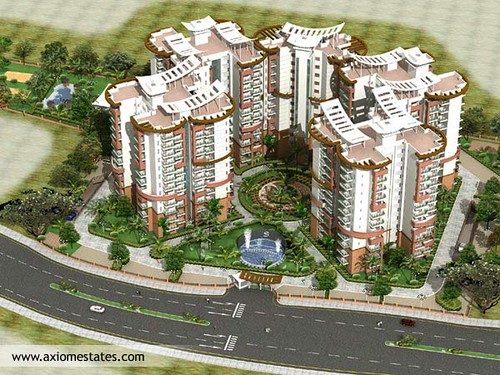
Image credit: Bangalore Properties - Real Estate India - Shriram Symphony by nancyarora2020 via flickr (BY-SA 2.0), sourced through Openverse.
Written by
Rajesh Tiwari
Real estate analyst covering property markets across Delhi NCR, Mumbai, and Bangalore. Rajesh tracks pricing trends, RERA compliance, and investment opportunities for residential and commercial buyers.
Looking for a technology partner?
From IT consulting to virtual office to custom software — eDarpan can help.
Continue reading
Senior Living in India 2026: Buying a Retirement Home in Tier-2 Cities
Choosing a retirement home in India means balancing healthcare access, accessibility and true costs. This guide covers buying vs renting and checks for Tier-2 cities.
Housing Sales Fall in 7 Cities: Should You Buy, Rent or Wait in 2026?
Housing sales are softening across seven Indian cities. Here's how to read the slowdown, weigh total ownership cost, and decide whether to buy, rent, or wait.
Rent vs Buy in Delhi-NCR 2026: A Break-Even Calculator Guide
Renting or buying in Delhi-NCR? Use this break-even framework, with a worked example, to decide with numbers instead of gut feel before 2026.