₹2 Crore for a 2BHK? Buy vs Rent Math for Delhi-NCR in 2026
A ₹2 crore 2BHK costs ₹4.16 crore after interest, while rental yields stay near 2.5%. Here's the real buy vs rent math for Delhi-NCR in 2026.
Last month a couple in their early thirties walked me through their dilemma over coffee in Sector 50, Noida. Both software engineers, combined take-home around ₹2.4 lakh a month, sitting on ₹40 lakh in savings. They had been shortlisting 2BHK flats and the good ones in Noida and Gurgaon were quoting ₹1.8 crore to ₹2.2 crore. The builder's sales agent had told them, with a straight face, that "rent is money down the drain." They wanted to know if buying made sense or if they were about to make the most expensive emotional decision of their lives.
Here is the number that stopped them cold: a ₹2 crore flat financed at 8.5% over 20 years means you pay back roughly ₹4.16 crore. The interest alone, ₹2.16 crore, is more than the flat's sticker price. Meanwhile that exact flat often rents for ₹40,000 to ₹50,000 a month, which works out to a rental yield of barely 2.5% to 3%. Anything below 3% should make a buyer pause and run the math properly.
This post is the framework I actually use when clients ask me the buy vs rent Delhi NCR question. No "real estate always goes up" platitudes. Just a break-even model, a worked example with real Delhi-NCR numbers, and a checklist you can apply this weekend.
Key Takeaways
- Delhi-NCR 2BHK rental yields sit around 2.5–3%, which is the single biggest argument in favour of renting when home loan rates are 8.5%+.
- The real cost of buying isn't EMI alone. Add stamp duty, registration, maintenance, property tax, and the opportunity cost of your down payment.
- The break-even point for most Delhi-NCR 2BHKs in 2026 is roughly 7–9 years. Stay longer and buying usually wins; move sooner and renting plus investing the difference wins.
- If you rent and disciplinedly invest the EMI-minus-rent gap into equity, you often beat property appreciation over a 10-year horizon.
- Location matters more than the buy-vs-rent debate itself. A flat near the upcoming Noida International Airport behaves very differently from one in a saturated micro-market.
- Buy for stability and family roots; rent-and-invest for capital efficiency. Both are valid, but the agent's "rent is waste" line is mathematically lazy.
Why is a 2BHK in Delhi-NCR costing ₹2 crore in 2026?
It helps to understand what you're actually paying for before deciding whether to pay it. A few forces have stacked up over the last three years.
Construction input costs went up sharply. Cement, steel, and labour all rose post-2022, and the GST structure on real estate (1% for affordable, 5% for non-affordable, both without input tax credit) keeps developer margins tight, which gets passed to buyers. Premium developers like DLF, Godrej Properties, M3M, and Sobha have leaned heavily into the luxury and "branded" segment in Gurgaon and Noida because that's where the demand and pricing power sit. A genuine budget 2BHK has nearly vanished from prime sectors.
Then there's the carpet-area sleight of hand. The ₹2 crore "2BHK" is often quoting super built-up area, while the actual usable carpet area might be 30–35% smaller. If you don't know the difference, you overpay per usable square foot without realising it. I'd strongly suggest reading our breakdown on carpet vs built-up vs super built-up area before you sign anything, because this single concept changes the effective price you're paying.
Infrastructure speculation is the third driver. The corridors around the Noida International Airport at Jewar have seen prices run up on the promise of connectivity. Some of that is real; some is froth. Knowing which is which is half the battle.
What does buying a ₹2 crore flat really cost?
EMI is the number everyone fixates on. It's also the most misleading, because it hides four other costs.
Let's build the full picture for a ₹2 crore flat with a 20% down payment (₹40 lakh) and a ₹1.6 crore loan at 8.5% over 20 years.
- EMI: roughly ₹1,38,800 per month, totalling about ₹3.33 crore over 20 years on the loan portion.
- Stamp duty and registration: in Uttar Pradesh (Noida/Greater Noida) stamp duty is 7%, with a 1% rebate if the property is registered in a woman's name, plus registration around 1%. On ₹2 crore that's roughly ₹14–16 lakh upfront. In Haryana (Gurgaon) it's typically 5–7% depending on jurisdiction and gender.
- Society maintenance: ₹4,000–₹8,000 a month in most NCR societies, often rising annually. Call it ₹6,000 average, around ₹72,000 a year.
- Property tax: modest in NCR compared to metros, but budget ₹10,000–₹20,000 a year.
- Opportunity cost of the down payment: that ₹40 lakh plus ₹15 lakh in registration costs, roughly ₹55 lakh, could compound elsewhere. At a conservative 11% equity return, ₹55 lakh becomes about ₹1.56 crore in 10 years.
That last point is the one buyers almost never compute, and it's the heart of the buy vs rent Delhi NCR argument.
Common Mistake: People compare EMI directly to rent. "My EMI is ₹1.38 lakh and rent is ₹45,000, so renting is cheaper" — wrong on both ends. Part of your EMI builds equity (the principal), and you must add maintenance, tax, and opportunity cost to the buy side. Compare total monthly outflow plus forgone investment returns, not EMI versus rent.
Buy vs rent Delhi NCR: a 10-year worked example
Let me run the actual numbers for the Noida couple I mentioned. Same ₹2 crore flat. Two paths, ten-year horizon.
Path A: They buy
- Upfront: ₹40 lakh down payment + ₹15 lakh stamp duty/registration = ₹55 lakh.
- Monthly: ₹1,38,800 EMI + ₹6,000 maintenance + ₹1,250 tax = ₹1,46,050.
- Over 10 years they pay roughly ₹1.66 crore in EMIs, of which about ₹45 lakh is principal repaid (the rest is interest).
- Outstanding loan after 10 years: roughly ₹1.15 crore.
- Property value if it appreciates at 5% annually: ₹2 crore grows to about ₹3.26 crore.
- Net equity at year 10: ₹3.26 crore minus ₹1.15 crore outstanding = ₹2.11 crore. Subtract 2% selling cost if they exit, leaving roughly ₹2.04 crore.
Path B: They rent and invest the difference
- Rent: ₹45,000/month, rising 7% a year (a realistic NCR escalation).
- They invest the ₹55 lakh upfront into a diversified equity portfolio.
- Each month they invest the gap between the buyer's total outflow (₹1,46,050) and their rent into the same portfolio.
- Assume 11% annual equity returns, which is conservative for a 10-year SIP horizon in Indian markets.
- The ₹55 lakh lump sum alone grows to about ₹1.56 crore in 10 years.
- The monthly gap (large in early years, shrinking as rent rises) adds roughly ₹95 lakh–₹1.1 crore more.
- Net portfolio at year 10: roughly ₹2.5–2.6 crore, liquid and diversified.
On these assumptions, renting and investing edges ahead by ₹40–50 lakh over ten years, and the renter's money is liquid. But notice how sensitive this is. If property appreciates at 8% instead of 5%, buying wins comfortably. If equity returns disappoint at 8% instead of 11%, buying wins. The decision lives entirely in those two assumptions.
| Factor | Buying a ₹2 Cr 2BHK | Renting + Investing |
|---|---|---|
| Upfront cash needed | ₹55 lakh (down + stamp duty) | ₹2–3 lakh (deposit) |
| Monthly outflow (year 1) | ~₹1,46,000 | ₹45,000 rent + investing the rest |
| 10-year net worth (5% property / 11% equity) | ~₹2.04 crore | ~₹2.5 crore |
| Liquidity | Low (asset is illiquid) | High (can redeem in days) |
| Flexibility to relocate | Low | High |
| Emotional / family stability | High | Lower (landlord risk, moving) |
| Tax benefit | 80C (₹1.5L principal) + 24(b) (₹2L interest) | HRA exemption if salaried |
When does buying actually win in Delhi-NCR?
The model isn't an argument against buying. It's an argument against buying carelessly. Buying clearly wins in a few situations.
- You'll stay 8+ years. The break-even on most NCR 2BHKs lands around years 7–9. Beyond that, the equity build-up and amortised transaction costs tilt toward owning.
- You're disciplined about ownership but not about investing. Plenty of people will pay an EMI religiously but never actually invest the "difference" if they rent. For them a home is forced savings, and that has real value.
- You're buying in a genuine growth corridor. Property near actually-under-construction infrastructure can appreciate faster than the 5% I modelled. The areas around Jewar airport and along the Mumbai-Ahmedabad bullet train corridor are worth studying for this reason, though you must separate hype from committed timelines.
- You secured a sub-8% rate or a builder subvention. Even half a percent on a ₹1.6 crore loan shifts the math meaningfully.
If you're leaning toward buying, our guide on why big developers are flocking to Delhi-NCR covers which micro-markets have genuine supply discipline versus which are oversupplied. And when you're ready to actually shortlist, you can browse vetted properties for sale across India through eDarpan rather than relying on a single broker's inventory.
How do I run the buy vs rent math for my own situation?
Here's the step-by-step process I take clients through. You can do this in an afternoon with a spreadsheet.
- Get the real rental yield. Find the actual monthly rent for the exact flat or an identical one in the same society. Multiply by 12, divide by the purchase price. If it's below 3%, the market is pricing in appreciation that may or may not happen.
- Build the full buy-side outflow. EMI + maintenance + property tax + an annual repairs buffer (₹15,000–₹25,000). Don't forget the one-time stamp duty and registration.
- Compute the opportunity cost. Take your down payment plus all transaction costs and grow it at a return you genuinely believe you can earn. Be honest. If you won't actually invest, use a low number.
- Model both paths over your real holding period. Not 20 years if you'll likely move in 6. Use your horizon.
- Stress-test the assumptions. Run property appreciation at 4%, 6%, and 8%. Run equity at 8%, 10%, and 12%. See which path wins in which scenario. If buying only wins in the optimistic property case, that tells you something.
- Add the non-financial factors. Stability, school proximity, the freedom to renovate, landlord hassles. Put a rough rupee value on what matters to you.
Pro Tip: Before you finalise any purchase, get the society's last three years of maintenance escalation and the sinking-fund balance from the RWA. A society that's hiking maintenance 15% a year or has a depleted sinking fund will quietly erode your returns. This data is freely available if you ask; most buyers never do.
What about renting smartly while you build your capital?
If the math points you toward renting for now, do it deliberately. Negotiate a longer lease (24–36 months) to lock your escalation. Keep your security deposit reasonable (two to three months is standard in NCR; some landlords demand more, push back). Document everything in a registered rent agreement, because an unregistered one over 11 months has weak legal standing.
Then actually invest the difference. The whole rent-and-invest case collapses if that gap leaks into lifestyle inflation. Set up an automatic SIP on the same date your EMI would have hit so you never see the money as spendable. You can find well-located rental homes across Indian cities through eDarpan, and the team can help you weigh a specific rental against buying in the same locality.
FAQ: Buy vs Rent in Delhi-NCR
Is it better to buy or rent a 2BHK in Noida in 2026?
If you'll stay eight years or more and you're not a disciplined investor, buying usually wins through forced equity build-up. If you'll move within five to six years or you'll genuinely invest the difference into equity, renting tends to win on these price-to-rent ratios. Run your own horizon, don't use a generic answer.
What is a good rental yield in Delhi-NCR?
Residential rental yields in Delhi-NCR currently hover around 2.5–3% for 2BHK flats. Anything above 3.5% is attractive and rare for residential property. Commercial and co-living assets yield more but carry different risks.
How much do stamp duty and registration cost in Noida and Gurgaon?
In Uttar Pradesh (Noida, Greater Noida) stamp duty is 7%, with a 1% rebate for registration in a woman's name, plus around 1% registration. In Haryana (Gurgaon) it ranges roughly 5–7% depending on jurisdiction and gender. On a ₹2 crore flat, budget ₹12–16 lakh.
Can I claim tax benefits on a home loan in India?
Yes. Under the old tax regime you can claim up to ₹1.5 lakh of principal under Section 80C and up to ₹2 lakh of interest under Section 24(b) for a self-occupied property. These benefits are largely unavailable under the new regime, so factor in which regime you're on before counting tax savings.
Does property always appreciate faster than the stock market in India?
No. Over the last decade, broad Indian equity indices have generally outperformed average residential real estate appreciation, especially after accounting for transaction costs and illiquidity. Specific high-growth corridors can beat equities, but the average flat in a saturated market often doesn't.
What is the break-even point for buying a home in Delhi-NCR?
For most NCR 2BHKs at current prices and loan rates, the break-even versus renting falls around seven to nine years. This is the point where accumulated ownership equity overtakes what you'd have built by renting and investing the difference.
Should I buy near the Noida International Airport for appreciation?
The Jewar airport corridor has real long-term potential, but prices in some pockets have already run ahead of fundamentals. Buy there if you believe in a 10-year horizon and you've verified the specific project's connectivity and approvals, not on speculation alone.
The bottom line on buy vs rent Delhi NCR
There's no universal answer, and anyone who gives you one, whether a builder's agent or a "rent is throwing money away" relative, is selling you a feeling, not a calculation. The honest answer for a ₹2 crore Delhi-NCR 2BHK in 2026 is: it depends on your holding period, your discipline as an investor, and the specific micro-market. Run the model, stress-test the assumptions, and let the numbers and your life plans decide together.
At eDarpan we built our property advisory practice precisely because so many buyers were making seven-figure decisions on gut feel. Whether you're comparing specific listings, weighing a rental against a purchase in the same locality, or just want a second opinion on a builder's quote, our team can help you run the real numbers. Reach out to us and we'll walk through your scenario, no sales pressure, just the math. You can also learn more about how we work before you do.
Buy if it gives you roots and you'll stay. Rent and invest if you value flexibility and you'll stay disciplined. Just make sure that whichever you choose, you chose it with a spreadsheet open and not because someone told you rent is money down the drain.
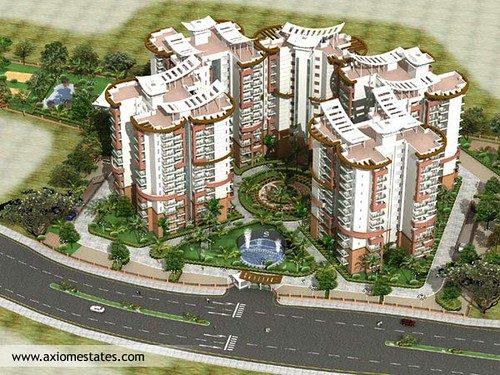
Image credit: Bangalore Properties - Real Estate India - Shriram Symphony by nancyarora2020 via flickr (BY-SA 2.0), sourced through Openverse.
Written by
Rajesh Tiwari
Real estate analyst covering property markets across Delhi NCR, Mumbai, and Bangalore. Rajesh tracks pricing trends, RERA compliance, and investment opportunities for residential and commercial buyers.
Looking for a technology partner?
From IT consulting to virtual office to custom software — eDarpan can help.
Continue reading
NRI Property Buying in India 2026: Rules, Taxes & Repatriation
NRI property buying in India made clear: FEMA rules, NRE/NRO accounts, TDS math, home loans, and how to repatriate sale proceeds without losing money.
Home Loan Balance Transfer in India 2026: Save Lakhs on EMIs
A 0.75% rate drop on a ₹50 lakh loan saves ₹5.2 lakh. Here's when a home loan balance transfer is worth it, the hidden charges, and the break-even math.
Rent Agreement Registration in India 2026: A Tenant & Landlord Guide
Confused about the 11-month rule, e-stamping, and registration? Here's a practical tenant and landlord guide to rent agreements in India for 2026.