Will the Mumbai-Ahmedabad Bullet Train Lift Property Prices?
Will the Mumbai-Ahmedabad bullet train double your property value? Here's how to tell real appreciation plays from speculative hype across all 12 stations.
Here's the question I keep getting from clients who own land near Boisar, Vapi, or Anand: "The bullet train station is coming. Should I hold, sell, or buy more?" Most of them have already heard the brokers' pitch — "prices will double the day trains start running." That's the trap. I've watched too many investors lock up capital in plots that looked great on a corridor map but sat flat for years because they bought the hype, not the fundamentals.
Let me give you a number that should sober you up. The Mumbai-Ahmedabad High-Speed Rail (MAHSR) project, originally targeted for 2023, is now realistically looking at partial operations on the Surat-Bilimora stretch around 2027-2028, with full Mumbai-Ahmedabad service later. The total project cost has crossed ₹1.65 lakh crore. That's a massive infrastructure bet, and infrastructure does move property values — but not uniformly, not instantly, and not at every one of the 12 stations. Some of these corridors are genuine appreciation plays. Others are speculative dead weight dressed up in glossy brochures.
This post is about cutting through that. If you're seriously evaluating bullet train property investment India as a strategy, I'll walk you through which stations have real economic depth, how to read the difference between connectivity and demand, a worked example of how the math actually plays out, and the due-diligence checklist I run before I let any client commit money.
Key Takeaways
- Not all 12 MAHSR stations are equal — Thane, Surat, Vadodara, and Ahmedabad have existing economic bases; Boisar, Bilimora, and Anand are speculative until industry follows.
- Connectivity alone doesn't lift prices. You need employment generation, last-mile transit, and developable land supply at the same time.
- The appreciation window is the construction phase, not after trains run. By launch, the gains are usually priced in.
- Jewar (Noida International Airport) with its planned underground HSR station is a separate, stronger thesis than most MAHSR stops because the airport itself is the demand driver.
- Budget realistically: registration, GST on under-construction property (5% without ITC), stamp duty (5-7% depending on state), and a 3-5 year holding period before liquidity improves.
- Verify station location against the final NHSRCL alignment, not preliminary maps. Stations have shifted, and so have the plots that benefit.
Why does infrastructure lift property prices — and when does it fail?
Let me start with the mechanism, because most brokers skip it. A high-speed rail station doesn't create value by itself. It creates value by compressing travel time, which changes where people are willing to live and where businesses are willing to set up. When Surat becomes a 100-minute ride from Mumbai instead of a 4-hour drive, the economics of locating a back office, a warehouse, or a second home in Surat shift.
But that shift only converts into property appreciation when three things line up:
- Employment or commercial demand follows. People buy near stations because jobs, factories, or offices move there. No jobs, no sustained demand.
- Last-mile connectivity exists. A station 18 km from the city core with no metro or reliable road feeder is far less valuable than one integrated into urban transit.
- Land is actually developable. Agricultural land with title issues, CRZ restrictions, or no master plan zoning won't appreciate the way RERA-registered, zoned residential or commercial land will.
I've seen the failure case up close. Around the early DMIC announcements, investors poured money into raw land near proposed nodes that never materialised on schedule. A decade later, some of those plots traded below entry price after adjusting for inflation. Infrastructure timelines slip. Your capital is locked while it does. That's the risk you're underwriting.
Which Mumbai-Ahmedabad bullet train stations are real bets?
The MAHSR corridor has 12 stations: Mumbai (BKC), Thane, Virar, Boisar, Vapi, Bilimora, Surat, Bharuch, Vadodara, Anand/Nadiad, Ahmedabad, and Sabarmati. They are not interchangeable as investments. Here's how I'd tier them.
| Station | Existing Economic Base | Last-Mile Connectivity | Investment Profile |
|---|---|---|---|
| BKC (Mumbai) | Very high — financial hub | Metro Line 3, road network | Premium, already priced in; commercial yield play |
| Thane | High — IT, residential | Strong rail/metro planned | Solid mid-term, lower entry than Mumbai |
| Surat | High — diamond, textiles, growing IT | City bus, metro under planning | Best balance of fundamentals + headroom |
| Vadodara | Medium-high — industry, education | Decent road, central station | Steady appreciation, end-user demand |
| Boisar / Bilimora / Anand | Low to medium — limited current demand | Weak last-mile | Speculative; high risk, long horizon |
If I had to pick one corridor where the fundamentals and the upside actually meet, it's Surat. It already has a self-sustaining economy — diamonds, textiles, and a growing services sector — so it doesn't depend on the bullet train to create demand. The train adds a Mumbai connection on top of an economy that's already moving. That's the kind of layered thesis that holds up even if the project slips a couple of years.
Thane and Vadodara are the next tier: real demand, lower entry than the metro core, and a credible path to appreciation. The stations I'd treat with extreme caution are the smaller ones like Boisar, Bilimora, and Anand. They can work — but only if industrial or institutional development specifically targets them. Without that, you're holding a corridor bet, not a property bet.
Common Mistake: Buying based on the preliminary alignment map. NHSRCL station locations were finalised after land acquisition, and in several spots the actual station sits a few kilometres from where early speculators assumed. I've reviewed deals where the "station-adjacent plot" turned out to be 6 km away from the final site. Always cross-check the plot's coordinates against the latest official alignment before signing anything.
How does Jewar's underground HSR station change the calculus?
Jewar deserves its own discussion because it's a fundamentally stronger thesis than most MAHSR stops. The Noida International Airport (NIA) at Jewar is the real demand engine — and the proposed underground high-speed rail station connecting it to Delhi and eventually toward the broader HSR network adds a second layer of connectivity on top of an asset that already justifies itself.
Here's why that matters for investors. With Jewar, you're not betting purely on the train. You're betting on an operational international airport, an aerotropolis master plan, the Yamuna Expressway corridor, and film city plus industrial development that's already drawing capital. The HSR connectivity is upside, not the foundation. That's a much safer structure for your money than a standalone speculative station.
If you're weighing NCR exposure broadly, it's worth reading our deeper breakdown in Why Big Developers Are Flocking to Delhi-NCR: A Buyer's Guide — it covers how the Jewar and YEIDA corridor fits into the larger NCR developer migration.
A worked example: running the actual numbers on a Surat plot
Let me make this concrete. Take a hypothetical but realistic scenario I'd model for a client.
An investor is looking at a RERA-registered residential plot of 1,200 sq ft in a developing area roughly 7 km from the planned Surat HSR station, priced at ₹4,200/sq ft. Total ticket: ₹50.4 lakh. Here's the full cost picture, because the sticker price is never the real cost:
- Base price: ₹50,40,000
- Stamp duty (Gujarat, ~4.9% incl. surcharges): ₹2,46,960
- Registration (~1%): ₹50,400
- Legal due diligence + brokerage (~2%): ₹1,00,800
- All-in entry cost: ~₹54.4 lakh
Now the appreciation logic. Areas around well-positioned Surat infrastructure have historically seen 8-12% annual appreciation in active phases. Suppose the plot appreciates at a conservative 10% CAGR over a 5-year hold tied to the construction-to-launch window:
- Year 5 value at 10% CAGR: ~₹81.1 lakh (on base price)
- Less selling costs (~3%): ~₹2.4 lakh
- Net gain over ~₹54.4 lakh all-in: roughly ₹24 lakh
That's a meaningful return — but notice the caveats. It assumes the project stays on a believable timeline, the plot is genuinely developable, and you exit during the hype peak rather than after. If you instead bought a speculative Boisar plot at the same price and demand never materialised, you could be sitting at 2-3% appreciation, barely beating inflation while your capital is illiquid for half a decade.
Pro Tip: The appreciation curve front-loads during construction and announcement phases, then flattens after the train actually starts running because the market has already priced in the connectivity. If your plan is "buy now, sell the day trains start," you've usually missed the best part of the curve. The smart entry was 2-3 years before launch.
What due diligence should you run before buying near an HSR station?
This is where deals go right or wrong. Here's the checklist I actually run, in order:
- Verify the final alignment. Pull the latest NHSRCL station location and measure the real distance from your plot. Brokers round down. You shouldn't.
- Confirm RERA registration. For any project or plotted development, check the state RERA portal. No registration, no deal. This protects you on delivery timelines and carpet area claims.
- Check title and encumbrance. Get a lawyer to trace title for at least 30 years and pull the encumbrance certificate. Agricultural-to-non-agricultural conversion status matters enormously in Gujarat and Maharashtra.
- Review zoning and master plan. Is the land zoned for what you intend? Is it inside any CRZ, green belt, or reserved-for-public-purpose zone? A station nearby is useless if your plot can't be developed.
- Assess last-mile reality. Don't trust "metro coming soon." Check what transit and road infrastructure is funded and under construction today.
- Model the full cost and exit. Include stamp duty, registration, GST (5% on under-construction property without input tax credit), holding costs, and selling costs. Then stress-test for a 2-year delay.
- Understand the area distinction. If you're buying a built unit, know exactly what you're paying for. Our guide on Carpet vs Built-Up vs Super Built-Up Area explains why two "1,200 sq ft" flats can differ by 25% in usable space.
If this sounds like a lot of moving parts, it is. This is exactly why we built eDarpan Properties — to help investors evaluate properties for sale in India with the diligence layer baked in rather than relying on a broker's optimism. If you're scouting rental yield instead of pure capital appreciation, the rental properties picture near these corridors is a separate analysis worth running.
How should businesses (not just investors) think about HSR corridors?
There's a second angle most blog posts miss. If you run a business — an MSME, a services firm, a back-office operation — these corridors change your location options too.
Say you're a Mumbai-based company paying premium rent in Andheri or BKC. Once Surat or Vadodara become a sub-two-hour HSR ride, setting up a satellite office or back-end team there becomes viable. Lower real estate cost, access to talent, and the ability to keep leadership in Mumbai with quick day trips. That's a structural advantage worth modelling.
But relocating or expanding into a new city brings its own compliance and operational lift — GST registration in the new state, a registered business address, IT infrastructure for the new office, and communication systems that work across locations. If you don't yet have physical premises in the new city, a virtual office address for GST and company registration lets you establish a compliant presence before you commit to a lease. And when you do set up the office, getting the IT foundation right — cloud migration and managed services, Google Workspace or Microsoft 365 licensing for the team — saves you from the expensive rework I see businesses do six months in.
For customer-facing operations expanding into a new market, tools like a WhatsApp Business API setup or AI voicebot for handling local enquiries can let a lean team punch above its weight without hiring a full local support staff on day one.
What's the realistic timeline and risk profile?
Let me be blunt about timelines, because this is where most investors miscalculate. The Surat-Bilimora section is the front-runner for first operations, plausibly 2027-2028. Full Mumbai-Ahmedabad service comes after that, with the Maharashtra portion historically lagging Gujarat due to slower land acquisition.
What that means for you: if you buy today, you're looking at a minimum 3-5 year hold before the connectivity story fully matures and liquidity improves. During that window your capital is largely locked. Plot land doesn't generate rental income the way a built apartment does, so you're carrying opportunity cost the entire time.
The risk-reward, summarised:
- Lower risk, lower upside: Built residential or commercial in Thane, Surat, or Vadodara with existing demand. You can rent it, and appreciation rides on real economics.
- Higher risk, higher upside: Land in emerging corridor nodes. Big gains if industry follows; dead money if it doesn't.
- The hype trap: Overpaying for "station-adjacent" plots at the announcement peak, then discovering the station moved or the timeline slipped.
Frequently Asked Questions
Will the Mumbai-Ahmedabad bullet train actually increase property prices?
Yes, but selectively. Stations with existing economic activity and good last-mile connectivity — Surat, Thane, Vadodara, BKC — are likely to see genuine appreciation. Smaller stations without supporting industry or transit may see speculative spikes that don't hold. The lift comes from jobs and demand following the connectivity, not from the train alone.
When is the best time to invest near a bullet train station?
The strongest appreciation typically happens during the construction-to-launch window, roughly 2-4 years before operations begin. By the time trains actually run, much of the connectivity premium is already priced into the market. Buying at the very start of announcements is risky due to timeline slippage; buying near launch usually means you've missed the best gains.
Is Jewar a better bet than the MAHSR corridor stations?
For many investors, yes, because Jewar's value is anchored by the Noida International Airport and the broader aerotropolis development, not just the proposed HSR station. That gives it a self-sustaining demand engine. Most MAHSR speculative stations depend almost entirely on the train materialising, which is a riskier single-point bet.
What taxes and costs apply when buying property near these corridors?
Budget for stamp duty (roughly 4.9% in Gujarat, 5-7% in Maharashtra depending on location), registration charges (around 1%), legal due diligence, and brokerage. For under-construction property, GST is 5% on non-affordable units without input tax credit. Always model your all-in cost and your exit costs before evaluating returns.
Should I buy land or a built property near a bullet train station?
It depends on your risk appetite and need for income. Built residential or commercial property in a city with existing demand can generate rental yield while you hold and carries lower risk. Raw land offers higher potential upside but is illiquid, generates no income, and depends heavily on future development arriving on schedule.
How do I verify a plot is genuinely close to the bullet train station?
Cross-check the plot's location against the latest official NHSRCL alignment, not preliminary maps that brokers often use. Measure the actual distance, confirm the plot is developable under the local master plan, and verify RERA registration and clean title. Station locations have shifted from early projections in several places.
Can eDarpan help me evaluate these property investments?
Yes. Through eDarpan Properties we help investors assess corridor opportunities with proper due diligence rather than broker hype, and our IT consulting team supports businesses expanding into new cities along these corridors. You can contact our team to discuss your specific situation.
The bottom line
The Mumbai-Ahmedabad bullet train will move property values — but it will reward investors who understand where and why, not those who buy the corridor map wholesale. The strongest plays sit where the train layers onto an economy that's already working: Surat, Thane, Vadodara, and the Jewar growth story. The weakest are speculative plots banking entirely on a project timeline that has already slipped before.
If you're approaching bullet train property investment India seriously, treat it like any disciplined investment: verify the alignment, run the full cost-and-exit math, confirm title and zoning, and assume a 3-5 year hold. Skip the hype, do the diligence, and pick corridors with their own economic gravity.
When you're ready to evaluate specific opportunities — or you're a business planning to expand along these corridors and need the supporting infrastructure and services to do it properly — talk to the eDarpan team. We'd rather help you avoid a bad plot than watch you chase a brochure.
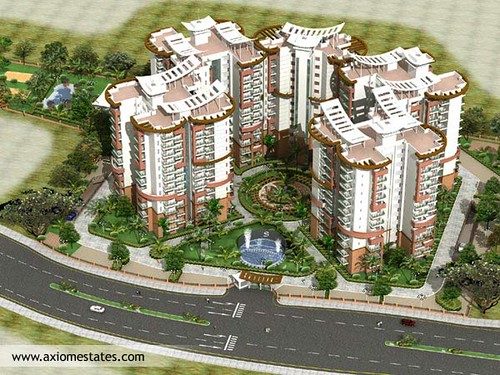
Image credit: Bangalore Properties - Real Estate India - Shriram Symphony by nancyarora2020 via flickr (BY-SA 2.0), sourced through Openverse.
Written by
Rajesh Tiwari
Real estate analyst covering property markets across Delhi NCR, Mumbai, and Bangalore. Rajesh tracks pricing trends, RERA compliance, and investment opportunities for residential and commercial buyers.
Looking for a technology partner?
From IT consulting to virtual office to custom software — eDarpan can help.
Continue reading
Metro & Infra Projects Reshaping NCR Home Prices 2026
Learn how metro corridors, expressways, and Jewar Airport are reshaping NCR home prices in 2026, plus a framework to time your entry for maximum gains.
Greater Noida Property 2026: Is the Builder Rush a Buy Signal
Big builders are rushing to Greater Noida, but is it a buy signal or hype? A practical guide to reading the land rush before you invest in 2026.
Construction Costs Up 34% in India 2026: Impact on Home Buyers
Construction input costs jumped 30-34% since 2024. Learn what's driving the construction cost rise in India 2026 and how home buyers can negotiate smarter.