Carpet vs Built-Up vs Super Built-Up Area: What You Really Buy
The gap between what you pay for and what you can use can hit 40%. Decode carpet area vs super built-up area before you sign any flat deal.
Here's a number that should make every home buyer in India pause before signing a sale agreement: in many under-construction projects, the difference between the area you pay for and the area you actually get to walk on and furnish can be 25% to 40%. Buy a flat advertised as 1,200 sq ft at ₹8,000 per sq ft and you've handed over ₹96 lakh. But if your usable carpet area is only 800 sq ft, you've effectively paid ₹12,000 per sq ft for the space your family will live in. That gap is where developers make money and buyers lose sleep.
I've sat across the table from buyers in Pune, Noida, and Hyderabad who discovered, after possession, that the bedroom in the model flat was somehow bigger than the one they got. The confusion almost always traces back to one thing: not understanding the difference between carpet area, built-up area, and super built-up area. Since RERA came into force in 2016, the rules tightened considerably, but the marketing language hasn't fully caught up, and plenty of buyers still sign documents they don't fully decode.
This post breaks down the carpet area vs super built-up area debate in plain terms, with real rupee math, a worked example, and a checklist you can take into your next site visit. By the end, you'll know exactly what you're paying for per square foot and how to push back when the numbers don't add up.
Key Takeaways
- Carpet area is the only number that reflects the space you can actually use. Under RERA, developers must quote and sell based on carpet area.
- Super built-up area (also called saleable area) inflates the figure by adding common spaces, lobbies, and proportional shared amenities. This is what most brochures historically showed.
- The ratio between carpet and super built-up is the loading factor. A loading of 25-30% is typical; anything above 40% deserves hard questions.
- Always compute your real price per sq ft on carpet area, not the advertised rate, before comparing two projects.
- RERA registration numbers let you verify the exact carpet area filed by the builder. Cross-check the brochure against the RERA portal.
- Get the carpet area, built-up area, and loading factor written into your agreement, not just the sale brochure.
What is carpet area, built-up area, and super built-up area?
Let's define the three terms precisely, because the loose usage in marketing material is exactly what trips people up.
Carpet area
Carpet area is the net usable floor area within the walls of your flat. Think of it literally: the area where you could lay a carpet. Under the Real Estate (Regulation and Development) Act, 2016, carpet area is defined as the net usable floor area, excluding the area covered by external walls, areas under service shafts, exclusive balcony or verandah area, and exclusive open terrace area. It does include the area covered by the internal partition walls of the apartment.
This is the legally binding number now. Section 4 of RERA requires the promoter to declare the carpet area when registering a project. So when a builder says "1,000 sq ft carpet," that is enforceable.
Built-up area
Built-up area is the carpet area plus the thickness of the walls (both internal and external) and sometimes the balcony. As a rough rule, built-up area runs about 10-15% more than carpet area. So a flat with 1,000 sq ft carpet might have roughly 1,100-1,150 sq ft built-up.
Super built-up area
Super built-up area, sometimes called the saleable area, is built-up area plus a proportional share of common areas: the lobby, staircase, lift well, corridors, clubhouse, security room, and sometimes even the proportionate space of amenities like the gym or swimming pool. This is the largest of the three figures and historically the one developers advertised because it makes the per-square-foot rate look lower.
The percentage added to get from carpet to super built-up is the loading factor. A 30% loading means a 1,000 sq ft carpet flat becomes 1,300 sq ft super built-up.
Carpet area vs super built-up area: which one are you actually paying for?
This is the heart of the matter. Pre-RERA, almost every developer sold on super built-up area. You'd see "₹6,500 per sq ft" on a hoarding, do quick math on the super built-up figure, and feel like you got a deal. After RERA, the law mandates that sales and pricing be based on carpet area in the agreement for sale. But the *marketing* still often quotes super built-up rates, which is where the disconnect lives.
The practical reality: you pay a total price. Whether the developer divides that total by carpet area or super built-up area changes the apparent per-sq-ft rate, not the cheque you write. So the smart move is to always normalise back to carpet area.
| Area Type | What it includes | Typical size vs carpet | RERA status | Use it to... |
|---|---|---|---|---|
| Carpet Area | Usable floor space within walls (incl. internal partitions) | Base (100%) | Legally mandated for sale | Judge real usable space and true price |
| Built-Up Area | Carpet + wall thickness + balcony | 110-115% | Informational | Understand the flat's footprint |
| Super Built-Up Area | Built-up + share of common areas & amenities | 125-140% | Marketing only, not for sale pricing | Compare loading factors between projects |
How do you calculate the real price per square foot?
Here's the only calculation that matters when comparing two flats. Forget what the brochure says. Take the total all-in price and divide by carpet area.
Walk through it step by step:
- Get the total consideration value from the cost sheet, excluding GST, stamp duty, and registration for an apples-to-apples comparison.
- Find the carpet area from the RERA disclosure or the draft agreement for sale, not the brochure.
- Divide: Total price ÷ carpet area = real price per sq ft on usable space.
- Compute the loading factor: (Super built-up − carpet) ÷ carpet × 100. This tells you how much "common area" you're funding.
- Repeat for every shortlisted flat and compare the real per-sq-ft numbers side by side.
Pro Tip: Two flats advertised at the same "₹7,000/sq ft" can have wildly different real costs. A project with a 28% loading is far better value than one with a 42% loading at the same headline rate. Always ask the sales team, in writing, "What is the carpet area and what is the loading factor?" If they hesitate or only quote super built-up, treat it as a red flag.
A worked example: comparing two flats in Pune
Let me make this concrete with a scenario I've seen play out almost exactly. A young couple, both salaried, were comparing two 2BHK flats in the Hinjewadi-Wakad corridor of Pune. Both were marketed as roughly the same size and price, so on the surface they looked identical.
Project A — "Skyline Residency"
- Advertised: 1,150 sq ft at ₹7,200 per sq ft (super built-up)
- Total price: 1,150 × ₹7,200 = ₹82.8 lakh
- Actual carpet area (from RERA): 805 sq ft
- Loading factor: (1,150 − 805) ÷ 805 = 42.9%
- Real price per sq ft on carpet: ₹82.8 lakh ÷ 805 = ₹10,286/sq ft
Project B — "Green Meadows"
- Advertised: 1,180 sq ft at ₹7,100 per sq ft (super built-up)
- Total price: 1,180 × ₹7,100 = ₹83.78 lakh
- Actual carpet area (from RERA): 940 sq ft
- Loading factor: (1,180 − 940) ÷ 940 = 25.5%
- Real price per sq ft on carpet: ₹83.78 lakh ÷ 940 = ₹8,913/sq ft
On the brochure, Project A looked ₹100/sq ft cheaper. In reality, the couple would have paid ₹10,286 for every usable square foot in Project A versus ₹8,913 in Project B. For roughly the same total outlay, Green Meadows gave them 135 sq ft more usable carpet area, the size of a small bedroom. They went with Project B, and a year after possession they had zero regrets about the extra room their child now uses.
That's the entire game. The marketing rate is a distraction. The carpet-normalised rate tells the truth.
How does GST affect what you pay on each area?
This part catches a lot of first-time buyers. GST applies to under-construction properties, not to ready-to-move-in flats with a completion certificate. For affordable housing (carpet area up to 60 sq m in metros, 90 sq m in non-metros, and value up to ₹45 lakh) the rate is 1% without input tax credit. For other under-construction residential property, it's 5% without ITC.
The crucial point: GST is charged on the total agreement value, which itself is now based on carpet area. So if you buy an under-construction flat for ₹83.78 lakh, a 5% GST adds about ₹4.19 lakh. Add stamp duty (typically 5-7% depending on the state) and registration (around 1%), and your real outflow climbs well above the brochure number. Factor all of this into your per-sq-ft comparison so you're not surprised at the bank's disbursal stage.
What should you verify before signing the agreement?
This is the checklist I hand to anyone buying property. Run through every item before you pay the booking amount.
- RERA registration number: Verify it on your state RERA portal (MahaRERA, UP RERA, K-RERA, etc.). The portal shows the registered carpet area, project timeline, and approved plans.
- Carpet area in the agreement: Confirm the exact carpet area figure is written into the agreement for sale, not just the brochure.
- Loading factor disclosed: Ask for the super built-up figure and compute the loading. Get it in writing via email if not in the document.
- Price breakup: Base price, floor rise charges, parking, club membership, infrastructure charges, GST. Total it up.
- Possession date with penalty clause: RERA mandates a defined possession date and interest for delays.
- Approved sanctioned plan: Match the flat you're buying against the approved layout.
- Carpet area variance clause: RERA allows up to a small variance; ensure the agreement specifies refund or adjustment if final carpet area differs.
Common Mistake: Buyers rely on the glossy brochure and the sales executive's verbal assurances, then sign an agreement they barely read. The brochure is not a legal document, the agreement is. I've seen cases where the brochure said "1,000 sq ft" with no qualifier and the agreement quietly listed it as super built-up with an 805 sq ft carpet. By the time the buyer noticed, the booking amount was already non-refundable. Read the agreement clause on area definition before any money changes hands.
Carpet area rules for commercial property and offices
If you're a business owner buying or leasing commercial space, the same logic applies but the loading factors tend to be higher, often 35-50%, because of larger lobbies, more lifts, and shared facilities. For an office, what matters operationally is usable carpet area: how many workstations, cabins, and meeting rooms you can actually fit.
Many small businesses don't need to buy or even lease a full office at all, especially in the early stages. If your need is purely an address for GST registration and company incorporation, a virtual office address for GST and company registration is far more cost-effective than committing to square footage you'll barely use. We see a lot of MSMEs and freelancers in metros taking this route to keep fixed costs low while staying fully compliant.
When you do need physical or investment property, browsing verified listings helps you compare carpet figures across options. eDarpan's real estate platform for buying, renting, and investing in Indian property lets you filter and compare, and you can explore properties for sale across India or rental properties depending on your stage.
Frequently Asked Questions
Is carpet area or built-up area mentioned in the sale agreement under RERA?
Under RERA, the carpet area must be declared and is the basis for sale in the agreement for sale. Developers are required to register the carpet area on the state RERA portal. Always confirm the carpet area figure appears explicitly in your agreement.
What is a good loading factor when buying a flat in India?
A loading factor of 25-30% is considered reasonable for residential projects. Anything above 40% means a large share of your payment is going toward common areas. Compare loading factors across shortlisted projects, since a lower loading at the same headline rate gives you more usable space.
How much more is super built-up area compared to carpet area?
Super built-up area is typically 25-40% larger than carpet area, depending on the project's common amenities and lobby design. The exact difference is the loading factor, which you should always ask the developer to disclose in writing.
Do I pay GST on carpet area or super built-up area?
GST is charged on the total agreement value of an under-construction property, and that value is now based on carpet area under RERA. The rate is 1% for affordable housing and 5% for other under-construction residential property, both without input tax credit. Ready-to-move flats with a completion certificate attract no GST.
Can a developer change the carpet area after I book a flat?
RERA permits only a small variation in carpet area between booking and possession. If the final carpet area is reduced beyond the permitted limit, the developer must refund the proportionate amount with interest. If it increases, the buyer pays the additional amount, but only up to the allowed variance. Ensure this clause is in your agreement.
How do I verify the carpet area declared by a builder?
Check your state RERA portal using the project's RERA registration number. The portal lists the registered carpet area, sanctioned plans, and project timelines. Cross-check this against the figure in the brochure and the draft agreement before paying any booking amount.
Is the price per square foot based on carpet area higher than super built-up?
Yes. Because carpet area is smaller, dividing the same total price by carpet area gives a higher per-sq-ft figure than dividing by super built-up area. This higher number reflects the true cost of your usable space and is the correct basis for comparing two properties.
Final word: always normalise to carpet area
If you remember one thing from this entire post, make it this: the carpet area vs super built-up area distinction is the difference between marketing and reality. Developers will quote whichever figure makes their rate look best. Your job is to ignore the headline number, pull the carpet area from the RERA portal and the agreement, divide the total all-in price by it, and compare projects on that real per-sq-ft basis. Do that, and you'll never overpay for air space, lobbies, and a clubhouse you visit twice a year.
Buying property is one of the largest financial decisions most Indian families make, and a little arithmetic upfront saves lakhs. Take the checklist from this article to your next site visit, ask the hard questions in writing, and don't let glossy floor plans do your math for you.
At eDarpan, we work with home buyers, investors, and businesses across Indian cities. Browse verified listings on our property platform, explore options to buy or rent, and if you'd like guidance specific to your budget and city, get in touch with our team. You can also learn more about how eDarpan works and the broader range of services we offer for both individuals and growing businesses.
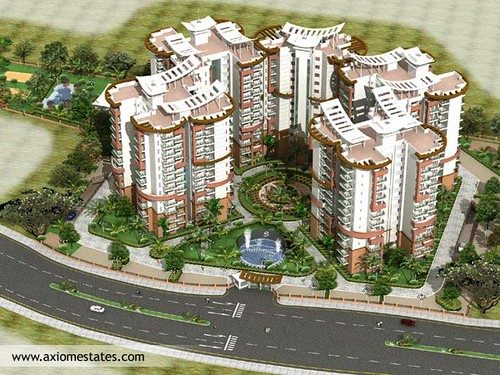
Image credit: Bangalore Properties - Real Estate India - Shriram Symphony by nancyarora2020 via flickr (BY-SA 2.0), sourced through Openverse.

Written by
Rajesh TiwariReal estate analyst covering property markets across Delhi NCR, Mumbai, and Bangalore. Rajesh tracks pricing trends, RERA compliance, and investment opportunities for residential and commercial buyers.
Looking for a technology partner?
From IT consulting to virtual office to custom software — eDarpan can help.
Continue reading
Metro & Infra Projects Reshaping NCR Home Prices 2026
Learn how metro corridors, expressways, and Jewar Airport are reshaping NCR home prices in 2026, plus a framework to time your entry for maximum gains.
Greater Noida Property 2026: Is the Builder Rush a Buy Signal
Big builders are rushing to Greater Noida, but is it a buy signal or hype? A practical guide to reading the land rush before you invest in 2026.
Construction Costs Up 34% in India 2026: Impact on Home Buyers
Construction input costs jumped 30-34% since 2024. Learn what's driving the construction cost rise in India 2026 and how home buyers can negotiate smarter.