Why Big Developers Are Flocking to Delhi-NCR: A Buyer's Guide
Adani, Tata, Godrej and DLF are flooding into Delhi-NCR. Here's what the branded developer rush means for prices, risk, and how to time your buy.
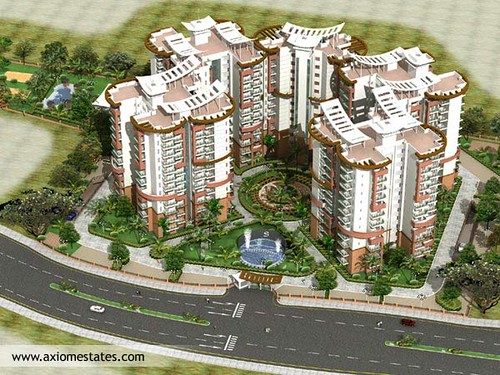
If you've been watching property prices in Gurgaon, Noida, or Dwarka Expressway over the last two years and feeling like the goalposts keep moving, you're not imagining it. A 3BHK on Golf Course Extension Road that quoted ₹1.8 crore in early 2022 is now asking ₹3.2 crore, and the broker isn't even negotiating hard. The reason isn't just demand. It's a structural shift in who is building.
For the better part of a decade, Delhi-NCR real estate was dominated by mid-tier developers, many of whom got the city a bad reputation: stalled towers in Noida Extension, NCLT cases, buyers who paid in 2014 and got possession in 2021 if they were lucky. That story is changing fast. Adani Realty, Tata Housing, Godrej Properties, the Lodha group testing the waters, DLF doubling down on luxury, and a wave of Bengaluru and Mumbai developers entering NCR have turned the market into something that looks a lot more like a corporate land grab than a builder's market. In FY2024, Godrej Properties alone reported record bookings, a big chunk of it from NCR launches that sold out in days.
This post is for buyers and investors trying to make sense of the Delhi NCR real estate 2026 landscape: why the big names are flooding in, what it does to pricing and micro-markets, how to tell a genuinely good launch from a hype-driven one, and how to time your purchase so you're not the person buying at the peak. I've sat across the table from enough builder sales teams and helped enough clients structure NCR purchases to tell you where the real value sits and where the traps are.
Key Takeaways
- Branded developers (Adani, Tata, Godrej, DLF) entering NCR is mostly good news for buyers: lower delivery risk, better RERA compliance, but a 20–40% brand premium on price.
- The premium is worth paying when the developer has a delivery track record and the land is litigation-free. It's not worth paying for an under-construction project from a developer with no NCR completions.
- Dwarka Expressway, New Gurgaon (Sectors 79–95), and Greater Noida West are the micro-markets seeing the heaviest branded supply, which caps runaway appreciation but improves liquidity.
- Always verify RERA registration, the land title chain, and whether the project is on freehold or leasehold land before paying a token.
- Time your purchase at launch (pre-launch pricing) only if the developer is proven; otherwise wait for the 50–60% construction milestone.
- Factor in GST (5% on under-construction, nil on ready-to-move), stamp duty, and the real carpet area, not the marketed super built-up number.
Why are big developers like Adani, Tata, and Godrej suddenly entering Delhi-NCR?
Three forces converged. First, consolidation. After RERA came into force in 2017 and the IL&FS-triggered NBFC liquidity crunch hit in 2018, dozens of weak NCR developers ran out of construction finance. Their half-built projects and their land banks became cheap acquisition targets. The big players, sitting on strong balance sheets and access to cheaper capital, bought in.
Second, the post-COVID housing surge. Demand for larger homes, with home-office space, in gated communities with amenities, jumped sharply from 2021 onwards. Branded developers are built to capture exactly this: premium pricing, fast execution, marketing muscle.
Third, land economics. Mumbai land is impossibly expensive. Bengaluru is hemmed in by approvals. NCR, especially the newer growth corridors, still has large contiguous land parcels available, and the Dwarka Expressway finally becoming operational in 2024 unlocked a corridor that had been stuck for years.
Put simply, the developers followed the money and the land. For buyers, this changes the risk calculus significantly. The old NCR fear, paying upfront and waiting a decade for a project that may never finish, is much lower when a Tata or Godrej is the one building.
What does the branded developer rush mean for Delhi-NCR property prices?
Here is the uncomfortable truth: branded entry pushes prices up, but it does so in a way that's more sustainable than a speculative bubble. When Godrej or DLF launches in a sector, they anchor the price ceiling for the entire micro-market. Local developers then price 15–25% below the branded benchmark, which lifts the whole area.
Let me give you concrete numbers from Dwarka Expressway, one of the hottest corridors:
| Project Type | Approx. Rate (per sq ft, 2023) | Approx. Rate (per sq ft, late 2025) | Change |
|---|---|---|---|
| Branded developer, new launch | ₹11,000–13,000 | ₹16,000–22,000 | +45–70% |
| Established local developer | ₹8,500–10,000 | ₹12,000–15,000 | +40–50% |
| Ready-to-move resale (3–5 yr old) | ₹9,000–11,000 | ₹13,000–16,000 | +35–45% |
The pattern is clear. Branded launches appreciate fastest at launch, because they price aggressively and there's genuine scarcity of trusted product. But that also means the easy gains for the early entrant are already largely captured. If you're buying a branded launch in 2026 at ₹20,000+ per sq ft, you are paying for a delivery guarantee, not a bargain.
For pure appreciation hunters, the smarter play is often the well-run local developer two notches below the brand, in the same micro-market, where the brand has already validated the location. You ride the same infrastructure and demand wave at a lower entry point.
Which Delhi-NCR micro-markets are seeing the heaviest branded supply?
Not all of NCR is moving at the same speed. The branded action is concentrated in specific corridors, and understanding the geography is half the battle.
Dwarka Expressway (Gurgaon)
The flagship corridor. Now physically connected, with the expressway operational and the metro extension planned. Adani, Godrej, Sobha, and others have launched here. High supply means good liquidity but also competition that caps short-term flips.
New Gurgaon (Sectors 79–95)
More affordable than the older Golf Course Road belt, this is where families looking for value in branded product are heading. Tata Housing and Signature Global have a strong presence. Infrastructure is still maturing, so factor in a 2–3 year lag on full social amenities.
Greater Noida West (Noida Extension)
The recovery story. Once the poster child for stalled projects, it's now seeing fresh institutional capital and improved connectivity via the Aqua Line metro and the upcoming Jewar (Noida International) Airport, expected to open phases from 2025. Airport proximity is the single biggest price driver here.
Yamuna Expressway
The speculative frontier. Cheapest entry, highest risk, entirely betting on the Jewar airport multiplier. Suitable for patient investors with a 7–10 year horizon, not for end-users who need amenities now.
Pro Tip: Don't buy a micro-market on the promise of infrastructure. Buy it when the infrastructure tender is awarded and construction has visibly started. The gap between "approved" and "operational" in NCR is routinely 4–6 years. I've seen buyers pay airport-proximity premiums in 2017 that still hadn't paid off by 2023. Verify on the ground.
How do you verify a branded project is actually safe to buy?
A big name on the hoarding reduces risk. It does not eliminate it. Many "branded" launches are actually joint development agreements where the brand lends its name and the underlying land belongs to a local entity with a messy title history. Here's the verification walkthrough I run for every client purchase:
- Check RERA registration. Go to the Haryana RERA (haryanarera.gov.in) or UP RERA (up-rera.in) portal and search the project by name or registration number. Verify the registration is valid, the promoter name matches what's on the brochure, and check the quarterly progress filings. A project that's behind on its own filed timeline is a red flag regardless of the brand.
- Confirm the land title and ownership structure. Ask whether it's a wholly owned project or a JDA. Get a copy of the title chain and have a property lawyer run a 30-year search. Budget ₹15,000–30,000 for a proper legal due diligence; it's the cheapest insurance you'll buy.
- Verify freehold vs leasehold. Most Noida and Greater Noida land is leasehold from the development authority, with periodic lease rent and transfer charges. Gurgaon is largely freehold. This affects resale and financing, so know which one you're buying.
- Check the developer's NCR delivery track record specifically. A developer can be excellent in Mumbai and a first-timer in NCR, where local approvals, labour, and authority relationships differ. Ask for at least one completed NCR project you can physically visit.
- Read the Builder-Buyer Agreement before the token, not after. Pay attention to the possession date clause, the penalty for delay (it should be symmetric with the penalty you pay for late payment), and the carpet area definition.
- Confirm approvals: occupancy certificate plan, environmental clearance, fire NOC. For ready-to-move, the Occupancy Certificate (OC) is non-negotiable. No OC, no purchase, full stop.
If you're an NRI or out-of-station buyer who can't run this process on the ground, this is exactly where a property advisory steps in. eDarpan Properties handles this end-to-end verification so you're not relying solely on the sales team's word. You can browse vetted properties for sale in India with the due diligence already in motion.
A worked example: timing a Gurgaon purchase the right way
Let me walk through a real-pattern case (details composited to protect the client). A Delhi-based MSME owner running a textile distribution business wanted to invest ₹2.5 crore in NCR residential property, partly as an investment and partly for his daughter's future home. He was leaning toward a branded under-construction launch on Dwarka Expressway quoting ₹18,500 per sq ft for a 1,650 sq ft (super built-up) 3BHK, total around ₹3.05 crore plus charges. Stretch on his budget.
Here's what we found and what he did:
- The "1,650 sq ft" was super built-up. The actual carpet area was closer to 1,080 sq ft, meaning he was paying roughly ₹28,000 per sq ft of usable space. That reframed the deal entirely.
- Possession was 4 years out. On a 5% GST under-construction project, his GST outflow alone was about ₹15.2 lakh, money that vanishes on a ready-to-move purchase.
- In the same corridor, a ready-to-move 3BHK from a reputable (if less glamorous) developer, 2 years old, with OC in hand, was available at ₹14,500 per sq ft. No GST. Move-in ready. Visible build quality.
He bought the ready-to-move unit. Total saving versus the branded launch: roughly ₹38 lakh once GST, the carpet-area reality, and four years of opportunity cost were accounted for. He gave up some brand prestige and the theoretical launch-stage appreciation. He got a home he could rent out for ₹52,000/month from day one and zero construction risk.
Common Mistake: Buyers fixate on the per-sq-ft rate of super built-up area and ignore the loading factor. A 30% loading means you're paying for 30% space you can't use. Always ask for the carpet area in writing and compute your real cost per usable square foot. Two projects at the "same rate" can differ by 20% in actual value.
What should investors versus end-users do differently in 2026?
The branded rush rewards these two buyer types differently, and conflating them is how people lose money.
If you're an end-user (buying to live)
- Prioritise ready-to-move or near-completion. The GST saving and zero waiting risk usually outweigh launch discounts.
- The brand premium is worth it here, because you're buying construction quality and a community you'll live in for years.
- Visit at different times of day. Check water supply, power backup load, and actual traffic on the access road during peak hours.
If you're an investor
- Launch-stage pricing from a proven developer can deliver 25–40% appreciation by possession, but only in genuinely supply-constrained micro-markets. Dwarka Expressway is now well-supplied, so be selective.
- Rental yields in NCR remain thin, typically 2.5–3.5% gross. Don't buy for yield; buy for capital appreciation plus a usable rental cushion.
- Track Jewar airport milestones for Greater Noida and Yamuna Expressway plays. The first commercial flights are the real trigger, not the announcements.
For investors who want to compare live yields and entry points across rental-grade inventory, the rental property listings on eDarpan give a realistic picture of what tenants are actually paying, not what brochures claim.
How does eDarpan help you navigate this market?
Buying in a hot, brand-driven market is as much about not overpaying as it is about finding the right unit. The sales teams are professionals; most buyers are doing this once or twice in a lifetime. That asymmetry is where mistakes happen.
eDarpan's property advisory exists to close that gap. We help with developer track-record checks, RERA and title verification, carpet-area and total-cost reality checks, and negotiation backed by current micro-market data, so you walk in knowing the real number, not the asking number. Beyond real estate, if you're an MSME owner setting up or scaling operations in NCR, our broader services cover the practical bits too, from a virtual office address for GST and company registration to IT consulting for digitising your business.
When you're ready to look at specific options or want a second opinion on a deal you're considering, reach out to the eDarpan team or read more about how we work.
Frequently asked questions about Delhi-NCR property in 2026
Is it a good time to buy property in Delhi-NCR in 2026?
For end-users with a long horizon, yes, particularly ready-to-move units in established corridors. For pure speculation in already-hot micro-markets like Dwarka Expressway, the easy gains are largely captured, so be selective and prioritise proven developers and emerging corridors near real infrastructure triggers.
Are branded developers like Tata and Godrej worth the higher price in NCR?
Usually yes, for the lower delivery risk and better construction quality, especially for under-construction projects where the brand's balance sheet matters. The premium runs 20–40%. It's only not worth it when the project is a joint development with murky underlying land or when a comparable ready-to-move option exists nearby at a lower effective cost.
What is the difference between freehold and leasehold property in NCR?
Gurgaon land is largely freehold, meaning you own it outright. Most Noida and Greater Noida land is leasehold from the development authority, typically on 90-year leases with transfer charges and lease rent. Leasehold can complicate resale and financing, so confirm which one applies before you commit.
How much GST do I pay on under-construction property in NCR?
GST is 5% on under-construction residential property (1% for affordable housing under the threshold) and nil on ready-to-move property with an Occupancy Certificate. On a ₹3 crore under-construction flat, that's roughly ₹15 lakh in GST you avoid entirely by buying ready-to-move.
Will Jewar airport increase property prices in Greater Noida and Yamuna Expressway?
It's the single biggest demand driver for those corridors, and prices have already risen on the expectation. The real appreciation trigger is operational flights and the connected infrastructure (metro, expressway links) actually functioning, not announcements. Treat it as a 7–10 year play, not a quick flip.
How do I verify a project's RERA registration before buying?
Visit the relevant state RERA portal (Haryana RERA or UP RERA), search by project name or registration number, and confirm the promoter, registration validity, and quarterly progress filings. A project missing its own filed timelines is a warning sign regardless of how big the developer's brand is.
What is super built-up area and why does it matter for pricing?
Super built-up area includes your carpet area plus a share of common spaces like lobbies, staircases, and amenities, often loading 25–35% on top of usable space. Since you can only live in the carpet area, always compute cost per carpet square foot to compare deals fairly. Two flats at the same headline rate can differ sharply in real value.
The bottom line
The arrival of Adani, Tata, Godrej, and the other heavyweights has made Delhi NCR real estate 2026 a safer market to buy in than it was five years ago, but also a more expensive and more crowded one. The delivery risk that haunted NCR is genuinely lower. The trade-off is that you're paying a brand premium that's already priced in, so the days of buying low and watching it triple are mostly behind the obvious corridors.
Your edge now comes from discipline, not timing the bottom. Verify the RERA registration and title. Compute cost per carpet square foot, not the marketed rate. Decide honestly whether you're an end-user or an investor, and buy accordingly. Pay the brand premium where delivery risk actually matters, and skip it where a vetted ready-to-move alternative does the job for less. Do that, and the developer rush works for you instead of against you.
If you want help running these checks on a specific project or shortlisting options that fit your budget and goals, that's exactly what eDarpan Properties is built for.
Image credit: Bangalore Properties - Real Estate India - Shriram Symphony by nancyarora2020 via flickr (BY-SA 2.0), sourced through Openverse.

Written by
Rajesh TiwariReal estate analyst covering property markets across Delhi NCR, Mumbai, and Bangalore. Rajesh tracks pricing trends, RERA compliance, and investment opportunities for residential and commercial buyers.
Looking for a technology partner?
From IT consulting to virtual office to custom software — eDarpan can help.
Continue reading
Metro & Infra Projects Reshaping NCR Home Prices 2026
Learn how metro corridors, expressways, and Jewar Airport are reshaping NCR home prices in 2026, plus a framework to time your entry for maximum gains.
Greater Noida Property 2026: Is the Builder Rush a Buy Signal
Big builders are rushing to Greater Noida, but is it a buy signal or hype? A practical guide to reading the land rush before you invest in 2026.
Construction Costs Up 34% in India 2026: Impact on Home Buyers
Construction input costs jumped 30-34% since 2024. Learn what's driving the construction cost rise in India 2026 and how home buyers can negotiate smarter.