Ghost Flats in India: Why Built Homes Stay Empty & Buyer Risks
Lakhs of finished flats across India sit empty while families struggle to buy. Learn why ghost flats exist and how to spot the risks before you sign.
Drive through the outer rings of Noida Extension, Whitefield in Bengaluru, or the far end of Dwarka Expressway and you'll see it: entire towers with the paint done, lifts installed, and not a single light on after 8 PM. Ready flats, occupancy certificate in hand, and nobody living there. Meanwhile the same city has families paying ₹35,000 a month in rent because they "can't find anything to buy." That contradiction is the heart of the ghost flat problem, and it costs buyers real money every year.
Here's the number that should stop you: a 2023 Knight Frank estimate pegged unsold ready inventory across the top eight Indian cities at well over one lakh finished units, with some micro-markets sitting on three to four years of unsold stock. These aren't half-built shells caught in a legal mess. They're complete, sellable homes that stay dark. When a building is 70% unsold, everything you assumed about your investment — resale value, maintenance quality, rental demand — quietly falls apart.
I've advised buyers and small developers on property decisions for years, and I've watched otherwise sharp people walk into these traps because the flat "looked ready." This post breaks down why ghost flats in India exist, how to spot one before you sign, and the exact checks that separate a genuine bargain from a slow-motion loss.
Key Takeaways
- Ghost flats are fully built, legally saleable homes that stay vacant — usually because of location mismatch, over-supply, investor dumping, or dead builder finances, not construction problems.
- A tower under ~50% occupancy is a red flag: maintenance collapses, sinking funds run dry, and resale becomes brutally hard.
- Check actual occupancy by counting lit units at night and asking the RWA for the electricity-meter connection count, not the developer's brochure.
- "Distress discount" flats can be great buys — but only after you verify the OC, encumbrance certificate, and the building's maintenance solvency.
- Rental yield below 2.5% in a low-occupancy tower is a warning that end-user demand doesn't exist there yet.
- Ready-to-move in an established, lived-in society is almost always safer than a discounted flat in an empty one.
What exactly is a ghost flat, and why should a buyer care?
A ghost flat is a completed residential unit that sits vacant for an extended period — no owner-occupier, no tenant, sometimes no registered owner at all. The building may be structurally fine and even have its Occupancy Certificate. The problem isn't the concrete. It's the absence of life.
This matters because a home isn't just an asset on paper. Its real value depends on the ecosystem around it: working lifts, a funded maintenance corpus, a functioning RWA, security guards who actually get paid, nearby shops that stay open, and enough neighbours that resale buyers feel comfortable. When 60% of a tower is empty, that ecosystem starves.
Consider what happens to the maintenance math. A society budgets for common-area upkeep assuming most flats pay their monthly ₹3–4 per sq ft. If two-thirds of owners are absent investors who default on dues, the corpus shrinks fast. Lifts break and stay broken. The water treatment plant runs on skeleton service. The empty flats then look even worse, which scares off the next round of buyers. It's a doom loop.
Why do finished homes stay empty in a country with a housing shortage?
India genuinely needs housing — the shortage in affordable segments is real. So it feels absurd that lakhs of finished flats stay dark. But the shortage and the vacancy exist in different places and price bands. Here are the actual drivers I see repeatedly.
1. Location built ahead of infrastructure
Developers buy cheap land 25 km from the city core, betting a metro line or expressway will "arrive soon." Sometimes it does, five years late. Meanwhile the towers are ready, but there's no school, no hospital, and a two-hour commute. Nobody wants to live there yet. Dwarka Expressway flats sat largely empty for years for exactly this reason before connectivity matured.
2. Investor-heavy sales
During launch, developers sell heavily to investors and speculators who never intend to move in. They flip on paper. When the market flattens, these investors are stuck holding vacant units they can't sell without a loss, so they simply lock them and wait. A tower sold 80% "to investors" is a ghost tower waiting to happen.
3. Over-supply in a micro-market
When six developers launch simultaneously in one sector, supply overwhelms genuine end-user demand for a decade. Bengaluru's Sarjapur belt and parts of Greater Noida have seen this. The flats are fine; there just aren't enough buyers.
4. Builder financial distress
A developer completes a tower but is bleeding cash on other projects. They don't push registrations because registered flats mean handing over maintenance and losing control of the asset they're using as collateral. Some units stay unsold on the books deliberately.
5. Price stickiness
Developers refuse to drop headline prices because a public price cut hurts their other inventory and their brand. So they'd rather hold empty stock and offer quiet "under-the-table" discounts than admit the market rate has fallen.
A real-world example: the ₹68 lakh "bargain" that wasn't
A client of mine — let's call him Rakesh, a mid-career IT manager in Bengaluru — came to me thrilled about a 2BHK in a completed tower off Hosur Road. Listed at ₹78 lakh, the developer was quietly offering it at ₹68 lakh "for a quick close." Ready to move, OC in hand. On paper it looked like a ₹10 lakh saving.
We did three checks before he committed:
- Night occupancy count. We drove there at 8:30 PM on a weekday. Of roughly 240 flats across the towers, fewer than 50 had lights on. Under 25% occupancy.
- Maintenance solvency. The society was still developer-managed with no independent RWA. The developer was collecting maintenance but the sinking fund had almost nothing. One of two lifts in Rakesh's tower had been out of service for three months.
- Rental reality. Local brokers said a 2BHK there rented for about ₹14,000–15,000 a month. On a ₹68 lakh outlay, that's a gross yield of roughly 2.5%, and finding a tenant took months because nobody wanted to live in an empty building.
The ₹10 lakh discount wasn't generosity. It was the market telling him the flat was worth less because the ecosystem was dead. He walked away and instead bought a slightly older, fully occupied resale flat in a lived-in society nearby for ₹72 lakh. Two years on, that flat has appreciated, rents easily, and the maintenance actually works. The "bargain" tower is still mostly dark.
Common Mistake: Buyers treat a builder discount as pure savings. In a low-occupancy tower, the discount is often just the market correcting the price downward — and the real costs (broken lifts, unpaid maintenance, poor resale) show up after you've paid stamp duty and can't easily exit.
How do you spot a ghost flat before you buy?
You don't need a private investigator. You need a checklist and one honest evening visit. Here's the sequence I use.
The physical checks
- Night light count. Visit between 8 and 9:30 PM on a weekday. Count lit windows versus total flats. Below 40% occupancy is a serious warning; below 25% is a red flag.
- Ask the guard. Security staff know exactly how many families actually live there. Tip: ask "kitni family rehti hai yahan?" — they'll usually tell you the truth the brokers won't.
- Check the parking. A full basement at 9 PM means people live there. Rows of empty bays mean they don't.
- Look at the common areas. Dead plants, a dry swimming pool, one working lift out of two, and a half-lit lobby all signal a starved maintenance budget.
The paper checks
- Occupancy Certificate (OC). No OC means you legally shouldn't move in and can't get some utility connections easily. Verify it exists and matches the tower.
- Encumbrance Certificate (EC). Pull 13–30 years of history from the sub-registrar. It shows loans, liens, and whether the unit is genuinely clear.
- Electricity connection count. Ask the RWA or DISCOM how many meters are actually energised in the block. This is a hard number the developer can't spin.
- RERA status. Check the project on your state RERA portal. Look at completion status, complaints filed, and whether the escrow rules were followed. Our guide on RERA escrow rules and how buyers verify a project is safe walks through this in detail.
- Maintenance dues and sinking fund. Ask for the society's audited accounts. A near-empty sinking fund in a "ready" tower is a solvency alarm.
The financial checks
- Rental yield test. Divide annual achievable rent by the purchase price. Below 2.5% in a low-occupancy building usually means end-user demand is missing.
- Resale liquidity. Ask three local brokers how long a similar unit took to sell recently. "Six to nine months" tells you what you need to know.
Ghost flat vs stalled project vs healthy resale: what's the difference?
Buyers often lump these together. They're very different risks, and the table below shows why.
| Criteria | Ghost flat (built, vacant) | Stalled project (unfinished) | Healthy resale (lived-in) |
|---|---|---|---|
| Construction status | Complete, often has OC | Incomplete, no OC | Complete, OC in place |
| Occupancy | Under 40%, often much lower | Zero — nobody can move in | 70%+ occupied |
| Maintenance ecosystem | Starved, unreliable | Non-existent | Funded, functioning RWA |
| Resale liquidity | Poor — buyers wary | Very poor to frozen | Good, established demand |
| Typical price | Discounted 8–20% | Deep discount / legal limbo | Market rate, sometimes premium |
| Best for | Patient investors who verify solvency | Only high-risk turnaround buyers | End-users and safety-first investors |
The lesson: a lived-in society at market price will almost always outperform a discounted ghost flat once you account for maintenance headaches and slow resale. If you want the safest end-user buy, browse fully occupied, ready options through properties for sale in India rather than chasing empty-tower discounts.
When is a ghost flat actually a smart buy?
Not every empty tower is a trap. Sometimes vacancy is temporary and connectivity is genuinely arriving. A ghost flat can be a real opportunity if — and only if — these conditions hold:
- The vacancy is recent and location-driven, not builder-distress-driven. A tower that got its OC eight months ago and is filling up is different from one that's been dark for four years.
- Hard infrastructure is confirmed, not promised. A metro station with a live construction contract and a completion timeline beats a "proposed" line on a brochure. Areas like the ones covered in Mumbai's next growth corridors for 2026 show how connectivity turns vacancy into value.
- The building's finances are solvent. If maintenance is funded and the developer isn't in NCLT proceedings, you can wait out the vacancy safely.
- You're buying at a genuine discount to intrinsic value, not just below the fantasy launch price.
- You don't need liquidity soon. This is a 5–7 year play. If you might need to sell in two years, skip it.
Pro Tip: If you're buying for pure investment rather than end-use, compare the ghost-flat play against listed real estate. Our breakdown of REITs vs direct property investment in 2026 shows why a liquid REIT sometimes beats a discounted flat you can't rent or exit.
A step-by-step process to safely evaluate a discounted ready flat
If you're seriously considering a discounted ready unit, here's the exact walkthrough I run clients through. You can brief a broker or lawyer with this or do it yourself.
- Do the night occupancy visit first. Before spending on lawyers, drive by at 8:30 PM. If occupancy is under 25% and the building is over two years old, seriously question the deal.
- Pull the RERA record. Confirm registration, completion date, and any pending complaints. Note the promoter's other projects and whether any are stalled.
- Verify OC and CC. Get copies of the Occupancy and Completion Certificates. Match plot numbers and tower names.
- Order the Encumbrance Certificate. Request 13+ years from the sub-registrar. Flag any unreleased mortgage or lien on the specific flat.
- Interrogate the maintenance accounts. Ask for audited society accounts, the sinking-fund balance, and the default rate on monthly dues. Empty tower + empty fund = walk away.
- Confirm the electricity meter count. Cross-check the RWA's occupancy claim against energised connections.
- Run the yield and resale test. Get three brokers' honest rent and time-to-sell estimates. Compute gross yield. Below 2.5% means demand is thin.
- Check your own affordability seriously. A low-yield asset that ties up capital hurts more if you're stretched. Our post on the salary-to-EMI rule for an ₹80L home helps you size this properly.
- Model the GST and total cost if it's still technically under-construction on paper. Ready flats with OC don't attract GST, but some "ready" units are sold pre-OC. See what buyers actually pay in GST on under-construction flats so you aren't surprised at closing.
- Negotiate from data. Armed with occupancy, yield, and resale numbers, you'll negotiate far harder than a buyer who just heard "10% off."
If you'd rather have someone run this verification end to end, the team behind eDarpan Properties helps buyers and investors evaluate real inventory across Indian cities — including flagging low-occupancy towers before you commit. You can also explore vetted rental properties in India if you decide renting in a proven location beats buying into an empty one.
Frequently asked questions about ghost flats in India
How can I check occupancy of a flat before buying?
The most reliable method is a weekday evening visit between 8 and 9:30 PM to count lit windows against total units. Back this up by asking the security guard how many families actually live there and requesting the electricity meter connection count from the RWA or DISCOM. Brochure "sold" percentages don't reflect real occupancy.
Are ready-to-move flats always safer than under-construction ones?
Not automatically. A ready flat in a healthy, occupied society is safer, but a ready flat in a near-empty ghost tower carries maintenance and resale risks that a well-verified under-construction project in a good location may not. Occupancy and builder solvency matter more than construction status alone.
Do ghost flats affect property resale value?
Yes, significantly. Low occupancy shrinks the maintenance corpus, degrades common areas, and makes future buyers nervous, which lengthens sale timelines and forces price cuts. A flat in a 70%-occupied society typically sells faster and holds value better than one in a 25%-occupied tower at the same headline price.
Is there GST on a ready flat with an Occupancy Certificate?
No. A completed property that has received its Occupancy Certificate is treated as a ready property and does not attract GST on sale. GST applies to under-construction units. Confirm the OC is genuine, because some "ready" flats are sold before OC and would then attract GST.
What occupancy percentage is a red flag?
As a working rule, under 40% occupancy in a building older than 18–24 months warrants caution, and under 25% is a strong red flag. At those levels, maintenance funding usually breaks down and resale liquidity dries up. Newer buildings still filling up are judged differently.
Can I get a home loan on a ghost flat?
Usually yes if the title is clear and the OC exists, since banks lend against the individual unit, not the building's occupancy. However, some lenders reduce the loan-to-value ratio or apply stricter valuation on projects with heavy unsold inventory or a distressed developer. Get the bank's technical valuation before assuming full funding.
How do I verify a developer isn't in financial trouble?
Check the state RERA portal for the promoter's other projects and any complaints, search for the company in NCLT/IBBI insolvency records, and look at whether their other towers are also stalled or empty. A developer holding many dark, unregistered units across projects is a warning sign.
The bottom line on ghost flats in India
Ghost flats in India exist because construction ran ahead of demand, investors dumped inventory, and developers would rather hold empty stock than admit prices fell. For a buyer, the danger isn't the concrete — it's the dead ecosystem around it: broken lifts, empty maintenance funds, and a flat you can neither rent nor resell easily.
The good news is that spotting one is straightforward. One honest night visit, a handful of paper checks, and a cold look at rental yield will tell you more than any glossy brochure. A discounted ready flat can genuinely be a smart buy — but only when the building is solvent, the location is truly arriving, and you have the patience to wait it out. In every other case, a slightly pricier, fully lived-in home wins.
If you want a second set of eyes before you commit, talk to the eDarpan team. Between our property advisory and city-level market data, we help buyers and investors separate a real bargain from a dark tower dressed up as one — before you pay the stamp duty.
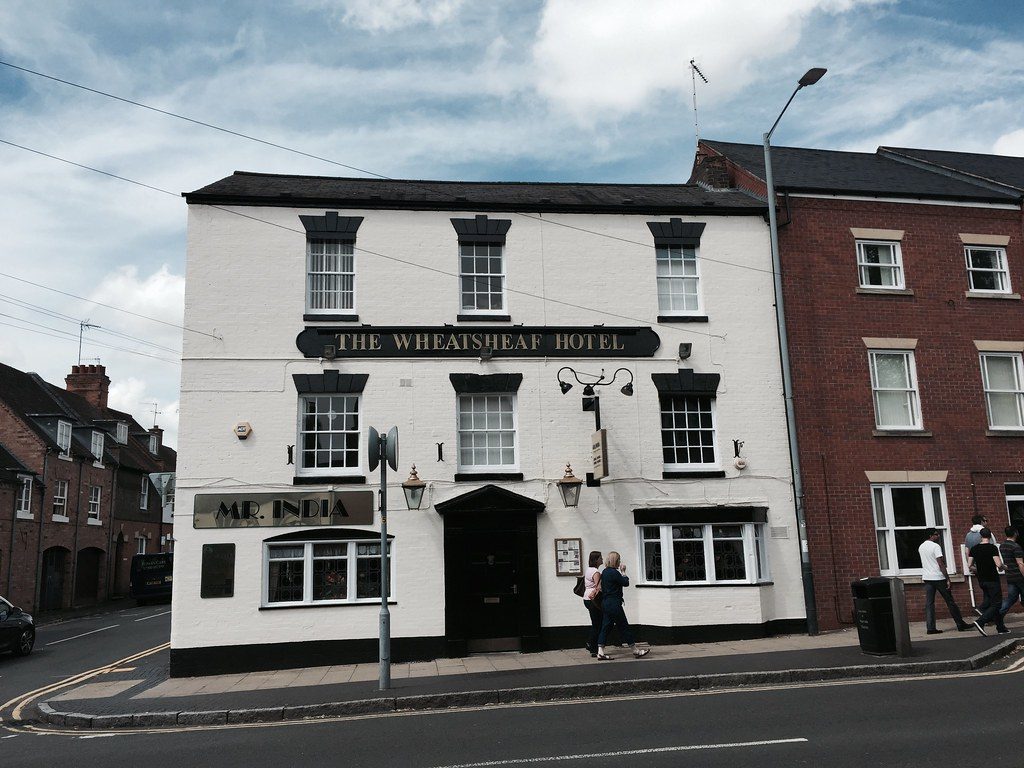
Image credit: The Wheatsheaf Hotel ghost sign, 54 West Street, Warwick by hazelnicholson via flickr (BY 2.0), sourced through Openverse.
Written by
Rajesh Tiwari
Real estate analyst covering property markets across Delhi NCR, Mumbai, and Bangalore. Rajesh tracks pricing trends, RERA compliance, and investment opportunities for residential and commercial buyers.
Looking for a technology partner?
From IT consulting to virtual office to custom software — eDarpan can help.
Continue reading
India Real Estate to Hit $5.8T by 2047: What It Means for Property Buyers Now
India's real estate could reach $5.8T by 2047. Here's how first-time buyers can judge projects, locations and timing without the hype, using RERA checks and real rupee numbers.
Rent or Buy in Dwarka 2026: Break-Even Math Under Current Rates
Stop guessing whether to rent or buy in Dwarka. This break-even guide walks through real price, rent and loan-rate inputs, with a worked example and the hidden costs that tip the decision.
Bhubaneswar Real Estate 2026: Is Eastern India's Growth Worth Investing In?
Is Bhubaneswar a smarter property bet than a cooling Delhi-NCR market? A micro-market checklist, RERA verification steps, and a realistic rental yield model.