GST on Under-Construction vs Ready-to-Move Flats 2026
Under-construction flats attract 5% GST with no input tax credit, while ready-to-move homes pay zero. Learn how to calculate the true cost before you buy.
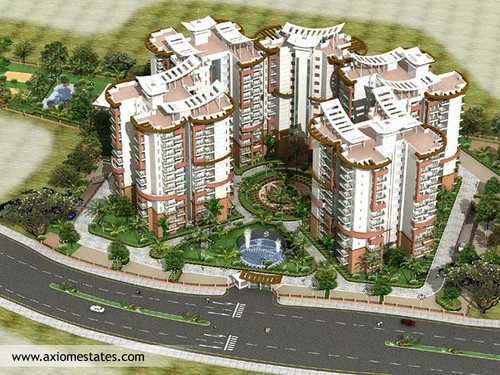
Here's a scenario I run into almost every month. A buyer in Pune finds two nearly identical two-bedroom flats. One is under construction, quoted at ₹72 lakh. The other is ready to move, quoted at ₹78 lakh. The under-construction unit looks like the smarter deal on paper. Then, after signing, the buyer discovers that GST added roughly ₹3.6 lakh to the under-construction price, while the ready-to-move flat carried zero GST. Suddenly the "cheaper" flat isn't cheaper at all once you run the full numbers.
Most buyers don't get told this clearly. Developers quote the base price, the broker talks square footage, and GST becomes a line item nobody explains. And here's the part that surprises people: since April 2019, homebuyers can no longer claim input tax credit (ITC) on under-construction residential flats. That single rule change means the 5% GST you pay is a straight-up cost, not something a developer can offset and pass back to you as a discount.
In this post I'll break down exactly how GST on under-construction property 2026 works, how it differs from ready-to-move homes, what happened to ITC, and how to calculate the true cost before you sign anything. I'll walk through a real worked example, give you a comparison table, and flag the mistakes I see buyers make repeatedly.
Key Takeaways
- Ready-to-move flats with a completion or occupancy certificate attract zero GST. Under-construction flats attract GST.
- Standard GST on under-construction residential property is 5% (no ITC), and 1% (no ITC) for affordable housing (up to ₹45 lakh and within carpet-area limits).
- Since April 2019, buyers cannot claim input tax credit on residential flats, so GST is a real, non-recoverable cost.
- On a ₹72 lakh under-construction flat, GST alone can add roughly ₹3.6 lakh to your outflow.
- GST is charged only on the construction portion, not on the land value baked into the price (the law assumes a one-third land deduction).
- Always compare the all-in cost including GST, stamp duty, and registration, not just the base price.
Why does GST apply to under-construction flats but not ready-to-move ones?
The logic comes down to how GST treats a "supply of service" versus a "sale of immovable property." When a developer sells you an under-construction flat, you're essentially paying for a construction service that hasn't finished yet. That's a taxable supply under GST.
A ready-to-move flat is different. Once the building has received its completion certificate (CC) or occupancy certificate (OC), the transaction is treated as the sale of a finished immovable property. Sale of completed property falls outside GST entirely. So the presence or absence of that certificate on the sale date is the single most important factor deciding whether you pay GST.
This is why the date matters so much. If you book a flat before OC/CC is issued, you pay GST on the instalments. If you buy after the certificate is issued, you pay none. Same building, same flat, different tax outcome depending on timing.
The completion certificate is your dividing line
I always tell buyers to ask one blunt question early: "Has this project received its OC or CC?" Get the answer in writing. Some developers market "ready possession" flats that technically haven't received the OC yet, which means GST still applies. The marketing language and the legal status don't always match.
What are the current GST rates on under-construction property in 2026?
The rates that came into effect on 1 April 2019 are still the framework in 2026. There are two main slabs for residential property, and they apply to the value after the standard land deduction.
- Affordable housing: 1% GST, no ITC. This applies to units with a carpet area up to 60 sq m in metro cities and 90 sq m in non-metro cities, and a total price up to ₹45 lakh.
- Other residential (non-affordable): 5% GST, no ITC. This covers most mid-range and premium under-construction flats.
- Commercial units in a residential project: typically 5% (with conditions), while standalone commercial property can attract 12% with ITC.
A crucial technical point people miss: GST is computed on roughly two-thirds of the agreement value, because the law assumes one-third of the price represents land, which isn't taxable. So the headline "5%" translates to an effective rate of about 3.33% on the total flat value in practice. Developers still usually show it as 5% on the construction component, which nets out to the same rupee amount.
How much GST will I actually pay? A worked example
Let me run the Pune example properly, because this is where the real decision gets made.
The under-construction flat: Base price ₹72,00,000 (non-affordable, so 5% GST, no ITC).
- Deemed land value (one-third): ₹24,00,000 (not taxable)
- Taxable construction value (two-thirds): ₹48,00,000
- GST at 5% on construction value: ₹2,40,000
Hold on though. In common practice, many developers apply the 5% on the full agreement value and treat the land deduction as already built into how they present it. If your builder charges 5% on the whole ₹72 lakh, that's ₹3,60,000. Read your cost sheet carefully, because the method changes the number by over a lakh. Ask the developer to show the GST calculation base explicitly.
For a clean, buyer-friendly estimate, assume the effective burden lands around ₹2.4 lakh to ₹3.6 lakh depending on how the base is computed and how the developer structures the agreement.
The ready-to-move flat: Base price ₹78,00,000, with OC already issued.
- GST: ₹0
Now the full comparison. On the under-construction unit at ₹72 lakh with ₹3.6 lakh GST, your construction-plus-GST outflow is ₹75.6 lakh, still under the ₹78 lakh ready flat, but the gap narrows from ₹6 lakh to ₹2.4 lakh. Add the fact that under-construction carries risk (delayed possession, quality disputes, the developer's financial health), and the ready flat's premium starts looking reasonable for many families.
If you're weighing project risk alongside price, our breakdown of how rising construction costs are pushing home prices in 2026 is worth reading before you commit.
Under-construction vs ready-to-move: the full cost comparison
Base price is only one line. Here's how the two options stack up across the costs that actually hit your bank account.
| Cost / Factor | Under-Construction (Non-Affordable) | Under-Construction (Affordable) | Ready-to-Move (OC/CC issued) |
|---|---|---|---|
| GST rate | 5% (no ITC) | 1% (no ITC) | Nil |
| GST on ₹72 lakh (approx) | ₹2.4L–₹3.6L | Up to ₹0.72L (if eligible) | ₹0 |
| Stamp duty & registration | Applicable (state rates) | Applicable (often concessional) | Applicable (state rates) |
| Possession risk | High (delay, quality) | Moderate–High | Nil (move in now) |
| Rent while waiting | Yes, you keep paying rent | Yes | No |
| Price advantage | Usually 10–20% lower base | Lowest entry price | Premium of 8–15% |
| Payment flexibility | Construction-linked instalments | Instalments / subsidy | Larger upfront outlay |
Remember stamp duty and registration apply to both categories. Those are state charges, separate from GST, and they can add 5–7% on top. For the specifics of what those charges look like this year, see our guide to property registration, stamp duty and charges in India 2026.
What happened to input tax credit (ITC) for homebuyers?
This is the part that trips up even experienced buyers. Before April 2019, under-construction flats attracted 12% GST but developers could claim ITC on cement, steel, contractor bills and other inputs. In theory they passed that benefit back through lower prices. In practice, most didn't, and it created endless disputes about anti-profiteering.
The government simplified it: from 1 April 2019, the rate dropped to 5% (and 1% for affordable), but ITC was removed entirely for these residential slabs. So the developer now absorbs the GST on their inputs as a cost, and you the buyer cannot claim any credit either.
What this means for you is simple and important: the 5% you pay is dead money from a tax-recovery standpoint. Unless you're a GST-registered business buying commercial space where ITC still applies, there's no getting it back. Treat it as a pure cost when budgeting.
Common Mistake: Buyers assume a developer offering a "GST-free" deal is absorbing the tax as a genuine discount. Often the base price has quietly been raised to cover it, or the flat already has its OC (so there was never any GST to begin with). Always ask whether the OC is issued, and ask for the base price and GST shown as separate line items in the cost sheet. If the developer refuses to separate them, that itself is a red flag.
How do I calculate the true cost before signing? A step-by-step walkthrough
Don't rely on the developer's summary. Build your own number. Here's the process I use with clients.
- Confirm OC/CC status in writing. This decides whether GST applies at all. Ask for a copy of the certificate for ready-to-move claims.
- Get the base sale price (the agreement value), separated from parking, club charges, and preferential location charges (PLC).
- Determine your GST slab. Check carpet area and total price against the affordable-housing limits (60/90 sq m, ₹45 lakh). If you don't qualify, it's 5%.
- Ask how the developer computes the GST base. Is it 5% on the full value or on two-thirds after the land deduction? Get it in writing on the cost sheet.
- Add stamp duty and registration at your state's current rate. In Maharashtra, for instance, budget around 5–6% plus 1% registration (subject to caps).
- Add GST on other charges like club membership, maintenance advance, and PLC, which can carry 18% GST separately. These add up.
- Factor in carrying costs for under-construction: rent you'll pay until possession, plus loan pre-EMI interest during construction.
- Total everything into one all-in number and only then compare the two flats side by side.
When you factor in the pre-EMI interest during construction, your home loan structure matters a lot. If you're timing a purchase around interest rates, read our analysis of home loan rates in India 2026 and how RBI rate cuts affect you.
Pro tip on GST during the transition period
If a project got its OC after you booked but before you paid your final instalments, GST logic can get messy. Instalments due before OC generally attract GST; those due after OC may not. This is genuinely case-specific. Get your CA or a property lawyer to review the payment schedule against the OC date. I've seen buyers overpay GST on post-OC instalments simply because nobody checked.
Which option is better for you: under-construction or ready-to-move?
There's no universal answer, but here's how I frame it.
Under-construction makes sense if: you want a lower entry price, you can wait 18–36 months, you're comfortable with the developer's track record and RERA registration, and you don't mind paying rent plus pre-EMI in parallel. The GST cost is real but often offset by the lower base price.
Ready-to-move makes sense if: you want zero GST, you need to move in now or want immediate rental income, and you value certainty over squeezing out the last rupee of discount. No possession risk, no waiting, no GST surprises.
If rental income is your goal, note that ready-to-move flats start earning immediately. Our roundup of India's top rental-yield cities in 2026 can help you decide where a ready flat actually pays for itself faster.
Buyers on a tight budget often assume under-construction is automatically cheaper. Not always, once GST and carrying costs are added. Our guide on buying a home below your budget in India 2026 covers how to work the full-cost math in your favour.
How eDarpan helps you buy smarter
Choosing between an under-construction and ready-to-move flat is as much a numbers exercise as an emotional one. On the eDarpan Properties platform you can browse verified listings, compare all-in costs, and filter by construction status so you're not comparing apples to oranges. Whether you're looking at properties for sale across Indian cities or exploring rental options while you wait for possession, having the real numbers upfront changes how you negotiate.
If you're a developer, builder, or property business, eDarpan's technology side can help too. We build custom software and mobile apps for real estate workflows, run buyer outreach through our WhatsApp Business API and bulk SMS services, and even automate site-visit booking with our AI voicebot. And if you're setting up a property firm and need a virtual office address for GST and company registration, we handle that end to end. Have a look at our full services overview or get in touch to talk through what fits.
Frequently asked questions
Is there GST on ready-to-move flats in 2026?
No. If the flat has received its completion certificate or occupancy certificate before the sale, it's treated as the sale of finished immovable property and attracts zero GST. Always confirm the OC/CC is issued in writing before assuming a flat is GST-free.
What is the GST rate on under-construction property in 2026?
The standard rate is 5% with no input tax credit for non-affordable residential flats, and 1% with no ITC for affordable housing (carpet area up to 60/90 sq m and price up to ₹45 lakh). Commercial units can attract higher rates with ITC available.
Can I claim input tax credit on my flat purchase?
No, not for residential flats. Since 1 April 2019, ITC has been removed for the 5% and 1% residential slabs. The GST you pay is a non-recoverable cost. ITC is only relevant for GST-registered businesses buying commercial property under the ITC-eligible slab.
Do I pay GST on stamp duty and registration?
No. Stamp duty and registration are separate state charges and are not subject to GST. However, GST does apply on both the construction value and on other builder charges like club membership, PLC and maintenance advance, so factor those in separately.
Why is the effective GST rate on flats often quoted as 3.33% instead of 5%?
Because the law allows a one-third deduction for land value, which isn't taxable. GST at 5% applies only to the remaining two-thirds (the construction portion), which works out to roughly 3.33% of the total agreement value. Ask your developer to show which base they're applying.
Is an under-construction flat cheaper than a ready-to-move one after GST?
Sometimes, but not always. Under-construction flats usually have a lower base price, but once you add 5% GST, rent paid while waiting, and pre-EMI interest, the gap can shrink significantly. Always compare the full all-in cost, not just the quoted base price.
What if the project gets its OC while I'm still paying instalments?
Instalments due before the OC date generally attract GST, while those due after may not. This is case-specific and depends on your payment schedule and the exact OC date. Have a CA or property lawyer review it so you don't overpay on post-OC instalments.
The bottom line
Understanding GST on under-construction property 2026 comes down to one idea: the tax is a real, non-recoverable cost, and it only applies before the completion certificate is issued. Ready-to-move flats carry zero GST but usually a higher base price. The smart move isn't to chase the lowest sticker price, it's to build one honest all-in number for each option, including GST, stamp duty, registration, and the money you'll spend while waiting for possession.
Run the math the way I've laid it out here, ask the developer to separate every line item, and confirm the OC status in writing. When you're ready to see verified listings with the numbers laid out clearly, browse eDarpan Properties or reach out to our team for a straight answer on which option actually costs you less.
Image credit: Bangalore Properties - Real Estate India - Shriram Symphony by nancyarora2020 via flickr (BY-SA 2.0), sourced through Openverse.
Written by
Rajesh Tiwari
Real estate analyst covering property markets across Delhi NCR, Mumbai, and Bangalore. Rajesh tracks pricing trends, RERA compliance, and investment opportunities for residential and commercial buyers.
Looking for a technology partner?
From IT consulting to virtual office to custom software — eDarpan can help.
Continue reading
Bhubaneswar Real Estate 2026: Is Eastern India's Growth Worth Investing In?
Is Bhubaneswar a smarter property bet than a cooling Delhi-NCR market? A micro-market checklist, RERA verification steps, and a realistic rental yield model.
Delhi-NCR Home Prices Up 12%: How to Plan Your Down Payment in 2026
Delhi-NCR home prices rose 12%, so your down payment and EMI plan may no longer hold. Here is how to recalculate with real numbers before you commit.
Gurgaon, Noida Demand Dips 8-9%: Should You Buy Now or Wait?
NCR demand dipped 8-9%. Before you negotiate, learn what the slowdown really means for buyers and run the EMI and price-to-rent checks that matter most.