Emerging Tech Hubs Beyond Bengaluru: Where to Invest in 2026
Bengaluru is saturating. Discover the Tier-2 cities like Coimbatore, Indore, and Visakhapatnam where property and IT jobs are moving next in 2026.
Here's a scenario I've watched play out three times in the last two years. A founder builds a 40-person product company in Bengaluru, signs a lease in Outer Ring Road at ₹95 per square foot, and then spends the next eighteen months bleeding on attrition, commute-driven no-shows, and a rent renewal that jumps 15%. Meanwhile, a competitor sets up in Mysuru or Coimbatore, pays a third of the rent, hires engineers who actually stay, and quietly ships faster. The gap isn't talent. It's timing and geography.
The number that should stop you: Bengaluru's Grade-A office rents crossed ₹90–110 per sq ft per month in prime corridors by late 2025, while Tier-2 IT destinations like Coimbatore, Indore, and Visakhapatnam sit comfortably in the ₹35–55 range for comparable quality. On the residential side, a 2BHK that costs ₹1.4–2 crore in Whitefield can be had for ₹45–70 lakh in these emerging cities. That spread is the entire investment thesis.
This post is about emerging tech hubs India property investment done with a practitioner's eye. Not the glossy "next Silicon Valley" hype, but the boring signals that actually predict where IT parks, jobs, and property demand move next. I'll give you the checklist I use, a real cost comparison, a worked case study of a company that relocated, and the specific cities I'd put money into for 2026.
Key Takeaways
- The most reliable early signal isn't an SEZ announcement, it's when anchor tenants (a Cognizant, a TCS, a mid-size product firm) sign 100,000+ sq ft leases. Property follows jobs by 18–36 months.
- Coimbatore, Indore, Visakhapatnam, Nagpur, and Mysuru show the strongest 2026 fundamentals: talent pipelines, airport connectivity, and land at a fraction of metro prices.
- Buy near the corridor, not the announcement. Land within 3–8 km of a confirmed IT park delivers better rental yield than the SEZ plot itself.
- You can set up a compliant business presence in these cities before committing capex using a virtual office address for GST and company registration.
- Residential rental yields in Tier-2 tech cities run 3.5–5%, meaningfully higher than the 2–2.5% you'll get in Bengaluru or Mumbai.
- Watch for GST-registered co-working supply as a lagging confirmation signal. When Awfis or WeWork open there, the easy money is already made.
Why is Bengaluru no longer the default answer for tech companies?
Bengaluru isn't dying. It's saturating. There's a difference. The city still adds the most tech jobs annually, but the marginal cost of each new job, in rent, salary inflation, and commute drag, has climbed to a point where the math stops working for anyone outside deep-funded product companies.
Three structural forces are pushing companies out:
- Rent compression is over. Prime corridors are landlord's markets. Renewals routinely come in 12–18% higher. A 20,000 sq ft office that cost ₹18 lakh/month in 2022 is ₹24–26 lakh today.
- Attrition tax. In Bengaluru's core IT hubs, mid-level engineer attrition ran 20–28% through 2024–25. In Coimbatore and Indore, the same roles see 10–15%. Lower churn is real money: every replacement costs 1.5–2x annual salary in hiring, ramp, and lost velocity.
- Distributed work made location optional. Post-2021, teams proved they can ship from anywhere. Founders now ask a smarter question: where can I get the same engineer for 30% less and keep them for twice as long?
This is exactly why the Mangaluru story matters. A decade ago, Mangaluru was a coastal town with an Infosys campus and not much else. Anchor tenants arrived, an engineering talent pool that used to migrate to Bengaluru started staying local, and property that traded at ₹2,500/sq ft crossed ₹6,000–8,000 in prime pockets. That pattern is repeatable, and it's playing out right now in five or six cities.
What signals actually predict the next Tier-2 tech hub?
Everyone waits for the government press release. By then you're late. Here's the sequence I look for, in order of how early it appears:
- Engineering college density and retention. Cities producing 15,000+ engineering graduates a year who currently leave for Bengaluru/Hyderabad are coiled springs. Coimbatore (PSG, Amrita), Indore (IIT Indore, SGSITS), and Nagpur (VNIT) all qualify.
- Airport upgrades and daily direct flights to metros. No CTO relocates a team to a city with one flight a day. Watch for a jump to 15+ daily departures and international connectivity. This is a hard leading indicator.
- The first anchor lease over 100,000 sq ft. When a TCS, Cognizant, or a well-funded product firm commits real square footage, the ecosystem gets a spine. Vendors, food, housing, and co-working follow.
- State IT policy with actual incentives. Not the intent document. The one with stamp duty rebates, capex subsidies, and power tariff concessions with defined claim windows.
- Co-working operators entering. This is the lagging signal. Awfis, Smartworks, or WeWork opening a center confirms demand that already exists. Good for validation, too late for the cheapest entry.
Pro Tip: The single most underrated signal is the local Grade-A office vacancy rate combined with net absorption. When vacancy is falling below 10% and absorption outpaces new supply for three straight quarters, rents are about to move. City real-estate consultants publish this quarterly. Read it before you read any newspaper property section.
Which emerging tech hubs should you invest in for 2026?
These are the cities where the fundamentals line up. I've weighted talent, connectivity, current entry price, and how far along the anchor-tenant curve each one sits.
| City | Grade-A office rent (₹/sq ft/mo) | Residential entry (₹/sq ft) | Rental yield | Key edge |
|---|---|---|---|---|
| Coimbatore | 45–58 | 5,500–8,000 | 3.5–4.5% | Deep engineering + manufacturing base, strong retention |
| Indore | 40–52 | 4,800–7,500 | 4–5% | IIT + IIM, central location, aggressive MP IT policy |
| Visakhapatnam | 38–50 | 5,000–7,800 | 3.5–4.5% | State capital push, coastal, data-center magnet |
| Nagpur | 35–48 | 4,500–7,000 | 4–5% | MIHAN SEZ, central logistics hub, cargo airport |
| Mysuru | 42–55 | 5,200–7,500 | 3.5–4% | Infosys anchor, 90 min from Bengaluru overflow |
Coimbatore: the quiet compounder
Coimbatore has something most Tier-2 cities lack: it never fully emptied of talent. The manufacturing base kept salaries and retention healthy, and the engineering colleges are genuinely strong. IT/ITeS absorption has been steady, and residential in growth corridors like Saravanampatti and Vilankurichi still trades well below metro parity. If I could hold one of these for a decade, this would be it.
Indore: policy plus prestige
Indore has IIT and IIM in the same city, which is rare. The Madhya Pradesh IT policy has been unusually founder-friendly with capex reimbursement and stamp duty concessions. Super Corridor is the pocket to watch. Prices here have room precisely because the anchor-tenant curve is still early.
Nagpur and MIHAN: the logistics-plus-IT play
Nagpur's MIHAN SEZ combines an IT/ITeS zone with a cargo hub. That combination matters because it attracts a broader employer base than pure software. When your tenant pool includes logistics tech, GCC back-offices, and data centers, your rental risk drops.
How does a company actually relocate operations to a Tier-2 city?
Let me make this concrete with a case I worked on. A 35-person SaaS company running out of a shared office in HSR Layout, Bengaluru, was paying roughly ₹4.1 lakh/month all-in for their space plus a brutal attrition problem, they'd lost 9 engineers in a year. Here's how the move to Coimbatore went, and the numbers.
- Month 0 — Establish presence without capex. Before signing any lease, they registered a branch presence using a virtual office for GST and company registration in Coimbatore. This gave them a compliant local GST address and a mailing point for ₹1,000–1,500/month while they scouted. This is the move most founders skip and regret.
- Month 1–2 — Hire the seed team locally. They ran a small hiring pilot: 4 engineers off Coimbatore campuses and one office admin. Offered salaries were 22% below Bengaluru; acceptance rate was near 90% because candidates wanted to stay in their home city.
- Month 2–3 — Take a managed office, not a lease. Instead of a 3-year lock-in, they took a managed 12-desk suite at ~₹52/sq ft. Total: ₹1.35 lakh/month for space that would've cost ₹3.2 lakh in Bengaluru.
- Month 3 — Migrate infra to cloud so location stops mattering. They moved their remaining on-prem staging boxes and file server to a cloud setup. We handled this as a phased cloud migration and managed services engagement so both offices worked off the same stack with no data-center dependency.
- Month 4–6 — Standardize collaboration. Two offices, one company. They consolidated on Google Workspace licensing for shared drives and video, and set up async workflows so the Bengaluru and Coimbatore teams shipped from a single backlog.
- Month 12 — Buy, don't just rent. Once the Coimbatore team hit 18 people and stayed put, leadership bought a floor in a growth corridor as a long-term asset. Entry at ~₹6,800/sq ft, financed partly by the rent savings.
The outcome after 14 months: monthly space cost across both offices dropped from ₹4.1 lakh to ₹2.9 lakh, engineer attrition on the Coimbatore team was under 8%, and they'd acquired an appreciating property asset. The rent arbitrage alone paid the EMI.
Common Mistake: Founders buy the flashy SEZ-adjacent plot at peak announcement price, then discover it has a 3–5 year construction and occupancy lag with no rental income in between. Buy ready residential or completed commercial 3–8 km from the confirmed IT corridor instead. You get rental yield from day one and ride the same appreciation wave.
How should property investors time the entry?
The window that matters is between the first anchor lease and the arrival of national co-working brands. That's roughly an 18–30 month runway where prices are still rational but the trajectory is set. Here's how I structure entry:
- For rental income: Buy completed 2BHK/3BHK units within 5 km of the corridor. Target a 4%+ gross yield. In these cities you'll actually get it, unlike the 2% you'd earn in a metro. The demand is IT employees who relocated and want to rent before buying.
- For appreciation: Buy land or under-construction in the second-ring growth corridor, not the corridor itself. The first ring is already priced; the second ring is where the multiple sits.
- For commercial: Small Grade-A office floors (2,000–5,000 sq ft) that you can lease to the wave of vendors and mid-size firms following the anchors. This is higher-yield but needs a longer hold.
If you're weighing markets, it's worth reading our buyer's negotiation playbook on India's unsold housing inventory, because the negotiating leverage in Tier-2 markets is often stronger than metros where developers hold out. And if you're comparing the pure math of owning versus renting, our breakdown on buy vs rent for a Delhi-NCR 2BHK in 2026 lays out a framework you can apply to any city.
What about infrastructure-driven hubs like airports and rail corridors?
Not every emerging hub is talent-led. Some are infrastructure-led, and those follow a different clock. Two worth watching:
The Noida–Jewar belt is being reshaped by the new airport, and the property dynamics there are already moving. We covered where the smart entry points sit in our piece on where smart buyers should look near Noida International Airport. The pattern is the same as tech hubs: buy the corridor, not the headline plot.
The Mumbai–Ahmedabad high-speed rail is another infrastructure story with property implications along its stations. Whether it actually lifts prices, and where, we dug into in our analysis of the bullet train's property impact. And for anyone still convinced the metro is the only game, our Delhi-NCR buyer's guide explains why big developers are still betting there too.
The key distinction: infrastructure hubs can be speculative and slow to fill, while talent-led hubs have organic demand from day one. For a first Tier-2 investment, I'd bias toward talent-led. The rental income shows up faster.
How can eDarpan help you set up and invest in these markets?
Two sides of the same problem. If you're a founder planning to open operations in one of these cities, you need the infrastructure to work before you commit capex. That's where our IT consulting team helps you plan the setup, and services like custom software development, mobile app development, and a AI voicebot for support desks let a lean Tier-2 team punch above its size. For customer communication at scale, our WhatsApp Business API and bulk SMS services keep engagement running without a big ops team. Browse the full services overview to see what fits.
On the property side, if you want to actually act on this thesis, eDarpan Properties lists opportunities across these markets. You can look at properties for sale in India for the buy-and-hold play, or rental properties if you want to test a city before you commit. When you're ready to plan a move or an investment, talk to our team, or read more about how we work.
Frequently Asked Questions
Which Tier-2 city in India has the best property investment potential in 2026?
Coimbatore and Indore rank highest on combined fundamentals: strong engineering talent, good connectivity, founder-friendly policy, and entry prices well below metro parity. Coimbatore edges ahead on retention and diversified employer base, making it the safer long-hold.
How much can a company save by moving from Bengaluru to a Tier-2 city?
Office rent typically drops 55–65%, and mid-level salaries run 20–30% lower with meaningfully lower attrition. A 35-person company in our case study cut combined monthly space costs from ₹4.1 lakh to ₹2.9 lakh while acquiring an appreciating asset.
Can I register a business in an emerging tech city without renting an office first?
Yes. A virtual office address gives you a compliant GST and company-registration address for ₹1,000–1,500/month, letting you establish local presence and hire before signing any lease. It's the standard way to test a market with minimal risk.
What rental yield can I expect in emerging Indian tech hubs?
Residential yields in Tier-2 tech cities run 3.5–5% gross, compared to roughly 2–2.5% in Bengaluru or Mumbai. Units within 5 km of a confirmed IT corridor, targeting relocated IT employees, deliver the most reliable rental demand.
When is the right time to buy property in an emerging tech hub?
The best window is after the first major anchor lease (100,000+ sq ft) but before national co-working operators like WeWork or Awfis enter. That 18–30 month gap is when prices are still rational but the growth trajectory is confirmed.
Should I buy the SEZ plot or property near the corridor?
Buy completed property 3–8 km from the corridor, not the SEZ plot itself. SEZ-adjacent land often carries a 3–5 year construction and occupancy lag with no income, while nearby ready units generate rental yield from day one and ride the same appreciation.
Do emerging tech hubs work for remote-first companies?
Yes, and arguably better. A cloud-first setup makes physical location almost irrelevant to operations, so you capture the salary and retention advantages of a Tier-2 talent pool without depending on any single office. Migrating infrastructure to the cloud is usually the first step.
The bottom line
The Mangaluru pattern, talent that stays, an anchor tenant that commits, and property that compounds, is repeating right now in Coimbatore, Indore, Visakhapatnam, Nagpur, and Mysuru. The founders and investors who move in the next 18 months, before national co-working brands confirm what the early signals already show, will capture both the rent arbitrage and the appreciation. That's the whole logic of emerging tech hubs India property investment: get in while the fundamentals are strong and the prices are still rational.
Start small. Establish a compliant presence, hire a seed team, migrate your stack so location stops mattering, and let the cost savings fund the property. When you're ready to look at specific listings or plan an operational move, reach out to eDarpan, we work both the technology and the real estate side of this decision, which is a rare combination when you're trying to time both at once.
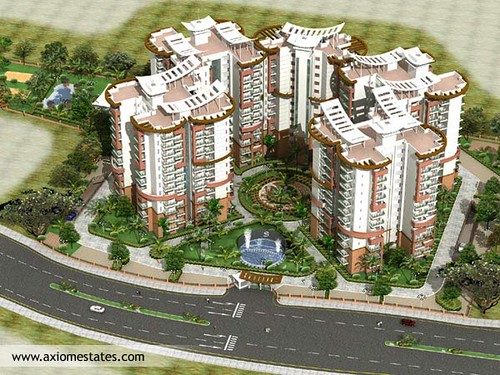
Image credit: Bangalore Properties - Real Estate India - Shriram Symphony by nancyarora2020 via flickr (BY-SA 2.0), sourced through Openverse.
Written by
Rajesh Tiwari
Real estate analyst covering property markets across Delhi NCR, Mumbai, and Bangalore. Rajesh tracks pricing trends, RERA compliance, and investment opportunities for residential and commercial buyers.
Looking for a technology partner?
From IT consulting to virtual office to custom software — eDarpan can help.
Continue reading
Fractional Ownership of Commercial Property in India 2026
SEBI now regulates fractional ownership via SM REITs. Learn how to own Grade-A commercial property in India from ₹10 lakh, plus returns, risks and a diligence checklist.
Capital Gains Tax on Property Sale in India 2026: Save Legally
A retiree saved ₹19 lakh legally by choosing the right method. Learn how capital gains tax on property sale in India works in 2026 and where the real savings hide.
Home Prices Outpacing Salaries in India 2026: Buy or Wait?
Homes in India cost 7-8x your salary while incomes crawl. Use our city-by-city framework to decide whether to buy now or wait two to three years.