Affordable Housing Squeeze in India 2026: Options for Buyers
Affordable homes haven't vanished, they've moved. Here's where ₹40-70 lakh still buys a real 2BHK, which schemes actually help, and how to read the true cost.

Here's the problem playing out in every metro right now: a young couple in Pune, both earning a combined ₹1.4 lakh a month, walk into a builder's sample flat expecting a decent 2BHK for around ₹55 lakh. What they get instead is a pitch for a ₹1.15 crore "premium residence with clubhouse and infinity pool." The genuinely affordable inventory they came for has quietly vanished. That's not bad luck. It's a structural shift.
Between 2021 and 2025, the share of new launches priced under ₹50 lakh across India's top seven cities collapsed from roughly 40% to under 18%, while units above ₹1.5 crore jumped past a third of all launches. Developers chased margins, land got expensive, and the middle-income buyer got squeezed out of the map. If you're a first-time buyer or a middle-income family, the market for affordable housing India 2026 feels like it's actively working against you.
This post is the honest version I'd give a friend. No brochure talk. I'll show you where the real affordable inventory has moved, which government schemes actually reduce your outgo (and which are marketing), how to read the numbers before you sign, and the emerging city corridors where ₹40–70 lakh still buys a real home. There's a worked example, a comparison table, and a checklist you can take to any builder meeting.
Key Takeaways
- Affordable supply hasn't disappeared, it has migrated to peripheral corridors 20–40 km from city cores. That's where your ₹40–70 lakh budget still works.
- PMAY-Urban 2.0 (approved 2024, rolling out through 2026) offers interest subsidy on loans up to ₹25 lakh for homes up to ₹35 lakh. Check eligibility before you assume you don't qualify.
- Your real cost is not the sticker price. Add GST (1% on affordable, 5% on non-affordable under-construction), stamp duty (5–7%), registration, and 12–18 months of possible rent overlap.
- Ready-to-move or near-possession under-construction from RERA-registered developers beats a cheaper "launch offer" from an unknown builder almost every time.
- Emerging corridors near new metro lines, expressways, and GCC office clusters offer the best price-to-appreciation ratio for 2026 buyers.
- Verify RERA registration, title chain, and approved plans yourself. Do not rely on the sales team's word.
Why has affordable housing India 2026 become so hard to find?
Three forces converged, and understanding them tells you where to hunt.
First, land cost. In a city like Bengaluru or Gurugram, land can be 40–55% of a project's total cost. When a developer pays ₹80 crore for an acre, there's no way to build a ₹40 lakh flat on it and survive. So the affordable stock only pencils out on cheaper peripheral land.
Second, the definition problem. The government's affordable housing tag (carpet area up to 60 sq m in metros, value up to ₹45 lakh) carries the 1% GST benefit. But construction costs and buyer aspirations pushed most new projects just above that ceiling, into the 5% GST bracket. Developers found it more profitable to build slightly larger, slightly pricier units.
Third, buyer aspiration met builder margin. Post-2021, demand roared back for larger homes as people worked hybrid. Builders happily met the higher end because the margins are fatter. The mid-budget buyer wasn't ignored out of malice; they were simply less profitable per square foot.
What this means for you: the affordable homes exist, but you have to go where the land is cheaper and the developer's math still works. That's the corridor play, and we'll get specific.
Where are the genuinely affordable homes in 2026?
The single biggest mistake I see middle-income buyers make is anchoring to a locality they already know. If you fix your search inside the ₹1 crore+ core, you'll conclude nothing affordable exists. Widen the radius and the picture changes.
Here are the corridors where ₹40–70 lakh still buys a 2BHK from a RERA-registered developer as of late 2025 pricing:
- Pune: Wagholi, Ravet, Punawale, Moshi. Ready 2BHKs in the ₹48–68 lakh range along the Pune Metro extensions and the Ring Road.
- Bengaluru: Devanahalli (airport corridor), Sarjapur outer, Attibele, Chandapura. ₹50–72 lakh for 2BHK depending on possession stage.
- Hyderabad: Adibatla, Shankarpalli, Kandukur. ORR-adjacent stock still lands ₹45–65 lakh.
- NCR: New Gurugram sectors (89, 92, 95), Sohna, Greater Noida West (Noida Extension), Ghaziabad's NH-24 belt. ₹42–68 lakh 2BHKs, though verify occupancy certificates carefully here.
- Chennai: OMR beyond Siruseri, Oragadam, Guduvancheri. ₹40–62 lakh.
- Ahmedabad and Kolkata: still the most affordable metros. 2BHKs from ₹35–55 lakh in developing peripheries.
The logic is simple: follow the metro extensions, the new expressways, and the office clusters. When a metro station gets confirmed funding, the 2 km catchment around it appreciates first. You want to buy before the station opens, not after. If you want to browse verified listings across these corridors, eDarpan's properties for sale in India section filters by price band and possession status, which saves the corridor-hunting legwork.
For NCR buyers specifically, it's worth reading the Delhi Master Plan 2047 breakdown before you commit, because the planned corridors will reshape which peripheries appreciate over the next decade.
Which government schemes actually cut your housing cost?
Everyone's heard of PMAY. Few buyers actually use it correctly. Let me separate the real benefit from the noise.
PMAY-Urban 2.0
The revamped scheme, approved by the Cabinet in 2024 and rolling out through 2025–26, targets one crore urban households. The Interest Subsidy Scheme (ISS) component is the piece that middle-income buyers care about: subsidy on home loans up to ₹25 lakh for houses valued up to ₹35 lakh, disbursed in installments over five years. The exact rate structure was being finalized as states signed MoUs, so confirm the current subsidy quantum with your lender at application time rather than assuming last cycle's numbers.
Common Mistake: Buyers assume they earn too much to qualify, so they never apply. PMAY-U 2.0 covers economically weaker, low-income, and middle-income groups. A household earning ₹9–12 lakh a year can still fall inside the MIG bracket for the interest subsidy. Ask, don't assume.
State-level schemes
Don't overlook state programs, which often stack on top of central benefits:
- Maharashtra's stamp duty concessions for women buyers (1% rebate) — registering in a woman's name genuinely saves lakhs on a ₹60 lakh flat.
- Karnataka, Tamil Nadu, and UP all run affordable housing boards with subsidized inventory, though allotment is lottery-based and slow.
- Several states offer reduced stamp duty for affordable-category homes.
The GST angle that most buyers miss
For under-construction property, GST is 1% on affordable homes (up to ₹45 lakh, within carpet-area limits) versus 5% on non-affordable. On a ₹44 lakh under-construction flat that qualifies as affordable, you pay roughly ₹44,000 GST. Push the price to ₹46 lakh and you jump to the 5% bracket — about ₹2.3 lakh. That ₹2 lakh sticker difference costs you nearly ₹2 lakh in extra tax. Ready-to-move homes with a completion certificate carry no GST at all, which is a genuine saving people forget to factor in.
How do you calculate what you can actually afford?
The sticker price is a trap. Here's the full cost stack you must model before you fall in love with a flat.
- Base price: the number the builder quotes.
- GST: 1% or 5% for under-construction; zero for completed with CC.
- Stamp duty: 5–7% depending on state (and gender of the buyer in some states).
- Registration charges: typically 1%.
- Parking, club membership, and infrastructure charges: often ₹2–6 lakh, frequently not in the headline price.
- Interior fit-out: budget ₹4–8 lakh minimum for a 2BHK to be livable.
- Rent overlap: if you're buying under-construction, you may pay rent AND pre-EMI for 12–24 months.
A reasonable rule: your EMI should not exceed 40% of net monthly household income, and your total EMIs (including any car loan) should stay under 50%. If the numbers only work at 60%, walk away. The financing math has genuinely gotten harder even as rates dipped — the home loan affordability breakdown for 2026 explains why lower rates didn't actually make homes more affordable.
Worked example: a Pune family's real numbers
Let me make this concrete. Anjali and Rohit, a couple in Pune with combined take-home of ₹1.35 lakh/month, were quoted a ₹92 lakh 2BHK in Baner (the "aspirational" locality). Here's how they reworked the problem.
Option A — Baner, ready-to-move:
- Base: ₹92,00,000
- GST: nil (completed, CC in hand)
- Stamp duty + registration (~6%): ₹5,52,000
- Parking + club: ₹4,00,000
- All-in: ~₹1,01,52,000
- Loan of ₹80 lakh at ~8.5% over 20 years: EMI ≈ ₹69,400 — that's 51% of income. Too tight.
Option B — Punawale, near-possession, RERA-registered:
- Base: ₹58,00,000
- GST (5%, under-construction, above affordable ceiling): ₹2,90,000
- Stamp duty + registration (registered in Anjali's name for the 1% concession, ~5%): ₹2,90,000
- Parking + club: ₹3,00,000
- All-in: ~₹66,80,000
- Loan of ₹50 lakh at ~8.5% over 20 years: EMI ≈ ₹43,400 — about 32% of income. Comfortable.
The Punawale home is 12 km further from the office but sits 800 m from a confirmed metro extension station. They bought it, kept ₹15 lakh in reserve instead of stretching, and their monthly cash flow stayed healthy. Two years of appreciation on the metro corridor has, so far, more than offset the "prestige" they gave up in Baner. The point isn't that peripheries always win. It's that the full-cost math, done honestly, often points somewhere the sales brochure never mentioned.
Should you buy ready-to-move or under-construction in 2026?
This is the decision that quietly makes or breaks affordability. Here's the honest comparison.
| Criteria | Ready-to-Move | Near-Possession (6–12 mo) | New Launch (24–36 mo) |
|---|---|---|---|
| Base price | Highest | Moderate | Lowest (launch discount) |
| GST | Zero (with CC) | 1% or 5% | 1% or 5% |
| Rent overlap risk | None | Low | High (12–36 months) |
| Delivery risk | None | Low | Moderate to high |
| What you see | The actual flat | Near-final | A sample + 3D render |
| Best for | Risk-averse, need to move now | Balance of price and safety | Investors, high risk appetite |
Pro Tip: The "launch price" on a new project looks 15–20% cheaper, but once you add 24 months of rent (₹18–25K/month = ₹4.3–6 lakh), zero GST savings, and delivery risk, the discount often evaporates. For a first-time buyer with a single earning household, near-possession from a developer with a clean delivery record is usually the sweet spot. You're buying certainty, and certainty is worth money.
What must you verify before you sign anything?
I've watched too many affordable-segment buyers get burned by paperwork they trusted the sales team to explain. Do this yourself.
- RERA registration: Every project must be registered. Look it up on your state's RERA portal by the registration number, not the project name. Check the promised completion date and any past complaints filed.
- Title chain: Get a lawyer to trace ownership back 30 years. This is ₹15–25K well spent. A clean title is non-negotiable.
- Approved building plan: Confirm the sanctioned plan matches what's being built. Unauthorized floors get demolished, and you lose everything.
- Occupancy / Completion Certificate: For ready-to-move, no CC means no legal move-in and no GST exemption. Insist on seeing it.
- Encumbrance certificate: Confirms no existing loans or legal claims on the property.
- Builder's delivery history: Search past projects for delivery delays and litigation. RERA and consumer forums are public.
- Loan sanction in principle: If your bank is hesitant to lend against a specific project, that's a red flag about the project, not just you.
If you're an NRI buying into these corridors, the TDS and repatriation rules add a layer most agents gloss over — the NRI property buying guide for 2026 walks through the compliance you can't skip.
How do emerging corridors and the office boom affect affordability?
Here's a pattern worth understanding. Where big Global Capability Centres and IT parks open, affordable residential demand follows within 18–24 months, and prices in the surrounding periphery climb. If you buy ahead of the office cluster maturing, you capture appreciation. If you buy after, you pay for it.
Corridors like Hyderabad's Adibatla, Bengaluru's Sarjapur, and Pune's Hinjewadi periphery are riding exactly this wave. The GCC office boom analysis maps where the next employment clusters are landing, which is a genuinely useful lens for a mid-budget buyer deciding between two similar-priced flats. Pick the one closer to future jobs.
Just be disciplined. Emerging corridor does not mean "any empty field a builder is selling." It means confirmed infrastructure — a funded metro line, a completed expressway link, an operational IT park. Speculative land plays without infrastructure are how people lose money. Compare the reasoning against the luxury market trends too, because when the top end overheats, the mid-segment corridors often become the smarter capital allocation.
How eDarpan can help you find the right home
Corridor hunting, price-band filtering, and possession-status verification are tedious to do across a dozen builder websites. eDarpan's real estate platform was built to cut that down. You can compare verified listings by budget and possession stage on the buy side, or bridge the gap with a rental in the same corridor while your under-construction flat completes — a practical move if you want to avoid paying rent and pre-EMI in two different localities.
If you're weighing options and want a straight conversation about corridors, financing math, and what's genuinely worth it in your budget, reach out to the eDarpan team. You can also learn more about how we work before you engage.
Frequently Asked Questions
Is 2026 a good time to buy an affordable home in India?
For end-users who plan to live in the home, yes, provided the EMI stays under 40% of household income and you buy in a corridor with confirmed infrastructure. Prices in peripheral corridors are still reasonable and appreciating. For pure short-term speculation, be far more cautious.
What is the maximum home value to qualify as affordable housing for GST?
The affordable housing category for the 1% GST rate covers homes valued up to ₹45 lakh with carpet area up to 60 sq m in metros and 90 sq m in non-metros. Above that value or size, under-construction property attracts 5% GST. Completed homes with a completion certificate carry no GST.
Can middle-income earners get PMAY subsidy in 2026?
Yes. PMAY-Urban 2.0 includes a middle-income group category, and households earning up to roughly ₹9–18 lakh annually can qualify for interest subsidy depending on the sub-bracket. Confirm the exact income limits and current subsidy quantum with your lender, since state rollout details are being finalized through 2025–26.
Should I register the property in my wife's name to save stamp duty?
In several states including Maharashtra, Delhi, and Haryana, registering in a woman's name gives a stamp duty concession, often around 1%. On a ₹60 lakh property that's roughly ₹60,000 saved. Confirm your state's current rate, as concessions change with each budget.
How much should I keep as a cash reserve after buying?
Keep at least six months of EMIs plus living expenses liquid after your down payment and registration costs. Stretching every rupee into the flat leaves you dangerously exposed if income drops or the property needs unexpected work. In the Pune example above, keeping ₹15 lakh in reserve was the smart move.
Is under-construction cheaper than ready-to-move in the long run?
Not always. The lower launch price is often offset by GST, 12–36 months of overlapping rent and pre-EMI, and delivery risk. Near-possession property from a developer with a clean track record usually offers the best balance of price and certainty for first-time buyers.
What's the single biggest red flag when buying an affordable home?
A project that isn't registered on the state RERA portal, or one where your own bank is reluctant to sanction a loan. If a mainstream lender won't finance the specific project, treat that as the market telling you something the sales team won't.
The bottom line
The squeeze in affordable housing India 2026 is real, but it's a squeeze on location convenience, not on affordable homes existing at all. The inventory has moved to the corridors following metro lines, expressways, and employment clusters. Your job is to widen your search radius, run the full-cost math honestly (GST, stamp duty, parking, rent overlap), verify the paperwork yourself, and let go of the prestige address if the numbers don't work.
Buy near-possession from a RERA-registered developer with a clean delivery record. Register smart to capture stamp duty concessions. Keep a genuine cash reserve. And use the government schemes you're actually entitled to instead of assuming you don't qualify. Do that, and a middle-income family can still own a real home in 2026 without gambling their financial stability on it. When you're ready to compare actual listings and corridors, start on eDarpan Properties and take the checklist above to every builder meeting.
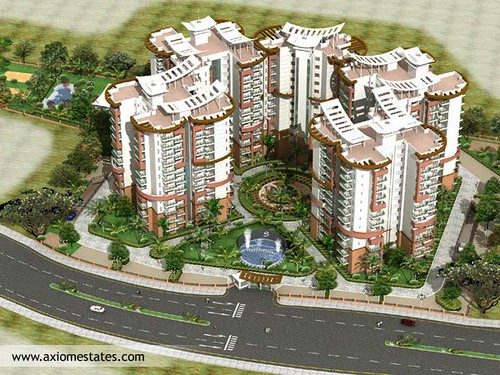
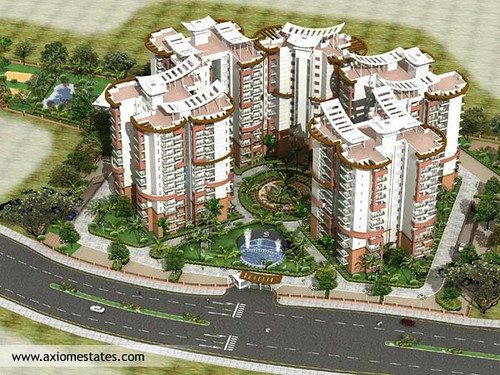
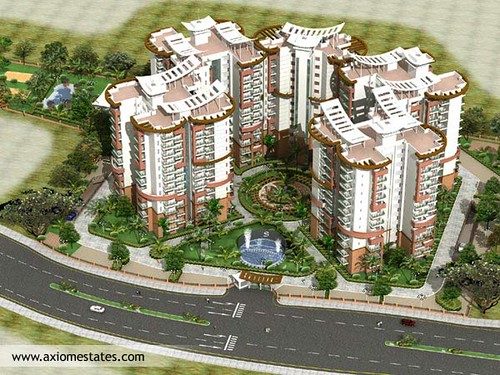
Image credit: Pune Properties - Real Estate India - Vilas Palash Interiors1 by nancyarora2020 via flickr (BY-SA 2.0), sourced through Openverse.
Written by
Rajesh Tiwari
Real estate analyst covering property markets across Delhi NCR, Mumbai, and Bangalore. Rajesh tracks pricing trends, RERA compliance, and investment opportunities for residential and commercial buyers.
Looking for a technology partner?
From IT consulting to virtual office to custom software — eDarpan can help.
Continue reading
Fractional Ownership of Commercial Property in India 2026
SEBI now regulates fractional ownership via SM REITs. Learn how to own Grade-A commercial property in India from ₹10 lakh, plus returns, risks and a diligence checklist.
Capital Gains Tax on Property Sale in India 2026: Save Legally
A retiree saved ₹19 lakh legally by choosing the right method. Learn how capital gains tax on property sale in India works in 2026 and where the real savings hide.
Home Prices Outpacing Salaries in India 2026: Buy or Wait?
Homes in India cost 7-8x your salary while incomes crawl. Use our city-by-city framework to decide whether to buy now or wait two to three years.