Unsold Homes in Delhi NCR 2026: Negotiate Harder or Hold Off?
Unsold flats are piling up across Delhi NCR. Learn when the slowdown gives you real room to negotiate, and when you are being sold a story.
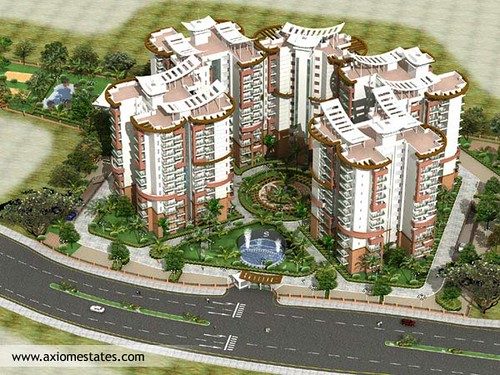
Your cousin in Noida has been watching the same flat listing for four months. The price has dropped twice, the builder keeps offering a "limited-time" 3% off, and every time you visit the sales office the agent says another buyer is "very close." You are wondering whether the market has finally turned in your favour, or whether you are about to be sold a story. If you are looking at a ₹1.2 crore apartment in Sector 150 or a ₹85 lakh unit in Dwarka, that question is worth roughly ₹5 to ₹15 lakh of your money.
Here is the context that matters. Housing sales across seven major Indian cities fell by about 6% in the recent period, and while Delhi NCR has not collapsed, the slowdown has been uneven. Unsold inventory in parts of Gurugram and Greater Noida has crept up, and some developers are quietly offering concessions that they would have refused two years ago. That creates real room to negotiate property price Delhi NCR 2026 buyers have not had in a while. It does not mean every listing is a bargain, and it does not mean the best discounts are available to everyone.
This article walks through how to read the market, what concessions are realistic to ask for, which ones are almost always negotiable, and what to verify before you sign anything. It is written for first-time buyers stretching a home loan and for mid-budget buyers who want to avoid overpaying for a builder's cash-flow problem. Where the advice depends on specific rules, such as RERA registration, GST treatment of under-construction property, or stamp duty differences between states, I have been as concrete as I can.
Key Takeaways
- Unsold inventory is a signal, not a discount. Find out whether the unsold units are in the project you want or elsewhere in the same developer's portfolio.
- The most negotiable items are often not the base price. Payment-plan flexibility, waived club or parking charges, and registration cost sharing usually move faster than the per-square-foot rate.
- Ready-to-move homes with a stuck builder are a different negotiation from under-construction units on a construction-linked plan. Know which one you are looking at before you open your mouth.
- Always get the carpet area, the RERA registration number, and the sanctioned plan in writing. Verbal promises on a sales-office whiteboard are worth nothing.
- Walk away is a real option. The best leverage you have is a credible willingness to buy elsewhere.
Is the Delhi NCR Market Actually Soft Enough to Negotiate Property Price Delhi NCR 2026?
Before you ask for anything, you need a view of whether the seller is under pressure. A slowdown in aggregate sales does not automatically translate into a discount on the specific unit in front of you. Developers manage inventory project by project, and a builder with strong sales in Dwarka Expressway may be entirely comfortable while a smaller builder in an outer sector is sitting on forty unsold units.
Start by pulling three data points for the exact micro-market: recent registered sale prices from the state's registration portal (the Haryana and UP registration portals are reasonably searchable, and Delhi's IGRS portal covers Dwarka and other Delhi-side areas), current listing prices on the major portals, and the developer's launch-to-possession history. If listing prices have been flat for six months while registered transactions have dipped, that is a sign the seller is holding out and will eventually move. If registered prices are holding while listings pile up, the asking price is probably inflated and the real room is in the gap between the two.
A practical rule: if a project has been on the market for more than 18 months without a launch or a price revision, the developer has a carrying-cost problem. Interest on construction finance, the cost of marketing, and the opportunity cost of unsold stock all add up. That is your opening.
Ready-to-move versus under-construction: different games
For a ready-to-move flat where the builder has delivered and the seller is an individual or a smaller firm, your negotiation is closer to a resale deal. Individual sellers respond to cash-in-hand offers, quick closing, and clean documentation. A serious buyer who can close in 30 days, with the loan pre-sanctioned, can often extract 5% to 8% below the first ask in the current market. Do not quote that as a rule; it depends heavily on the locality and how long the unit has been listed.
For under-construction units on a construction-linked payment plan, the leverage shifts. The builder wants your booking amount and your next instalment to keep their project funded. The concessions available are usually structural rather than headline discounts, and we cover those in the next section.
Which Concessions Are Most Negotiable Right Now?
Many buyers fixate on the headline rate per square foot and ignore everything else. In a soft market, the builder's sales team often has more room on the ancillary charges than on the base price, because the base price is what appears on the RERA-registered agreement and is harder to change for other buyers to see. Here is roughly how the common levers compare.
| Concession | Typical negotiability in a soft market | Why it moves | What to ask for |
|---|---|---|---|
| Base price per sq ft | Moderate, usually 3% to 8% on unsold stock | Visible to other buyers, so builders resist | A written discount tied to a booking date within 7 to 14 days |
| Payment plan (down payment, instalment timing) | High | Builder needs cash inflow timed to construction milestones | Lower booking amount, or a plan that shifts 5% to 10% of the cost to post-possession |
| Club membership, car parking, power backup charges | High | Often treated as "add-ons" with inflated margins | Waiver or a fixed, lower amount in writing |
| Registration and stamp duty cost sharing | Medium | Builders sometimes absorb part of it on unsold units | Share of stamp duty or registration fee borne by developer |
| Preferred floor, corner unit, or view upgrade | Medium to high on unsold units | Unsold premium units are a liability | Floor or unit change at the same rate |
Payment plans are where the real money is
A builder offering a 10% concession on the price sounds attractive, but if they also demand 90% of the cost before handover, your loan structure, your interest outgo, and your cash flow all suffer. Compare the net present value of the offers, not the headline numbers. A simple way to do this: list every instalment with its due date, discount each amount at your home loan interest rate for the months until it is due, and sum the results. A ₹1.1 crore flat with a 60-day stretched plan can cost less in present-value terms than a ₹1.0 crore flat with a front-loaded plan.
On a ₹1 crore unit, moving 5% of the value from pre-possession to post-possession, paid after you have a sanctioned loan, is worth roughly ₹5 lakh in cash-flow terms over a three-year construction period. Builders who will not move on the headline rate often move on this.
Pro Tip: Ask for the charges to be itemised before you negotiate
The most common mistake I see is buyers negotiating the base rate while the all-in cost is quietly padded. Before you discuss any discount, ask the sales team for a full statement covering base price, preferred location charges, external development charges, infrastructure development charges, IFMS (interest-free maintenance security), club charges, parking, power backup, and any GST component. Then compare the all-in figure across two or three projects. A builder advertising a lower base rate with a ₹3 lakh club charge and ₹2 lakh of parking can be more expensive than a competitor with a higher base and nothing else.
A Worked Example: Negotiating a 3BHK in Greater Noida West
Consider a hypothetical but realistic case. A family of four is looking for a 3BHK of roughly 1,650 sq ft carpet area in a mid-range project in Greater Noida West. The developer's ask is ₹5,400 per sq ft on the super area, which works out to a headline price around ₹1.2 crore after the usual loading. The family's budget is ₹1.1 crore, and they have a pre-sanctioned home loan for ₹85 lakh.
Their approach was methodical rather than aggressive. They pulled registered sales from the Gautam Buddh Nagar registration records for the previous six months and found transactions clustering around ₹4,900 to ₹5,100 per sq ft for similar units in nearby towers. They then visited the sales office on a weekday, asked for an itemised cost sheet, and discovered ₹4.2 lakh in club and parking charges that were not in the advertised price.
Their opening position was not a lowball number. They offered to close at ₹5,000 per sq ft on the super area, with club and parking charges waived, and with a booking amount of 10% rather than 15%, provided the agreement was signed within ten days. The builder countered at ₹5,150 with club charges reduced to ₹1 lakh and parking unchanged. The family accepted, after asking for and receiving a written cost sheet that reflected the final figures, and after confirming the unit's RERA registration number on the UP RERA portal.
The net result was an all-in saving of roughly ₹7 to ₹8 lakh against the first quoted total, without touching the developer's headline rate in any dramatic way. The lesson is that the concessions that moved were the ancillary charges and the booking structure, not the per-square-foot figure that every other buyer in the tower would see.
What Should You Verify Before Signing?
A discount is worth nothing if the title is clouded or the project is stuck in litigation. Before you pay a rupee beyond a token booking amount, verify the following. Treat this as a checklist you work through with a lawyer or a chartered accountant, not as a substitute for their advice.
- RERA registration. Confirm the project is registered under the applicable state RERA, get the registration number, and check that the carpet area, sanctioned layout, and completion date on the portal match what the sales team has told you. In Uttar Pradesh that is UP RERA, in Haryana it is HRERA Gurugram or Panchkula depending on the district, and in Delhi it is DRERA.
- Land title and encumbrances. Obtain an encumbrance certificate for the land for at least 13 to 30 years, depending on your lawyer's advice, and check for any mortgage, litigation, or government acquisition notice.
- Sanctioned building plan. Ask for the plan approved by the development authority, and check that the unit you are buying matches it. Mismatched carpet areas and balconies that have been quietly enclosed are common issues.
- Construction-linked payment and escrow. RERA requires developers to keep a portion of buyer money in a separate account for construction. Ask for confirmation of the escrow arrangement and the percentage of collections being deposited.
- GST treatment. For under-construction residential property the effective GST rate is typically 5% without input tax credit for affordable housing and 1% for affordable housing under the relevant notifications, and 5% for other residential units, but the exact rate depends on the classification of the project and whether it is in the affordable category. Ask the builder to state the GST component and the applicable classification in writing, and check it against the current notification. Do not assume.
- Stamp duty and registration. Stamp duty rates and registration fees differ between Delhi, Haryana, and Uttar Pradesh, and sometimes between sub-districts. Include them in your all-in calculation, and ask whether the developer will share any part of them on unsold stock.
- Possession timeline and delay compensation. Check the committed possession date and the compensation clause for delay. A builder who will not commit to a delay penalty in writing is telling you something about their confidence.
Once you have verified the basics, the agreement for sale should reflect every concession you negotiated. Concessions promised verbally, or written on a brochure, are not enforceable in practice. Ask your lawyer to review the agreement clause by clause against your notes.
Should You Negotiate Harder or Hold Off Entirely?
This is the question every buyer is really asking. The honest answer depends on three things: how long you can afford to wait, whether your rent is eating a large share of your income, and whether the specific project has a credible reason to hold its price.
If you are paying rent of ₹35,000 a month in Dwarka and the flat you want would cost ₹85 lakh, every month of waiting has a real cost. The rent you pay is not returned, and you are betting that prices will fall enough to make up for it. Price falls in a single micro-market are possible, but a 6% fall in aggregate city sales does not guarantee a 10% fall in your locality. For a buyer who plans to live in the home for fifteen years, the right question is usually whether the purchase works at today's price with reasonable concessions, not whether it will be cheaper next year.
If you are a mid-budget buyer with some flexibility, the case for holding off is stronger, especially if the project has a long history of unsold units and a builder with visible financial stress. In that situation, your leverage increases with time, and you may be able to wait for a launch-period distress offer. Keep in mind that builder distress can also mean delayed possession, and a cheaper flat that arrives four years late can cost more than the discount.
For a broader view on whether buying makes sense at current price-to-income levels, our piece on home prices outpacing salaries and whether Indian buyers should stop waiting in 2026 lays out the arithmetic in more detail. If you are weighing a specific micro-market, the Gurugram versus Dwarka buyer's guide compares where the rupee stretches furthest, and Dwarka flat versus plot buyer math is useful if you are considering a plot rather than an apartment.
How Do You Handle the Negotiation Itself Without Losing the Unit?
The buyers who negotiate well share a few habits. They do their research before they walk into the sales office. They know the registered comparables. They have a pre-sanctioned loan or a clear funding plan, because a builder cannot discount to a buyer who may not be able to close. And they are genuinely willing to walk away, which they signal by mentioning other projects they are considering.
Keep the first offer specific and conditional. "Will you do better on the price?" invites a vague answer. "I can close at ₹5,000 per sq ft on the super area, with club charges waived and a 10% booking amount, if we sign within ten days" forces a decision. Make one offer at a time, and let the seller counter. If they come back with a number that is close, ask for the concession in writing before you celebrate.
Do not reveal your maximum budget. Do not get emotionally attached to a specific unit in the sales room, because the sales team is trained to read that. And never sign a booking form that pre-commits you to a payment you have not verified.
Frequently Asked Questions
Can I really negotiate a property price in Delhi NCR in 2026?
Yes, especially on unsold inventory and in projects that have been on the market for a long time. Expect the room to be larger on payment-plan terms, waived ancillary charges, and booking structure than on the headline per-square-foot rate. Always compare against recent registered transactions before you open.
What is the best time to buy a flat in Noida or Gurugram?
There is no reliable calendar window. The better signal is whether a specific project has high unsold stock, a builder under financial pressure, and listings that have stayed flat for six months or more. Those conditions usually create the most room, but they also carry delivery risk, so verify RERA status carefully.
Do I need a lawyer to buy an under-construction flat?
Yes. Even if you are confident in your own reading of the documents, a lawyer experienced in the relevant state's RERA and registration rules will catch clauses about delay compensation, escrow, and cancellation that are easy to miss. The cost is small relative to the purchase price.
How much stamp duty will I pay on a flat in Delhi versus Haryana or UP?
Stamp duty and registration rates vary by state and sometimes by sub-district, and they change through budget and notification cycles. Check the current rates on the relevant state's registration or stamp portal, and include them in your all-in cost calculation before you compare two projects in different states.
What is the difference between carpet area and super area, and why does it matter?
Carpet area is the usable floor space inside the walls of the unit. Super area adds a proportionate share of common areas such as lobbies, corridors, and staircases. Builders typically quote the price on super area, so a flat with a high loading factor can cost more per usable square foot than its headline rate suggests. Always compare on carpet area.
Should I buy a ready-to-move flat or an under-construction one in the current market?
A ready-to-move flat lets you see what you are buying, avoids construction delay risk, and often gives you a faster, cleaner negotiation with an individual seller. An under-construction unit can offer better payment terms and a lower entry price but carries delivery and cash-flow risk. Choose based on your timeline and tolerance for delay, not solely on the headline discount.
What is the single biggest mistake buyers make when negotiating in a soft market?
Negotiating the wrong number. Buyers fight hard on the base rate, which is the most visible and least movable figure, and then accept an opaque set of charges, a front-loaded payment plan, and unclear GST treatment. Get the all-in cost in writing, compare it across projects, and then negotiate on the components that actually move.
If you are working through this decision and would like a second pair of eyes on the numbers, eDarpan Properties can help you compare listings, sanity-check pricing against recent transactions, and shortlist projects for buying or renting across Delhi NCR. You can see what is currently available on our properties for sale in India page, or get in touch with our team to talk through your budget and timeline. For a sense of who we are and how we work, the about eDarpan page has more detail.
Image credit: Bangalore Properties - Real Estate India - Shriram Symphony by nancyarora2020 via flickr (BY-SA 2.0), sourced through Openverse.
Written by
Rajesh Tiwari
Real estate analyst covering property markets across Delhi NCR, Mumbai, and Bangalore. Rajesh tracks pricing trends, RERA compliance, and investment opportunities for residential and commercial buyers.
Looking for a technology partner?
From IT consulting to virtual office to custom software — eDarpan can help.
Continue reading
Buying a Flat in Gurugram vs Dwarka 2026: Where the Rupee Stretches Further
Gurugram or Dwarka? Learn how to compare true cost per usable square foot, net rental yield, and connectivity to find where your rupee stretches furthest in 2026.
Premium Homes in NCR 2026: Buy for Living or Investing?
Is a premium NCR home a place to live or a store of value? A number-first guide to premiums, rental yields and resale liquidity before you buy.
Rent vs Buy in Noida 2026: Real Yields After Price Surges
Noida prices keep climbing, but is buying still smarter than renting? Here's a number-driven breakdown of yields, EMIs, break-even and hidden costs for 2026.