Buying a Flat in Gurugram vs Dwarka 2026: Where the Rupee Stretches Further
Gurugram or Dwarka? Learn how to compare true cost per usable square foot, net rental yield, and connectivity to find where your rupee stretches furthest in 2026.
A two-bedroom flat in Gurugram's Sector 82 and a comparable unit in Dwarka Sector 23 can differ in price by a figure that would fund a decent car. Yet the buyer who looks only at the headline rate per square foot often walks away with the wrong asset. The question most NCR buyers actually face is not "which is cheaper" but "which gives my rupee the best combination of entry price, rental return, and appreciation I can realistically capture." That is a harder calculation, and in 2026 it is worth doing carefully because premium-housing demand in Gurugram and the infrastructure push around Dwarka have both moved prices faster than many buyers expected. If you are weighing a Gurugram vs Dwarka property 2026 decision, this guide walks through the buyer's math I use when advising clients, including per-square-foot comparisons, rental yield, connectivity, and the hidden costs that quietly change the answer. I will also show a worked example, a comparison table, and a checklist you can take to a broker or lawyer. Where the topic overlaps with how we help businesses plan their own capital decisions, I will point you to the relevant eDarpan resources as well.
Key Takeaways
- Compare on all-in cost per usable square foot, not the advertised super-area rate. Loading charges, parking and maintenance can shift the gap by 8 to 15 percent.
- Gross rental yield is a starting point only. Net yield after property tax, society charges, vacancy and interest on your loan is the number that matters.
- Gurugram wins on job-linked rental demand and premium-segment liquidity. Dwarka wins on entry price and on the long-run payoff from delayed infrastructure.
- Connectivity is not just distance to the metro. Check the actual commute to your workplace at peak hours, and whether the nearest station is operational today or only on a future notification.
- Stamp duty, registration, GST treatment (under-construction versus ready-to-move) and RERA registration change your effective price by lakhs. Verify them before you compare any two projects.
Why Gurugram vs Dwarka Property 2026 Is Harder to Call Than It Looks
Five years ago the comparison was simple: Gurugram was the expensive corporate address and Dwarka was the calmer, cheaper residential suburb that Delhi families bought into. Both assumptions have blurred. Gurugram's office market keeps absorbing global capability centres and the premium residential stock around Golf Course Road, Sohna Road and the New Gurgaon belt has repriced upward. Dwarka, meanwhile, has benefited from the Dwarka Expressway corridor, the upcoming Delhi-Gurugram connectivity projects and the Dwarka Sub-City's steady redevelopment. Price momentum in both micro-markets has been strong enough that the old "buy cheap in Dwarka, hold" thesis needs fresh numbers.
The honest answer is that neither city wins across the board. The right choice depends on how you plan to use the flat (self-occupation, rental, or pure appreciation), how long you can hold it, and how much cash you can commit upfront versus carry as an EMI. I have seen buyers who should have bought in Dwarka pay a premium for Gurugram because the brochure was better, and buyers who saved on the headline rate and then spent three years paying a daily commute cost that wiped out the saving. The method below is designed to prevent both mistakes.
How Do You Calculate the True Cost Per Square Foot?
Start with the number builders quote, which is almost always the super-area rate, and convert it to what you actually own. Super area includes common corridors, lift lobbies, the share of clubhouse and amenity space, and sometimes the lawn. The carpet area is the space you can actually use inside the walls. In many NCR projects carpet area is 60 to 70 percent of super area, so a flat advertised at ₹9,000 per square foot on super area can cost you closer to ₹13,000 to ₹15,000 per square foot of usable floor.
Here is the step-by-step buyer calculation I use:
- Base price: Basic rate multiplied by super area. Confirm whether the rate is per super area or carpet area in the agreement, because the wording varies.
- Floor rise, PLC and location charges: Preferential location charges for park-facing or corner units often add 5 to 15 percent. Get these itemised in writing.
- Car parking: In Gurugram premium projects, a covered parking slot can run from ₹4 lakh to ₹10 lakh or more depending on the tower. Dwarka projects are frequently cheaper here, but check whether parking is open or covered.
- Club membership, power backup and IFMS: Club membership, power backup installation and the interest-free maintenance security deposit are one-time charges that often add ₹2 lakh to ₹5 lakh.
- Stamp duty and registration: Haryana and Delhi charge different rates and rules apply to how the consideration is valued. Use the current state schedules and get an advocate to confirm before you commit.
- GST: Under-construction purchases attract GST on the under-construction component (with the applicable concessional rate for affordable housing, where it applies), while a ready-to-move resale is generally outside GST. Ask the builder for the exact treatment in the allotment letter.
- Divide by carpet area: The all-in total divided by carpet area gives you your real per-square-foot cost. This is the figure to compare across projects.
Pro Tip: Ask for the "all-in" cost sheet in writing before you sit down to negotiate. Builders who quote ₹10,500 per square foot on super area often hide ₹2,000 to ₹3,000 of extras in the schedule of payments. A clean all-in number makes comparison honest and gives you leverage on the items you can actually negotiate, such as parking and PLC.
Which City Gives Better Rental Yield in 2026?
Rental yield is annual rent divided by purchase price, expressed as a percentage. Gross yield uses the rent you receive. Net yield subtracts costs you pay to hold the asset. Most investors quote gross yield because it looks better, and most regret it later.
Gurugram's rental demand is anchored by employment. Tenants are typically white-collar professionals working in the Cyber City, Udyog Vihar and Sohna Road corridors, and corporate leasing can keep premium flats occupied. The trade-off is that entry prices are higher, which compresses gross yield even when rents are strong. Dwarka rents are lower in absolute terms but the entry price is also lower, and the tenant base includes government employees, Delhi commuters and families who prefer the quieter sub-city. Vacancy patterns differ too: Gurugram premium units can sit empty for a month between tenants, while well-priced Dwarka units with good metro access often re-let faster.
For the worked comparison below, assume a 1,200 sq ft carpet-area flat in each city. These figures are illustrative and meant to show method, not to quote current market prices, which you must verify on the ground.
Worked Example: A Two-Bedroom Flat in Each City
Consider a salaried buyer, Ritu, who has ₹60 lakh available and wants to rent out the flat while she lives in a rented place near her office. She is choosing between a Gurugram project on Sohna Road and a Dwarka Sector 23 project near the metro. Her goal is to understand whether the higher entry cost in Gurugram is compensated by better rent and appreciation.
Working through the method for each:
- Gurugram (illustrative): Advertised super-area rate ₹11,000 per sq ft, super area 1,600 sq ft, base price ₹1.76 crore. Add PLC ₹8 lakh, covered parking ₹6 lakh, club and IFMS ₹4 lakh, stamp duty and registration around ₹10 lakh. All-in roughly ₹2.04 crore on 1,200 sq ft carpet, or about ₹17,000 per sq ft of carpet. Assuming the rent is ₹38,000 per month, gross yield is about 2.2 percent.
- Dwarka (illustrative): Advertised super-area rate ₹8,500 per sq ft, super area 1,500 sq ft, base price ₹1.28 crore. Add PLC ₹3 lakh, open parking included, club and IFMS ₹2.5 lakh, stamp duty and registration around ₹7 lakh. All-in roughly ₹1.40 crore on 1,200 sq ft carpet, or about ₹11,700 per sq ft of carpet. Assuming rent of ₹24,000 per month, gross yield is about 2.1 percent.
The point is not that one city wins. The point is that the headline rates (₹11,000 versus ₹8,500) understate the gap, and the all-in per-square-foot numbers show Dwarka is meaningfully cheaper to enter. Gross yields are close, which means the difference in return must come from appreciation and from how each flat holds up in a downturn. Ritu's decision then rests on her job location, her holding period and how comfortable she is with a higher loan. If she plans to live in Gurugram later, the Gurugram unit may be the better personal asset. If she is purely investing, the Dwarka unit's lower cash requirement leaves room for a second asset.
Once you add net costs (property tax, society maintenance, vacancy allowance of one month, and interest on a loan), the net yields drop to roughly 1.5 to 1.8 percent in both cities at these assumptions. That is the number worth comparing, and it is why the all-in method exists.
Comparison Table: Gurugram vs Dwarka on the Criteria That Matter
| Criteria | Gurugram (Sohna Road / Golf Course belt) | Dwarka (Sectors 21 to 23 and Expressway side) | Why it matters to you |
|---|---|---|---|
| Typical all-in cost per sq ft of carpet | Higher, often ₹15,000 to ₹20,000+ in premium projects | Lower, often ₹10,000 to ₹14,000 in comparable projects | Sets your entry ticket and loan size |
| Rental demand driver | Corporate and white-collar employment | Government staff, commuters, families | Determines tenant quality and stability |
| Connectivity today | Rapid Metro and expressway access; strong road network | Metro access in parts of the sub-city; expressway proximity improving | Commute time at peak hours matters more than distance |
| Infrastructure upside | Largely built out; upside comes from premium repricing | Meaningful pipeline; upside depends on delivery timelines | Infrastructure delays are the main appreciation risk in Dwarka |
| Liquidity on resale | Strong in premium segment | Good in mid-segment, thinner for luxury stock | Affects how quickly you can exit |
Treat the price bands above as directional. Verify current rates through recent registered transactions and active listings, not only brochures.
What Connectivity Should You Actually Check?
Buyers often equate "near the metro" with "well connected", but the metro is only one leg of a commute. Walk through this checklist before you trust any connectivity claim in a brochure:
- Confirm whether the nearest station is operational today. Many listings show stations that are sanctioned but not yet open, and the timeline can slip by years.
- Measure the door-to-door commute at 9 a.m. on a weekday, not on a Sunday with the sales agent. Time the walk to the station, the wait, and the last-mile leg.
- Check whether the route you need passes through known bottlenecks at peak hours on the expressway or the connecting roads.
- Ask about the interchange situation if you need to change lines or modes. Two transfers can turn a 30-minute ride into 70 minutes.
- For Dwarka specifically, separate what is built from what is announced. Give announced corridors a discount until construction is visible on the ground.
Common Mistake: Buyers pay a premium for a project that is "10 minutes from the metro" and discover the metro is a 15-minute auto ride away through a congested stretch. Always time the commute yourself on a working day. It costs an hour and it can save you a decade of frustration.
What Is the Compliance Checklist Before You Sign?
Paperwork errors are the most expensive mistakes in property purchase, and they are rarely visible in the sales pitch. Before you pay a token amount, confirm the following:
- RERA registration: Check the project and the agent on the relevant state RERA portal. Haryana and Delhi each maintain their own registry. An unregistered project is a serious red flag for any purchase above a small deposit.
- Title and encumbrances: Get an independent title search by a qualified advocate covering the land, approvals and any bank charge or litigation.
- Approvals: Building plan sanction, environmental clearance where required, and completion or occupancy certificate for ready-to-move properties.
- GST treatment: Confirm in the allotment letter how GST applies and whether any concession is available.
- Stamp duty and registration: Confirm the applicable rates and who bears the cost. These are non-refundable and calculated on the registered value, so an under-declared value can create its own problems later.
- Escrow and payment schedule: Ask how construction-linked payments are structured and whether funds are held in a designated account as required under RERA.
For buyers who run businesses or hold property through a company or LLP, the registered address and entity structure can affect how you document the purchase and receive rent. If you are setting up a holding entity or need a registered address for filings, our virtual office address service for GST and company registration can simplify the paperwork, and our IT and business consulting team can help you think through the operational side if you manage rentals across several units.
How Do You Run the Decision as a Step-by-Step Plan?
Once you have the numbers, a practical buying process looks like this:
- Define the purpose: Self-occupation, rental income, or appreciation. The answer changes which city and which project you should shortlist.
- Set a total budget: Include stamp duty, registration, GST, parking, club and IFMS, and a buffer of at least 5 percent for surprises.
- Shortlist three projects per city: Use RERA data, recent resale transactions and tenant feedback, not just brochures.
- Calculate all-in cost per carpet sq ft for each shortlisted project using the method above.
- Estimate net rental yield at a conservative vacancy assumption and at the rent you can realistically achieve, not the broker's optimistic figure.
- Time the commute from each project to your workplace at peak hours.
- Stress-test the loan: Model your EMI at a rate 1 to 2 percentage points higher than today and check whether you can still pay comfortably.
- Verify compliance through RERA, title and approvals before any significant payment.
- Negotiate on the items that move: PLC, parking and the payment plan are usually negotiable. The base rate often is not.
If you are also weighing whether to buy now or wait, our earlier analysis on home prices outpacing salaries and whether Indian buyers should keep waiting in 2026 is a useful companion read. For NCR investors who are considering plots rather than flats in Dwarka, our Dwarka flat versus plot buyer math works through a different set of trade-offs. And if your interest extends beyond Gurugram and Dwarka, the piece on premium homes in the NCR for living or investing covers the premium segment in more depth.
Where Should You Look for Listings and Rentals?
Whether you buy or rent first, start with verified listings rather than cold leads. Our properties for sale across India section lists current options with clear pricing, and the rental properties in India section is useful if you want to test a neighbourhood before committing to a purchase. Rent in the area for six months if you can. It is the cheapest way to learn the commute, the noise, the water supply and the social fabric before you lock in a 20-year loan. If you want help reading the market or structuring a multi-property plan, eDarpan Properties can walk you through it, and you can contact our team for a conversation tailored to your budget and timeline.
Frequently Asked Questions About Gurugram vs Dwarka Property 2026
Is Gurugram or Dwarka better for property investment in 2026?
Neither is universally better. Gurugram offers stronger rental demand from corporate tenants and deeper liquidity in the premium segment, but entry prices are higher. Dwarka offers a lower entry ticket and an infrastructure-led upside, though returns depend on how reliably projects are delivered. Your holding period and budget should decide it.
Which is cheaper per square foot, Gurugram or Dwarka?
Dwarka is generally cheaper on an all-in per-square-foot basis for comparable projects. Compare on carpet area including parking, PLC, club membership and stamp duty, not on the advertised super-area rate, because the gap between the two numbers is large.
What rental yield can I expect from a flat in Gurugram vs Dwarka?
Gross yields in both cities often sit in a similar range at current prices, but net yields are lower once property tax, society charges, vacancy and loan interest are deducted. Model your own numbers using the actual rents achievable in the specific project rather than relying on broker estimates.
Do I pay GST on a flat bought in Gurugram or Dwarka?
Under-construction purchases generally attract GST on the under-construction component, with concessional rates applying in some categories. Ready-to-move resale purchases are generally outside GST. Confirm the exact treatment in the allotment or sale agreement before you pay.
How do I check if a project in Dwarka or Gurugram is RERA registered?
Search the project and the developer on the relevant state RERA portal for Haryana or Delhi. Verify the registration number on the portal matches the one in the agreement. An unregistered project should be a clear reason to walk away for any significant payment.
Is a metro connection enough to justify buying in a particular sector?
No. Check whether the station is operational today, time your door-to-door commute at peak hours, and account for any interchanges. A station that is sanctioned but not built, or a commute that involves two transfers, can make a metro-adjacent flat far less convenient than the brochure suggests.
Should I buy now or wait for Gurugram or Dwarka prices to settle?
Timing the market is unreliable. A better question is whether the total cost of ownership, including your loan at a stressed interest rate, fits your budget for the next five to ten years. If it does and you have the purpose and location right, waiting for a perfect entry point often costs more than it saves.
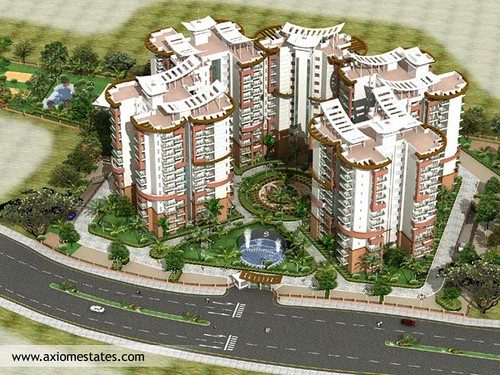
Image credit: Bangalore Properties - Real Estate India - Shriram Symphony by nancyarora2020 via flickr (BY-SA 2.0), sourced through Openverse.
Written by
Rajesh Tiwari
Real estate analyst covering property markets across Delhi NCR, Mumbai, and Bangalore. Rajesh tracks pricing trends, RERA compliance, and investment opportunities for residential and commercial buyers.
Looking for a technology partner?
From IT consulting to virtual office to custom software — eDarpan can help.
Continue reading
Premium Homes in NCR 2026: Buy for Living or Investing?
Is a premium NCR home a place to live or a store of value? A number-first guide to premiums, rental yields and resale liquidity before you buy.
Rent vs Buy in Noida 2026: Real Yields After Price Surges
Noida prices keep climbing, but is buying still smarter than renting? Here's a number-driven breakdown of yields, EMIs, break-even and hidden costs for 2026.
Home Prices Outpacing Salaries: Should Indian Buyers Stop Waiting in 2026?
Home prices are outpacing salaries across Indian metros. Here's how to test whether buying now beats renting, using price-to-income ratios and a rent-vs-buy break-even.