TDS on Property Purchase in India: A Buyer's 2026 Checklist
Buying property worth ₹50 lakh or more? Learn the 1% TDS rules under Section 194-IA, Form 26QB filing, deadlines, and penalties to avoid costly notices.
Here's a scenario I've watched play out more times than I'd like. A buyer in Noida closes on a ₹95 lakh flat, pays the seller the full amount happily, registers the property, and moves in. Eight months later, a notice from the Income Tax Department lands in the inbox. The buyer forgot to deduct 1% TDS and deposit it via Form 26QB. Now there's the original tax liability, plus interest at 1% per month for late deduction, another 1.5% per month for late deposit, and a late-filing fee of ₹200 per day under Section 234E. The ₹95,000 that should have been a routine deduction has ballooned into something closer to ₹1.3 lakh, and the paperwork to fix it eats a full weekend.
The rule itself is simple. Anyone buying immovable property (other than agricultural land) for ₹50 lakh or more has to deduct 1% of the sale consideration as TDS and deposit it with the government. Section 194-IA has been on the books since June 2013. Yet compliance among individual buyers remains patchy, mostly because your builder's sales team won't remind you and your lawyer often assumes someone else is handling it. Understanding TDS on property purchase India rules is squarely the buyer's job, not the seller's, and the penalty structure is unforgiving of ignorance.
This guide walks you through exactly what to do, when, and how, with a real worked example, a comparison of the numbers when you get it wrong, and the mistakes I see buyers make repeatedly. Whether you're picking up your first flat or investing in a second, treat this as a checklist you can follow line by line.
Key Takeaways
- If the property costs ₹50 lakh or more, the buyer must deduct 1% TDS on the total consideration and deposit it using Form 26QB.
- TDS applies to the entire value once you cross ₹50 lakh, not just the amount above it.
- Deposit the TDS within 30 days from the end of the month in which the deduction is made, or interest and fees start accruing.
- You do not need a TAN. Both buyer and seller PAN are mandatory. If the seller has no PAN, TDS jumps to 20%.
- Issue Form 16B to the seller within 15 days of filing 26QB, downloaded from TRACES.
- For joint buyers or joint sellers, file a separate Form 26QB per buyer-seller combination.
What is Section 194-IA and when does TDS on property purchase apply?
Section 194-IA of the Income Tax Act requires the buyer (called the "transferee" in the legal text) to deduct tax at source when purchasing immovable property. The threshold is ₹50 lakh. The rate is 1% of the sale consideration.
A few points that trip people up:
- It's on the full value, not the excess. A ₹60 lakh flat means 1% of ₹60 lakh, which is ₹60,000. It's not 1% of the ₹10 lakh above the threshold.
- Agricultural land is excluded. Rural agricultural land does not attract Section 194-IA. Everything else, residential flats, commercial units, plots, does.
- Stamp duty value matters now. Since a 2022 amendment, TDS is deducted on the higher of the sale consideration or the stamp duty value. If your agreement says ₹55 lakh but the circle rate/stamp duty value is ₹62 lakh, you deduct 1% of ₹62 lakh.
- It applies to under-construction purchases too. If you're paying a builder in installments, TDS is deducted on each installment once the total consideration crosses ₹50 lakh.
One thing that separates 194-IA from other TDS sections: the buyer does not need a TAN (Tax Deduction Account Number). You use your PAN. This was a deliberate design choice to make it workable for ordinary individuals who buy property once or twice in a lifetime.
How much TDS do I deduct, and what counts as "consideration"?
The 1% rate is fixed, but calculating the base amount is where buyers slip. "Sale consideration" for TDS purposes now includes all charges incidental to the transfer: club membership fee, car parking charges, electricity and water connection charges, maintenance advance, and any other charge of a similar nature that the builder bundles in.
So if your builder's cost sheet reads:
- Base flat cost: ₹58,00,000
- Car parking: ₹3,00,000
- Club membership: ₹1,50,000
- Power backup / infra charges: ₹2,00,000
Your total consideration is ₹64,50,000, and TDS is 1% of that, which is ₹64,500. Not ₹58,000. GST is a separate matter, calculated on the builder's side, and TDS is deducted on the amount excluding GST.
Common Mistake: Buyers deduct TDS only on the base flat price and skip the ancillary charges. If the department reconciles your Form 26QB against the registered sale deed and finds a mismatch, you get a short-deduction notice. Always deduct on the aggregate value that appears in your agreement to sell.
Step-by-step: How to deduct and deposit TDS using Form 26QB
Here's the exact walkthrough. You can do this yourself in about 30 minutes if your papers are ready.
- Deduct at the time of payment. Legally, TDS is deducted when you credit the amount to the seller or make payment, whichever is earlier. In practice, you deduct 1% from the payment you're about to make and pay the seller only 99%.
- Go to the TIN/Income Tax e-filing portal. Form 26QB is now filed through the
incometax.gov.ine-filing portal under "e-Pay Tax". Log in with your PAN. - Select Form 26QB. Under "New Payment", pick the TDS on Sale of Property (26QB) tile.
- Enter buyer and seller details. PAN of both parties, full addresses, and contact details. Confirm whether there are multiple buyers or sellers, because that changes how many forms you file.
- Enter property details. Complete address, type of property, date of agreement/booking, total consideration value, and the amount paid in this transaction.
- Enter the TDS amount. The portal calculates 1% automatically once you enter the consideration. Verify it matches your own calculation.
- Choose payment mode. Pay immediately via net banking/UPI, or generate a challan and pay at an authorised bank within the validity window.
- Save the acknowledgement. You'll get a 9-digit acknowledgement number. Keep the challan-cum-statement (Form 26QB) and the challan receipt.
- Register on TRACES and download Form 16B. Around 5 to 7 days after the TDS reflects, register on the TRACES portal as a taxpayer, request Form 16B against your 26QB acknowledgement, and download it.
- Hand Form 16B to the seller. This is the seller's proof that tax was deducted on their behalf. Do it within 15 days of the 26QB due date.
The deposit deadline you cannot miss
TDS deducted must be deposited within 30 days from the end of the month in which you made the deduction. Deduct on 12 March, and your deadline is 30 April. Miss it and interest starts, plus the ₹200/day late-filing fee under 234E, capped at the TDS amount itself.
What does it cost you to get TDS on property purchase India wrong?
This is where the theory becomes painful. Let me show the numbers side by side so you understand what's at stake.
| Scenario | Compliant Buyer | Late by 4 Months | Never Deducted (10 months) |
|---|---|---|---|
| Property value | ₹95,00,000 | ₹95,00,000 | ₹95,00,000 |
| TDS @ 1% | ₹95,000 | ₹95,000 | ₹95,000 |
| Interest (late deduction @ 1%/mo) | ₹0 | — | ₹9,500 |
| Interest (late deposit @ 1.5%/mo) | ₹0 | ₹5,700 | — |
| Late-filing fee (234E @ ₹200/day) | ₹0 | ₹24,000 | ₹60,000 |
| Approx. total outflow | ₹95,000 | ₹1,24,700 | ₹1,64,500 |
The 234E fee alone can eat you alive because it accrues per day. On a 10-month delay it hits the cap, which is the TDS amount itself, so you effectively pay double. Add the penalty under Section 271H (₹10,000 to ₹1,00,000) that the Assessing Officer may levy for non-filing, and the downside is genuinely severe for something you could have handled in half an hour.
How does TDS work for joint buyers, joint sellers, and home loans?
This is the section most online guides fumble, so pay attention.
Joint buyers or joint sellers
Form 26QB is a one-buyer-to-one-seller form. If a husband and wife jointly buy a flat from a single seller, you file two Form 26QBs, one from each buyer for their share. Two buyers and two sellers means four forms. The TDS on each form corresponds to that buyer's proportion of the consideration.
The catch on the ₹50 lakh threshold: the CBDT has clarified that the threshold applies to the property value, not the individual share. So if two people buy a ₹60 lakh flat with a ₹30 lakh share each, TDS still applies, because the property crosses ₹50 lakh even though no single share does.
Home loan disbursals
When you take a home loan, the bank disburses funds directly to the seller or builder. TDS is still your responsibility as the buyer. Deduct 1% from each disbursal (or arrange to deposit it separately) once the total consideration crosses the threshold. Coordinate with your loan officer, because some banks will hold the TDS component and let you deposit it, while others disburse the full amount and expect you to manage it. Confirm this in writing before the first disbursal.
Pro Tip: For under-construction property paid in installments, don't wait to deposit TDS at the end. File a 26QB for each installment as you pay it. Batching everything at the end creates reconciliation headaches and, if any single deposit slips past its 30-day window, you're paying interest on the whole lot. One form per payment event keeps your trail clean.
What if the seller is an NRI?
This changes everything, and buyers get burned here constantly. When the seller is a Non-Resident Indian, Section 194-IA does not apply. Instead, you deduct TDS under Section 195, and the rate is far higher, based on capital gains: typically around 20% (plus surcharge and cess) for long-term capital gains, and at slab rates for short-term.
For NRI sellers, you also need a TAN, you file Form 27Q instead of 26QB, and the seller can apply to the department for a lower or nil deduction certificate under Section 197. If you treat an NRI sale like a resident sale and deduct only 1%, you're personally liable for the shortfall. When there's any doubt about the seller's residency status, get a professional involved before you pay a rupee. Our IT and compliance consulting team can connect you with the right advisory support, and if you're structuring the purchase through a company, our virtual office for GST and company registration service is often part of that same conversation.
Where does property investing fit into the bigger picture?
TDS is a compliance chore, but it's downstream of a much bigger decision: what and where to buy. The reason so many buyers rush the paperwork is that they've spent all their energy on the purchase itself and treat the tax step as an afterthought.
If you're still deciding, it's worth reading through the market view first. We've broken down the rent vs buy math for Delhi-NCR in 2026, and if you're comparing metros, where to buy across Bengaluru, Mumbai, and Delhi NCR is a useful starting point. For NCR-specific opportunity, the Delhi Master Plan 2047 corridors are shaping where smart money is going. And before you sign anything, run through the amenities that quietly fail after possession, because those problems cost more than any TDS penalty.
When you're ready to transact, eDarpan Properties helps you find properties for sale across India and rental options too. Browse the full real estate listings to see what fits your budget and city.
A worked example: A Pune buyer's clean 26QB filing
Let me put the whole thing together with a real-shaped example.
Rohan and Meera, a couple in Pune, buy a ₹1.1 crore apartment in Kharadi from a resident individual seller. Ownership is 50:50. Here's how they handled it, step by step:
- Total consideration confirmed: The cost sheet showed ₹1,04,00,000 base + ₹4,00,000 parking + ₹2,00,000 club and infra = ₹1,10,00,000. They confirmed the stamp duty value was lower, so consideration governs.
- TDS split by share: Each buyer's share of consideration is ₹55,00,000. TDS per buyer is 1% = ₹55,000. Total TDS ₹1,10,000.
- Two forms filed: Rohan filed one Form 26QB for ₹55,000, Meera filed a second for ₹55,000, both against the single seller's PAN.
- Paid seller net: The seller received the consideration minus ₹1,10,000, and the couple paid the TDS to the government within the same month via the e-Pay Tax portal.
- Form 16B issued: Six days later, both registered on TRACES, downloaded their respective Form 16Bs, and handed them to the seller before the sale deed registration appointment.
Total extra time spent: roughly one hour across two sittings. Total penalties: zero. The seller was happy because their Form 26AS reflected the credit promptly, which mattered when they filed their own return and claimed the capital gains treatment.
Notice what made this clean: they got the consideration figure right (including ancillary charges), they filed separate forms for the joint ownership, and they didn't wait. If you can replicate those three habits, you've handled 90% of what goes wrong.
Frequently Asked Questions
Do I need a TAN to deduct TDS on property purchase?
No. Section 194-IA specifically waives the TAN requirement for property buyers. You use your PAN to file Form 26QB. A TAN is only needed when the seller is an NRI and you file under Section 195/Form 27Q.
Is TDS applicable if the property is exactly ₹50 lakh?
Yes. The rule triggers at ₹50 lakh and above. A property priced at exactly ₹50 lakh attracts 1% TDS on the full ₹50 lakh, which is ₹50,000. Only purchases strictly below ₹50 lakh are exempt.
What happens if the seller doesn't have a PAN?
Under Section 206AA, if the seller cannot furnish a valid PAN, you must deduct TDS at 20% instead of 1%. Always verify the seller's PAN before payment, because a wrong or inoperative PAN can also push you into the higher rate.
Can I revise Form 26QB after filing if I made a mistake?
Yes. You can request corrections to Form 26QB through the TRACES portal. Minor fields can be corrected online, while some corrections need Assessing Officer approval. Fix errors quickly, because a mismatch between 26QB and the sale deed invites a notice.
Who deposits TDS when there's a home loan?
The buyer remains responsible for deducting and depositing TDS, even when the bank disburses the loan directly to the seller. Coordinate with your bank so the 1% is either held for you or you deposit it separately from your own funds against each disbursal.
Is TDS deducted on the amount including GST?
No. TDS under Section 194-IA is deducted on the consideration excluding GST. The 1% applies to the base value plus ancillary charges like parking and club fees, but the GST component charged by the builder is kept out of the TDS calculation.
What is Form 16B and why does the seller want it?
Form 16B is the TDS certificate you download from TRACES and give to the seller. It proves that you deducted and deposited tax on their behalf, allowing them to claim credit for it in their own income tax return. Issue it within 15 days of the 26QB due date.
The bottom line
Getting TDS on property purchase India right is less about tax expertise and more about discipline. Confirm your total consideration including every ancillary charge, deduct 1%, file Form 26QB per buyer-seller combination within 30 days of month-end, and hand over Form 16B. That single sequence, done on time, saves you from interest, the ₹200-a-day 234E fee, and the possibility of a penalty running into lakhs. The buyers who get burned aren't unlucky. They just assumed someone else was watching the clock.
If you're buying property and want the transaction handled end to end, from finding the right listing to sorting the compliance around it, get in touch with the eDarpan team. You can learn more about how we work on our about page and explore our full range of services if your purchase also involves setting up a business, registering for GST, or building the systems to run it.
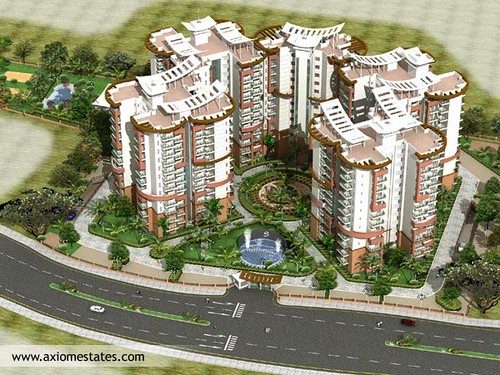
Image credit: Bangalore Properties - Real Estate India - Shriram Symphony by nancyarora2020 via flickr (BY-SA 2.0), sourced through Openverse.
Written by
Rajesh Tiwari
Real estate analyst covering property markets across Delhi NCR, Mumbai, and Bangalore. Rajesh tracks pricing trends, RERA compliance, and investment opportunities for residential and commercial buyers.
Looking for a technology partner?
From IT consulting to virtual office to custom software — eDarpan can help.
Continue reading
UP Model Building Rules 2026: Impact on Noida & Greater Noida Properties
UP's new 2026 building rules will reshape Noida & Greater Noida real estate, with major impacts on FAR, costs, and project approvals.
India's Real Estate Market Splits: What It Means for Investors
India's real estate market is splitting. Learn why commercial assets now offer stable cash flow, while residential success depends on hyper-local, end-user demand.
Hyderabad & Bengaluru Lead Sales Surge: What It Means for Buyers
Hyderabad & Bengaluru lead India's 2026 property surge, driven by infrastructure, affordability, and end-user demand. Learn the key takeaways for buyers.