UP Model Building Rules 2026: Impact on Noida & Greater Noida Properties
UP's new 2026 building rules will reshape Noida & Greater Noida real estate, with major impacts on FAR, costs, and project approvals.
If you’ve been tracking the property market in Noida or Greater Noida over the last six months, you’ve likely heard a familiar, frustrating refrain from developers and agents: “Approvals are taking longer.” The reason isn’t just bureaucratic inertia. It’s the quiet, seismic shift happening as Uttar Pradesh prepares to implement its new UP Model Building Regulations 2026. For the uninitiated, this isn’t a minor tweak. It’s a comprehensive overhaul that will fundamentally reshape what gets built, where, and at what price point. As someone who has sat through municipal corporation meetings and helped clients navigate the labyrinth of RERA, GST implications on under-construction property, and land use compliance, I can tell you this: the rules of the game are changing. If you are a buyer, investor, or even a business looking for commercial space in the NCR’s western corridor, understanding these changes isn’t optional—it’s critical for protecting your investment and identifying real value.
Key Takeaways:
- The new FAR (Floor Area Ratio) norms will create a clear premium for plotted developments and smaller apartments in plotted colonies, while high-rise G+20 towers will become more expensive to build.
- Mandatory EV charging infrastructure and enhanced parking requirements will add a direct capital cost of ₹3-5 lakhs per four-wheeler parking slot, impacting project viability and final sale prices.
- Green building compliance, while beneficial long-term, will increase construction costs by 8-12% for Gold/GRIHA 3-Star certification, a cost developers will pass on.
- Project approval timelines will stretch by 4-6 months initially, meaning delivery delays for ongoing projects not yet fully approved.
- The regulations will widen the price and quality gap between compliant, premium projects and older, non-compliant inventory.
- For commercial properties, the new mixed-use and FAR provisions could unlock better-integrated business hubs, but with stricter compliance overhead.
What Exactly Are the UP Model Building Regulations 2026?
Think of the UP Model Building Regulations as the DNA code for any construction project in Uttar Pradesh. They dictate everything from how much you can build on a plot (FAR), where you must leave open spaces, how many cars you need to park, and what sustainability features are mandatory. The 2026 update is Uttar Pradesh’s response to modern urban challenges: traffic congestion, environmental sustainability, and the need for more integrated living. It aligns with national missions like Smart Cities and AMRUT. For Noida and Greater Noida, governed by the Noida Authority and Greater Noida Industrial Development Authority (GNIDA), these model rules form the basis for their local bylaws, which will be amended accordingly. The transition period has already begun, and its effects are palpable in the approval pipelines.
The Core Changes: FAR, Parking, and Green Norms
Let’s break down the three pillars set to disrupt the market.
1. Floor Area Ratio (FAR) Rejig: FAR determines the total buildable area on a plot. The 2026 regulations propose a nuanced approach. For instance, in residential plotted developments, you might see a slight increase in FAR to encourage smaller, more efficient dwelling units. However, for high-rise group housing, the effective FAR may not see a dramatic jump, but the calculation methodology becomes more complex, factoring in road width and land use. The goal is to de-densify over-congested pockets and promote more balanced development. This means a 1000 sq yd plot in a prime sector that could earlier yield a certain number of apartments may now yield fewer, or the same number but with a different unit mix.
2. Parking Paradigm Shift: This is a massive cost driver. The old norms are simply inadequate for today’s multi-car households and commercial traffic. The new regulations significantly increase the number of parking slots required per 100 sqm of built-up area. More critically, they mandate that a substantial portion of this parking must be designed as ‘Ready for EV Charging’—meaning conduit pipes, trunking, and electrical load capacity must be pre-installed for future EV chargers. For a 200-unit apartment complex, this is not a trivial upgrade. It involves higher slab heights, more sophisticated electrical substations, and upfront capital.
3. Green Building Mandates: While Noida already has some green building incentives, the 2026 rules make certain elements compulsory for projects above a specific size. Think on-site water recycling, rainwater harvesting structures with a minimum capacity, mandatory solar-ready infrastructure, and the use of sustainable construction materials. Achieving even the basic compliance level (like GRIHA 3-Star or IGBC Gold) requires upfront investment in design, technology, and certified materials.
A Real-World Case Study: The Unforeseen Approval Delay
Let me share an anonymized case from my network. A mid-sized developer in Greater Noida (West) had plans for a G+12 residential tower on a 4000 sqm plot. The project was conceived in early 2024, and the architectural plans were drafted under the old bylaws. By the time they submitted for approval in Q4 2024, the Authority had begun applying a “preview” of the 2026 norms, especially for parking and green space.
The original design had 1.5 parking slots per 100 sqm. The new norm demanded 2.2. To accommodate this within the same basement footprint, they had to switch from a conventional ramp system to an automated puzzle parking system—an additional capital expenditure of nearly ₹2.2 crore. Furthermore, the landscape plan had to be reworked to increase permeable green area by 15%. The combined effect was a 7-month delay in securing the building permit and a 12% increase in the project’s foundational cost. The developer now faces a tough choice: absorb the cost and shrink margins, or re-price the apartments before launch, potentially affecting sales velocity. This is not an outlier; it’s becoming the standard.
Impact on Property Prices: A Detailed Breakdown
The regulations will exert upward pressure on prices, but not uniformly across all segments. Here’s how it will likely play out:
- Premium & Luxury Segments: Prices will rise, but demand may be more inelastic. Buyers in this segment expect modern amenities, and the cost of advanced parking solutions and high-grade green certifications (like LEED Platinum) can be baked into the premium. A project that can market itself as “fully 2026-compliant” will use it as a key differentiator against older inventory.
- Mid-Income Housing (₹80L - ₹2.5Cr): This segment will be the most sensitive. Developers will try to optimize unit sizes (slightly smaller balconies, efficient layouts) to offset increased construction costs per square foot. Expect a rise of ₹800-₹1500 per sq ft in launch prices for new projects post-regulation implementation compared to similar projects launched in 2023-24. Resale properties in older, non-compliant societies might see a relative price stagnation, as new stock offers better future-proofing.
- Plotted Developments & Floors (Builder Floors): This could be the dark horse. The regulations often offer more favorable FAR for plotted colonies. For an investor buying a plot or a floor in a smaller building, this can mean better utilization of the land and a potentially higher yield. The demand for well-located plotted properties in Noida Extension or Greater Noida may see an uptick as buyers seek to avoid the complexity and cost of high-rise compliance.
Pro Tip: When evaluating a new launch, don’t just ask about the possession date. Ask the developer for a specific compliance sheet. Which level of green rating are they targeting? Is the parking ratio compliant with the draft 2026 norms? Is the sanctioned plan under the old bylaws or a new conditional approval? Their answers (or evasion) will tell you everything about future risk of delays and cost overruns.
Investment Potential: Where Will the Smart Money Go?
The investment lens needs to focus on two aspects: capital appreciation potential and rental yield resilience.
1. Commercial & Mixed-Use Properties: The regulations encourage mixed-use development. This is excellent for commercial properties in sectors earmarked for such use. A business looking for a virtual office address for GST might still prefer a serviced office, but an MSME looking for a combined office-warehouse-showroom unit will find new options. These integrated spaces, with adequate parking and EV charging, will command a rental premium. Investors should look at sectors in Noida and Greater Noida where the Master Plan already designates mixed-use zones, as these will be the first to see compliant projects.
2. Ready-to-Move-In (RTM) Inventory: In the short term (next 18-24 months), RTM properties in existing societies become a safe haven. They bypass the approval and construction risk of the new regulations entirely. While they may lack the latest green tech, their price is not subject to the new construction cost inflation. For an investor seeking immediate rental yield, this is a lower-risk bet. Platforms like eDarpan Properties can be useful to filter such available inventory.
3. Projects with Phased Approvals: Be wary of large township projects where only the first phase is approved. Subsequent phases will likely fall under the full rigor of the 2026 rules, leading to possible design inconsistencies and price jumps between phases. Ensure you’re comparing the cost per sq ft of the new phase with a true like-for-like from the earlier one.
Comparison: Buying Under Old vs. New Regulations
This table outlines the core differences a buyer will experience.
| Criteria | Property Under Old Regulations (Pre-2025 Approvals) | Property Under New Regulations (2026 Onwards) |
|---|---|---|
| Approval Timeline Risk | Low (already approved) | High (initial 2-3 years) |
| Parking Adequacy | Often congested; may have 1-1.5 slots/unit | Designed for 2+ slots/unit; EV-ready |
| Common Amenities | Standard (pool, club, basic gym) | Focus on sustainability (organic waste compost, rainwater storage tanks, solar panels) |
| Construction Quality Focus | Finishes and brand fixtures | Building material sustainability, thermal insulation |
| Maintenance Cost Outlook | Rises predictably with inflation | Potentially lower long-term energy/water costs, but may have higher initial corpus for tech maintenance |
| Resale Value Driver | Location, builder brand, apartment size | All of the above + compliance rating & future-proof infrastructure |
A Step-by-Step Guide for Buyers & Investors Navigating the Transition
- Due Diligence is Non-Negotiable: Before any agreement, visit the local planning authority (Noida Authority or GNIDA) website or office to check the project’s approval status. Is the sanction letter conditional? Does it reference the old bye-laws or have notations about future compliance?
- Scrutinize the Architect’s Compliance Certificate: Demand a copy of the architect’s certificate submitted with the building plan. It should explicitly state which set of bylaws have been followed. This is your first line of defense.
- Factor in the Hidden Cost of Compliance: When comparing per sq ft prices, add a 7-10% buffer for projects launching after mid-2025. This isn’t arbitrary; it’s the estimated cost pass-through for parking and green mandates. If a project seems priced similarly to a 2023 launch, question how they achieved it.
- Think Long-Term Holding Period: The benefits of green buildings (lower utility costs, better air quality) and ample parking accrue over a 10-15 year horizon. If your investment horizon is shorter (3-5 years), the premium you pay today may not fully realize in resale value until the market has fully internalized the new norms. Consider focusing on properties for sale that are either RTM or very near completion.
- Engage a Professional: For a significant investment, consider engaging a RERA-registered real estate consultant or a lawyer specializing in property. The few lakhs spent here can save crores in a flawed investment. The team at eDarpan’s consulting services often works with such professionals and can provide referrals.
FAQ: Your Questions on UP Model Building Regulations 2026 Answered
Will these new rules make apartments unaffordable in Noida?
They will increase the cost of new supply, putting upward pressure on prices. However, affordability is relative. The market may respond with slightly smaller unit designs, more shared amenities, and a shift towards the outskirts like Greater Noida (West) where land costs are lower. Resale inventory from the pre-regulation era may offer relative value.
As an investor, should I wait for new compliant projects or buy now?
If you need certainty and immediate yield, buy ready-to-move-in now. If you are building a portfolio for the long term (7+ years) and can tolerate delay risk, waiting for a best-in-class compliant project could yield better capital appreciation. Diversification across both might be the wisest strategy.
How will this affect commercial property rentals in Noida?
New commercial spaces will have higher specifications (parking, EV charging, green certification), allowing landlords to charge a premium. Older commercial buildings without these features may see tenant migration to newer stock over time, putting downward pressure on their rentals unless they undertake costly retrofits.
Do these regulations apply to renovation or extension of my existing house?
Yes, significantly. Any major structural addition or change of use will require fresh approval under the new regulations. This could make horizontal or vertical expansions on existing plots more expensive and complex. Always check with the Authority before planning such work.
What is the single biggest cost increase for developers?
The combined cost of enhanced basement parking (especially if it requires mechanized systems) and the mandatory EV-ready electrical infrastructure. This is a capital-intensive, upfront cost that directly impacts the project's financial model.
Will older societies be forced to retrofit for EV charging?
Not immediately mandated retroactively, but market pressure will mount. Societies that proactively upgrade their common electrical infrastructure to allow for resident-installed EV chargers will see a distinct advantage in property values. It’s a smart move for resident welfare associations (RWAs) to plan for this now.
When will these regulations be fully enforced in Noida?
The model rules are expected to be formally adopted by the state in 2025. Noida and Greater Noida authorities will then amend their local bylaws, a process that could take 6-12 months. However, as seen in the case study, the “spirit” of the rules is already influencing approvals. Full enforcement is likely by mid-2026.
Conclusion: Navigating the New Landscape
The UP Model Building Regulations 2026 represent a necessary evolution towards more sustainable and livable cities. However, like any transition, it creates winners and losers, risks and opportunities. For the astute buyer or investor in Noida and Greater Noida, success will hinge on moving beyond superficial metrics like price per square foot. It demands a deeper understanding of the project’s DNA—its compliance, its future-proofing, and the developer’s ability to navigate this complex new environment.
The coming years will separate serious, long-term developers from the rest. As an investor, aligning with those who embrace these changes and transparently communicate their strategy will be key. For businesses, especially MSMEs looking for rental properties in India for office or retail space, factoring in the operational benefits of green buildings and adequate parking will be a sound financial decision.
The market is in flux, but flux breeds opportunity. Arm yourself with information, engage experts where needed, and make your decisions based on the new reality taking shape. For more insights on how broader market trends interact with local policy, explore our analysis on the impact of rising Delhi NCR home prices or the split between commercial and residential real estate. If you have specific questions about how technology can aid in managing property investments or business operations from a new compliant space, our team is here to help.
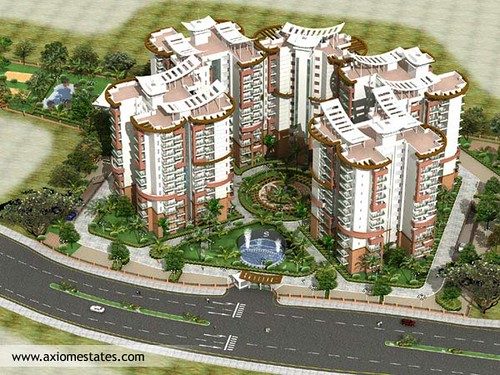
Image credit: Bangalore Properties - Real Estate India - Shriram Symphony by nancyarora2020 via flickr (BY-SA 2.0), sourced through Openverse.
Written by
Rajesh Tiwari
Real estate analyst covering property markets across Delhi NCR, Mumbai, and Bangalore. Rajesh tracks pricing trends, RERA compliance, and investment opportunities for residential and commercial buyers.
Looking for a technology partner?
From IT consulting to virtual office to custom software — eDarpan can help.
Continue reading
India's Real Estate Market Splits: What It Means for Investors
India's real estate market is splitting. Learn why commercial assets now offer stable cash flow, while residential success depends on hyper-local, end-user demand.
Hyderabad & Bengaluru Lead Sales Surge: What It Means for Buyers
Hyderabad & Bengaluru lead India's 2026 property surge, driven by infrastructure, affordability, and end-user demand. Learn the key takeaways for buyers.
Delhi-NCR Price Surge: Is It Better to Rent or Buy Now?
Delhi-NCR prices soared 12% in 2026. For business owners, we analyze if renting or buying is smarter with a financial model for the current market.