Bengaluru vs Mumbai vs Delhi NCR 2026: Where to Buy Now
Bengaluru, Mumbai or Delhi NCR? A practitioner's no-hype guide to 2026 prices, rental yields, and growth corridors to help you buy with confidence.
Every month I get the same call. Someone has ₹80 lakh to ₹1.5 crore sitting in a fixed deposit or a maturing mutual fund SIP, and they want to buy property in one of India's big three metros. The question is always the same: "Bengaluru, Mumbai, or Delhi NCR — where do I put it?" And almost every time, they've already made up their mind based on where their cousin bought a flat in 2019.
Here's the uncomfortable truth I've learned after helping dozens of business owners and salaried professionals sort out their property decisions: the "right" city in 2026 depends far more on your holding period and your goal (rental income vs capital appreciation vs self-use) than on which market has the loudest headlines. A 2BHK in Whitefield behaves nothing like a 2BHK in Thane, even at a similar price point. Rental yields in Bengaluru still hover around 3.5–4% while Mumbai struggles to cross 2.8–3% despite far higher ticket sizes.
This post is a practitioner's comparison — no hype, no builder brochures. If you're trying to figure out the best city to buy property in India 2026, I'll walk you through the price bands, realistic rental yields, growth corridors, a worked example of an actual buyer decision, a side-by-side comparison table, and the mistakes I see people make repeatedly. By the end you'll be able to brief a broker or run your own numbers with confidence.
Key Takeaways
- Bengaluru wins on rental yield and end-user demand from IT/GCC employees; best for buyers who want cash flow plus steady appreciation.
- Mumbai (MMR) offers the highest capital appreciation ceiling but the worst yields and highest entry cost; suited to long-hold investors and self-use buyers with deep pockets.
- Delhi NCR (especially Gurugram and Noida Expressway) is the momentum play in 2026, with strong price growth but wide quality variance between builders.
- Always add 7–10% to the sticker price for stamp duty, GST (on under-construction), registration, and brokerage before you compare cities.
- Buy ready-to-move or near-completion in 2026 — under-construction risk is real, and RERA gives you recourse but not speed.
- Match the city to your holding period: under 5 years, be cautious everywhere; 7–10 years, NCR and Bengaluru corridors look strongest.
What are property prices in Bengaluru, Mumbai and Delhi NCR in 2026?
Let's get the numbers straight first, because a lot of buyers compare cities without accounting for what the same rupee actually buys. Ticket sizes vary enormously not just between cities but between micro-markets within a city.
In Bengaluru, the mid-premium residential belt (Whitefield, Sarjapur Road, Hebbal, North Bengaluru near the airport) runs roughly ₹8,000–₹13,000 per sq ft. A decent 3BHK of about 1,600 sq ft lands you between ₹1.3 crore and ₹2 crore. Prime areas like Indiranagar or Koramangala go well past ₹20,000 per sq ft.
Mumbai (MMR) is a different universe. Suburbs like Thane, Panvel, and Kalyan-Dombivli sit around ₹9,000–₹15,000 per sq ft, while the western suburbs (Andheri, Goregaon) command ₹22,000–₹35,000, and South Mumbai crosses ₹60,000 easily. The same ₹1.5 crore that gets you a spacious 3BHK in Bengaluru buys a compact 1BHK-plus in Andheri.
Delhi NCR spreads across a huge range. Gurugram's premium sectors (Golf Course Extension, Dwarka Expressway) trade at ₹12,000–₹22,000 per sq ft, Noida Expressway and Greater Noida West run ₹7,000–₹12,000, and central Delhi is in its own bracket. NCR has seen some of the sharpest appreciation of the three markets over the past two years, especially in Gurugram luxury.
If you're weighing whether to buy at all versus wait, our earlier analysis on what NCR buyers should do as home sales cool but prices climb is worth reading alongside this.
Which city gives the best rental yield in 2026?
This is where a lot of "investors" get a rude shock. Rental yield in India's metros is genuinely low compared to global standards, and it varies more than people expect.
Bengaluru is the yield leader among the three. The constant churn of IT and Global Capability Centre (GCC) employees keeps rental demand high, and gross yields of 3.5–4% are achievable in areas like Whitefield, Marathahalli, and Sarjapur. A ₹1.4 crore property renting at ₹45,000–₹55,000 a month is a realistic scenario there.
Delhi NCR sits in the middle at roughly 3–3.5% in the better-managed Gurugram and Noida projects. Corporate leasing demand in Gurugram supports premium rentals, but oversupply in some Noida pockets drags yields down.
Mumbai has the lowest yields, typically 2.5–3%, because prices are so high relative to what tenants can pay. A ₹2.5 crore Andheri flat might fetch ₹65,000–₹70,000 a month, which sounds like a lot until you calculate the yield.
Pro Tip: Never quote yourself the gross yield when you're deciding. Subtract society maintenance, property tax, a vacancy allowance of at least one month per year, and periodic repainting/repairs. Net yield is often 0.8–1.2 percentage points below gross. On a Mumbai property, that can push your real return below 2%, which is where the "is this better than a debt fund?" question becomes serious.
Bengaluru vs Mumbai vs Delhi NCR: the side-by-side comparison
Here's the comparison I actually walk clients through. Treat these as 2026 indicative ranges, not gospel — micro-markets differ, and a specific project can beat or lag its city average.
| Criteria | Bengaluru | Mumbai (MMR) | Delhi NCR |
|---|---|---|---|
| Typical mid-premium price/sq ft | ₹8,000–₹13,000 | ₹9,000–₹35,000 | ₹7,000–₹22,000 |
| Gross rental yield | 3.5–4% | 2.5–3% | 3–3.5% |
| Capital appreciation potential | Steady, moderate-high | High ceiling, slow climb | High momentum (2024–26) |
| Entry cost for a 3BHK | ₹1.3–2 cr | ₹2.5 cr+ | ₹1.2–2.5 cr |
| Main demand driver | IT/GCC employment | Finance, limited land | Corporate + infra buildout |
| Builder quality variance | Moderate | Low (established players) | High — vet carefully |
| Best for | Yield + end-use | Long-hold self-use | 7–10 yr appreciation |
If you're an NRI or a first-time buyer confused by these ranges, eDarpan Properties can pull verified, RERA-registered listings across all three cities. Start with our properties for sale in India section, or if you want to test a market before committing, look at rental properties in India first.
A worked example: how a Pune-based business owner chose between the three
Let me make this concrete. Last year a client of mine — call him Rakesh, a 44-year-old owner of a mid-size MSME auto-components unit near Pune — came to me with ₹1.6 crore he wanted to deploy in real estate. His goal was mixed: he wanted rental income now and a property his daughter could potentially use in five to six years when she started working in a metro.
Here's how we ran the comparison:
- Mumbai: ₹1.6 crore would only get him a compact 1BHK in Thane or a distant Panvel unit. Expected rent ₹28,000–₹32,000/month, gross yield about 2.4%. Appreciation potential was decent but the ticket didn't buy anything his daughter would actually want to live in. We shelved it.
- Bengaluru: ₹1.55 crore bought a well-located 3BHK of ~1,650 sq ft near Sarjapur Road in a project with strong tenant demand. Expected rent ₹52,000/month, gross yield around 4%. Strong end-user resale market. This was the front-runner for cash flow.
- Delhi NCR (Gurugram): ₹1.6 crore got a 3BHK on the Dwarka Expressway in a project nearing completion. Lower immediate rent (₹40,000, yield ~3%) but the infrastructure buildout suggested stronger medium-term appreciation.
The deciding factor was his net numbers over a realistic 6-year horizon and the softer, personal factor of self-use. We modelled it roughly like this: Bengaluru's higher rent produced about ₹6,000 more per month in cash flow than Gurugram after maintenance. Over six years that's roughly ₹4.3 lakh extra. But Rakesh believed — and the corridor data supported — that Gurugram had a stronger appreciation runway.
He chose Bengaluru for a simple reason: the rental cash flow was reliable and the tenant pool (IT professionals) was deep and creditworthy, which reduced his vacancy risk. Appreciation is a forecast; rent is money in the bank. For his risk appetite, the bird in hand won. Had his goal been pure 10-year appreciation with no need for interim income, we would have leaned toward Gurugram.
Common Mistake: Rakesh's first instinct was Mumbai "because it's Mumbai." Buyers routinely overpay for brand-name cities without checking whether their budget buys a livable, rentable unit there. Always ask: does my money buy an asset people actually want to rent or resell in this city, or just the cheapest thing available in an expensive market?
Which corridors are worth watching in each city?
Averages hide the story. Within each city, specific corridors will outperform, usually driven by new infrastructure, metro connectivity, or employment hubs.
Bengaluru
- North Bengaluru (Devanahalli, Yelahanka) — airport proximity and new business parks.
- Sarjapur Road & Whitefield — mature IT demand, reliable tenants.
- East corridor near ORR — GCC clusters keep rental demand strong.
Mumbai (MMR)
- Navi Mumbai / Panvel — driven by the new airport and connectivity projects.
- Thane — better value than western suburbs with improving infrastructure.
- Wadala / central Mumbai — redevelopment plays for long-term holders.
Delhi NCR
- Dwarka Expressway (Gurugram) — the standout appreciation corridor of 2024–26.
- Golf Course Extension Road — premium demand, corporate leasing.
- Noida Expressway & Greater Noida West — value pricing, but check builder track record and possession delays carefully.
How do you actually vet a property and close safely in 2026?
This is the part where money gets lost when people rush. Follow this sequence regardless of city:
- Verify RERA registration. Every under-construction project must be registered on the state RERA portal (Karnataka RERA, MahaRERA, HRERA/UP-RERA). Pull the registration number and check declared timelines and complaints against the promoter.
- Do a legal title check. Engage a property lawyer to verify the title chain, encumbrance certificate, and approved building plan. Budget ₹15,000–₹40,000 for a thorough review — it's the cheapest insurance you'll buy.
- Confirm the GST position. Under-construction property attracts GST (currently 5% without input credit for non-affordable housing, 1% for affordable). Ready-to-move-in with a completion certificate does not attract GST. This alone can swing your total cost by several lakhs.
- Compute all-in cost. Add stamp duty (5–7% depending on state and gender of buyer), registration (~1%), brokerage (typically 1–2%), and GST where applicable. On a ₹1.5 crore purchase, this is easily ₹10–15 lakh on top.
- Get the loan pre-sanctioned. A pre-sanction letter strengthens your negotiating position and flags any legal issues the bank's own lawyers catch.
- Inspect physically or via a trusted representative. For NRIs and out-of-city buyers, never close on renders alone. Get a site visit report.
- Register and collect all documents. Sale deed, share certificate (for societies), NOC, occupancy certificate. Keep digital copies.
If something goes wrong with a builder — delayed possession, deviation from the sanctioned plan, quality issues — you have recourse. Read our practical RERA complaint process guide for homebuyers before you sign anything.
Should you buy direct, or consider REITs and fractional ownership instead?
Not everyone should own a physical flat. If your capital is ₹25–50 lakh, or you don't want tenant and maintenance headaches, there are alternatives that give you real estate exposure with far less hassle.
REITs let you buy units in a portfolio of income-generating commercial property on the stock exchange, with yields often comparable to or better than residential rent, plus liquidity. Fractional ownership platforms let you co-own Grade-A commercial assets from a few lakhs. Both avoid the illiquidity and management burden of a physical flat.
We've compared these paths in detail — see REITs vs direct property in India 2026 and our breakdown of fractional ownership of commercial property. For business owners specifically weighing office real estate, our note on where SMBs should lease as India tops APAC office leasing is a useful companion.
How eDarpan helps you buy right
eDarpan isn't just an IT and cloud company — through eDarpan Properties we help buyers, renters, and investors navigate exactly these decisions with verified listings and on-ground support across Bengaluru, Mumbai, and Delhi NCR. Whether you're relocating for work, deploying investment capital, or setting up a business, we can shortlist properties that match your yield and appreciation goals.
If you're a business owner, the property decision often comes bundled with an operational one. Many of our clients buy or lease in a new city and simultaneously need to set up local presence. A virtual office address for GST and company registration lets you establish a compliant business address in a target city before you commit to a full office, and our IT consulting team helps set up the digital backbone once you're operational. Explore the full range of eDarpan services or reach out to our team to talk through your specific numbers.
Frequently asked questions
Which is the best city to buy property in India 2026 for rental income?
Bengaluru is generally the strongest for rental income among the big three, with gross yields of 3.5–4% supported by consistent IT and GCC tenant demand. Delhi NCR (Gurugram) comes second, while Mumbai has the lowest yields despite the highest prices.
Is it better to buy in Gurugram or Noida in 2026?
Gurugram commands higher prices and stronger corporate-driven demand, especially along Dwarka Expressway and Golf Course Extension. Noida and Greater Noida West offer better value per sq ft but require careful vetting of builder track records and possession timelines. For appreciation with lower entry cost, Noida corridors can work if you pick a reputable developer.
How much extra should I budget beyond the property price?
Plan for 7–10% over the sticker price. That covers stamp duty (5–7%), registration (~1%), brokerage (1–2%), and GST (1% or 5%) if the property is under construction. On a ₹1.5 crore flat, that's ₹10–15 lakh in additional costs.
Does ready-to-move-in property attract GST?
No. Properties with a completion or occupancy certificate are treated as immovable property, not a supply of service, and do not attract GST. GST applies only to under-construction properties — currently 5% for standard housing and 1% for affordable housing, both without input tax credit.
Should NRIs buy in Bengaluru, Mumbai, or Delhi NCR?
It depends on the goal. NRIs seeking rental yield and easier tenant management often prefer Bengaluru; those wanting a prestige self-use asset lean toward Mumbai; and those chasing medium-term appreciation look at Gurugram. NRIs should always verify RERA status, use a local legal representative, and follow FEMA rules on repatriation.
What holding period makes property worthwhile in these cities?
Given transaction costs of 7–10% on entry and roughly 1% brokerage on exit, a holding period under 3–4 years rarely makes sense. A 7–10 year horizon lets appreciation and rental income comfortably clear your total costs, which is why we advise against short-term flipping in all three markets.
Are property prices in these cities expected to fall in 2026?
A broad crash is unlikely. Prices in NCR and Bengaluru have been climbing, and while sales volumes have cooled in some segments, developer discipline on new supply is keeping prices firm. Buyers should focus on picking the right micro-market and project rather than timing a citywide dip.
The bottom line
There is no single answer to the best city to buy property in India 2026 — there's only the best city for your goal. If you want reliable rental cash flow and a deep, creditworthy tenant pool, Bengaluru is hard to beat. If you're a long-hold buyer or want a self-use asset in India's financial capital and can absorb thin yields, Mumbai's ceiling is the highest. And if you're playing a 7–10 year appreciation game and can vet builders carefully, Delhi NCR's Gurugram and Noida corridors offer the strongest momentum right now.
Run your net numbers, add the full transaction cost, match the city to your holding period, and never buy a brand name when you can buy a genuinely rentable, resalable asset. When you're ready to see verified listings or talk through the math for your specific budget, get in touch with eDarpan — we'll help you make the call with data, not headlines.
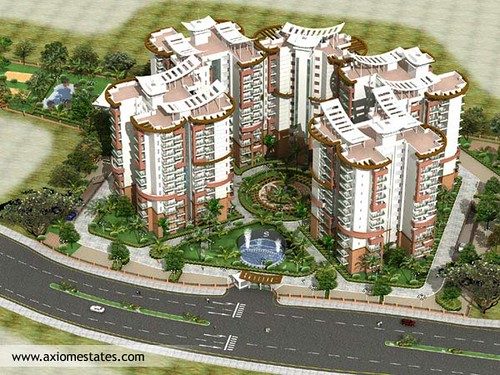
Image credit: Bangalore Properties - Real Estate India - Shriram Symphony by nancyarora2020 via flickr (BY-SA 2.0), sourced through Openverse.
Written by
Rajesh Tiwari
Real estate analyst covering property markets across Delhi NCR, Mumbai, and Bangalore. Rajesh tracks pricing trends, RERA compliance, and investment opportunities for residential and commercial buyers.
Looking for a technology partner?
From IT consulting to virtual office to custom software — eDarpan can help.
Continue reading
Hyderabad & Bengaluru Lead Sales Surge: What It Means for Buyers
Hyderabad & Bengaluru lead India's 2026 property surge, driven by infrastructure, affordability, and end-user demand. Learn the key takeaways for buyers.
Delhi-NCR Price Surge: Is It Better to Rent or Buy Now?
Delhi-NCR prices soared 12% in 2026. For business owners, we analyze if renting or buying is smarter with a financial model for the current market.
How Rising Delhi NCR Home Prices Impact Your Budget & Options
Delhi NCR's 12% property price surge is derailing budgets. Learn strategic fixes, affordable alternatives, and whether to buy now.