Rent vs Buy in Delhi-NCR 2026: The Math Nobody Shows You
Should you rent or buy in Delhi-NCR in 2026? Here's the real break-even math, worked examples with actual Gurugram and Noida numbers, and the mistakes to avoid.
Here's a conversation I have at least twice a month, usually with a couple in their early thirties, both salaried, sitting across from me with a home loan pre-approval letter and a lot of anxiety. They've found a 3BHK in Sector 150 Noida or on Dwarka Expressway, the builder is pushing for a booking amount, and their WhatsApp is full of relatives saying "rent is money down the drain, beta." Then they show me the numbers, and the numbers don't say what the relatives think they say.
In 2026, the Delhi-NCR market is doing something confusing. Prices are still climbing, roughly 6% year-on-year in the hot micro-markets like Golf Course Extension Road and Noida Expressway, but actual sales volumes have cooled. That combination should make anyone pause. When prices rise while fewer people are buying, you're often paying more for less liquidity, which is exactly the wrong time to lock yourself into a 20-year commitment without running the real math.
This post is the math nobody shows you. I'll walk through a proper break-even framework for the rent vs buy Delhi NCR 2026 decision using actual Gurugram and Noida rent and price data, a full worked example with real rupee figures, a comparison table, and the mistakes I see people make when they let emotion do the arithmetic.
Key Takeaways
- The real cost of buying isn't the EMI. It's the EMI plus interest, stamp duty, registration, maintenance, and the opportunity cost of your down payment sitting in bricks instead of earning returns.
- In most NCR micro-markets in 2026, the annual rental yield is 2.5–3.5%, while home loan rates sit near 8.5–9%. That gap is the single most important number in this decision.
- Your personal break-even is usually 7–10 years. If you might move for a job, a school, or family within that window, renting often wins on pure math.
- Under-construction property adds GST, delay risk, and rent-plus-EMI double payment. Ready-to-move removes that but costs more upfront.
- Buying makes strong sense when you're settled, the price-to-rent ratio in your area is below 20, and you'll hold for 10+ years.
- Run your own numbers before you sign anything. The right answer is personal, not a proverb.
Why is the rent vs buy Delhi NCR 2026 decision harder than it used to be?
Ten years ago the answer was almost always "buy." Property in NCR was appreciating at double digits, home loan rates were manageable, and rents were low enough that owning felt obviously smarter. That world is gone.
Today you're dealing with three things at once. First, capital values have run up hard in select corridors, so entry prices are steep. A decent 3BHK on Dwarka Expressway that was ₹1.1 crore in 2021 is now quoting ₹1.7–1.9 crore. Second, rental yields have not kept pace, which means rents are cheap relative to what you'd pay to own the same flat. Third, home loan rates, even after RBI's easing, are still in the 8.5–9% range for most borrowers.
When appreciation slows but prices are still high, the "property always goes up" assumption stops carrying your decision. You have to look at the actual cash flows. I've written more about this cooling-price dynamic in Home Sales Cool But Prices Climb: What NCR Buyers Do in 2026, and it pairs well with this framework.
What does renting actually cost versus buying, per month?
Let's stop talking in feelings and use a real example. I'll use figures I've seen quoted repeatedly across Gurugram and Noida through late 2025 and into 2026. Your exact numbers will differ, but the shape of the answer usually holds.
The property in question
Take a ready-to-move 3BHK, around 1,600 sq ft carpet-ish, in a good society off Noida Expressway or Golf Course Extension Road.
- Purchase price: ₹1.6 crore (all-in, ready-to-move, so no GST)
- Comparable monthly rent for the same flat: ₹42,000
- Annual rent: ₹5,04,000
- Gross rental yield: roughly 3.1% (₹5.04L ÷ ₹1.6cr)
That 3.1% yield is your first red flag if you're buying purely for investment. You could park money in far more liquid instruments and beat it. But most buyers aren't pure investors, so let's do the full owner cost.
The cost of buying, laid out honestly
Assume a 20% down payment and an 80% loan.
- Down payment: ₹32,00,000
- Loan amount: ₹1,28,00,000
- Stamp duty + registration (Haryana/UP, roughly 6–7% all-in): around ₹10,00,000
- Interest rate: 8.75% over 20 years
- EMI: approximately ₹1,13,000 per month
So on day one, you've deployed ₹42 lakh (down payment plus stamp duty and registration and a bit of legal and brokerage) before you own a single tile. Then you pay ₹1.13 lakh a month.
Now add the recurring costs owners forget: society maintenance of about ₹7,000/month, property tax, a sinking fund for repairs, and the fact that in the early years of a 20-year loan, the vast majority of your EMI is interest, not principal. In year one, of that ₹1.13 lakh EMI, roughly ₹93,000 is interest and only ₹20,000 chips at the principal.
The cost of renting the identical flat
- Rent: ₹42,000/month
- The ₹42 lakh you didn't put down: invested. Even a conservative debt-heavy portfolio at 8% grows meaningfully.
Here's the part relatives never mention. That ₹42 lakh, invested at 8% compounded, becomes roughly ₹90 lakh in 10 years. Meanwhile the renter pays ₹42,000 rising at maybe 7% a year, and the buyer pays ₹1.13 lakh EMI plus ₹7,000 maintenance while their equity builds slowly and their property appreciates at whatever the market gives, which in a cooling NCR might be 4–6% rather than the double digits of the past.
Common Mistake: People compare EMI to rent directly. "My EMI is ₹1.13 lakh and rent is ₹42,000, so if I can afford the EMI, buying is smarter because I'm building an asset." Wrong comparison. The right comparison is (EMI interest + maintenance + property tax + opportunity cost of down payment) versus (rent + nothing else), and then you separately track equity built and appreciation. When you do it correctly, the gap between renting and owning in NCR right now is much smaller than it feels.
How do you calculate your personal break-even year?
The break-even year is the point at which buying becomes cheaper than renting on a total-wealth basis, factoring in appreciation, equity, and the returns you gave up by not investing your down payment. Here's the walkthrough I use with clients. You can do this in a spreadsheet in an hour.
- List your buying cash outflows. Down payment, stamp duty, registration, brokerage, legal, and any interior/fit-out spend. This is your upfront capital deployed.
- Build a 15-year EMI amortisation. Split each year's EMI into interest and principal. Interest is a pure cost; principal is forced savings that becomes equity.
- Add annual owner costs. Maintenance, property tax, insurance, and an annual repair reserve of about 0.5% of property value.
- Project property value. Apply a realistic appreciation, 4–6% for most NCR corridors in 2026, not the 12% your builder's brochure implies.
- Build the renting scenario. Rent growing at 6–7% annually, plus your down payment invested at your realistic return (7–9%).
- Compare net worth each year. Buyer net worth = property value minus outstanding loan. Renter net worth = invested corpus. The year the buyer overtakes the renter is your break-even.
For the ₹1.6 crore flat above, with 5% appreciation, 8% investment returns, and 7% rent growth, the break-even lands around year 8 to year 9. Nudge appreciation to 7% and it moves earlier, to year 6. Drop it to 3% and buying may not break even for well over a decade.
The lesson: your break-even is entirely dependent on your appreciation and return assumptions. Be honest, not hopeful.
Rent vs buy: a side-by-side comparison for NCR 2026
Here's how the two options stack up across the criteria that actually matter, based on the ₹1.6 crore example.
| Criterion | Renting (₹42K/month) | Buying (₹1.6cr, 80% loan) | Under-construction (₹1.4cr) |
|---|---|---|---|
| Upfront cash | ~₹1.3L (deposit) | ~₹42L (down + duty + costs) | ~₹35L + GST on construction |
| Monthly outflow | ₹42,000 | ₹1.13L EMI + ₹7K maintenance | EMI on disbursed + current rent |
| GST | None (residential rent to individual) | None (ready-to-move) | 5% on construction value |
| Flexibility to relocate | High, 1–2 month notice | Low, selling takes months | Very low, locked till possession |
| Wealth-building | Via invested down payment | Via equity + appreciation | Via appreciation, delayed |
| Key risk | Rent rises, landlord sells | Price stagnation, EMI stress | Delay, builder default |
| Break-even horizon | N/A | ~7–9 years | ~9–12 years (delay-dependent) |
Notice the under-construction column. That 5% GST and the possibility of paying rent and pre-EMI simultaneously for two or three years is the hidden killer that brochures never surface. If you're weighing new launches, read Luxury vs Affordable Housing 2026: What Indian Buyers Do Now before committing.
A real case: the Gurugram couple who decided to keep renting (for now)
Last year I sat with a couple, both in tech, combined take-home around ₹3.6 lakh a month, renting a 3BHK in a Sector 65 society for ₹48,000. They were about to buy a ₹1.85 crore flat in the same society because "we're basically throwing away ₹48,000 every month."
We ran the numbers together. Here's what surfaced:
- The flat they wanted to buy was renting to their neighbour for ₹52,000. So the gross yield was 3.4%. Their loan would cost 8.7%.
- To buy, they'd deploy about ₹48 lakh upfront. That corpus was currently in equity mutual funds averaging 11% over five years.
- One of them had a real chance of a Bengaluru relocation within three years.
The relocation risk was the deciding factor. If they bought and moved in three years, they'd eat stamp duty, registration, and brokerage on both the buy and the eventual sale, roughly ₹18–20 lakh of transaction friction, on a property that might appreciate only 12–15% total in that window. On a break-even of eight-plus years, a three-year hold is financial self-harm.
They kept renting, kept investing the ₹48 lakh, and we agreed to revisit once the Bengaluru question resolved. Eighteen months later she got the transfer. Renting saved them from a very expensive mistake. This is exactly the settled-versus-mobile trade-off I break down in Bengaluru vs Mumbai vs Delhi NCR 2026: Where to Buy Now.
Pro Tip: Before you buy, ask yourself one brutal question: "Am I 90% sure I'll be in this city and this life stage for at least eight years?" If the answer is anything softer than yes, rent. Optionality has real monetary value, and NCR's cooling resale market makes exiting slower than it was in the boom years.
When does buying clearly win in NCR right now?
I'm not anti-buying. Ownership wins decisively in several scenarios, and I've told plenty of clients to buy without hesitation.
- You'll hold 10+ years. Past the break-even, equity and appreciation compound in your favour and rent inflation stops hurting you.
- The price-to-rent ratio in your target area is below 20. Divide the purchase price by annual rent. At ₹1.6cr ÷ ₹5.04L you get about 31, which favours renting. Below 20 favours buying. Some peripheral NCR pockets and resale-heavy societies fall closer to 20.
- You're buying an under-priced resale in a completed, well-maintained society rather than a premium new launch. You skip GST and avoid delay risk.
- Stability of income and location is high. Government service, a stable business, ancestral roots in NCR.
- The emotional value is real to you and you can afford it comfortably. A home you'll raise kids in has value a spreadsheet can't fully capture. Just make sure the EMI stays under 35% of take-home so the dream doesn't turn into stress.
If you decide to buy, do your due diligence on the society itself, not just the flat. Poorly funded maintenance and failing amenities quietly erode your investment. My checklist in Amenities That Fail: What to Check Before Buying a Flat covers what to inspect before you sign.
How eDarpan can help you decide and act
Whether you land on renting or buying, the friction is in execution: finding a genuinely fair-priced flat, verifying the title and society finances, and negotiating. On the property side, eDarpan Properties works across NCR for both properties for sale in India and rental properties in India, so you can compare the same micro-market as an owner and as a tenant before you commit capital.
If you run a business and the real question underneath "should I buy" is actually about workspace and compliance, that's a different calculation. Plenty of NCR founders don't need a bought office at all. A virtual office address for GST and company registration can satisfy your compliance requirements at a fraction of the cost of leasing space, and if you do need physical space, our take on office leasing for SMBs is worth a read. For anything beyond property, from cloud migration to custom software, our full services overview lays out where we fit.
Frequently asked questions
Is it better to rent or buy in Gurgaon in 2026?
For most people planning to stay under 8 years, renting is financially better in 2026 because rental yields are low (around 3%) while loan rates are near 8.75%. Buying wins if you'll hold 10+ years, the price-to-rent ratio is below 20, and your income and location are stable. Run your personal break-even before deciding.
What is a good price-to-rent ratio for Indian cities?
Divide the property's price by its annual rent. Below 15 strongly favours buying, 15–20 is a reasonable buy zone, and above 20 tilts toward renting. Many premium NCR corridors currently sit near 30, which is why the math favours tenants there right now.
Does buying an under-construction flat attract GST?
Yes. Under-construction residential property attracts 5% GST (1% for affordable housing) on the construction value, while ready-to-move flats with a completion certificate do not. Combined with delay risk and the chance of paying rent plus pre-EMI at the same time, this makes under-construction meaningfully riskier than the sticker price suggests.
How much rent is too much compared to my income?
A common rule is keeping rent at or below 30% of your take-home income, with room to invest the difference between rent and what an EMI would have cost. If renting frees up cash you can systematically invest, you capture the opportunity cost that makes renting competitive with buying.
Will property prices in Delhi-NCR keep rising in 2026?
Prices are climbing around 6% in hot micro-markets, but sales volumes have cooled, which usually signals slowing appreciation ahead rather than another boom. Don't build your buy decision on assumptions of double-digit gains. Model 4–6% appreciation to stay realistic.
Is rent really money down the drain?
No, that's a myth when you invest the difference. Rent buys you flexibility and frees up your down payment to compound elsewhere. Interest on your home loan in the early years is also "down the drain" in the same sense, and in year one of a 20-year loan the vast majority of your EMI is interest, not equity.
Should a business owner buy a home and office together?
Keep the two decisions separate. Your home is a lifestyle and personal-finance call, while your office is a business-cost and compliance call. Many SMBs are better served by leasing or a virtual office for GST registration and putting capital into the business instead of locking it into real estate.
The bottom line on rent vs buy Delhi NCR 2026
The honest answer to rent vs buy Delhi NCR 2026 isn't a proverb, it's a spreadsheet plus a hard look at your own life. With yields near 3% and loan rates near 9%, the pure math currently favours renting for anyone whose horizon is under eight years or whose location isn't locked in. Buying wins when you're settled, you'll hold for a decade or more, and you've found a fairly priced flat, ideally resale, with healthy society finances.
Do the four things that matter: calculate your real break-even, compute the price-to-rent ratio for your exact micro-market, be honest about your appreciation and return assumptions, and separate the emotional value from the financial one. Then decide with your eyes open.
When you're ready to look at actual listings or want a second opinion on a specific flat, get in touch with eDarpan. We'll help you compare the same property as a buyer and a renter so the numbers, not the relatives, make your call.
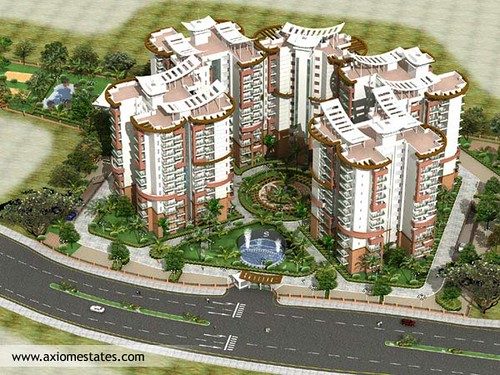
Image credit: Bangalore Properties - Real Estate India - Shriram Symphony by nancyarora2020 via flickr (BY-SA 2.0), sourced through Openverse.
Written by
Rajesh Tiwari
Real estate analyst covering property markets across Delhi NCR, Mumbai, and Bangalore. Rajesh tracks pricing trends, RERA compliance, and investment opportunities for residential and commercial buyers.
Looking for a technology partner?
From IT consulting to virtual office to custom software — eDarpan can help.
Continue reading
India's Real Estate Market Splits: What It Means for Investors
India's real estate market is splitting. Learn why commercial assets now offer stable cash flow, while residential success depends on hyper-local, end-user demand.
Hyderabad & Bengaluru Lead Sales Surge: What It Means for Buyers
Hyderabad & Bengaluru lead India's 2026 property surge, driven by infrastructure, affordability, and end-user demand. Learn the key takeaways for buyers.
Delhi-NCR Price Surge: Is It Better to Rent or Buy Now?
Delhi-NCR prices soared 12% in 2026. For business owners, we analyze if renting or buying is smarter with a financial model for the current market.