Home Sales Cool But Prices Climb: What NCR Buyers Do in 2026
NCR home sales are cooling while prices keep climbing. Here's why the crash won't come in 2026, which corridors offer real value, and how to time your buy.
Here's the scenario I keep running into with clients who are also first-time or second-time homebuyers in the National Capital Region. They've been waiting on the sidelines since 2023, expecting a correction. "Sales are slowing," they say, quoting a headline. "Prices will drop soon." Then they check the going rate on a 3BHK in Noida Sector 150 or Gurgaon's Golf Course Extension and it's up another 15% year on year. The wait cost them money, not the other way around.
This is the paradox that defines India housing prices 2026: transaction volumes are cooling across several NCR micro-markets, but headline prices keep grinding higher. Registrations dipped in parts of the Delhi-NCR market through 2024 and into 2025, yet average residential prices in Gurgaon and Noida rose well into double digits over the same window. If falling demand were the whole story, prices should soften. They aren't. Something else is happening under the hood.
In this post I'll decode why that gap exists, show you which NCR and Tier-2 markets actually offer value versus which are running on hype, walk through a real buyer's decision framework with rupee numbers, and give you a checklist you can take to a builder meeting tomorrow. This isn't theory. It's what I tell friends and clients when they ask me whether to buy now or keep waiting.
Key Takeaways
- Falling sales volume in NCR is mostly a mid-segment and affordable-housing phenomenon; the premium and luxury segments (₹1.5 Cr+) are still absorbing supply and pulling the average price up.
- Supply discipline by large developers, high input costs, and land scarcity in prime corridors mean a broad price crash is unlikely in 2026. Don't wait for one.
- Value has shifted to specific corridors: Dwarka Expressway, New Gurgaon (Sohna Road/Southern Peripheral Road), Greater Noida West, and Tier-2 cities like Jaipur, Lucknow, and Ludhiana.
- Time your entry to project stage and payment plan, not to a mythical market bottom. Under-construction stock offers better GST economics only in specific cases.
- Ready-to-move inventory in a slowing volume market gives you negotiating leverage — use it.
- Do your RERA, title, and builder-track-record checks before you fall in love with a sample flat.
Why are home sales falling but prices rising in Delhi-NCR?
On the surface it looks broken. Economics 101 says lower demand should lower prices. But the residential market doesn't behave like a single commodity. It's a stack of very different sub-markets, and they're moving in opposite directions.
Three forces explain the paradox:
1. The mix shifted upmarket. The units that stopped selling are the affordable and lower-mid segment (under ₹50 lakh). What's still transacting briskly is premium and luxury — ₹1.5 Cr and above. When cheap units drop out of the sales mix and expensive ones dominate, the average transaction price rises even if fewer total deals happen. It's a statistical artifact as much as a real trend, but it's a real trend too.
2. Developers learned discipline. After the NBFC crisis and the RERA cleanup, over-leveraged builders got wiped out. The survivors — DLF, Godrej Properties, M3M, Signature Global, Sobha, Prestige — control supply carefully. They launch in phases, hold inventory rather than dumping it at distress prices, and pass on rising input costs. Cement, steel, and labour are all more expensive than they were three years ago.
3. Land is genuinely scarce in the corridors people want. There's only so much developable land along Golf Course Road or inside Lutyens-adjacent Delhi. Scarcity plus a wealthy buyer base that includes NRIs and business owners deploying capital keeps a floor under prices in prime pockets.
Common Mistake: Treating "NCR average price up 18%" as if it applies to your specific 2BHK in Greater Noida West. It doesn't. The luxury segment in Gurgaon can rip while your target segment is flat or negotiable. Always look at price movement for your specific segment and micro-market, not the regional headline.
What does the India housing prices 2026 outlook mean for a regular buyer?
If you're a salaried professional or an MSME owner looking for a home to live in, here's the practical translation.
Don't budget your decision around a crash. It's not coming for the segments and corridors most people want. The developers with the inventory aren't distressed sellers. What you'll get instead is a market where sales velocity is slow, which quietly shifts negotiating power to buyers in ready-to-move and near-completion projects. A builder sitting on 30 unsold units in a completed tower is far more flexible than one selling a fresh launch on the "grand opening weekend" hype.
So the game in 2026 isn't timing the bottom. It's picking the right corridor, the right project stage, and negotiating hard where the developer needs the sale more than you need that specific flat.
For investors, the calculus is different. If you're chasing yield, direct residential in NCR gives you thin rental yields (roughly 2.5–3.5% gross in most areas). You may find better risk-adjusted returns elsewhere. I'd point you to our breakdown of REITs versus direct property in India for 2026 and the emerging model of fractional ownership of commercial property before you lock capital into a second flat purely for returns.
Which NCR corridors offer real value in 2026?
Not all of NCR is the same trade. Here's how I'd rank the main corridors on the value-versus-hype spectrum right now.
Gurgaon (Gurugram)
The Golf Course Road and Golf Course Extension micro-markets are premium and priced accordingly — you're paying for prestige and rental demand from corporate tenants. Genuine value has moved to New Gurgaon (Sectors along Dwarka Expressway, Sohna Road, and the Southern Peripheral Road). Infrastructure like the Dwarka Expressway becoming operational has already been partly priced in, but connectivity keeps improving.
Noida and Greater Noida
Noida Expressway sectors (150, 143, 168) offer relatively better value than central Noida. Greater Noida West (Noida Extension) remains the most affordable large-supply corridor in NCR, though you must scrutinize builder credentials — this belt has a history of stalled projects. The upcoming Noida International Airport at Jewar is the long-term catalyst everyone's betting on.
Faridabad and Ghaziabad
Still the value plays of NCR for owner-occupiers on a budget. Slower appreciation historically, but lower entry points and improving metro connectivity.
| Corridor | Indicative 3BHK price | Buyer profile | Value vs Hype (2026) |
|---|---|---|---|
| Golf Course Ext, Gurgaon | ₹2.5–5 Cr+ | Premium / NRI / investor | Priced high; prestige premium |
| Dwarka Expressway / New Gurgaon | ₹1.6–3 Cr | Upgraders, end-users | Fair value, infra upside |
| Noida Expressway (Sec 150 etc.) | ₹1.4–2.6 Cr | End-users, IT professionals | Good value, low density |
| Greater Noida West | ₹75 L–1.4 Cr | First-time buyers | Best affordability; check builder |
| Faridabad / Ghaziabad | ₹65 L–1.3 Cr | Budget end-users | Value, slower appreciation |
Prices are indicative ranges for reasonable-quality projects and vary widely by exact sector, builder, and floor. Treat them as a starting map, not a quote. You can filter live listings across these corridors on eDarpan's properties for sale and compare them against actual asking prices before you set your budget.
Are Tier-2 cities a smarter bet than NCR right now?
For a lot of buyers, yes — especially those who can work remotely or whose business is regional.
Tier-2 cities have been the quiet outperformers. Jaipur, Lucknow, Indore, Chandigarh-Mohali, Coimbatore, and even Ludhiana and Nagpur have seen strong price appreciation with far lower absolute entry points. A ₹1 Cr budget buys you a cramped 2BHK in central Gurgaon or a spacious, well-located 3BHK-plus in Lucknow's Gomti Nagar Extension or Jaipur's Mansarovar Extension.
The drivers are real: work-from-home permanence, better civic infrastructure, expanding airports, and local business owners upgrading their homes. Yields are often better too because rents haven't fully caught up to capital values in some pockets.
The caveat: liquidity. It's easier to exit an NCR property than one in a Tier-2 city if you need to sell in a hurry. And builder quality is more variable. Do heavier due diligence.
Pro Tip: In Tier-2 markets, physically visit the site at two different times — a weekday morning and a weekend evening. Occupancy and construction activity you can see with your own eyes tell you more than any brochure. A half-empty "ready" township with locked units is a liquidity warning sign, not a bargain.
Should I buy under-construction or ready-to-move in 2026?
This is where the GST math actually matters, and where a lot of buyers leave money on the table.
Under-construction residential property attracts GST (5% without input tax credit for non-affordable housing, 1% for affordable). Ready-to-move property where the completion certificate has already been issued attracts no GST. That's a real cost difference on a large ticket.
Run the numbers on a ₹1.5 Cr flat:
- Under-construction: 5% GST = ₹7.5 lakh added cost, plus you carry construction risk and pay rent/EMI in the interim.
- Ready-to-move: No GST, immediate possession, and in a slow-volume market, more negotiating room.
Under-construction still wins in specific cases — when the raw price is meaningfully lower, when the payment plan is construction-linked (so your capital isn't locked up front), or when you genuinely believe in the corridor's appreciation over the build period. But you have to price in the GST, the risk, and the holding cost honestly. We break the full comparison down in our guide to GST on under-construction versus ready-to-move flats, which is worth reading before you sign anything.
How do I actually vet a builder and project before buying?
Here's the walkthrough I use. Do these in order, and stop the moment something fails badly.
- Check the RERA registration. Every project must be registered with the state RERA (for NCR: UP-RERA, Haryana RERA, or Delhi). Search the project on the state RERA portal. Verify the registration number, promoter name, approved plan, and — critically — the committed completion date and current status of quarterly filings.
- Pull the builder's track record. How many projects have they delivered? On time? Search for the promoter's other RERA registrations and check for delays or complaints. A builder with three delayed projects will delay yours too.
- Verify the title and land status. Get the title documents reviewed by a property lawyer. Confirm the land isn't agricultural without conversion, isn't litigated, and that the builder actually owns or has development rights.
- Confirm approvals. Building plan sanction, environmental clearance (for larger projects), fire NOC, and — for ready projects — the occupancy/completion certificate. No OC means you may struggle with loans, GST, and resale later.
- Read the builder-buyer agreement clause by clause. Look at the possession date, penalty for delay, carpet area versus super area, and the cancellation/refund terms. RERA mandates carpet-area-based selling — insist on it.
- Inspect the payment plan. Prefer construction-linked plans over "possession-linked" or heavily front-loaded ones for under-construction stock. It aligns the builder's incentive with actual progress.
- If something goes wrong later, know your recourse. Familiarize yourself with the RERA complaint process for homebuyers before you buy, not after. Knowing the escalation path changes how you negotiate.
This is roughly a two to four week process if you're thorough. Rushing it to grab a "limited-time offer" is exactly how people end up in stalled Greater Noida projects.
A worked example: how one Gurgaon business owner timed his purchase
Let me make this concrete. A client of mine runs a 20-person digital marketing firm in Gurgaon — an MSME, GST-registered, healthy cash flow. He'd been renting a 3BHK for ₹55,000 a month and had roughly ₹40 lakh liquid plus loan eligibility for another ₹1.1 Cr. He'd delayed buying since 2023 waiting for prices to fall.
When he came to me in early 2025, here's what we did:
- Reframed the goal. He wasn't investing; he wanted a home. So appreciation mattered less than total cost of ownership and negotiating leverage.
- Chose ready-to-move over a shiny new launch. A completed project on Sohna Road had unsold inventory. The developer was flexible because volumes were slow. No GST on the ready unit saved roughly ₹6.5 lakh versus a comparable under-construction flat at ₹1.3 Cr.
- Negotiated hard. Because sales velocity was low and the tower was 80% occupied (good for livability, bad for the builder's remaining sales targets), we got the asking price of ₹1.35 Cr down to ₹1.26 Cr, plus a waiver on two years of maintenance and a covered parking thrown in.
- Structured the loan sensibly. ₹35 lakh down, ₹91 lakh loan. His EMI landed near ₹78,000 — higher than his rent, but now building equity in an appreciating asset with a possession-day handover, no construction risk.
The lesson: he didn't win by predicting the market. He won by picking a slow-velocity, ready-to-move situation and using the buyer's leverage that a cooling sales market hands you if you know where to look. Waiting another year for a "crash" would have cost him more in rent than any plausible price dip would have saved.
How eDarpan helps buyers move faster and safer
Full disclosure — this is where we fit in. eDarpan Properties exists precisely because the gap between headline prices and real, negotiable deals is where buyers lose or make money. We help you shortlist properties for sale across NCR and Tier-2 cities, compare corridors on actual asking prices rather than glossy averages, and connect you with rental options if you'd rather rent in a corridor before committing to buy there.
For business owners and NRIs handling this remotely, the process gets messier — GST registration, company address, documentation. If you're an out-of-town investor or setting up a business presence, our virtual office for GST and company registration handles the compliance address side while you focus on the property decision. And if you want a second opinion on structuring the purchase or the tech side of running your business, our IT and business consulting team is a call away via contact eDarpan.
Frequently asked questions
Will house prices in NCR fall in 2026?
A broad crash is unlikely. Supply discipline by large developers, high construction costs, and land scarcity in prime corridors keep a floor under prices. You may find flat prices or genuine negotiability in slow-selling ready-to-move inventory, but don't bank on a significant decline in the segments and locations most buyers want.
Why are property prices rising when sales are falling?
The sales that dropped are mostly in the affordable and lower-mid segment, while premium and luxury deals keep transacting. That shifts the average transaction price upward. Combined with disciplined supply and rising input costs, prices grind higher even as total transaction volume cools.
Is it better to buy in Gurgaon or a Tier-2 city like Jaipur or Lucknow?
It depends on your goal. Gurgaon offers liquidity and strong rental demand from corporates but higher entry prices. Tier-2 cities like Jaipur and Lucknow offer far more space per rupee and strong appreciation, but lower liquidity and more variable builder quality. If you can work remotely and plan to hold long term, a well-vetted Tier-2 purchase can be the smarter buy.
Do I pay GST on a ready-to-move flat in India?
No. If the flat has received its completion or occupancy certificate before you buy, no GST applies. GST (5% for standard housing, 1% for affordable) applies only to under-construction property. On a ₹1.5 Cr flat, that's a difference of up to ₹7.5 lakh, so factor it into your comparison.
How do I check if a real estate project is RERA registered?
Visit your state's RERA portal (UP-RERA, Haryana RERA, or Delhi RERA for NCR) and search by project name, promoter, or registration number. Verify the registration number, approved plans, committed completion date, and whether the builder is filing quarterly progress updates. Never buy in an unregistered project.
What rental yield can I expect on residential property in NCR?
Gross rental yields on NCR residential property are typically in the 2.5–3.5% range, which is modest. If income yield is your primary goal rather than capital appreciation, compare against REITs and fractional commercial ownership, which can offer better risk-adjusted returns.
Should I wait for prices to drop before buying my home?
For an end-user, usually no. The rent you pay while waiting often exceeds any realistic price dip in the corridors people actually want. A better strategy is to buy a ready-to-move unit in a slow-velocity market where you hold negotiating leverage, rather than trying to time a bottom that may not arrive.
The bottom line
The story of India housing prices 2026 isn't a contradiction once you look under the headline. Sales are cooling in the mass segment, prices are climbing on a premium-heavy mix and disciplined supply, and that combination hands quiet leverage to informed buyers in ready-to-move and near-completion inventory. Stop waiting for a crash that isn't coming for the homes you actually want.
Pick the corridor on fundamentals, favour ready-to-move where the GST and negotiation math works, vet the builder like your money depends on it — because it does — and act when a slow-velocity situation gives you the upper hand. If you want help shortlisting the right corridor and separating negotiable deals from hype, browse eDarpan Properties or reach out to our team. The best time to buy well is when everyone else is confused about the market. Right now, they are.
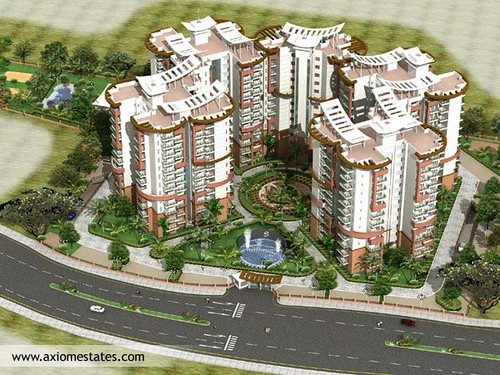
Image credit: Bangalore Properties - Real Estate India - Shriram Symphony by nancyarora2020 via flickr (BY-SA 2.0), sourced through Openverse.
Written by
Rajesh Tiwari
Real estate analyst covering property markets across Delhi NCR, Mumbai, and Bangalore. Rajesh tracks pricing trends, RERA compliance, and investment opportunities for residential and commercial buyers.
Looking for a technology partner?
From IT consulting to virtual office to custom software — eDarpan can help.
Continue reading
How AI Infrastructure Growth is Reshaping Delhi NCR Office Demand
AI infrastructure growth is reshaping office demand in Delhi NCR, making power and connectivity as crucial as location for future-proof investments.
Branded Residences in India 2026: Luxury Living or Smart Investment?
Is the premium for branded homes in India justified by returns? We analyze rental yields, capital appreciation, and tax pitfalls for the savvy investor.
RTO Mandates & Office Space Demand in India 2026: What to Know
RTO mandates and GCC expansion are driving up office rents in India. Here's what SMB founders need to know about leasing, flexible offices, and costs in 2026.