Delhi-NCR Price Surge: Is It Better to Rent or Buy Now?
Delhi-NCR prices soared 12% in 2026. For business owners, we analyze if renting or buying is smarter with a financial model for the current market.
You're sitting in your rented 2BHK in Gurgaon, refreshing property listings after work. The number you saw in the morning—₹2.1 crore for a decent 3BHK in a good society—has just been revised to ₹2.25 crore by the evening. A 7% jump in 12 hours. Your broker's text says, "Sir, 5 more parties interested. Owner says final price is ₹2.35 crore. Decide by tomorrow." Meanwhile, your own business, perhaps a mid-sized logistics firm in Faridabad or a growing SaaS startup in Noida Sector 62, is facing its own margin pressures. The question isn't just about a roof over your head; it's a critical capital allocation decision that will impact your business liquidity, personal net worth, and stress levels for the next 15 years. Welcome to the Delhi-NCR property market of 2026.
According to recent data from major real estate consultancies, the Delhi-NCR region has witnessed a staggering 12% year-on-year price surge, with micro-markets like Golf Course Extension (Gurgaon) and Noida Expressway seeing spikes of up to 18%. This isn't just post-pandemic catch-up; it's a complex cocktail of infrastructure completions (think Dwarka Expressway), speculative capital, and genuine demand from a growing professional class. For the Indian business owner or senior professional, this presents a classic, high-stakes dilemma: do you commit a massive chunk of capital to buy now, hoping for further appreciation, or do you continue renting, preserving cash for business expansion, while watching prices potentially climb out of reach?
This article cuts through the noise. We'll move beyond generic advice and dive into a financial model built specifically for the 2026 NCR context. We'll analyze a real-world case study, compare EMI vs. rent scenarios with actual ₹ figures, and factor in variables most analysts miss—like the impact of new GST compliance on business cash flow, or how opting for a virtual office address can alter your real estate needs. By the end, you'll have a framework to make a decision that aligns with your financial portfolio, not just market FOMO.
Key Takeaways: Your Rent vs. Buy Financial Checklist
- Run the 5-Year Rule: If you cannot commit to living in the same property for at least 5 years, renting is almost always financially superior when you factor in registration, GST, and brokerage costs.
- Calculate Your True Cost of Capital: The ₹50,000 saved in rent is not a ₹50,000 gain. Compare it against the post-tax returns your down payment could earn in your business or other investments.
- Stress-Test Your EMI at 10.5%: Banks may offer loans at 9% today, but model your affordability against a potential 10.5% interest rate. Can your business sustain the EMI if margins tighten?
- Factor in "Hidden" Ownership Costs: Budget 1.5-2% of the property's value annually for maintenance, society charges, and property tax—a cost absent in a rental agreement.
- Explore Hybrid Models: Consider renting your primary residence while investing in a smaller property or commercial space in a high-growth corridor, diversifying your real estate exposure.
The 12% Surge Decoded: What's Really Driving Delhi-NCR Prices in 2026?
To make a smart decision, you first need to understand what you're dealing with. This isn't a uniform boom. The 12% average masks a tale of two cities: the "finisher" markets and the "promise" markets.
The "Finisher" Markets: Gurgaon's Dwarka Expressway & Noida's Sec-150+
These are areas where infrastructure promised a decade ago is finally, tangibly ready. The Dwarka Expressway is operational, the Noida Airport is a year from launch, and metro connectivity is a reality. Prices here are being driven by end-users—professionals who need to move in now and can afford the premium. The surge is backed by delivered utility, making it somewhat resilient, but also means most of the short-term gains have likely been captured. Buying here is about stability and quality of life, not explosive growth.
The "Promise" Markets: Greater Noida West, Yamuna Expressway, New Gurgaon
Here, the game is different. Prices are being driven by investor speculation on future infrastructure and the ripple effect from the "finisher" markets. You'll see higher volatility and more aggressive bidding. A plot we evaluated for a client in Greater Noida West in January 2026 was quoted at ₹6,800/sq.ft. By March, after a new commercial park announcement, it was at ₹8,200/sq.ft. This is high-risk, high-potential territory. It's crucial to separate marketing hype from genuine, funded government projects with hard deadlines.
Pro Tip: Always cross-reference builder or agent claims with the actual budget allocation and tender status on government department websites (like Noida Authority or GMDA). I've seen clients get burned betting on "confirmed" metro extensions that were merely in the feasibility study phase. Your capital is too precious to be guided by a brochure.
EMI vs. Rent: A Real-World Delhi-NCR Case Study for 2026
Let's move from theory to practice. Meet Rajesh (name changed), the founder of a 40-employee digital marketing agency currently operating from a virtual office in Delhi with a team working hybrid from across NCR. His business turned profitable in 2024, and he has ₹40 lakhs saved for a property. He's married, with one child, and currently rents a 3BHK in Sector 70, Gurgaon, for ₹45,000/month. He's looking at a ready-to-move-in 3BHK in a comparable society, priced at ₹2.2 crore. Let's model his two options over a 7-year horizon.
Option A: The Purchase Decision
- Property Cost: ₹2,20,00,000
- Down Payment (20%): ₹44,00,000 (wipes out his savings + needs extra ₹4L)
- Home Loan (80%): ₹1,76,00,000 at 9% for 20 years.
- Monthly EMI: ₹~1,58,300
- One-Time Costs: Stamp Duty & Registration (~6%): ₹13,20,000. GST (if under-construction, but this is ready): 5% on value? No, but brokerage (~2%): ₹4,40,000. Total upfront cash outflow beyond down payment: ~₹17,60,000.
- Annual Costs: Maintenance (~₹6,000/month): ₹72,000. Property Tax: ~₹25,000. Total: ~₹97,000/year.
Option B: The Rent & Invest Decision
- Monthly Rent: ₹45,000, increasing at 5% per year.
- Capital Preserved: ₹44,00,000 (down payment) + ₹17,60,000 (avoided one-time costs) = ₹61,60,000.
- Investment Strategy: Rajesh invests this ₹61.6L in a balanced portfolio (60% equity, 40% debt) with a conservative post-tax average return of 10% p.a. He also invests the monthly difference between the EMI (₹1.58L) and his rent (starts at ₹45k) into the same portfolio.
After 7 years, the comparison is stark. In Option A, Rajesh owns an asset valued at, say, ₹3.5 crore (assuming 6% annual appreciation), with a outstanding loan of ~₹1.4 crore. His net equity in the home is ~₹2.1 crore. In Option B, his investment portfolio, with systematic contributions from the EMI-rent difference, grows to approximately ₹3.2 crore. The gap is narrower than most assume. The "buy" decision only becomes a clear winner if property appreciation consistently outpaces financial market returns, and you stay put for a long duration. This is the core of the rent or buy property Delhi NCR 2026 calculus.
The Business Owner's Lens: How Your Company's Health Should Guide Your Choice
As a business owner, your primary asset is your company. Tying up ₹60-70 lakhs of liquidity in a home's down payment and registration costs has a direct opportunity cost for your business. Could that capital fund a new custom software platform that increases efficiency? Could it finance the move to a cloud-based infrastructure, cutting your IT overhead? I've worked with MSMEs where the founder's personal property purchase directly delayed a critical business automation project by 18 months, costing them market share.
Furthermore, consider the impact of Google Workspace or Microsoft 365 adoption enabling permanent hybrid or remote work. Does your team need a central office five days a week? If not, the need for a large, centrally-located personal home changes. You might opt for a smaller rental in the city and invest in a larger property in a peaceful, value-for-money location for weekends, using the savings to upgrade your company's WhatsApp Business API or AI voicebot capabilities for better customer service.
Rent vs. Buy Comparison: A 5-Factor Decision Matrix
This isn't just about numbers; it's about life stage, risk appetite, and personal goals. Use this table to score your own situation.
| Decision Factor | Leans Towards BUY If... | Leans Towards RENT If... | Questions to Ask Yourself |
|---|---|---|---|
| Stability & Timeline | You are certain you will live in the city/property for 7+ years. | Your job/business may relocate you in under 5 years. | Can I commit to this location for the long haul? |
| Financial Health | Your business has stable, predictable cash flows; down payment is <40% of your liquid net worth. | Business is cyclical or growing fast; capital is needed for opportunities. | Will this EMI constrain my ability to pivot or invest in my business? |
| Market Condition | You are buying in a "finisher" market with realistic prices or in a downturn. | Market is in a speculative frenzy with prices rising 15%+ YoY. | Am I buying out of need or out of fear of missing out (FOMO)? |
| Lifestyle Preference | You value customization, permanence, and asset-building over flexibility. | You value minimalism, dislike maintenance hassles, and want to upgrade/downgrade easily. | Do I want to deal with plumbing issues and society meetings? |
| Tax & Compliance | You are in the highest tax bracket and can fully benefit from HRA & home loan deductions. | Your business structure (e.g., proprietorship) makes claiming HRA complex or less beneficial. | Have I calculated my net tax outgo under both scenarios with my CA? |
A Practical 7-Step Action Plan for Your 2026 Decision
- Audit Your Finances: With your CA, determine your exact liquidity post-tax. Don't just look at bank balances; account for upcoming business outlays like quarterly GST payments or vendor fees.
- Model the 10.5% Scenario: Use an online EMI calculator. If your proposed EMI is ₹1.5L at 9%, it jumps to ~₹1.75L at 10.5%. Can you handle that if interest rates rise?
- Explore the Hybrid Path: Investigate renting your primary home while buying a smaller commercial shop or studio apartment (see investment properties) that generates rental income to partly offset your own rent.
- Negotiate Like a Pro: In a hot market, your edge isn't just price. Offer a quicker closure (if you have cash), a larger earnest deposit, or flexibility on possession. Get every promise from the builder in writing, witnessed.
- Due Diligence is Non-Negotiable: For resale, check the original allotment letter, all receipts, and society dues clearance. For under-construction, verify the RERA registration number and project status on the official H-RERA or UPRERA website.
- Factor in Total Cost of Ownership (TCO): Add 20% to your estimated interior budget. Add 1.5% of property value per year for maintenance. This is your true annual cost.
- Run the Final Comparison: Create a simple spreadsheet comparing the Net Equity (Property Value - Loan) in the Buy scenario vs. the Investment Corpus in the Rent & Invest scenario over 5, 10, and 15 years. The longer the horizon, the more buying favors you, provided the property is well-chosen.
Frequently Asked Questions (FAQs)
Is 2026 a good time to buy property in Delhi NCR?
It depends entirely on your profile. For an end-user with strong financial stability, a clear 10-year horizon, and a need for stability, buying in a "finisher" market can be a sound decision. For an investor or someone with uncertain plans, the current premium prices suggest caution; renting might be financially wiser while you wait for more clarity or a market correction.
How much should my EMI be compared to my salary?
The old rule of thumb of 40% of take-home is dangerous for business owners. Your salary might be low, but your business profit is high. Instead, ensure your total EMI (home + any other loans) is not more than 30% of your business's post-tax, stable monthly profit. This protects your company's operational liquidity.
What are the hidden costs of buying a house in India?
Beyond stamp duty and registration (~6%), don't forget brokerage (1-2%), interior costs (₹1500-3000/sq.ft.), modular kitchen (extra), increased utility deposits, higher property tax than rented, and monthly society charges which can be ₹4-8/sq.ft. These can add 10-15% to your purchase price.
Should I buy land or apartment in Delhi NCR 2026?
Land (freehold) offers higher appreciation potential but zero income, requires a larger capital outlay, and comes with higher due diligence risks (litigation, zoning). Apartments offer immediate usability, easier financing, and lower entry costs but have lower appreciation and monthly society charges. For most professionals, a well-located apartment is a more practical choice.
How does hybrid work affect Delhi NCR property prices?
Hybrid work is decentralizing demand. While core commercial hubs (Cyber City, Nehru Place) remain strong, there's rising demand in peripheral "live-work-play" townships with better amenities and slightly lower prices. This trend supports the growth in markets along the expressways. For a deeper dive, read our analysis on how AI and infrastructure are reshaping office demand.
Conclusion: It's a Capital Allocation Problem, Not an Emotional One
The Delhi-NCR market of 2026 is complex and unforgiving. The 12% surge is real, but it's not uniform, and it doesn't automatically make buying the right choice for you. Your decision should stem from a cold, hard analysis of your personal balance sheet and your business's strategic needs. For many of the business owners and consultants I work with, the optimal path in today's market is often a balanced, hybrid approach: securing a comfortable rental in a location that suits your current life, while strategically deploying capital into your business's growth—be it through technology services, marketing, or talent—and perhaps a smaller, income-generating real estate asset.
Remember, the most valuable property you own is your own enterprise. Don't mortgage its future for an illiquid asset. If you need to run personalized financial models or explore how business technology efficiency can free up capital for real estate decisions, that's where a pragmatic IT and business consulting partner can add value. For those actively looking, start your search with a clear budget and criteria on our eDarpan Properties portal, and always, always do your homework.
If you're grappling with this decision and how it intersects with your business's tech roadmap, feel free to reach out for a consultation. Sometimes, the right software system can save enough to make your dream home a reality without the financial strain.
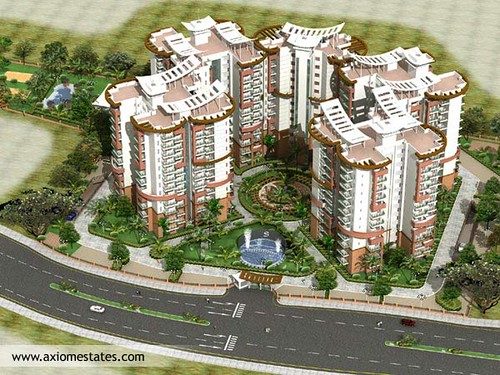
Image credit: Bangalore Properties - Real Estate India - Shriram Symphony by nancyarora2020 via flickr (BY-SA 2.0), sourced through Openverse.
Written by
Rajesh Tiwari
Real estate analyst covering property markets across Delhi NCR, Mumbai, and Bangalore. Rajesh tracks pricing trends, RERA compliance, and investment opportunities for residential and commercial buyers.
Looking for a technology partner?
From IT consulting to virtual office to custom software — eDarpan can help.
Continue reading
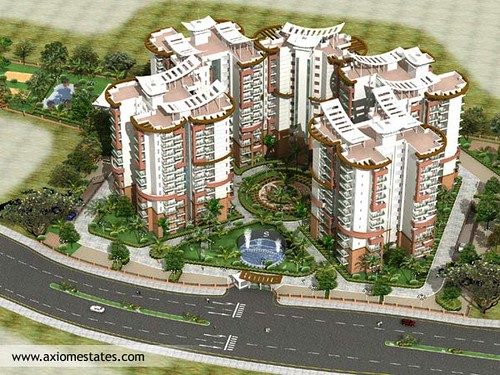
How Rising Delhi NCR Home Prices Impact Your Budget & Options
Delhi NCR's 12% property price surge is derailing budgets. Learn strategic fixes, affordable alternatives, and whether to buy now.
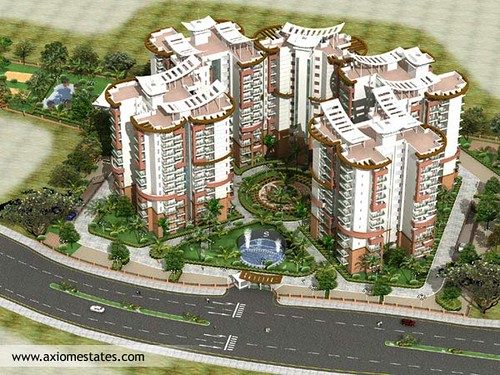
Goa, Bhopal, Lucknow: Top Tier-2 Cities for Property Investment 2026
Move beyond expensive metros. Discover why Goa, Bhopal & Lucknow are the top tier-2 cities for high-yield property investment in 2026, backed by data & infrastructure growth.
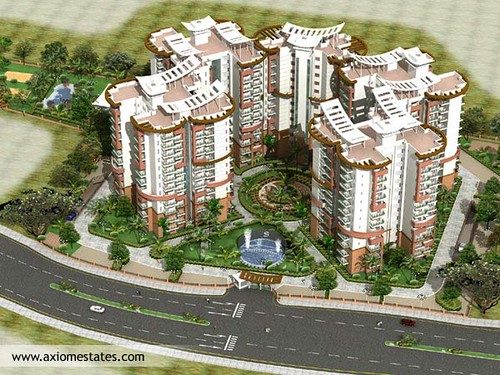
How AI Infrastructure Growth is Reshaping Delhi NCR Office Demand
AI infrastructure growth is reshaping office demand in Delhi NCR, making power and connectivity as crucial as location for future-proof investments.