Office Leasing Hits 48M Sq Ft: Should SMBs Buy or Rent?
India's office market hit 48M sq ft in H1 2026. Learn whether your SMB should buy, rent, or use a virtual office—with real numbers and a decision framework.
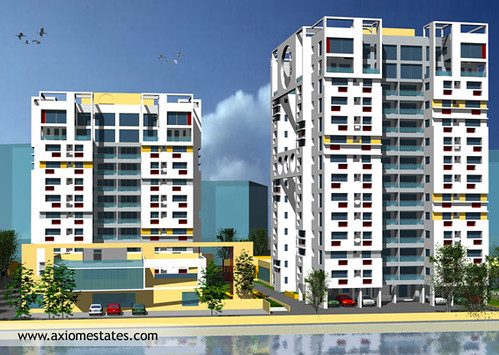
Here's a scenario I run into almost every month. A founder running a 20-person services firm in Bengaluru signs a lease for 4,000 sq ft because their landlord promised "great long-term rates." Eighteen months later, half the team is hybrid, the office feels empty, and they're locked into a five-year commitment with a three-year lock-in and a nine-month security deposit sitting dead on their books. That deposit alone was north of ₹25 lakh. Money that could have funded a year of growth.
The reason this matters right now is timing. India's office market just clocked around 48 million sq ft of gross leasing in H1 2026 across the top seven cities, one of the strongest first halves on record. When demand runs this hot, landlords get aggressive, brokers push bigger footprints, and SMB owners get talked into space they don't need. The surge in office space leasing India 2026 is real, but a record market is exactly when you should slow down and think about whether your business needs a traditional lease at all, a flexible seat-based workspace, or just a compliant registered address.
In this post I'll break down the three real options, walk through the actual numbers with a worked example, give you a decision framework, and flag the mistakes I've watched cost businesses lakhs. By the end you should know which door to walk through and what to ask before you sign anything.
Key Takeaways
- A traditional lease only makes financial sense once you have 30+ people who need to be in the office most days and you can commit to 3+ years with confidence.
- Managed and coworking spaces cost more per seat but eliminate capex, deposits, and fit-out headaches. For teams of 5 to 40, they usually win on total cost when you factor in idle capacity.
- A virtual office address is enough for GST registration, company incorporation, and courier handling if your team is fully remote or field-based. This is the cheapest legal option at ₹1,000 to ₹2,500 a month in most cities.
- Security deposits (typically 6 to 12 months of rent) are the hidden killer in traditional leases. Model your cost including locked-up deposit and lost interest.
- Always check GST addressability and whether the landlord will provide a No Objection Certificate before you sign. Skipping this breaks your GST registration.
- Match the space decision to your 24-month headcount plan, not your current headcount or your ego.
Why is office leasing surging in H1 2026, and what does it mean for SMBs?
The 48 million sq ft figure is being driven mostly by large occupiers: global capability centres, IT majors, BFSI, and flex operators pre-committing space in cities like Bengaluru, Hyderabad, Pune, and the NCR. That's the important nuance. The headline number is a big-company story.
For an SMB owner reading that number, the risk is assuming you need to "get in before rates rise." Rising demand does push up rents in Grade A buildings, especially in the prime micro-markets like Whitefield, HITEC City, and Gurgaon's Golf Course Extension. But it also means flex operators (WeWork India, Awfis, Table Space, Smartworks, IndiQube) are expanding aggressively, and that gives smaller businesses more negotiating power on flexible terms than they've had in years.
So the market surge cuts both ways. It makes long leases pricier and riskier, while making flexible and virtual options more available and competitive. Your job is to figure out which side of that trade you belong on.
What are the three real options for office space in India?
Strip away the jargon and there are exactly three paths. Most confusion comes from mixing them up or from a broker pushing whichever one earns them the biggest commission.
1. Traditional commercial lease
You rent bare or warm-shell space directly from a landlord, do your own fit-out (furniture, cabling, cabins, pantry), and sign a lease that's typically 3 to 9 years with a lock-in period. You pay a security deposit of 6 to 12 months' rent, plus a maintenance charge (CAM) on top of base rent, usually ₹8 to ₹20 per sq ft per month.
2. Managed office or coworking
A flex operator hands you a ready-to-use, furnished space with internet, housekeeping, reception, and meeting rooms bundled in. You pay a per-seat or per-cabin monthly fee. Deposits are lighter (usually 2 to 3 months), commitments can be as short as month-to-month or as long as you want. Managed offices are the "private customised floor" version; coworking is the "shared building, dedicated desks" version.
3. Virtual office
You don't get any physical workspace at all. You get a legitimate commercial address you can use for company registration, GST registration, and receiving official mail and couriers. This is ideal for remote-first teams, consultants, e-commerce sellers registering in multiple states, and anyone whose team simply doesn't need desks.
If your business is genuinely distributed or field-based, a virtual office address for GST and company registration can cover your legal and compliance needs for a fraction of any physical option. I'll come back to the GST angle because that's where people trip up.
Buy vs lease vs flex vs virtual: how do the numbers actually compare?
Let me put concrete rupee figures against a realistic scenario: a 20-person team in a tier-1 city needing roughly 2,000 sq ft equivalent if they went traditional. These are representative ranges for a good micro-market; your exact numbers will vary by city and building.
| Criteria | Traditional Lease | Managed / Coworking | Virtual Office | Buy (Own) |
|---|---|---|---|---|
| Monthly cost (20 people) | ₹1.8L–₹2.6L base rent + CAM | ₹1.6L–₹2.4L all-inclusive | ₹1,000–₹2,500 total | EMI ₹3L–₹5L on a ₹4–6 Cr unit |
| Upfront capex / deposit | ₹15L–₹35L (deposit + fit-out) | ₹3L–₹6L deposit | ~₹5,000–₹25,000/yr | ₹80L–₹1.5 Cr down payment |
| Commitment / lock-in | 3–5 yr lock-in typical | Month-to-month to 2 yr | Monthly / yearly | Permanent asset |
| Time to move in | 6–12 weeks (fit-out) | 1–7 days | Same day to 3 days | Months + fit-out |
| GST / registration valid? | Yes | Yes | Yes (with NOC + docs) | Yes |
| Best for | Stable 30+ team, long horizon | Teams of 5–40, uncertain growth | Remote/field teams, multi-state GST | Cash-rich, long-term, wants asset |
Buying deserves a note. For most SMBs, tying up ₹1 crore-plus of equity in a commercial unit is a poor use of growth capital unless you're flush and want the real estate as a long-term asset play. If you do want exposure to commercial property returns without operating an office, look at REITs versus direct property investment instead. And if you're set on buying, at least go in eyes open about the risks around unoccupied built inventory and buyer traps.
A worked example: the Gurgaon services firm that almost overpaid
Here's a real-shaped example based on a firm I advised. A 22-person digital marketing agency in Gurgaon was being pushed by a broker into a 3,500 sq ft warm-shell lease on Golf Course Extension Road. Let me lay out what they were actually signing up for.
- Base rent: 3,500 sq ft at ₹75/sq ft = ₹2,62,500/month
- CAM: ₹12/sq ft = ₹42,000/month
- Security deposit: 9 months of rent = ₹23,62,500 locked up
- Fit-out: furniture, cabins, cabling, pantry = ₹18,00,000 one-time
- Lock-in: 3 years, with a 5% annual escalation
Their all-in first-year cash outflow, counting deposit and fit-out, was going to cross ₹78 lakh. And their actual daily office attendance? Around 12 to 14 people, because sales and content folks worked hybrid.
We ran the alternative. A managed office with 25 dedicated seats plus two meeting rooms in the same micro-market quoted roughly ₹2.1 lakh/month all-inclusive (internet, housekeeping, reception, electricity, meeting-room credits), with a 3-month deposit of ₹6.3 lakh and a 24-month term. No fit-out. Move-in within a week.
The comparison over three years:
- Traditional lease: ~₹1.2 Cr total outflow, ~₹23.6L deposit stuck, ₹18L sunk fit-out, no flexibility if they shrank.
- Managed office: ~₹78L total outflow, ₹6.3L deposit recoverable, zero fit-out, ability to scale seats up or down.
The managed option saved them over ₹40 lakh across three years and freed up the deposit and fit-out cash for hiring. The clincher wasn't even the rent, it was the ₹23L deposit. In a lease, that money earns you nothing while sitting with a landlord. Invested even at a modest 7%, it's ₹1.65 lakh a year in lost interest, ignored by almost every SMB doing this math.
Common Mistake: Sizing your office to your current headcount plus a "buffer for growth." Landlords love this because you pay for empty space today. Instead, size to your realistic 12-month attendance, and use a flex operator that lets you add seats on 30 days' notice. Growth should expand your space, not sit as a rent liability you're praying to fill.
How do you decide? A practical framework and checklist
Run your business through these questions in order. The first "no" usually points you to your answer.
- Does your team physically need to be together most days? If no (sales-heavy, field ops, or remote-first), a virtual office plus occasional day passes is probably enough.
- Is your 24-month headcount stable and predictable? If you can't confidently forecast, avoid a 3-year lock-in. Flex is your friend.
- Do you have 30+ people who need daily desks? Below that, the per-seat economics of managed space usually beat the total cost of a leased-and-fitted floor once you count deposit, fit-out, and idle capacity.
- Can you afford to lock up 9 months of rent as a dead deposit? If that capital is better spent on the business, that's a strong signal against a traditional lease.
- Do you need a prestige address for client meetings? A managed office in a Grade A tower or a premium virtual office address delivers this without a full lease.
Before signing anything, physical or virtual, run this checklist:
- Confirm the address is commercially zoned and the landlord will issue a signed No Objection Certificate for GST and company registration.
- Get the latest electricity bill or property tax receipt in the owner's name and a copy of the rent/lease agreement, both required as address proof for GST.
- For flex spaces, get the exact list of what's included (electricity, internet SLA, meeting-room hours, printing) in writing. Bundled pricing hides caps.
- Check the escalation clause, lock-in, and exit notice period line by line. A "flexible" plan with a 6-month notice isn't flexible.
- For leases, negotiate the deposit down to 6 months in a strong market and get a clear fit-out rent-free period (30 to 90 days is standard).
If you're evaluating actual physical space, our team at eDarpan Properties can help you shortlist and compare rental commercial properties across Indian cities, and if buying makes sense for your situation we'll walk you through commercial units for sale with the diligence done properly.
How does a virtual office actually work for GST and registration?
This is the part that saves smaller and multi-state businesses the most money, and it's the one people understand least. Under GST law you need a registered place of business in each state where you have a taxable presence. E-commerce sellers on Amazon and Flipkart often need registrations in multiple states for their fulfilment operations. Renting physical space in five states would be absurd. A virtual office solves this legally.
Here's the typical process:
- Choose your city/state based on where you need a GST registration or your company's registered office.
- Get the document kit from the virtual office provider: the NOC from the owner, the rent/lease agreement in your company's name, and the latest utility bill. These three documents are what the GST officer wants.
- File your GST application (Form GST REG-01) on the portal using this address as your principal or additional place of business.
- Handle physical verification if the officer requests it. A good virtual office provider will have signage and staff to receive the inspection, which is exactly why you shouldn't use a random friend's flat address.
- Set up mail/courier handling so official notices and client correspondence reach you.
Pro Tip: The single most common reason a GST officer rejects a virtual office address is a mismatch between the name on the rent agreement, the NOC, and your GST application. Get all three issued in your exact registered legal entity name (not your trade name) before you file. This one alignment saves weeks of back-and-forth.
You can explore how a compliant virtual office for GST and company registration works and which cities are covered. For most consultants, freelancers, and remote-first startups, this plus a good set of cloud tools is the entire "office" they ever need.
What should your tech stack look like once you go flexible or remote?
The whole point of dropping a fixed office is that your team works from anywhere. That only works if your systems are built for it. When a client goes flex or remote, this is roughly the stack I put in place.
- Productivity and email: a proper Google Workspace or Microsoft 365 licensing setup, so email, docs, and video are on your own domain with admin controls, not a free Gmail.
- Infrastructure: if you were running on-prem servers to justify that big office, this is the moment to move to the cloud. Our cloud migration and managed services team regularly cuts infra spend while making it accessible from anywhere.
- Customer communication: route inbound queries through WhatsApp Business API, transactional alerts through bulk SMS, and repetitive call handling through an AI voicebot so a distributed team doesn't drop the ball.
- Custom systems: if your operations depend on a shared tool, get it built cloud-first with custom software or a mobile app so field staff aren't tied to a desk.
Getting the space decision and the tech decision right together is where the real savings compound. Our IT consulting team can map your workflow before you commit to any lease so you're not paying for square footage your systems don't require.
Frequently asked questions
Is it better to lease or buy office space for a small business in India?
For most SMBs, leasing or flexible workspace beats buying because buying locks up ₹1 crore or more of equity that's usually better spent on growth. Buy only if you're cash-rich, have a very long horizon, and want the property as a deliberate asset. Otherwise lease, flex, or go virtual.
Can I register my company and GST using a virtual office address?
Yes. A virtual office address is legally valid for company incorporation and GST registration as long as the provider supplies a signed No Objection Certificate, a rent agreement in your company's name, and a recent utility bill. Ensure the entity name matches across all three documents.
How much security deposit is normal for a commercial lease in India?
Traditional commercial leases typically demand 6 to 12 months of rent as an interest-free security deposit, with 9 months being common in metros. In a competitive negotiation you can often push this down to 6 months, especially for smaller floors.
What's the difference between coworking and a managed office?
Coworking gives you dedicated desks within a shared, operator-run building alongside other companies. A managed office gives you a private, customised floor or suite exclusively for your team, still operated by the provider. Managed offices cost more but offer privacy and branding; coworking is cheaper and more social.
Is flexible workspace really cheaper than a traditional lease?
On raw rent per seat, flex often looks pricier. But once you add the locked-up deposit, fit-out capex, lost interest on that capital, and the cost of idle space, flex usually wins the total-cost comparison for teams under 30 to 40 people. Model the full three-year outflow, not just monthly rent.
Which Indian cities have the strongest office demand in 2026?
Bengaluru, Hyderabad, Pune, and the NCR (Gurgaon/Noida) continue to lead office leasing volumes, driven by GCCs and IT occupiers. For SMBs, this means both higher Grade A rents and more flexible workspace supply in these markets. If you're weighing location for the long term, study the emerging growth corridors smart buyers are watching.
What documents does a landlord need to provide for GST registration?
You need a No Objection Certificate from the owner, the executed rent or lease agreement, and the latest electricity bill or property tax receipt in the owner's name. If you're buying, verify project safety through the RERA escrow verification process first.
The bottom line
The record surge in office space leasing India 2026 is a large-occupier story, and it's exactly the wrong moment for an SMB to get swept into a lease bigger than it needs. Start from your team's real attendance and your 24-month plan, not from what a broker or a hot market tells you. For most businesses under 40 people, a managed or flexible workspace wins on total cost, and for remote-first or multi-state operations a compliant virtual office covers your legal needs for the price of a nice dinner each month.
Whatever direction you lean, get the diligence right: check the NOC, model the full cost including the dead deposit, and align your tech stack so your space decision actually holds up. If you want a second opinion tailored to your numbers, the teams at eDarpan Properties and eDarpan's technology services can help you compare options end to end. Get in touch before you sign anything, or learn more about how we work. A short conversation now can save you lakhs over the next three years.
Image credit: Kolkata Properties - Real Estate India - Sunny Fort by nancyarora2020 via flickr (BY-SA 2.0), sourced through Openverse.
Written by
Rajesh Tiwari
Real estate analyst covering property markets across Delhi NCR, Mumbai, and Bangalore. Rajesh tracks pricing trends, RERA compliance, and investment opportunities for residential and commercial buyers.
Looking for a technology partner?
From IT consulting to virtual office to custom software — eDarpan can help.
Continue reading

Delhi-NCR Home Prices Up 12%: Rent or Buy in 2026? A Break-Even Guide
Home prices are up 12%, but is buying still smarter than renting? A break-even guide to the real costs of owning in Delhi-NCR.

Property Prices Up in 2026: Should You Buy Now or Wait for 2027?
Property prices rose through 2026 while sales softened in some areas. Here's how to decide between buying now or waiting, using your own numbers rather than forecasts.

India Real Estate to Hit $5.8T by 2047: What It Means for Property Buyers Now
India's real estate could reach $5.8T by 2047. Here's how first-time buyers can judge projects, locations and timing without the hype, using RERA checks and real rupee numbers.