Premium Housing Push 2026: Why Builders Skip Affordable Homes
Builders are abandoning affordable homes for luxury in 2026. Here's the land economics behind the shift, plus a playbook to find real value.
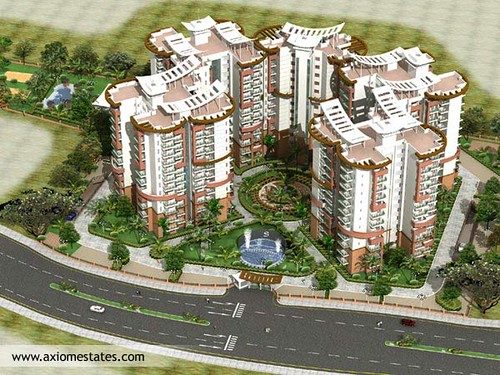
Here's the situation staring down every mid-budget homebuyer in 2026: you saved for eight years, you've got ₹18–20 lakh ready for a down payment, and you walk into a launch expecting to find a decent 2BHK in the ₹55–70 lakh band. Instead the sales executive shows you a ₹1.4 crore "premium residence" with a clubhouse the size of a cricket ground, and gently suggests you "stretch a little." The affordable inventory you came for? Barely three units left in a project that launched in 2022.
You're not imagining it. Between 2019 and 2025, the share of new residential launches priced under ₹50 lakh in India's top seven cities collapsed from roughly 40% of supply to under 18%, according to data tracked by Anarock and Knight Frank across launch cycles. Meanwhile luxury and premium launches (₹1.5 crore and above) grew their share to nearly a third of new supply in cities like Mumbai, Bengaluru, and Gurugram. The math is brutal and it isn't an accident. This is a structural shift, and the engine driving it is land.
This post breaks down exactly why developers are abandoning affordable housing in favour of the premium housing India 2026 boom, walks through the real economics using an actual project P&L, and gives you a concrete, step-by-step playbook to find genuine value as a mid-budget buyer without overpaying for marble lobbies you'll never use.
Key Takeaways
- Land now accounts for 40–55% of project cost in prime urban pockets, and on expensive land a builder mathematically must go premium to make margins work.
- The affordable segment (under ₹50 lakh) has shrunk to under 18% of new launches in top cities. The gap is real, not a sales tactic.
- Your best value in 2026 sits in Tier-2 cities, peripheral growth corridors, and near-ready inventory from developers clearing older stock.
- Ready-to-move flats now carry a GST advantage over under-construction premium units. Factor this into total cost, not just the sticker.
- Negotiate on carpet area price per sq ft and unbundled amenities, not the all-in headline number.
- Get your loan pre-sanctioned and RERA-verify the project before you fall for the show flat. Financing readiness is your leverage.
Why are builders skipping affordable housing in 2026?
The short answer: they can't make the numbers work at affordable price points anymore, so they don't try.
Land prices in and around India's metros have gone vertical. In parts of Gurugram's Golf Course Extension Road, Bengaluru's outer ring, and Pune's Hinjewadi belt, land that traded at ₹3–5 crore per acre a decade ago now commands ₹25–60 crore per acre depending on FSI and approvals. When your raw land cost per buildable square foot crosses ₹4,000–6,000, an affordable ₹4,500/sq ft selling price is a guaranteed loss before you've laid a single brick.
Add to that the construction cost inflation the sector has absorbed. Cement, steel, labour, and finishing materials have pushed input costs up sharply over the last three years, a trend we covered in detail in our breakdown of how construction costs rising 34% hit home prices in 2026. When both land and build cost climb together, the developer has two choices: shrink margins to nothing, or move up the value chain where buyers absorb the premium. Almost every listed and mid-tier developer has chosen the second path.
The FSI and approval bottleneck
There's a second, less visible reason. Getting approvals, environmental clearances, and RERA registration takes the same 18–30 months whether you're building 200 affordable units or 200 luxury units. The regulatory and financing overhead is largely fixed. If a developer is going to sink two years and crores of interest cost into approvals, they'd rather do it on a project that yields ₹40 crore of gross margin than ₹8 crore. Premium projects amortise the fixed pain over a fatter return.
The real economics: a project P&L that proves the point
Let me show you why this isn't developer greed but arithmetic. I've helped a small builder-client model project feasibility, and the pattern repeats everywhere. Consider a 1-acre plot on a decent peripheral corridor of a Tier-1 city.
The land: Acquired at ₹24 crore per acre. With an FSI of 2.5, the developer gets roughly 1,08,900 buildable sq ft (43,560 sq ft × 2.5). That means land cost alone is about ₹22,038 per buildable sq ft. Wait, that's not right for saleable area, so let's use saleable/carpet realistically.
Let me redo this cleanly with the numbers a builder actually uses:
- Land cost: ₹24 crore for 1 acre.
- Saleable area at FSI 2.5 minus common area loading: around 90,000 sq ft of saleable built-up.
- Land cost per saleable sq ft: ₹24,00,00,000 ÷ 90,000 =
₹2,667/sq ft. - Construction + finishing (mid-spec): ₹2,800/sq ft.
- Approvals, RERA, marketing, financing, GST inputs: ₹1,500/sq ft.
- Total cost: roughly ₹6,967/sq ft.
Now the developer needs a margin. At a target 25% margin, break-even sale price is about ₹9,300/sq ft. On an affordable 600 sq ft 2BHK, that's a ₹56 lakh flat with paper-thin margin and enormous sales volume risk. On the same land, if they instead build 1,200 sq ft "premium" units, add a clubhouse and better fittings that cost ₹1,500/sq ft more but let them charge ₹14,000/sq ft, suddenly each unit sells for ₹1.68 crore and the margin per unit is roughly 2.5x higher.
Same land. Same approvals. Same two years of pain. Far more profit per unit and fewer units to sell. That's the entire story of the premium push, and no amount of policy talk changes the underlying land math.
Common Mistake: Buyers assume a "premium" tag means the construction quality is proportionally better. It usually isn't. A large chunk of the premium is land cost and amenity capex you're funding, not superior structural engineering. Ask for the specification sheet and compare RCC grade, waterproofing warranty, and lift brands against a mid-budget project. You'll often find the ₹1.4 crore flat and the ₹70 lakh flat use the same structural spec, with the difference sitting in the lobby cladding and the marketing budget.
Where does actual value hide for mid-budget buyers?
If new launches in the core city are pricing you out, you shift strategy. Here's where the real ₹55–90 lakh value lives in 2026.
1. Tier-2 city growth corridors
Indore, Coimbatore, Jaipur, Lucknow, Nagpur, Kochi, and Vizag are seeing genuine end-user demand with land prices a fraction of metro rates. A well-built 2BHK in a RERA-registered project in Indore or Jaipur can still be had for ₹45–65 lakh, and the rental yields and price appreciation are frequently better than an over-supplied metro suburb.
2. Peripheral corridors of metros with confirmed infrastructure
Follow the metro rail extensions and expressways, not the hype. Bengaluru's areas along the upcoming metro phases, the Dwarka Expressway influence zone in NCR, and Pune's ring road corridor offer new supply that's still in the mid-budget band because the land was bought earlier. We covered the NCR dynamic specifically in our Delhi-NCR buyer guide for 2026, and it's worth reading before you commit anywhere in that region.
3. Near-ready and ready-to-move inventory from earlier launches
Projects launched in 2020–2022 at pre-boom prices are now nearing completion. Developers sitting on unsold ready inventory are far more negotiable, and you skip the delivery risk entirely. This is often the single best value pocket right now, especially when demand is soft. Our buyer playbook for the 2026 slowdown goes deep on how to use soft sales as negotiating leverage.
Which cities and formats offer the best value in 2026?
Here's a comparison of realistic mid-budget options across formats and locations. These are indicative bands based on typical 2026 pricing, not guarantees, and always verify against live listings.
| Option | Typical price band (2BHK) | Price appreciation potential | Delivery/possession risk | Best for |
|---|---|---|---|---|
| Tier-2 city new launch (Indore, Jaipur) | ₹45–65 lakh | Moderate to high | Medium (verify RERA & builder track record) | End-users open to relocation; investors seeking yield |
| Metro peripheral corridor, under-construction | ₹65–90 lakh | High if infra delivers | Higher (construction + timeline risk) | Buyers with 3–4 year horizon |
| Ready-to-move older inventory (metro) | ₹70 lakh–1.1 cr | Moderate | Low (already built, GST-free) | Buyers wanting to move in now, low risk |
| Resale in established metro locality | ₹80 lakh–1.2 cr | Steady, location-driven | Very low | Buyers prioritising location & schools |
| Core-city premium new launch | ₹1.4 cr+ | Depends on micro-market | Medium | High-budget buyers or genuine luxury seekers |
Notice that ready-to-move and resale carry the lowest risk and a notable tax advantage. That's not incidental, and it deserves its own section.
How does GST change the premium vs affordable decision?
This is where a lot of buyers leave money on the table. Under current rules, ready-to-move flats where the completion certificate has been issued attract no GST, because the sale is treated as a transaction in immovable property, not a supply of construction services. Under-construction flats attract GST, which on premium (non-affordable) units runs at 5% without input tax credit.
On a ₹1.4 crore under-construction premium flat, that 5% is ₹7 lakh of pure GST you pay on top of the price. On an equivalently priced ready-to-move flat, that ₹7 lakh evaporates from your outflow. We unpacked the full mechanics, including the affordable-vs-standard rate distinction and the input credit trap, in our guide on GST on under-construction vs ready-to-move flats in 2026. Read it before you sign, because the GST line changes your real cost-per-sq-ft comparison materially.
A step-by-step playbook to buy value in the premium era
Here's the exact sequence I'd tell a friend to follow if they're buying in 2026 with a mid-budget wallet.
- Fix your true budget, not your dream budget. Add stamp duty (5–7% depending on state), registration (~1%), GST if under-construction, brokerage, and interior/setup costs of ₹8–15 lakh. A ₹70 lakh flat is really a ₹82–88 lakh commitment. Work backwards from what you can actually service.
- Get your home loan pre-sanctioned first. A pre-approved loan is negotiating leverage and it tells you your ceiling. With the RBI rate cycle shifting, timing your loan matters. Our breakdown of home loan interest rates in India for 2026 and how RBI cuts affect you will help you decide fixed vs floating.
- Shortlist by carpet area price, never by headline price. Ask every developer for the
price per sq ft on carpet area(RERA carpet, not super built-up). This is the only apples-to-apples number. A "cheaper" flat with 40% loading is often costlier per usable sq ft. - RERA-verify every project. Pull up the project on your state RERA portal. Check registration number, promoter track record, past project delivery dates versus promises, and any complaints. If it's not registered, walk away.
- Physically inspect the specification, not the show flat. Show flats are staged. Ask for the standard-unit finishing schedule in writing: flooring brand, sanitaryware, electrical fittings, structural warranty. Compare across your shortlist.
- Prioritise near-ready and slightly-unsold inventory for negotiation. Developers with unsold ready stock at quarter-end or financial year-end (March, so watch the run-up) are motivated. Ask for a 3–8% discount, waived floor-rise charges, or free covered parking.
- Verify the title and encumbrance independently. Engage your own lawyer for the title search and encumbrance certificate. Don't rely on the builder's assurance. This ₹15,000–30,000 legal spend prevents catastrophic disputes.
- Structure the payment and get the agreement vetted. For under-construction, insist on a construction-linked plan, not upfront-heavy. Have your lawyer read the sale agreement for penalty clauses on delayed possession.
Pro Tip: Shop in the last three weeks of a quarter, and especially in March. Sales teams have targets, and developers book revenue against milestones. I've seen the same unit that was "firm price, sir" in early January get a ₹4.5 lakh sweetener plus free modular kitchen by late March. Timing your visit is free leverage that most buyers ignore.
How eDarpan Properties helps you cut through the premium noise
Finding genuine mid-budget value in a market that's engineered to push you upmarket takes filtering. This is exactly where eDarpan Properties is useful. Instead of trawling a dozen listing portals full of ₹1.4 crore "premium residences," you can filter for verified, budget-appropriate options directly.
If you're buying to live in, browse properties for sale across Indian cities filtered by your real budget and possession timeline. If you're an investor watching yields in Tier-2 corridors, the rental property listings give you a read on achievable rents before you commit capital. And when you've shortlisted, our team can help you sanity-check RERA status and negotiate. Reach out via the contact page and tell us your budget and preferred cities.
Beyond property, if you're a developer, broker, or small real estate business trying to modernise your operations, eDarpan also builds the technology side. We've set up WhatsApp Business API flows for lead follow-up, AI voicebots for after-hours enquiry handling, and custom CRM software for developers drowning in walk-in leads. If you want to see the full picture, our services overview and IT consulting pages lay out how we work with real estate SMBs.
Frequently asked questions
Why are affordable homes disappearing in Indian cities?
High land costs make affordable pricing mathematically unviable in and around metros. When land alone costs ₹2,500–6,000 per saleable sq ft, developers can't sell profitably at affordable price points, so they build premium units where fatter margins justify the same fixed approval and construction overhead.
Is 2026 a good time to buy a mid-budget flat in India?
It can be, if you shift where you look. Core-city new launches are pricing out mid-budget buyers, but ready-to-move older inventory, Tier-2 cities, and metro peripheral corridors still offer genuine value. Soft sales in some markets also improve your negotiating position.
Should I buy ready-to-move or under-construction to save money?
Ready-to-move flats with a completion certificate attract zero GST and carry no delivery risk, which often makes them cheaper on a total-cost basis despite a higher sticker. Under-construction units may have lower base prices but add 5% GST on premium flats plus timeline risk. Compare total outflow, not headline price.
Which Indian cities offer the best value for mid-budget homebuyers in 2026?
Tier-2 cities like Indore, Jaipur, Coimbatore, Lucknow, Nagpur, and Vizag offer 2BHKs in the ₹45–65 lakh band with solid end-user demand. Within metros, follow confirmed infrastructure like metro extensions and expressways into peripheral corridors where earlier-bought land keeps prices reasonable.
How much extra should I budget beyond the flat price?
Plan for 12–20% on top of the base price. This covers stamp duty (5–7% by state), registration (~1%), GST if applicable, brokerage, legal fees, and interiors of ₹8–15 lakh. A ₹70 lakh flat typically becomes an ₹82–88 lakh real commitment.
How do I verify a builder and project before buying?
Check the project on your state RERA portal for registration, promoter details, and delivery track record. Engage your own lawyer for an independent title search and encumbrance certificate, and get the sale agreement vetted for penalty and possession clauses. Never rely solely on builder assurances.
Does the premium housing trend mean prices will keep rising?
Premium and land-scarce micro-markets are likely to hold or rise, but over-supplied premium pockets and peripheral areas can stagnate. Location, confirmed infrastructure, and genuine end-user demand matter far more than the "premium" label in determining future appreciation.
The bottom line
The shift toward premium housing India 2026 is a structural response to land economics, not a passing trend, and it means mid-budget buyers can no longer expect value from glossy core-city launches. The winners in this market are the buyers who change tactics: chase ready-to-move and near-ready inventory, look seriously at Tier-2 cities and infrastructure-backed peripheral corridors, negotiate on carpet-area pricing, and factor GST and total cost into every comparison.
Do your homework, get pre-sanctioned, RERA-verify, and use quarter-end timing as leverage, and you'll find that genuine value still exists even in a market designed to sell you marble lobbies. When you're ready to shortlist real options in your actual budget, start with verified properties for sale on eDarpan and reach out to our team via the contact page to sanity-check anything before you sign.
Image credit: Bangalore Properties - Real Estate India - Shriram Symphony by nancyarora2020 via flickr (BY-SA 2.0), sourced through Openverse.
Written by
Rajesh Tiwari
Real estate analyst covering property markets across Delhi NCR, Mumbai, and Bangalore. Rajesh tracks pricing trends, RERA compliance, and investment opportunities for residential and commercial buyers.
Looking for a technology partner?
From IT consulting to virtual office to custom software — eDarpan can help.
Continue reading
Property Prices Up in 2026: Should You Buy Now or Wait for 2027?
Property prices rose through 2026 while sales softened in some areas. Here's how to decide between buying now or waiting, using your own numbers rather than forecasts.
India Real Estate to Hit $5.8T by 2047: What It Means for Property Buyers Now
India's real estate could reach $5.8T by 2047. Here's how first-time buyers can judge projects, locations and timing without the hype, using RERA checks and real rupee numbers.
Rent or Buy in Dwarka 2026: Break-Even Math Under Current Rates
Stop guessing whether to rent or buy in Dwarka. This break-even guide walks through real price, rent and loan-rate inputs, with a worked example and the hidden costs that tip the decision.