Luxury vs Affordable Housing 2026: What Indian Buyers Do Now
Affordable homes are vanishing while luxury towers boom. Here's what mid-budget Indian buyers should actually do in 2026, with a real decision framework.
Here's the problem I keep hearing from clients who aren't in the top income bracket but earn well enough to be house-hunting seriously: they've saved a ₹25-40 lakh corpus, they're pre-approved for a home loan, and yet every project their broker shows them in the metro peripheries is either sold out, quoted 20% above what it was 18 months ago, or has quietly repositioned itself as "premium" with a matching price tag. The affordable inventory they were counting on has thinned out. Meanwhile, developers keep launching ₹2.5 crore-plus towers that somehow keep selling.
This isn't your imagination. According to CareEdge Ratings, the housing market has structurally tilted toward the premium and luxury segments, with the share of affordable homes in new launches shrinking sharply over the past few years while high-ticket units drive both volume and value. In cities like Mumbai, Bengaluru, and Delhi NCR, units under ₹50 lakh now make up a small fraction of fresh supply, down from being the mainstay just five or six years ago. If you're a mid-budget buyer or a small investor, the ground has moved under you.
So this piece is about the real decision behind luxury vs affordable housing India 2026: where the supply is going, why developers made this shift, and what a buyer with a limited but serious budget should actually do about it. I'll walk through a real buyer's numbers, give you a comparison you can act on, and lay out a decision framework I use with clients who ask me whether to stretch, wait, relocate, or go the REIT route instead.
Key Takeaways
- Affordable housing (sub-₹50 lakh) supply is shrinking structurally, not cyclically. Developers make thinner margins on it, and rising land and compliance costs have pushed the economics against it.
- Luxury and premium homes (₹1.5 crore+) now dominate new launches in top metros, and that trend is expected to hold through 2026.
- Mid-budget buyers have three realistic moves: buy in the ₹60-90 lakh "value-premium" band before it inflates further, shift to emerging peripheral corridors, or deploy capital into REITs and fractional ownership instead of a full unit.
- The ₹60-90 lakh band is the sweet spot right now, better construction quality than dying affordable stock, still liquid on resale, and not yet priced like true luxury.
- Waiting for a price crash is a losing bet. Prices in most metros have climbed even as volumes cooled. Time in market beats timing the market for end-users.
- Investors chasing rental yield should look hard at commercial fractional ownership and REITs, where yields (7-9%) beat residential (2.5-3.5%) comfortably.
Why is affordable housing supply shrinking in India in 2026?
Let me be blunt about the economics, because that's what actually drives this. A developer building an affordable project sells units at ₹35-45 lakh. On that ticket size, after land cost, construction, approvals, GST input complications, and marketing, the net margin is razor thin, often 8-12%. The same developer building luxury units at ₹2.5 crore on comparable land captures margins of 25-35% because premium buyers pay disproportionately more for the same square foot of concrete plus amenities.
Now layer in cost pressures that hit everyone. Land prices in and around metros have risen faster than affordable buyers' budgets. Cement, steel, and labour costs climbed steadily. Compliance under RERA added legitimate but real overhead. GST on under-construction property sits at 1% for affordable and 5% for other residential without input tax credit, which sounds like it favours affordable but doesn't move the needle enough when the land itself has become unaffordable to build cheap housing on.
The result is simple. A rational developer, given a plot near a metro corridor, will build premium because that's where the returns are. Affordable housing has drifted to locations 30-50 km out where land is cheap, and that's a different lifestyle proposition entirely. This is why CareEdge and others describe the shift as structural. It's not a fad that reverses when interest rates drop.
If you want the city-level view of where this plays out differently, our breakdown of Bengaluru vs Mumbai vs Delhi NCR for 2026 is worth reading alongside this.
What does the luxury vs affordable housing India 2026 shift mean for a mid-budget buyer?
If your budget is ₹40-90 lakh, you're in the squeezed middle. The genuinely affordable stock you'd have bought in 2019 is either gone from good locations or has been rebranded upward. But you're also not a luxury buyer, so the ₹2 crore towers aren't for you either.
The practical reality is that your budget now buys what I'd call "value-premium": decent 2BHK and compact 3BHK units in the ₹60-90 lakh band in emerging corridors, or smaller units closer to established areas. This is actually not a bad place to be, provided you adjust expectations on location or size.
Here's the trap I see mid-budget buyers fall into. They anchor on a price they remember from a few years ago, refuse to move on it, and end up sitting in cash for two years while prices climb another 15-20%. That corpus loses purchasing power. Waiting for affordable stock to "come back" in prime locations is waiting for something the market economics won't produce.
Pro Tip: Don't measure a project by its sticker price alone. Measure it by price per square foot for the actual carpet area (RERA carpet, not super built-up) and by the developer's track record on delivery timelines. A ₹75 lakh unit with honest carpet area and an on-time developer beats a "₹55 lakh" unit that's 40% loading and delivered two years late. The cheaper number is often the more expensive purchase.
A worked example: the Gurugram buyer who almost overpaid
Let me give you a real-shaped scenario I worked through with a client, a 34-year-old salaried professional in Gurugram with a household income of about ₹28 lakh a year and a corpus of ₹35 lakh.
His initial plan: buy a ₹1.4 crore 3BHK in a well-known Sector 8x project, putting down ₹35 lakh and taking a ₹1.05 crore loan. At roughly 8.6% over 20 years, that's an EMI of about ₹92,000 a month. On his income, that EMI plus maintenance plus the fact that the project was slated for possession in three years (meaning he'd also pay rent meanwhile) made the whole thing dangerously tight. One job disruption and he's in trouble.
We reworked it. We looked at ready-to-move and near-ready 3BHK stock in a Dwarka Expressway-adjacent corridor at around ₹95 lakh for genuinely comparable carpet area. Down payment of ₹30 lakh (keeping ₹5 lakh as buffer), loan of ₹65 lakh, EMI around ₹57,000. Ready possession meant no double-paying rent and EMI. The location was slightly less prestigious but on an infrastructure corridor with real appreciation potential.
The difference in monthly outflow was ₹35,000. Over the three years he'd have been waiting for the pricier project, that's ₹12.6 lakh he redirected into a mix of equity mutual funds and a small REIT allocation. He got into his home immediately, kept his financial life breathable, and set up a parallel wealth engine. He didn't buy luxury. He bought smart value-premium and invested the rest. That's the play for most people in this band.
If you're weighing whether to buy the physical unit at all or route capital into listed real estate instead, read our comparison of REITs vs direct property investment in India for 2026 before committing.
Luxury vs affordable vs value-premium: which one fits your money?
Here's a side-by-side I use to help buyers see where their money actually works hardest. The "value-premium" column is the one most mid-budget buyers overlook.
| Criteria | Affordable (< ₹50L) | Value-Premium (₹60-90L) | Luxury (₹1.5Cr+) |
|---|---|---|---|
| New supply availability (metros) | Shrinking, mostly 30-50km out | Moderate, in emerging corridors | Abundant, dominates launches |
| Typical rental yield | 3-3.5% | 2.8-3.5% | 2-2.8% |
| Resale liquidity | Weak in far locations | Good, broad buyer pool | Slow, narrow buyer pool |
| Construction quality | Basic, cost-driven | Decent to good | High-end |
| Appreciation potential | Depends on infra reaching it | Strong on infra corridors | Prestige-driven, slower % |
| Best suited for | First home on tight budget, distance OK | Most mid-budget end-users | HNIs, end-use luxury seekers |
Notice that luxury doesn't win on yield or on percentage appreciation, it wins on lifestyle and on preserving large amounts of capital in a tangible asset. For a mid-budget buyer whose goal is a home plus reasonable growth, value-premium is almost always the rational bucket.
Should mid-budget investors buy a flat at all, or go REIT and fractional?
This is where I push back on the default assumption that "real estate means buying a flat." If you're an investor rather than an end-user, residential property in 2026 is not an obvious win. Residential rental yields of 2.5-3.5% barely cover maintenance and opportunity cost, and you're locking up capital in a single, illiquid asset.
The alternatives worth serious consideration:
- REITs: Listed real estate investment trusts holding commercial office and retail assets, offering yields typically in the 6-8% range with liquidity you'll never get from a physical flat. You can start with a few thousand rupees.
- Fractional ownership of commercial property: Platforms now let you co-own Grade-A office or warehouse assets, targeting 8-10% rental yields plus capital appreciation, with entry tickets often around ₹10-25 lakh. Our guide on fractional ownership of commercial property in India breaks down how this works and the risks.
- Commercial leasing exposure: India's office market is genuinely strong. We covered why in India topping APAC office leasing in 2026.
For a mid-budget investor who doesn't need to live in the asset, a blended approach, some REIT for liquidity and yield, some fractional for higher return, often beats sinking your entire corpus into one residential unit that yields 3% and takes months to sell.
Common Mistake: Treating your home and your investment as the same decision. If you need a place to live, buy for use and stop obsessing over it as an "investment." If you want returns, chase yield where yield actually is, which in 2026 is commercial and listed real estate, not a second residential flat in a saturated micro-market.
How should a mid-budget buyer actually execute in 2026? A step-by-step
Here's the sequence I'd give a client walking in today with ₹30-40 lakh and a stable income.
- Fix your true budget first. Cap your EMI at 35-40% of net monthly income, no more. Work backward from that to your maximum loan, add your down payment, subtract a buffer of at least 6 months' EMIs. That's your real ceiling, not the bank's sanction limit.
- Decide use vs investment. If it's a home, prioritise ready-to-move or near-ready to avoid double outflow and possession risk. If it's investment, seriously price out REIT and fractional options first.
- Shortlist by corridor, not just city. Identify 2-3 infrastructure corridors with confirmed metro, expressway, or business-park development. That's where value-premium appreciates. Avoid buying "affordable" 45 km out with no infra line of sight.
- Verify RERA registration and carpet area. Check the project on your state RERA portal. Compare price on carpet area, not super built-up. Read the delivery-timeline history of the developer.
- Lock the loan smartly. Compare at least three lenders. Watch for the difference between repo-linked rates and fixed teasers. Negotiate the processing fee, it's often waivable.
- Budget for the extras. Stamp duty and registration (5-7% depending on state), GST if under-construction (1% affordable / 5% other), brokerage, interiors. These add 10-15% on top of the sticker price. Don't get surprised at signing.
- Deploy the surplus. If you chose value-premium over stretching to luxury, put the saved monthly amount into a disciplined SIP or REIT allocation. That's the wealth-building half of the strategy.
If you're browsing actual inventory to run this against, you can look at properties for sale across India or, if you're renting while you decide, rental options through eDarpan Properties. And if you want a second opinion before committing a large corpus, our property advisory team works through exactly these numbers with buyers.
What about NCR specifically, where prices keep climbing?
Delhi NCR deserves a special note because it's a live example of the "prices up, volumes soft" pattern. Sales momentum has cooled in parts of NCR while prices have kept rising, driven partly by the luxury tilt and by genuine infrastructure like the expressways and the airport corridor. That combination frustrates mid-budget buyers most, because it removes the hope that softer sales will translate into softer prices.
The practical NCR takeaway: don't wait for a correction that the supply mix isn't going to deliver. Focus on corridors where infrastructure is actually landing, and buy value-premium ready stock. We go deeper into this in our NCR buyer guide for 2026, which I'd read if you're specifically targeting Gurugram, Noida, or Greater Noida.
How eDarpan helps you decide and execute
Full disclosure on where we fit. eDarpan runs a property advisory and listings arm that helps buyers and investors evaluate exactly the trade-offs in this article, matching your budget and goals to the right segment and corridor rather than pushing whatever inventory pays the most brokerage.
We also help on the parts people forget. If you're setting up or scaling a business alongside these decisions and need a compliant registered address, our virtual office solution for GST and company registration is a low-cost way to get there. And for the digital operations that fund these purchases, the broader eDarpan services team handles everything from cloud migration to custom software. If you want to talk through your specific situation, reach out here.
Frequently Asked Questions
Is affordable housing in India going to disappear completely by 2026?
No, it won't disappear, but its share of new supply in major metros has shrunk sharply and is expected to stay low. Affordable stock is increasingly located in far peripheries and satellite towns rather than near city cores, so the trade-off shifts from price to location and commute.
Should I wait for property prices to fall before buying in 2026?
For an end-user home, waiting is usually a poor bet. Prices in most Indian metros have kept climbing even as sales volumes softened, and the luxury-heavy supply mix doesn't point to a broad correction. Time in the market and locking in your EMI generally beats trying to time a crash that may not come.
What is a "value-premium" home and why does it matter?
It's the ₹60-90 lakh band between dying affordable stock and full luxury, typically decent 2BHK or compact 3BHK units in emerging infrastructure corridors. It matters because it offers better construction quality and resale liquidity than far-flung affordable units, without the capital lock-up and slow percentage growth of luxury.
Are REITs a better option than buying a flat in 2026?
For pure investors, often yes. REITs offer 6-8% yields versus 2.5-3.5% on residential rentals, plus far greater liquidity and a much lower entry ticket. If you need a home to live in, that's a separate decision, but as an investment vehicle REITs and fractional commercial ownership tend to work harder for your capital.
What extra costs should I budget beyond the sticker price?
Plan for stamp duty and registration at 5-7% of value depending on your state, GST of 1% for affordable or 5% for other under-construction property, brokerage, and interiors. Altogether these typically add 10-15% on top of the quoted price, so factor them into your ceiling from the start.
Is luxury housing a good investment given it dominates new supply?
Luxury preserves large amounts of capital and appeals to end-use buyers who value lifestyle and prestige, but it's weaker on rental yield and slower on percentage appreciation, and it has a narrow resale pool. It suits HNIs and genuine luxury seekers more than mid-budget investors chasing returns.
Where should I look for genuine value in NCR right now?
Focus on corridors with confirmed infrastructure like the expressways and airport-linked zones, and target ready or near-ready value-premium stock rather than distant affordable projects. Since NCR prices have kept rising despite softer sales, chasing infra-backed appreciation makes more sense than waiting for a discount.
The bottom line
The luxury vs affordable housing India 2026 question isn't really luxury or affordable for most people, because the affordable option in good locations has quietly left the building. The honest answer for a mid-budget buyer is to stop anchoring on old prices, aim at the value-premium band on real infrastructure corridors, buy ready stock to avoid possession risk, and channel whatever you save from not overstretching into REITs or fractional commercial exposure. That's how you get both a home and a growing corpus instead of one overpriced flat and no financial breathing room.
Run your own numbers against the step-by-step above, and if you'd like a grounded second opinion, the eDarpan Properties team is happy to work through your specific budget, corridor, and goals. Get in touch when you're ready.
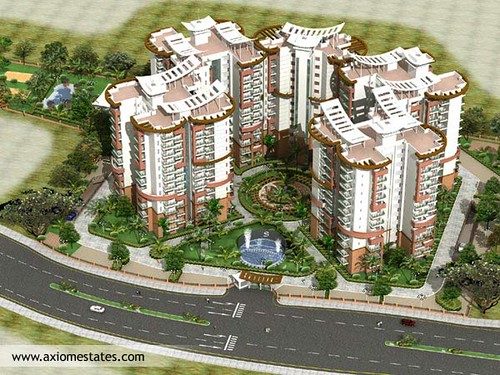
Image credit: Bangalore Properties - Real Estate India - Shriram Symphony by nancyarora2020 via flickr (BY-SA 2.0), sourced through Openverse.
Written by
Rajesh Tiwari
Real estate analyst covering property markets across Delhi NCR, Mumbai, and Bangalore. Rajesh tracks pricing trends, RERA compliance, and investment opportunities for residential and commercial buyers.
Looking for a technology partner?
From IT consulting to virtual office to custom software — eDarpan can help.
Continue reading
Hyderabad & Bengaluru Lead Sales Surge: What It Means for Buyers
Hyderabad & Bengaluru lead India's 2026 property surge, driven by infrastructure, affordability, and end-user demand. Learn the key takeaways for buyers.
Delhi-NCR Price Surge: Is It Better to Rent or Buy Now?
Delhi-NCR prices soared 12% in 2026. For business owners, we analyze if renting or buying is smarter with a financial model for the current market.
How Rising Delhi NCR Home Prices Impact Your Budget & Options
Delhi NCR's 12% property price surge is derailing budgets. Learn strategic fixes, affordable alternatives, and whether to buy now.