Metro & Infra Projects Reshaping NCR Home Prices 2026
Learn how metro corridors, expressways, and Jewar Airport are reshaping NCR home prices in 2026, plus a framework to time your entry for maximum gains.
Here's a problem I've watched play out dozens of times over the last decade. A family in Delhi decides to buy their first home. They save for years, then rush to book a flat in a "hot" location because a broker told them the metro is coming. Two years later the flat is delivered, the metro line is still 30 months from opening, and the ₹15 lakh premium they paid for "connectivity" has barely moved. Meanwhile, an investor who bought in the next sector over, closer to a corridor that actually got funded and started construction, saw their unit appreciate 40% in the same window.
The difference wasn't luck. It was timing, and it was reading the infrastructure pipeline correctly. The infrastructure impact on property prices NCR is one of the most reliable value drivers in Indian real estate, but only if you understand the lag between announcement, funding, construction, and operation. Most buyers react to the announcement. The smart money moves at the funding-and-groundbreaking stage, which is usually 18 to 36 months ahead of the price peak.
In this post I'll walk you through the specific metro corridors, expressways, and the new Noida International Airport at Jewar that are reshaping NCR prices in 2026. You'll get a framework to time your entry, a comparison of the major growth corridors, a worked example of how a value uplift actually plays out, and a checklist you can use before you sign anything.
Key Takeaways
- Property prices near infrastructure typically rise in three waves: announcement (5-10%), construction start (15-25%), and operational (20-40%). The best risk-adjusted entry is at construction start, not announcement.
- The Noida International Airport (Jewar) and the Delhi-Meerut RRTS (Namo Bharat) are the two biggest 2026 price movers in NCR.
- Verify project funding and physical progress, not just press releases. A funded, under-construction project is worth 3x the confidence of an "approved" one.
- Budget for a 2-4 year hold to capture the full operational uplift. Infrastructure plays are not short-term flips.
- Always check RERA registration, land title, and the actual distance to the nearest station or interchange, not the "as the crow flies" number brokers quote.
Why does infrastructure lift property prices so predictably in NCR?
NCR is unusual because it's sprawling and car-dependent, so anything that cuts commute time has an outsized effect on where people are willing to live and work. When a metro station opens within walking distance, it changes the buyer pool overnight. Suddenly a professional working in Cyber City or Connaught Place can live there and skip the two-hour daily grind.
The value uplift comes from three things stacking together. First, raw accessibility: shorter commute times expand the practical labour catchment. Second, commercial follow-on: retail, offices, and hospitals cluster around transit nodes, which pulls in more residents. Third, developer confidence: builders launch premium projects near confirmed infrastructure, which resets the local price benchmark upward.
The catch is timing. An announcement gives you a sentiment bump, but announcements get delayed, rerouted, or quietly shelved all the time. The Dwarka Expressway took over a decade to open. If you bought purely on the 2013 announcement, you carried holding costs for years. The reliable signal is money in the ground plus visible construction.
The three-wave price pattern
From tracking transactions across Gurgaon, Noida, and Ghaziabad, here's the pattern I consistently see:
- Wave 1 - Announcement: 5-10% bump within 6-12 months, largely speculative. High risk of reversal if the project stalls.
- Wave 2 - Construction start / land acquisition complete: 15-25% over 12-24 months. This is when the project becomes "real" and end-users start buying.
- Wave 3 - Operational: 20-40% as the asset actually starts running and rental demand kicks in.
Enter at the start of Wave 2 and you skip the speculative risk while capturing most of the upside.
Which NCR metro and expressway projects are moving prices in 2026?
Let me be specific about the corridors that matter right now, because "NCR is growing" is useless advice.
Noida International Airport, Jewar
This is the single largest infrastructure catalyst in NCR. The first phase is targeting operations, and it has already reshaped land and residential pricing across the Yamuna Expressway belt, Sectors 17, 18, 20, 22D, and the Jewar periphery. Land rates along parts of the Yamuna Expressway that were in the ₹25,000-35,000 per square metre range a few years ago have moved substantially as allotments and connectivity work progressed.
The airport pairs with a planned metro extension and rapid rail connectivity to Noida and Delhi, which is the multiplier. If you're considering this belt, I'd point you toward reading our deeper analysis in Greater Noida Property 2026: Is the Builder Rush a Buy Signal before committing.
Delhi-Meerut RRTS (Namo Bharat)
The Regional Rapid Transit System has genuinely changed the game for Ghaziabad, Muradnagar, Modinagar, and Meerut. This is not a slow metro. It runs at high speed, which means a home in Meerut becomes viable for someone working in East Delhi. Sectors and localities near the stations at Sahibabad, Ghaziabad, Guldhar, and Duhai have seen strong rental and resale interest.
Delhi Metro Phase 4
Phase 4 extensions, including the corridors touching Janakpuri, RK Ashram, Tughlakabad, and the outer stretches, are shifting demand in previously overlooked pockets. The extension toward Gurugram's newer sectors and the connectivity around the Airport line also matters.
Key expressways
- Dwarka Expressway: Now operational in stretches, it's finally delivering on its decade-old promise for Gurugram Sectors 99-113.
- Delhi-Mumbai Expressway (initial NCR leg): Improving Sohna and southern Gurugram connectivity.
- Ganga Expressway and FNG (Faridabad-Noida-Ghaziabad): Long-discussed, watch funding status carefully before betting on FNG.
How do the main NCR growth corridors compare for a 2026 buyer?
Here's a side-by-side view of the corridors I'd shortlist, judged on the criteria that actually matter when you're putting money down.
| Corridor / Zone | Primary Infra Trigger | Typical Entry Price (Residential) | Infra Stage (2026) | Best For |
|---|---|---|---|---|
| Yamuna Expressway / Jewar belt | Noida International Airport | ₹4,500-7,500 / sq ft | Construction / near-operational | Long-hold investors, plot buyers |
| Ghaziabad (RRTS stations) | Namo Bharat RRTS | ₹5,500-8,500 / sq ft | Operational in stretches | End-users, rental yield |
| Dwarka Expressway (Gurugram) | Expressway + Metro | ₹9,000-15,000 / sq ft | Operational | Premium end-users |
| Greater Noida West (Noida Ext) | Metro extension + Aqua Line | ₹6,000-9,000 / sq ft | Operational / expanding | Value end-users, first homes |
| Sohna / Southern Gurugram | Delhi-Mumbai Expressway leg | ₹6,500-10,000 / sq ft | Construction | Mid-term investors |
Prices are indicative ranges and vary widely by micro-location, builder, and project stage. Always validate current rates with recent registered transactions in that exact sector, not just listing prices.
Worked example: how a Jewar-belt entry plays out
Let me make this concrete with a realistic scenario built from the kind of numbers I see in the field.
Take a buyer, call her Anjali, a Noida-based professional with about ₹60 lakh to deploy. In early 2023, she was deciding between two options: a ready-to-move 2BHK in an established Noida sector at roughly ₹90 lakh, or a plot allotment in the Yamuna Expressway belt near the emerging airport corridor for about ₹55 lakh.
She chose the plot, but crucially she waited for a specific signal. She didn't buy on the airport announcement years earlier. She bought once the concessionaire was finalised, land acquisition was largely complete, and physical construction was visibly underway. That's the Wave 2 entry.
Here's how the economics ran:
- Purchase price (2023): ₹55,00,000
- Stamp duty and registration (approx 7% in UP, with women buyer rebate applied): ~₹3,30,000
- Legal, title verification, and documentation: ₹40,000
- Total in: ~₹58,70,000
By 2026, with the airport nearing operational status and connectivity works progressing, comparable plots in her pocket were transacting around ₹78-82 lakh. That's roughly a 40-45% gross appreciation over three years, driven overwhelmingly by the infrastructure moving from construction to operational stage.
Compare that to the ready Noida 2BHK, which appreciated in the more modest 12-18% range over the same window because its infrastructure premium was already priced in years earlier. The lesson: buy the uplift that hasn't happened yet, not the one that already has.
Pro Tip: The uplift is largest where you buy before the operational milestone but after the funding and construction milestone. If you buy purely on an announcement, you're carrying holding costs and stall risk. If you buy after the metro opens or the airport is running, the premium is already baked into the price and you're just a late end-user.
What's the step-by-step framework to time your entry?
This is the part most articles skip. Here's the actual process I'd walk a buyer through.
- Confirm the project is funded, not just approved. Search for the concession agreement, budget allocation, or loan sanction. A funded project on the Ministry or state authority website is real. A "proposed" corridor in a newspaper is not. This single check filters out most of the risk.
- Verify physical construction has started. Look for piling, viaduct pillars, or station foundation work. Satellite imagery on Google Earth over successive months is a free, honest source. Brokers exaggerate; concrete doesn't.
- Map the real walking distance to the station or interchange. Not the sector centroid, the actual door of the project to the actual station gate. Under 1 km commands the premium. Beyond 2.5 km, the transit benefit fades fast.
- Check RERA registration for any under-construction project. Pull the registration number on the state RERA portal (UP-RERA, HRERA for Haryana). Verify the completion timeline and any complaints filed against the builder.
- Validate land title and land-use conversion. Agricultural land sold as residential is a classic NCR trap. Confirm the land use is converted and the authority has approved the layout.
- Model your holding period and costs. Assume a 2-4 year hold. Factor in EMI or opportunity cost of capital, maintenance, and property tax. Infrastructure appreciation rewards patience, so don't over-leverage into a short window.
- Confirm the price hasn't already run. Pull the last 6-12 months of registered transactions in that micro-market. If prices already jumped 30% on the operational news, you may have missed the entry.
If you'd rather have this vetting done for you, our eDarpan Properties team helps buyers and investors evaluate NCR corridors against exactly this framework. You can browse verified properties for sale in India or rental properties to gauge live yields in a corridor before committing capital.
Common Mistake: Buying based on the full length of a planned corridor when only the first phase is funded. Phase 1 might connect the airport to a nearby node, while the glossy connectivity map shows a direct line to Connaught Place that's still on paper. Price the project on Phase 1 reality, and treat later phases as free upside, not baseline.
How does the current cost environment change the math?
You can't evaluate infrastructure-driven appreciation in isolation. Construction costs have climbed sharply, which pushes new-launch prices up but also squeezes builder margins and can slow delivery. If a builder is under margin pressure, delayed possession becomes a real risk on your infrastructure play. We broke this down in Construction Costs Up 34% in India 2026: Impact on Home Buyers, and it's worth reading alongside this piece.
Financing matters too. With home loan rates where they are, your holding cost over a 3-year window is meaningful. Run the actual EMI against your expected appreciation. A 40% gross appreciation looks great until you subtract three years of interest, stamp duty, and maintenance. Net returns are usually more sober than the headline number.
If you want lower ticket exposure to real estate growth without the illiquidity, our overview of REITs in India 2026 covers how to get commercial real estate exposure with far smaller capital. It's not the same as a direct infrastructure play, but it's a useful diversifier.
Should you consider NCR versus other Indian metros in 2026?
Fair question, because capital is finite. NCR's infrastructure pipeline is genuinely strong right now, especially the airport and RRTS. But Bengaluru and Pune have their own transit-driven stories, and Tier-2 cities are catching investor attention on lower base prices.
If you're weighing markets against each other, our comparison of Bengaluru vs Mumbai vs Delhi-NCR 2026 is a good starting point, and Tier-2 City Property Investing 2026 covers where prices are rising off a lower base. For pure infrastructure timing, though, NCR gives you the clearest, best-documented pipeline of major projects in a single geography.
How eDarpan supports property buyers and businesses in NCR
eDarpan started as a technology consultancy, and property advisory grew out of the same discipline: verify before you commit, and use data over hype. Beyond helping you evaluate corridors through eDarpan Properties, we support the businesses that grow around these new infrastructure zones.
If you're a business planning to set up near a new corridor, a virtual office address for GST and company registration lets you establish a compliant presence in the right jurisdiction without leasing physical space on day one. For the operational side, our IT consulting and cloud migration and managed services teams help SMBs set up lean, scalable infrastructure. Growing brokerages and developers use our WhatsApp Business API and bulk SMS services for buyer outreach, and our AI voicebot to qualify enquiries around the clock.
If you want a second opinion before you sign, reach out to eDarpan and we'll help you run the numbers honestly.
Frequently asked questions
Does property near a new metro station always increase in value?
Not always, and not evenly. Value rises reliably when the project is funded, under construction, and eventually operational, and when the property is genuinely within walking distance of a station. Properties more than 2-3 km from a station, or near a corridor that stalls, see much weaker uplift.
When is the best time to buy for infrastructure appreciation in NCR?
The best risk-adjusted entry is when land acquisition is complete and physical construction has visibly started, typically 18-36 months before the project becomes operational. Buying at the announcement stage carries stall risk, and buying after it's operational means the premium is already priced in.
How much does the Jewar airport actually affect nearby property prices?
The Noida International Airport has been the strongest single catalyst in the Yamuna Expressway belt, with well-located plots in that corridor seeing substantial appreciation as the project moved from construction toward operational status. Actual gains depend heavily on the exact micro-location and how close it is to confirmed connectivity.
What documents should I verify before buying in an NCR growth corridor?
Check RERA registration on the relevant state portal, the land title and mutation records, land-use conversion approval, the sanctioned layout plan, and any encumbrances. For under-construction projects, verify the builder's track record and completion timelines filed with RERA.
Is it better to buy a plot or a flat near new infrastructure?
Plots in early-stage corridors like the Jewar belt often appreciate faster because they carry no construction depreciation and land is the scarce asset. Flats offer rental income sooner and are easier to occupy or lease. Your choice depends on whether you want appreciation or yield, and your holding horizon.
What stamp duty applies to property purchases in NCR?
Stamp duty varies by state within NCR. Uttar Pradesh generally levies around 7% with a rebate for women buyers, while Haryana and Delhi have their own slabs and gender-based concessions. Always confirm the current rate with the local sub-registrar, as rates and rebates change.
How long should I plan to hold an infrastructure-driven property?
Plan for a 2-4 year hold to capture the shift from construction to operational stage, which is where most of the appreciation happens. These are not quick flips, and short-term exits often get eaten by transaction costs and holding expenses.
The bottom line
The infrastructure impact on property prices NCR is real, repeatable, and well-documented, but it rewards discipline over excitement. The buyers who lose money chase announcements and pay for premiums that already exist. The ones who build wealth verify funding, wait for construction to start, and hold through the operational milestone.
Use the seven-step framework, run your own numbers on holding costs, and don't let a broker's connectivity map substitute for satellite imagery and RERA records. NCR's 2026 pipeline, led by the Jewar airport and the Namo Bharat RRTS, offers some of the clearest infrastructure-timing opportunities in India right now.
If you want help evaluating a specific corridor or property against this framework, explore eDarpan Properties or get in touch with our team. Buy the uplift that hasn't happened yet, and let the concrete do the work.
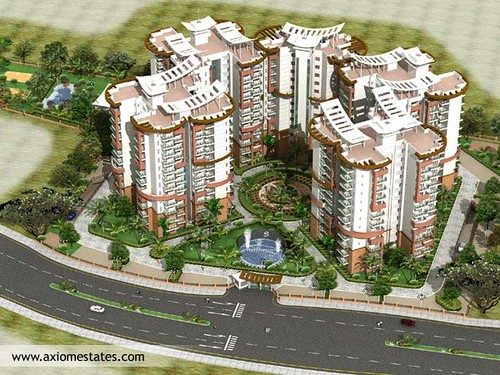
Image credit: Bangalore Properties - Real Estate India - Shriram Symphony by nancyarora2020 via flickr (BY-SA 2.0), sourced through Openverse.
Written by
Rajesh Tiwari
Real estate analyst covering property markets across Delhi NCR, Mumbai, and Bangalore. Rajesh tracks pricing trends, RERA compliance, and investment opportunities for residential and commercial buyers.
Looking for a technology partner?
From IT consulting to virtual office to custom software — eDarpan can help.
Continue reading
Greater Noida Property 2026: Is the Builder Rush a Buy Signal
Big builders are rushing to Greater Noida, but is it a buy signal or hype? A practical guide to reading the land rush before you invest in 2026.
Construction Costs Up 34% in India 2026: Impact on Home Buyers
Construction input costs jumped 30-34% since 2024. Learn what's driving the construction cost rise in India 2026 and how home buyers can negotiate smarter.
REITs in India 2026: How to Start Investing With Small Money
Want commercial real estate exposure without crores? Learn how to start REIT investing in India 2026 with under ₹500, plus taxes, top REITs, and mistakes to avoid.