Tier-2 City Property Investing 2026: Where Prices Are Rising Fast
Discover which tier-2 cities are seeing 60%+ price growth in 2026, plus a proven framework to invest smart without falling for broker hype.
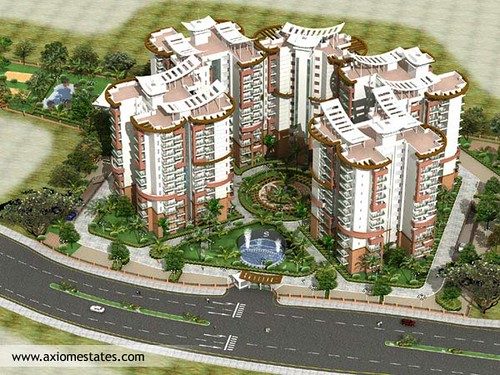
Here's the problem that keeps most first-time investors awake: you know the metro property game is played out. A 2BHK in Whitefield or Powai now costs what a bungalow used to, rental yields have compressed to 2.5-3%, and the entry ticket alone rules out most salaried buyers. So the smart money starts whispering about tier-2 cities. But then you're staring at Indore, Coimbatore, Nashik, Lucknow, and a dozen others, with no clue which ones are genuinely appreciating and which are just hype fed by a broker who wants your token amount.
Let me give you a number that reframes the whole thing. Between 2021 and 2025, some tier-2 micro-markets clocked residential price appreciation of 60% or more, while several metro pockets barely moved 15-20% over the same window. That's not a rounding error. That's the difference between doubling your money and watching it get eaten by inflation. The catch? For every one of those winners, there were three towns where prices stayed flat because a promised highway never got funded or an IT park stayed on paper.
This post is about how to actually do tier-2 city property investment India without gambling. I'll walk you through which cities are moving and why, a real evaluation framework, a worked example with actual rupee figures, the compliance and due-diligence checklist I use, and the mistakes that quietly wipe out returns. No cheerleading. Just the way I'd brief a client sitting across the table.
Key Takeaways
- The 60%+ jumps are real but concentrated in specific micro-markets driven by infrastructure, industrial corridors, and IT/GCC expansion, not entire cities.
- Evaluate a market on five hard signals: employment inflow, physical infrastructure under construction, RERA registration density, rental demand, and inventory absorption rate.
- Cities like Indore, Coimbatore, Lucknow, Nagpur, and Jaipur show the strongest fundamentals going into 2026, but each rewards a different strategy.
- Always verify RERA registration, title chain, and encumbrance before paying a token. A cheap price on a disputed title is the most expensive mistake you can make.
- Under-construction property in a genuinely appreciating corridor beats ready-to-move in a saturated one, but only if the developer has a delivery track record.
- Budget for the full cost of ownership: stamp duty, GST on under-construction, registration, and holding costs, not just the sticker price.
Why are tier-2 cities suddenly outperforming metros in 2026?
The short version: demand moved, and supply followed. Three structural shifts are doing the heavy lifting.
First, the decentralisation of white-collar work. Global capability centres (GCCs) and IT firms that once clustered only in Bengaluru and Hyderabad have started opening delivery centres in Indore, Coimbatore, Jaipur, and Nagpur, chasing lower rentals and cheaper talent. When a company signs a 200-seat office lease in a tier-2 city, it pulls in a few hundred families who need housing within 18 months. That's a demand shock a small market feels immediately.
Second, physical infrastructure is finally being delivered, not just announced. The Delhi-Mumbai Expressway, dedicated freight corridors, new airports, and metro projects have turned once-remote pockets into commuter-viable zones. A stretch of land that was 90 minutes from the city core becomes 30 minutes overnight, and prices reprice accordingly.
Third, MSME and manufacturing growth under schemes tied to the PLI push has revived industrial towns. Where factories go, warehousing, worker housing, and mid-income residential demand follow. If you want the bigger picture on where institutional money is flowing, our breakdown of real estate investment in India for 2026 maps the capital trends behind these moves.
Which tier-2 cities are seeing the fastest price growth?
Let me name names, with the caveat that appreciation happens in micro-markets, not city-wide. The city is the story; the specific corridor is the trade.
- Indore - Madhya Pradesh's commercial engine. The Super Corridor and areas near the IT SEZ have seen sustained demand from IT firms and educational institutions. Clean-city reputation adds a genuine premium.
- Coimbatore - A manufacturing and textile base now layering on IT and healthcare. Peripheral areas along the Avinashi Road corridor have absorbed new supply quickly.
- Lucknow - Government capital status plus expressway connectivity (the Purvanchal and Agra-Lucknow expressways) has pushed growth toward Sultanpur Road and Shaheed Path corridors.
- Nagpur - The MIHAN project, central logistics location, and expressway connectivity make it a warehousing and residential dark horse.
- Jaipur - Tourism plus a growing IT and services base. The Ajmer Road and Jagatpura belts have shown steady, less-volatile appreciation.
Notice I'm not promising 60% everywhere. That top-end appreciation shows up in specific launch-phase corridors where infrastructure completion and employment inflow hit at the same time. Your job is to find the overlap, not to buy the city name.
How do you evaluate a tier-2 market before you buy?
This is the part most buyers skip and later regret. Over years of advising clients, I've narrowed the evaluation to five hard signals you can actually verify, plus one soft one you shouldn't ignore.
The five hard signals
- Employment inflow. Look for announced and operational office leases, factory setups, or GCC centres in the last 24 months. A single large employer signing a long lease is a stronger signal than ten "proposed" IT parks.
- Infrastructure under construction, not proposed. Visit the site. Is the metro pillar actually up? Is the expressway carrying traffic? Announcements are cheap; concrete is real.
- RERA registration density. Check the state RERA portal. A healthy pipeline of registered projects signals developer confidence and legal cleanliness. Zero registrations in a hot area is a red flag.
- Rental demand and yield. If people want to rent there, people want to live there. A 3-4% gross rental yield in a tier-2 city usually beats the sub-3% you'll find in metros. Our analysis of rental yields in Delhi-NCR for 2026 gives you a metro benchmark to compare against.
- Inventory absorption rate. How fast is unsold stock clearing? A market with 4-6 quarters of inventory is healthy. Twelve-plus quarters means oversupply and stagnant prices.
The one soft signal
Talk to three local brokers and one bank branch manager who does home loans. The banker knows which projects lenders are approving and which they've blacklisted, and that intel is gold. A developer whose projects banks won't finance is telling you something the brochure won't.
Pro Tip: Pull the last three years of guideline (circle) rate revisions from the state's registration department. If the government's own guideline rate has been rising 8-12% annually in a specific ward, the market has real momentum, because state revenue departments are conservative and only raise rates when transactions justify it. This is a lagging but honest indicator that no broker can spin.
Tier-2 city comparison: which fundamentals should drive your choice?
Here's how the leading contenders stack up on the factors that matter for a 2026 entry. Ratings are directional and based on infrastructure momentum and demand fundamentals, not exact forecasts.
| City | Primary Growth Driver | Best Suited Strategy | Entry Ticket (2BHK, indicative) | Momentum |
|---|---|---|---|---|
| Indore | IT/GCC + education hub | Under-construction in Super Corridor belt | ₹45-65 lakh | High |
| Coimbatore | Manufacturing + IT layering | Ready-to-move for rental yield | ₹50-70 lakh | High |
| Lucknow | Govt + expressway connectivity | Plotted development along corridors | ₹40-60 lakh | Medium-High |
| Nagpur | Logistics (MIHAN) + central location | Warehousing land + mid-income residential | ₹40-55 lakh | Medium |
| Jaipur | Tourism + services growth | Stable long-hold residential | ₹45-65 lakh | Medium |
If you're weighing tier-2 against staying in a metro, our head-to-head on Bengaluru vs Mumbai vs Delhi-NCR for 2026 is worth reading alongside this. The right answer often depends less on the city and more on your holding period and risk tolerance.
A worked example: how a corridor bet actually plays out
Let me make this concrete with a composite example built from real deal patterns I've seen, using round numbers.
A Pune-based salaried professional, call him Ravi, wanted to invest ₹50 lakh in property but couldn't afford anything meaningful in Pune's established areas. In early 2022, he identified an under-construction 2BHK in Indore's Super Corridor belt, near an operational IT SEZ, at a launch price of roughly ₹42 lakh (₹4,900 per sq ft for an 860 sq ft unit).
Here's what his actual entry cost looked like, because the sticker price is never the real number:
- Base price: ₹42,14,000
- GST on under-construction (5% on the base, no ITC for residential): ₹2,10,700
- Stamp duty and registration (approx. 8-9% in MP, paid at possession/registration): ₹3,70,000
- Parking, club, and preferential location charges: ₹1,80,000
All-in cost: roughly ₹49.7 lakh. He financed 75% and put in the rest as equity plus registration.
By late 2024, the corridor had matured: the SEZ added tenants, a flyover reduced commute time, and the developer delivered on schedule. Comparable ready units in the same project were transacting at ₹7,600-7,900 per sq ft. On his 860 sq ft unit that's a market value of roughly ₹66 lakh, a jump of about 57% on the base price over nearly three years.
Two things made this work, and both are teachable:
- He bought under-construction in a corridor with confirmed employment inflow, not a speculative one. The IT SEZ was already operational, so demand wasn't hypothetical.
- He checked the developer's RERA delivery history before committing. Two prior projects delivered within four months of the promised date. That track record is why the on-time possession wasn't a surprise.
Now the honest counterfactual. A colleague of Ravi's bought in a "future growth" township on the far edge of the same city, sold on the promise of a ring road that got repeatedly deferred. Three years later his unit had appreciated barely 12%, and he was paying EMIs on an asset he couldn't easily rent. Same city, same period, wildly different outcomes. The corridor is everything.
What's the step-by-step due-diligence process before you pay a token?
This is the walkthrough I'd hand a client so they can either do it themselves or brief a lawyer precisely. Do not skip steps to save a few thousand rupees.
- Verify RERA registration. Search the project on the state RERA portal. Confirm the registration number, promoter details, approved layout, and the quarterly progress updates. Match the RERA carpet area against what the broker quotes.
- Pull the title chain. Get a lawyer to trace ownership for at least 30 years. Confirm the seller or developer actually holds marketable title and that the land conversion (agricultural to non-agricultural, where relevant) is complete.
- Get an encumbrance certificate (EC). This shows any registered loans or charges on the property. A clean EC for the relevant period is non-negotiable.
- Check approvals. Commencement certificate, building plan sanction, environmental clearance (for larger projects), and fire NOC. Ask for copies, don't take verbal assurance.
- Confirm bank loan approval status. If two or more major banks have already approved the project for home loans, an independent set of eyes has already checked the legals. This is a free due-diligence shortcut.
- Model the full cost and holding period. Add GST (5% on under-construction residential without ITC, 1% for affordable housing), stamp duty, registration, and estimated holding costs. Decide your exit horizon before you buy, not after.
- Register correctly and keep everything. Ensure the sale deed reflects the true consideration, pay stamp duty on the correct value, and store scanned copies of every document. This matters for capital gains and resale.
Common Mistake: Paying a large "token" or booking amount before RERA verification and title check, lured by a "limited launch price." Once your money is in, your negotiating power and legal leverage evaporate. Pay a small refundable expression-of-interest amount at most, get the paperwork verified in writing, and only then commit the booking amount. I've seen buyers lose two-figure lakh sums to projects that never cleared RERA.
How does eDarpan help with tier-2 property decisions?
Two ways, and both are practical rather than promotional. First, if you're actively hunting, our platform lists properties for sale across India and rental properties with the kind of location and pricing detail that lets you compare corridors instead of guessing. The broader eDarpan Properties section is built for exactly the buy-rent-invest decision this post is about.
Second, and this is the part people miss: if your reason for entering a tier-2 city is business expansion rather than pure investment, you often need a registered address there before you set up operations. A virtual office address for GST and company registration lets you establish presence in a new city legally and cheaply while you evaluate whether to commit to a physical office. Many of our clients test a market that way before signing an office lease, and if you eventually need help choosing the workspace, our comparison of Grade A vs Grade B office space is a useful next read.
If the whole due-diligence and market-selection process feels heavy, our IT and business consulting team works with founders relocating or expanding into tier-2 cities, and you can always reach out to eDarpan to talk through your specific situation.
What's the smartest way to reduce risk in tier-2 investing?
A few principles that consistently separate the investors who make money from the ones who tell sad stories at dinner parties.
- Buy the corridor, not the city. Everything above reinforces this. Within any tier-2 city there are winning belts and dead zones. Do the corridor-level work.
- Prefer developers with a RERA delivery track record. A slightly higher price from a proven developer is cheaper than a "great deal" from one who might not deliver.
- Match the strategy to the city. Some cities reward rental-yield plays (ready-to-move), others reward appreciation plays (under-construction in launch corridors). The comparison table above is your starting map.
- Keep your exit liquid. Tier-2 resale markets are thinner than metros. A mid-segment 2BHK near jobs is far easier to exit than a luxury unit or an oversized plot. Liquidity beats theoretical upside.
- Watch transparency improvements. RERA and digitised land records are making these markets far safer than they were a decade ago. Our piece on India's rising real estate transparency in 2026 covers what buyers now gain from these reforms.
Frequently asked questions about tier-2 city property investment in India
Is tier-2 city property investment in India actually safer than metros in 2026?
It's not automatically safer, but it can offer better risk-adjusted returns if you pick corridors with real employment and infrastructure. Metros are more liquid and more transparent; tier-2 markets offer higher appreciation potential but thinner resale demand. The safety comes from your due diligence, not the city tier itself.
Which is the fastest-growing tier-2 city for property in India?
Indore and Coimbatore consistently show strong fundamentals heading into 2026 on the back of IT, GCC, and manufacturing demand, but growth is corridor-specific. There's no single "best" city; the fastest-growing pocket depends on where employment and infrastructure completion overlap. Verify current data on the state RERA portal and local guideline-rate trends before committing.
Should I buy under-construction or ready-to-move property in a tier-2 city?
Under-construction in a genuinely appreciating corridor offers higher upside and a lower entry price, but carries delivery risk. Ready-to-move gives you immediate rental income and zero completion risk but usually costs more. Choose under-construction only when the developer has a solid RERA delivery record and the demand drivers are already operational, not just promised.
What are the hidden costs when buying property in a tier-2 city?
Beyond the base price, budget for GST on under-construction property (5% for standard residential, 1% for affordable), stamp duty and registration (typically 5-9% depending on the state), parking and club charges, and holding costs like maintenance and property tax. These can add 12-18% to the sticker price, so model the all-in cost before you decide.
How do I check if a tier-2 project is legally safe to buy?
Verify RERA registration on the state portal, get a lawyer to trace the title chain for at least 30 years, obtain an encumbrance certificate, and confirm building approvals and NOCs. A strong practical shortcut is checking whether two or more major banks have approved the project for home loans, since they run their own legal checks.
What rental yield can I expect in a tier-2 city?
Gross rental yields in well-located tier-2 residential markets typically run around 3-4%, which usually beats the sub-3% common in top metros. Yields are strongest near operational employment hubs where tenant demand is genuine. Always calculate net yield after maintenance, tax, and vacancy, not just the gross figure.
Can I invest in tier-2 property remotely if I don't live there?
Yes, and many investors do, but remote investing raises the bar on due diligence. Insist on physical site verification through a trusted lawyer or agent, verify all documents independently, and prefer developers with financing tie-ups and delivery records. Platforms like eDarpan Properties help you compare listings and pricing across cities before you travel to close.
The bottom line
Done right, tier-2 city property investment India is one of the clearest opportunities in the 2026 market, precisely because the 60%-plus appreciation stories are real and repeatable when you buy the right corridor at the right time. But the same conditions that create outsized winners also create quiet losers, and the difference almost always comes down to disciplined evaluation: employment inflow, infrastructure that actually exists, RERA-clean title, and a strategy matched to the city.
Do the corridor-level work, verify every document before your money moves, model the full cost of ownership, and keep your exit liquid. If you'd like a hand navigating listings, establishing a legal presence in a new market, or thinking through the business side of an expansion, explore eDarpan Properties, look at the full range of eDarpan services, or simply get in touch. The market rewards the prepared, and now you know what preparation actually looks like.
Image credit: Bangalore Properties - Real Estate India - Shriram Symphony by nancyarora2020 via flickr (BY-SA 2.0), sourced through Openverse.
Written by
Rajesh Tiwari
Real estate analyst covering property markets across Delhi NCR, Mumbai, and Bangalore. Rajesh tracks pricing trends, RERA compliance, and investment opportunities for residential and commercial buyers.
Looking for a technology partner?
From IT consulting to virtual office to custom software — eDarpan can help.
Continue reading
Bengaluru vs Mumbai vs Delhi-NCR 2026: Where to Buy Now
Bengaluru, Mumbai, or Delhi-NCR? A data-driven breakdown of yields, prices, and growth to help you find the best city to buy property in 2026.
Real Estate Investment in India 2026: Where Big Money Is Going
Discover where institutional money is flowing in Indian real estate in 2026 — warehousing, Grade A offices, and data centres — and how to follow the trail.
India's Real Estate Transparency Rises 2026: What Buyers Gain
India entered the 'Transparent' tier at 26th globally in GRETI 2026. Here's what it means for buyers, plus a practical due-diligence checklist to avoid costly mistakes.