Bengaluru vs Mumbai vs Delhi-NCR 2026: Where to Buy Now
Bengaluru, Mumbai, or Delhi-NCR? A data-driven breakdown of yields, prices, and growth to help you find the best city to buy property in 2026.
Here's the problem I keep hearing from clients who've done well in business but not yet in property: they've got ₹80 lakh to ₹2 crore sitting in fixed deposits and mutual funds, they know they want to buy an apartment or a commercial unit somewhere, and they're paralysed by the three-city question. Bengaluru, Mumbai, or Delhi-NCR? Every broker they talk to swears their city is the winner. And every WhatsApp forward tells a different story.
Let me give you a number that reframes the whole thing. A 2BHK in a decent Whitefield project in Bengaluru rents for roughly ₹32,000 a month against a purchase price of around ₹95 lakh. That's a gross rental yield near 4%. The exact same money in Bandra buys you a fraction of the space and rents at barely 2.8%. Same rupees, wildly different outcomes. The city you pick isn't a matter of taste, it's a financial decision that compounds over ten years.
This post is my attempt to settle the argument with actual data and lived experience, not city pride. I've advised founders, NRIs, and salaried buyers on all three markets. By the end you'll know which is the best city to buy property in India 2026 for your specific budget, yield target, and growth horizon, plus the exact due-diligence steps I make every client run before they sign anything.
Key Takeaways
- Bengaluru offers the best balance of price, rental yield (3.5–4.2%), and end-user demand driven by IT and GCC hiring. Best for first-time investors and yield seekers.
- Mumbai commands the highest capital values and lowest yields (2.5–3%), but redevelopment and infra (Coastal Road, Metro lines) are creating pockets of sharp appreciation. Best for deep-pocket, long-horizon buyers.
- Delhi-NCR (specifically Gurugram and Noida) is the momentum market for 2026, with luxury absorption and expressway-led corridors delivering strong price growth. Best for growth-focused investors who can stomach some regulatory noise.
- Verify RERA registration, title, and OC/CC status in every city before booking. Non-negotiable.
- Factor total cost: stamp duty ranges from 5% (Karnataka) to 6–7% (Maharashtra/NCR), plus 1% registration and GST on under-construction units.
- For under ₹1 crore, Bengaluru and Noida win. Above ₹3 crore with a 10-year view, Mumbai redevelopment and Gurugram luxury deserve serious attention.
Which city gives the best rental yield in 2026?
Yield is where most emotional buyers get burned. People fall in love with a Mumbai address and forget that the rent barely covers society maintenance and property tax. Let me be blunt: if your primary goal is passive income, Bengaluru is the clear winner among the three, and it isn't close.
Bengaluru's yield advantage comes from a genuine structural driver, not hype. The city's Global Capability Centres (GCCs) and IT services firms keep pumping in a young, salaried tenant base that pays rent on time and rotates apartments every two to three years. Areas like Whitefield, Sarjapur Road, and Electronic City routinely deliver 3.5% to 4.2% gross yields. Marathahalli and parts of North Bengaluru near the airport corridor are pushing similar numbers as the metro extends.
Delhi-NCR sits in the middle. Gurugram's premium sectors and Noida's Sector 150 give you 3% to 3.5% on residential, but commercial and pre-leased Grade A assets in Cyber City or DLF can touch 6–8%. Mumbai residential yields are the weakest, typically 2.5% to 3%, because capital values are so inflated that rent can't keep pace. If you want to understand yield mechanics deeper for the capital region, my colleagues broke it down in this piece on rental yields in Delhi-NCR.
A worked example: same ₹1 crore, three cities
Let's put real rupees on the table. Assume you have ₹1 crore to deploy in a residential unit and you want to rent it out.
- Bengaluru (Sarjapur Road): Buys a comfortable 2BHK around 1,150 sq ft. Rents for ~₹35,000/month = ₹4.2 lakh/year. Gross yield ~4.2%. Maintenance eats ₹3,500/month.
- Noida (Sector 150): Buys a 2BHK around 1,050 sq ft. Rents for ~₹28,000/month = ₹3.36 lakh/year. Gross yield ~3.4%.
- Mumbai (Mulund/Ghatkopar): Buys a compact 1BHK around 450 carpet sq ft. Rents for ~₹26,000/month = ₹3.12 lakh/year. Gross yield ~3.1%, and you own far less usable space.
The Bengaluru unit not only yields more, it gives your tenant a lifestyle they'll pay to stay in. That reduces vacancy, which is the silent killer of real returns. A flat that sits empty for three months a year loses 25% of its yield instantly.
Where will property prices appreciate fastest by 2028?
Yield is today's cash flow. Appreciation is tomorrow's wealth. And here the ranking flips.
Delhi-NCR, and Gurugram specifically, has been the appreciation engine of the last 24 months. The Dwarka Expressway becoming operational, the SPR (Southern Peripheral Road) corridor, and sustained luxury demand have pushed prices up sharply in sectors like 76, 79, and along the new corridors. Developers are selling ₹5 crore-plus units within days of launch. That kind of absorption tells you the demand is real, not speculative flipping.
Mumbai's appreciation story is infrastructure-led and pocket-specific. The Coastal Road, the Trans-Harbour Link (Atal Setu), and multiple metro lines are unlocking areas that were previously badly connected. Navi Mumbai around the new airport is the one to watch. Redevelopment in the western suburbs is another wealth creator, but it's a game for people who understand builder track records and can wait five to seven years.
Bengaluru appreciates steadily rather than explosively. Expect 8–12% annual price growth in the good corridors, backed by end-user demand. It's boring, and boring compounds beautifully. For a broader map of where institutional money is flowing across these markets, read where big money is going in Indian real estate for 2026.
Pro Tip: Don't chase the corridor that's already appeared in newspaper headlines. By the time a project makes the front page, the smart money has already booked at launch prices. Instead, track where the next metro station or expressway interchange is under construction and buy within a 3–4 km radius before completion. In Bengaluru, that means watching the metro Phase 2B airport line. In NCR, it's the sectors adjacent to the operational Dwarka Expressway stretches, not the saturated ones.
Bengaluru vs Mumbai vs Delhi-NCR: the side-by-side comparison
Here's the consolidated view I share with clients. These are indicative 2026 figures for mid-premium residential in established corridors; always verify current project-level numbers before buying.
| Criteria | Bengaluru | Mumbai (MMR) | Delhi-NCR |
|---|---|---|---|
| Avg price (₹/sq ft, mid-premium) | ₹8,500 – ₹13,000 | ₹22,000 – ₹45,000+ | ₹9,000 – ₹18,000 |
| Gross rental yield | 3.5% – 4.2% | 2.5% – 3% | 3% – 3.5% |
| Stamp duty | 5% + 1% reg + cess | 5–6% + 1% reg | 6–7% (Haryana/UP) |
| Primary demand driver | IT / GCC hiring, end users | Redevelopment, infra, finance | Luxury, expressway corridors |
| Appreciation outlook (2026–28) | Steady 8–12% p.a. | Pocket-driven, high in select zones | Strong in Gurugram/Noida corridors |
| Best for | Yield + first-time buyers | Deep pockets, long horizon | Growth-focused investors |
| Liquidity (resale speed) | High | Moderate (high-ticket) | Moderate to high |
Read the table with your own numbers in mind. A ₹90 lakh budget can't buy a decent Mumbai home, so the choice narrows to Bengaluru and Noida automatically. A ₹4 crore budget with a decade to spare changes the entire conversation.
How much does it really cost to buy in each city?
Sticker price is never the real price. I've watched buyers blow their budget by 12% because they didn't model the transaction costs. Here's what actually lands on your bank statement.
- Stamp duty and registration: Karnataka charges around 5% stamp duty plus 1% registration and a small cess. Maharashtra is 5–6% depending on the municipal area plus 1% registration. Haryana and UP for the NCR belt run 6–7%. On a ₹1 crore purchase, that's ₹6–8 lakh straight off.
- GST on under-construction: Ready-to-move units with an occupancy certificate carry no GST. Under-construction homes attract 5% GST (1% for affordable housing) with no input credit. This alone can push you toward ready inventory.
- Brokerage: Typically 1–2% of value in the secondary market. Primary sales from builders are often brokerage-free for the buyer.
- Home loan processing and legal: Budget ₹25,000–₹75,000 for legal verification, loan processing fees, and documentation.
- Society corpus and maintenance deposit: New projects charge an upfront corpus fund and advance maintenance, often ₹2–5 lakh on a premium apartment.
Model the all-in number before you fall in love with a floor plan. A ₹1 crore flat routinely costs ₹1.10–1.12 crore to actually own and move into.
What due diligence should you run before booking? (the practitioner's checklist)
This is the part brokers skip and buyers regret. I've seen a client nearly lose ₹40 lakh on a project where the land title was disputed. Run this checklist every single time, regardless of how reputable the builder claims to be.
- RERA registration: Every project must be registered with the state RERA authority (Karnataka RERA, MahaRERA, Haryana RERA, UP RERA). Pull the project's registration number and verify it on the official portal. Check the promised completion date filed with RERA, not the one the sales team quotes.
- Title and encumbrance: Get a lawyer to trace the title for at least 30 years and pull an encumbrance certificate. Confirm the land isn't agricultural or under litigation.
- Approvals: Verify the sanctioned building plan, environmental clearance for large projects, and commencement certificate. For ready homes, insist on the Occupancy Certificate (OC) and Completion Certificate (CC).
- Builder track record: Check the developer's last three delivered projects for delays and construction quality. Talk to actual residents, not the show-flat host.
- Loan sanction as validation: If a major bank like SBI or HDFC has approved the project for loans, it has usually done its own legal vetting. That's a useful second signal, though never a substitute for your own lawyer.
Transparency in Indian real estate has genuinely improved since RERA matured, and buyers today have far more recourse than a decade ago. I wrote about exactly what protections you now enjoy in this breakdown of India's rising real estate transparency.
Common Mistake: Booking an under-construction unit purely on a "possession in 24 months" verbal promise. The date that legally binds the builder is the one filed with RERA, and even that carries buffer clauses. If your financial plan depends on rent starting exactly on month 25, you're setting yourself up for a cash-flow gap. Always assume a 6–9 month slip on under-construction projects and stress-test your EMIs against it.
Which city fits which buyer? (my honest recommendation)
After all the data, here's how I actually advise people based on who they are.
The first-time buyer or yield-focused investor
Go Bengaluru. Sarjapur Road, Whitefield, or the North corridor near the airport. You get better yield, strong end-user resale demand, and a market that behaves predictably. Under ₹1.2 crore, this is the safest wealth-building choice among the three.
The NRI or salaried professional wanting growth with less capital
Look at Noida Sector 150 and the newer Greater Noida West stretches, or Gurugram's Dwarka Expressway sectors. Prices are still below Mumbai, appreciation momentum is strong, and the connectivity story keeps improving.
The high-net-worth, long-horizon buyer
Mumbai redevelopment and Navi Mumbai around the new airport, or Gurugram luxury. You need patience and deep pockets, but the upside on infrastructure-led pockets is real. This is not a two-year flip; this is a seven-to-ten-year hold.
The buyer who doesn't want a whole flat
If a full apartment stretches you thin, fractional ownership through SM REITs now lets you own a slice of Grade A commercial assets with far less capital. I explained the mechanics in this guide to fractional real estate investing in India. It's a genuinely useful path for spreading risk across cities.
Whichever profile you fit, our team at eDarpan Properties can shortlist RERA-verified projects across all three cities and run the legal checks for you. Browse current properties for sale in India or, if you'd rather generate rental income while you decide, explore rental options too.
What about commercial property and business needs?
Plenty of my clients aren't just buying homes, they're expanding businesses. If you're a growing MSME weighing whether to lease office space, the Grade A versus Grade B decision matters more than the city sometimes. I'd point you to this comparison of Grade A versus Grade B office space before you sign a lease.
And if you're setting up a company or need a GST-compliant registered address in a new city without leasing a full office, a virtual office address for GST and company registration is the pragmatic first step. Many founders use it to establish presence in Bengaluru or Gurugram before committing to physical space. On the operations side, if you're scaling a property or services business, eDarpan also helps with the tech backbone, from WhatsApp Business API for lead follow-ups to AI voicebots for handling buyer enquiries at scale.
Frequently asked questions
Which is the best city to buy property in India in 2026 for investment?
For pure rental yield and predictable returns, Bengaluru leads with 3.5–4.2% gross yields and strong tenant demand. For capital appreciation, Delhi-NCR corridors like Gurugram's Dwarka Expressway show the strongest momentum. The best choice depends on whether you prioritise monthly cash flow or long-term growth.
Is Bengaluru property cheaper than Mumbai?
Significantly. Mid-premium Bengaluru property runs ₹8,500–₹13,000 per sq ft, while comparable Mumbai (MMR) locations range from ₹22,000 to well over ₹45,000 per sq ft. The same ₹1 crore buys roughly 2.5 times more usable space in Bengaluru than in central Mumbai.
What is the minimum budget to buy a decent 2BHK in these cities?
In Bengaluru's good corridors, a decent 2BHK starts around ₹85 lakh to ₹1 crore. Noida and Greater Noida offer 2BHKs from ₹65–90 lakh. In Mumbai, ₹1 crore typically buys only a compact 1BHK in the suburbs, so plan for ₹1.5 crore-plus for a genuine 2BHK.
Should I buy ready-to-move or under-construction property?
Ready-to-move homes with an occupancy certificate carry no GST and no possession risk, which suits most buyers. Under-construction units are cheaper and appreciate during the build, but they attract 5% GST and carry delay risk. Only go under-construction with a well-established RERA-registered developer.
How do I verify a project is RERA registered?
Get the project's RERA registration number from the builder and check it on your state's official RERA portal (KRERA, MahaRERA, Haryana RERA, or UP RERA). Verify the registered completion date, approved plans, and any complaints filed against the project. Never book a project that isn't RERA registered.
Which city has the fastest property resale?
Bengaluru generally offers the fastest liquidity in the mid-premium segment because of consistent end-user demand from IT professionals. Delhi-NCR is close behind in the popular corridors. Mumbai's high-ticket units can take longer to resell simply because the buyer pool at that price point is smaller.
Can NRIs buy property in all three cities easily?
Yes. NRIs can freely buy residential and commercial property in India (not agricultural land) under FEMA rules, using NRE/NRO accounts. The due-diligence and RERA verification process is identical to resident buyers. Many NRIs use a local advisor or property manager to handle inspections and paperwork remotely.
The bottom line
There's no universally correct answer to the three-city question, but there is a right answer for your situation. If you want yield and a market that won't keep you up at night, Bengaluru is the best city to buy property in India 2026 for you. If you're chasing appreciation and can handle some regulatory noise, Delhi-NCR's expressway corridors are the momentum play. And if you have serious capital and a decade of patience, Mumbai's infrastructure-led pockets can build genuine wealth.
Whatever you decide, the discipline matters more than the city: verify RERA, trace the title, model your true all-in cost, and stress-test your cash flow against delays. Get those right and you'll do well in any of the three.
If you'd like a shortlist tailored to your budget and goals, or help running the legal and financial due diligence, talk to the eDarpan team. You can also learn more about how we work across property, IT consulting, and business services. We'd rather help you buy the right asset than sell you the loudest one.
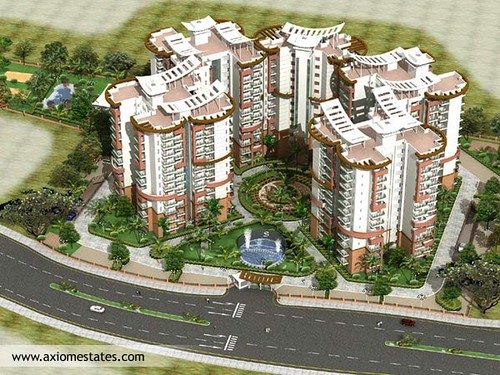
Image credit: Bangalore Properties - Real Estate India - Shriram Symphony by nancyarora2020 via flickr (BY-SA 2.0), sourced through Openverse.
Written by
Rajesh Tiwari
Real estate analyst covering property markets across Delhi NCR, Mumbai, and Bangalore. Rajesh tracks pricing trends, RERA compliance, and investment opportunities for residential and commercial buyers.
Looking for a technology partner?
From IT consulting to virtual office to custom software — eDarpan can help.
Continue reading
Real Estate Investment in India 2026: Where Big Money Is Going
Discover where institutional money is flowing in Indian real estate in 2026 — warehousing, Grade A offices, and data centres — and how to follow the trail.
India's Real Estate Transparency Rises 2026: What Buyers Gain
India entered the 'Transparent' tier at 26th globally in GRETI 2026. Here's what it means for buyers, plus a practical due-diligence checklist to avoid costly mistakes.
Rental Yields in Delhi-NCR 2026: Which Areas Pay Landlords
Discover which Delhi-NCR areas actually pay landlords in 2026. Compare gross vs net yields across Gurgaon, Noida & Ghaziabad micro-markets with real numbers.