Greater Noida Property 2026: Is the Builder Rush a Buy Signal
Big builders are rushing to Greater Noida, but is it a buy signal or hype? A practical guide to reading the land rush before you invest in 2026.
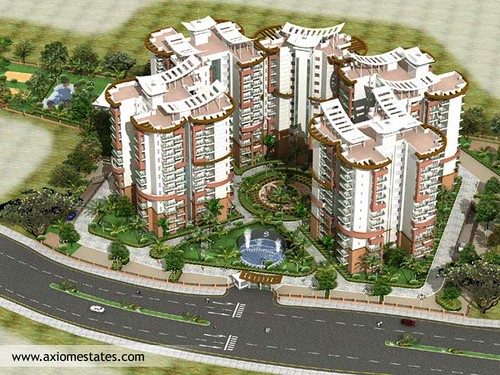
Here's the question I've been getting from clients since the middle of 2025: "A big builder just announced a project near my plot in Greater Noida. Should I buy now before prices run, or is this the top?" It's a fair worry. When Puravankara, a Bengaluru-based developer that historically stayed south of the Vindhyas, picks up land in Greater Noida, people assume the smart money knows something they don't. And sometimes it does. But builder land acquisition is not the same as end-user demand, and I've watched too many buyers confuse a supply-side event with a buying signal.
Let me put a number on the churn. Land deals across Greater Noida and Yamuna Expressway in 2024-25 crossed several thousand crore in aggregate transaction value, with national developers like Godrej Properties, Max Estates, and now Puravankara entering or expanding. The trigger is not mysterious. It's the Noida International Airport at Jewar, which is targeting commercial operations in 2025-26, plus the Film City project and the ongoing metro and expressway build-out. That is a genuine infrastructure story. But infrastructure timelines slip, and a lot of paper appreciation has already been priced in.
This post is for the homebuyer or investor trying to separate genuine opportunity from developer marketing. I'll show you how to read the builder rush, which micro-markets actually deserve attention, a worked example of how the math plays out, a comparison of the main corridors, and the due-diligence checklist I use before I let anyone I advise sign an allotment letter. This is practical guidance for anyone weighing a Greater Noida property investment 2026 decision, not a brochure.
Key Takeaways
- Builders buying land signals confidence in a 5-8 year horizon, not a quick flip. If you need liquidity in under 3 years, this is not your play.
- The airport at Jewar is real but its economic multiplier arrives in phases. Buy near confirmed connectivity (metro, expressway interchanges), not near promised connectivity.
- Yamuna Expressway (YEIDA) sectors and Greater Noida West (Noida Extension) are two very different bets with different risk profiles and price points.
- Verify RERA registration, authority allotment, and land-use conversion before anything else. A shockingly high share of Greater Noida disputes come from land that was never legally residential.
- For most retail investors with under ₹50 lakh, a diversified approach that includes REITs may beat a single leveraged plot bet.
- Rental yields here are thin today (2-3%). Your return case has to be capital appreciation, so entry price discipline matters more than anything.
Why are big developers rushing to Greater Noida in 2026?
Three structural drivers, and it helps to understand each because they mature at different speeds.
The airport. Noida International Airport at Jewar is the single biggest catalyst. When Phase 1 goes live, it creates direct employment, feeder logistics demand, hospitality, and eventually an aerotropolis economy. Developers acquire land years ahead of this because the good parcels get bought early and cheaply. That is exactly why a builder buying land today is a bet on 2030, not on 2026.
Land availability and pricing. Compared to Gurugram or central Noida, Greater Noida still has developable land at rates that make large integrated townships financially viable. A developer can plan a 25-acre project here that would be impossible to assemble in Sector 62 Noida.
Authority-driven planning. GNIDA and YEIDA release land through structured schemes, which national developers prefer because title risk is lower than fragmented private land. This is a genuinely underrated positive for buyers too, and I'll come back to it in the due-diligence section.
So yes, the rush is rational. But rational for a developer with a decade-long balance sheet is not automatically rational for you buying one flat with a 20-year home loan.
Is the builder land-buying rush a real buy signal or hype?
Here's the honest answer: it's a partial signal. Developer acquisition tells you where supply and eventually demand will concentrate. It does not tell you that today's launch prices are fair, and it definitely does not tell you the timeline will hold.
Think about what actually happened in Greater Noida West between 2011 and 2016. Enormous builder activity, aggressive bookings, and then a wave of stalled projects, buyer protests, and NCLT cases. People who bought the story without checking the builder's balance sheet lost years. The lesson is not "don't buy." The lesson is that a hot micro-market attracts both serious developers and opportunists, and the crowd can't always tell them apart.
Pro Tip: A cleaner buy signal than developer land purchases is commercial and institutional commitment. When an IT park signs an anchor tenant, when a hospital chain commits, when a school with a real waitlist opens, that's demand you can underwrite. Land banking by a builder is speculation on your behalf. Institutional occupancy is validation.
Which Greater Noida micro-markets should you actually watch?
Not all of "Greater Noida" is one market. The differences in price, risk, and time-to-payoff are large. Here's how I break it down for clients.
Greater Noida West (Noida Extension)
This is the mature, ready-to-move-in end. Established societies, functioning schools, malls, and metro connectivity via the Aqua Line extension in progress. Prices are higher and appreciation is slower because a lot of the growth already happened. This is where an end-user who wants to actually live in the property should look. Lower speculative upside, lower risk.
Yamuna Expressway (YEIDA sectors)
This is the airport-proximity play. Sectors near Jewar, Film City, and the proposed logistics and industrial zones. Higher speculative upside, longer horizon, and materially higher risk if timelines slip. Plot allotments through YEIDA schemes here have seen heavy oversubscription. This is investor territory, not a place to plan your family's move-in for 2027.
Central Greater Noida and institutional belt
The area around the universities, Pari Chowk, and the knowledge park. More balanced. Steady rental demand from students and faculty, decent connectivity, moderate prices. This is where thin but real rental yield actually exists.
| Micro-market | Indicative price band (₹/sq ft) | Best suited for | Payoff horizon | Key risk |
|---|---|---|---|---|
| Greater Noida West (Extension) | ₹6,000 - ₹9,000 | End-users, low-risk investors | 3-5 years | Slower appreciation, oversupply of resale units |
| Yamuna Expressway / near Jewar | ₹3,000 - ₹6,500 (plots vary widely) | Long-horizon investors | 5-8 years | Airport/infra timeline slippage, thin current demand |
| Central GN / Pari Chowk belt | ₹5,500 - ₹8,000 | Rental-yield investors | 3-6 years | Student demand seasonality |
| Tech Zone / IT belt | ₹5,000 - ₹7,500 | Balanced buyers | 4-6 years | Dependent on office absorption |
Treat these bands as directional. Actual quotes vary by project, floor, and whether you're buying primary from a builder or resale. Always pull three or four live quotes before you anchor on a number.
A worked example: does the appreciation math actually work?
Let me run real numbers, because this is where enthusiasm meets a spreadsheet.
Suppose Rakesh, a 38-year-old with a small manufacturing unit in Faridabad, wants to invest in a 2BHK in Greater Noida West. He's looking at a ready unit at ₹75 lakh (roughly 1,100 sq ft at ₹6,800/sq ft). Here's what actually goes into the deal:
- Base price: ₹75,00,000
- Stamp duty and registration (UP, roughly 7% including registration): ₹5,25,000
- GST on under-construction would be 5%, but this is ready, so no GST. Good, that saved him ₹3.75 lakh right there.
- Interiors, brokerage, incidentals: ₹4,00,000
- All-in cost: ~₹84,25,000
He puts 25% down (₹18.75 lakh) and takes a ₹56.25 lakh loan at 8.7% for 20 years. His EMI is roughly ₹49,500/month. If he rents the flat, the realistic rent in that pocket is ₹18,000-20,000/month. So he's carrying a negative cash flow of around ₹30,000/month before maintenance.
Now the appreciation case. For this to work, the property has to appreciate enough to cover interest cost plus that monthly shortfall plus his opportunity cost. If prices grow at a healthy 8% a year, the flat is worth about ₹1.1 crore in five years. Sounds great, until you subtract the ₹9 lakh he'll have paid as EMI shortfall over five years, the interest embedded in his EMIs, and transaction costs on exit. His real return lands closer to a modest single-digit annualized figure, and only if the 8% growth actually materializes.
Common Mistake: Buyers quote themselves the headline appreciation and ignore the carrying cost of negative rental yield. In Greater Noida, where yields are 2-3%, a leveraged flat bleeds cash every month. If your growth thesis is right, you win. If prices stay flat for three years, which happened in this exact market from 2013 to 2016, you're funding a loss. This is why I often point smaller investors toward a mix that includes REITs as a way to start investing with small money rather than concentrating everything in one leveraged plot.
What due diligence must you do before buying Greater Noida property?
This is the section that saves you from the horror stories. Run through this before you pay any token amount.
- RERA registration. Check the project on the UP RERA portal. Note the registration number, the promised completion date, and any complaints filed against the promoter. If it's not registered and it's a new project, walk away.
- Authority allotment and land use. Confirm the land was allotted by GNIDA or YEIDA for residential use. Ask for the allotment letter and the lease deed. A large share of disputes in this region trace back to land that was agricultural or industrial and never legally converted.
- Builder track record. Pull the developer's last three delivered projects. Did they deliver on time? Are there NCLT or insolvency filings? For a new entrant like a national developer, check their delivery record in their home market.
- Title and encumbrance. Get an encumbrance certificate for the last 13-30 years and have a property lawyer verify the chain of title. Budget ₹15,000-30,000 for a proper legal opinion. It's the cheapest insurance you'll buy.
- Occupancy and completion certificates. For ready units, no OC means no legal occupancy. Do not accept "OC applied for."
- Actual connectivity, not promised. Physically drive the route from the property to the metro, the expressway interchange, and the nearest hospital. Timelines on paper mean nothing.
- Society financial health. For ready units, check the maintenance dues, sinking fund, and whether the RWA is functional.
If you're an NRI or investing from another city and can't physically inspect, this is where getting professional help matters. Our eDarpan Properties team helps buyers and investors evaluate Indian real estate with on-ground verification, and you can browse verified properties for sale in India or rental listings to benchmark real pricing rather than relying on developer brochures.
How does construction cost inflation change the 2026 math?
This matters more than most buyers realize. Input costs for cement, steel, and labor have climbed sharply, and that feeds straight into launch prices for under-construction projects. I've covered the details in how construction costs rising 34% affect home buyers, but the short version for Greater Noida is this: new launches will be priced higher than the existing resale stock, which creates an odd situation.
You can often buy a ready, near-new resale unit for less than a fresh launch of comparable specification, and you skip the construction risk and the GST entirely. In a rising-cost environment, ready inventory becomes relatively more attractive. That runs against the instinct to "get in early on a new launch," which is exactly why it's worth stating plainly.
Should you compare Greater Noida with other NCR and national options first?
Yes, and this is where discipline pays off. Greater Noida is one bet among several. Before committing, it's worth understanding where the broader smart money is flowing, which I've broken down in where big money is going in Indian real estate in 2026 and in the Bengaluru vs Mumbai vs Delhi-NCR comparison. If your goal is appreciation and you don't need to live in NCR, some tier-2 cities are seeing faster price growth off lower bases.
The point is not to talk you out of Greater Noida. It's to make sure you chose it after comparing, not by default because a builder's ad caught your eye.
How eDarpan can help you decide
Buying property is one of the few decisions where a few thousand rupees of professional diligence protects tens of lakhs. Beyond property advisory, if you're an investor structuring purchases through a company or you're a business setting up a base near the new airport economy, we help with the surrounding pieces too: a virtual office address for GST and company registration if you're setting up a legal entity in UP, and the broader technology and consulting services that growing SMBs around these corridors need. If you want a straight opinion on a specific project, talk to our team before you sign anything.
Frequently asked questions
Is Greater Noida a good place to invest in property in 2026?
It can be, for investors with a 5-8 year horizon who buy near confirmed infrastructure and do proper due diligence. It is a weaker choice for anyone needing liquidity in under three years or expecting strong rental income, since yields sit around 2-3%.
Will property prices in Greater Noida rise because of the Jewar airport?
The airport is a genuine long-term catalyst, but its economic impact arrives in phases over several years. Prices near confirmed connectivity have already appreciated, so the easy gains are partly priced in. Expect a longer runway rather than a quick spike.
Is Greater Noida West better than Yamuna Expressway for buying a flat?
For end-users and lower-risk investors, Greater Noida West is better because it's mature with existing infrastructure. Yamuna Expressway suits long-horizon investors comfortable with timeline risk in exchange for higher potential upside from the airport economy.
What are the biggest risks of buying property in Greater Noida?
Land-use and title disputes, project delays and stalled developments by weaker builders, infrastructure timeline slippage, and thin rental yields that make leveraged purchases cash-flow negative. Verifying RERA registration and authority allotment addresses the biggest legal risks.
Does buying a ready flat in Greater Noida attract GST?
No. GST applies only to under-construction properties, currently at 5% for non-affordable housing without input tax credit. A ready-to-move unit with an occupancy certificate does not attract GST, which is a real cost saving of several lakh on a typical purchase.
Should a small investor with under ₹50 lakh buy a Greater Noida flat or invest in REITs?
For many small investors, a diversified approach beats a single leveraged flat. REITs offer liquidity, professional management, and no maintenance headaches, while a physical flat concentrates risk and carries negative cash flow if rented. The right mix depends on your goals and whether you want a self-use asset.
How do I verify if a Greater Noida builder is trustworthy?
Check the developer's UP RERA record, review their last three delivered projects for delivery timelines, search for NCLT or insolvency filings, and get an independent lawyer to verify the title and land-use conversion. For new national entrants, examine their delivery record in their home market.
The bottom line
The builder rush into Greater Noida is a real signal, but it's a signal about a decade-long story, not about this quarter's launch prices. Big developers buy land because they can afford to wait. The question you have to answer is whether you can, and whether the specific project, at the specific price, in the specific micro-market survives honest due diligence.
Approach your Greater Noida property investment 2026 decision the way a developer approaches its own: with a spreadsheet, a lawyer, and a clear horizon. Buy near confirmed connectivity, not promised connectivity. Prefer ready inventory when it's cheaper than new launches. And don't confuse the crowd's enthusiasm with your own margin of safety. If you want a second opinion on a specific deal or help structuring the purchase, reach out to eDarpan before the token cheque leaves your hands.
Image credit: Bangalore Properties - Real Estate India - Shriram Symphony by nancyarora2020 via flickr (BY-SA 2.0), sourced through Openverse.
Written by
Rajesh Tiwari
Real estate analyst covering property markets across Delhi NCR, Mumbai, and Bangalore. Rajesh tracks pricing trends, RERA compliance, and investment opportunities for residential and commercial buyers.
Looking for a technology partner?
From IT consulting to virtual office to custom software — eDarpan can help.
Continue reading
Construction Costs Up 34% in India 2026: Impact on Home Buyers
Construction input costs jumped 30-34% since 2024. Learn what's driving the construction cost rise in India 2026 and how home buyers can negotiate smarter.
REITs in India 2026: How to Start Investing With Small Money
Want commercial real estate exposure without crores? Learn how to start REIT investing in India 2026 with under ₹500, plus taxes, top REITs, and mistakes to avoid.
Tier-2 City Property Investing 2026: Where Prices Are Rising Fast
Discover which tier-2 cities are seeing 60%+ price growth in 2026, plus a proven framework to invest smart without falling for broker hype.