Construction Costs Up 34% in India 2026: Impact on Home Buyers
Construction input costs jumped 30-34% since 2024. Learn what's driving the construction cost rise in India 2026 and how home buyers can negotiate smarter.
If you've been watching a 2BHK you liked in Pune or Thane creep from ₹68 lakh to ₹79 lakh over the last eighteen months while your own salary crawled up 8%, you're not imagining things. Builders aren't being greedy for the sake of it. Their raw material bills have genuinely exploded, and the money has to come from somewhere. That somewhere is you.
Here's the number that surprised even the developers I work with: industry estimates and CREDAI commentary point to cumulative construction input costs rising roughly 30% to 34% across 2024–2026, driven by cement, steel, labour, and compliance. Meanwhile registration data in several metros shows sales volume actually softening in the mid and premium segments. That combination — flat or falling demand alongside rising prices — feels wrong to most buyers. It isn't. Understanding the construction cost rise India 2026 is the difference between overpaying for a unit and negotiating from a position of knowledge.
In this post I'll break down exactly what's pushing costs up, show you a real cost buildup for a mid-tier apartment, give you a table of where the money goes, and hand you a practical negotiation and timing playbook. This is written for buyers and small investors, not for people who quote white papers.
Key Takeaways
- Construction input costs have risen an estimated 30–34% since 2024; cement, steel, sand, and labour are the biggest drivers.
- Prices are rising despite softer sales because builders are protecting margins and carrying higher finance and land costs.
- Ready-to-move (RTM) inventory is your best hedge against future price escalation and GST on under-construction units.
- Under-construction homes attract 5% GST (1% for affordable) with no input tax credit — factor this into the sticker price.
- The best negotiation leverage is a builder sitting on unsold inventory near a possession deadline or quarter-end.
- Tier-2 cities and RERA-transparent projects offer better value per rupee right now than saturated metro micro-markets.
Why are construction costs rising in India in 2026?
The construction cost rise India 2026 is not one thing. It's a stack of pressures that hit at the same time. Let me go through them the way I'd explain it to a client comparing two projects.
Cement and steel. These two alone make up roughly 30–35% of the structural cost of a typical high-rise. Steel prices swing with global demand, iron ore, and import duties. Cement is more regional, tied to freight, coal, and pet coke prices. When either moves 15–20% in a year, the developer's per-square-foot cost moves with it and they can't absorb it forever.
Sand and aggregates. This is the quiet killer. In many states, restrictions on riverbed sand mining have pushed up prices for legal sand and forced developers toward manufactured sand (M-sand) and imported material. In cities like Bengaluru and Chennai, sand cost per truckload has doubled in some periods.
Labour. Skilled masons, bar benders, and finishers are scarcer than people assume. Post-pandemic, a lot of migrant labour didn't return to construction, and daily wages in metros have climbed steadily. A finisher who cost ₹650/day in 2021 may cost ₹900–₹1,000 now.
Finance and land. Developers borrow at 11–14% from NBFCs and banks. Every month a project runs late, interest accrues on the whole borrowed amount. Land in good micro-markets keeps appreciating, so the entry cost for new projects is higher, which resets the base price upward.
Compliance and quality. RERA registration, environmental clearances, fire safety upgrades, and better construction standards all cost money. They're good for you as a buyer, but they add to the per-unit cost. If you want a sense of how these rules changed the buying experience, this piece on India's rising real estate transparency and what buyers gain is worth a read.
Where does the money actually go? A cost buildup breakdown
Buyers see one number: the price per square foot. Developers see a stack. Here's an approximate cost buildup for a mid-tier apartment in a Tier-1 suburb, expressed as a share of total delivered cost. Actual figures vary by city and project, but the proportions hold reasonably well.
| Cost Component | Approx. Share of Total | 2024 → 2026 Trend | Why It Matters to You |
|---|---|---|---|
| Land | 25–40% | Up sharply in prime areas | Non-negotiable; sets the floor price |
| Cement, steel, structure | 25–30% | Up 20–30% | Directly passed on in price hikes |
| Labour | 12–18% | Up 20–30% | Delays inflate this further |
| Finishes, fittings, MEP | 10–15% | Up 10–15% | Where "premium" markups hide |
| Approvals, finance, overhead, margin | 15–20% | Up with interest rates | Squeezed when sales slow |
Notice that land plus structure is over half the cost, and both are moving up. That's why a builder can't just cut prices to chase sales. If they sell below cost, the project bleeds. So they hold prices, offer soft freebies (parking, club membership, a modular kitchen), and wait.
Why do prices keep climbing when sales are slowing?
This is the question I get most often, and it feels counterintuitive because we're trained to expect discounts when demand falls. Real estate doesn't work like FMCG. Here's the mechanics.
First, developers have high fixed costs and leverage. A project financed at 12% cannot afford to sit half-sold and half-priced. They'd rather sell slower at a firm price than fast at a loss. Cutting the sticker price also angers earlier buyers and can trigger contractual complications.
Second, the cost floor keeps rising. Even if a developer wanted to hold prices flat, next quarter's cement invoice is higher. New launches are priced off current input costs, which drags up the whole neighbourhood's reference price.
Third, the slowdown is uneven. Premium and luxury inventory is moving well in cities like Bengaluru, Hyderabad, and parts of Mumbai, funded by IT salaries and NRI money. It's the mid-segment that feels soft. So headline "prices up, sales down" masks a two-speed market. If you're deciding between cities, the comparison in Bengaluru vs Mumbai vs Delhi-NCR 2026 lays out where each market stands.
Pro Tip: Don't read a builder's "no discount" stance as strength. Ask instead: how many unsold units are in this tower, and when is the OC (occupancy certificate) due? A builder with 40 unsold flats and an OC three months away has a cash flow problem you can exploit. A builder who sold out floor by floor does not. The negotiation happens on inventory and timing, not on charm.
A real cost example: what a ₹85 lakh flat actually reflects
Let me walk through a case I helped a buyer analyse in Wagholi, Pune, in early 2026. The listed price for a 2BHK of 720 sq ft carpet was ₹85 lakh all-in. The buyer thought the developer was overcharging by ₹10–12 lakh. We reverse-engineered it.
- Base price: ₹78 lakh (at roughly ₹10,800/sq ft on carpet equivalent)
- GST (under-construction, 5%): ₹3.9 lakh on the base construction value
- Stamp duty + registration (Maharashtra, ~6–7%): ~₹5.2 lakh
- Parking, club, maintenance advance, legal: ~₹3 lakh
Add it up and the true out-of-pocket crosses ₹90 lakh, not ₹85 lakh. Two lessons came out of this. First, the "all-in" price rarely includes stamp duty and GST, so always compute the landed cost. Second, when we compared the same builder's ready-to-move tower next door, the RTM unit was priced only ₹6 lakh higher but attracted zero GST (no GST on completed units with OC). That closed most of the gap.
The buyer moved to the RTM unit. They paid slightly more on the sticker, saved ₹3.9 lakh in GST, avoided two years of construction risk, and started earning rent immediately. That's the kind of math that beats intuition every time.
Ready-to-move vs under-construction: which is smarter in 2026?
With input costs still climbing, the RTM-versus-under-construction decision has shifted meaningfully. Here's how I frame it for clients.
| Factor | Ready-to-Move (RTM) | Under-Construction |
|---|---|---|
| GST | Nil (has OC) | 5% (1% affordable), no ITC |
| Price | Higher sticker | Lower entry, escalation risk |
| Possession risk | None — you see the actual unit | Delay risk despite RERA |
| Rental income | Immediate | Starts after possession |
| Price appreciation | Slower from higher base | Higher if project delivers well |
| Best for | End-users, risk-averse buyers | Investors with time horizon |
In a period of rising construction costs, an under-construction unit from a credible builder can be a genuine bargain because you lock today's price before the next escalation. But that only works if the builder actually delivers on time. A stalled project eats your savings in EMI-plus-rent for years. So the calculus is: strong balance-sheet builder + RERA-clean project + early-stage price = worth the risk. Everything else, lean RTM.
How to time and negotiate a purchase amid rising input costs
You can't control cement prices, but you can control when and how you buy. Here's the playbook I give buyers.
- Buy at quarter and year-end. Developers chase collection targets in March, and often June, September, December. A ready-to-close buyer at month-end gets attention and flexibility that a "just looking" buyer never sees.
- Target unsold inventory, not fresh launches. Fresh launches are priced at the developer's optimism. Unsold units in a nearly-completed tower are priced at their anxiety. Ask for the specific unit inventory list.
- Negotiate on extras, not just base price. Builders resist cutting the headline rate because it resets neighbourhood pricing. They'll happily waive floor-rise charges, parking, club membership, or one year of maintenance. That's real money, often ₹3–5 lakh.
- Lock the price against escalation. For under-construction, insist on a clause that fixes your total consideration. Some builders sneak in "cost escalation" clauses that pass future input cost hikes to you. Strike them out.
- Verify RERA and OC status. Check the project on your state RERA portal. Confirm the carpet area, completion date, and litigation status before you pay a rupee.
- Get your home loan pre-sanctioned. A pre-approved buyer negotiates from strength and closes faster, which builders reward.
Common mistake: Buyers obsess over shaving ₹200/sq ft off the base rate and completely miss the ₹5 lakh in extra charges buried in the cost sheet. Always ask for the full cost sheet in writing — base, floor rise, PLC, parking, GST, stamp duty, registration, maintenance, corpus fund — before you get emotionally attached to a unit.
Where's the value in 2026? Tier-2 cities and REITs
If metro micro-markets feel priced out, two options deserve a serious look.
Tier-2 cities. Cities like Indore, Coimbatore, Nagpur, Lucknow, and Jaipur are seeing infrastructure spend and job creation without the price saturation of Mumbai or Bengaluru. Construction costs there are rising too, but from a much lower base, so entry prices remain sane. I've walked through the specifics in where Tier-2 property prices are rising fast in 2026, and for many first-time investors that's where the risk-reward is cleanest right now.
REITs. If you want real estate exposure without a ₹80 lakh commitment and the headache of tenants and maintenance, REITs let you start with a few thousand rupees. The guide on how to start investing in REITs with small money covers the mechanics. For a broader view of where institutional capital is flowing, see where the big money is going in Indian real estate in 2026.
When you're ready to actually look at listings, eDarpan Properties lists verified properties for sale across India and rental properties, so you can compare RTM and under-construction options side by side with the landed-cost math in front of you.
Frequently asked questions
Will construction costs in India come down in 2026?
A sharp fall is unlikely. Cement and steel may see short-term corrections, but land, labour, and compliance costs are structurally rising. Expect prices to stabilise in some segments rather than drop meaningfully.
Is it better to buy a ready-to-move or under-construction flat now?
Ready-to-move avoids 5% GST and eliminates possession risk, which suits end-users and cautious buyers. Under-construction from a strong, RERA-registered builder can lock in a lower price before the next cost escalation, which suits investors with a time horizon.
How much GST do I pay on an under-construction property?
You pay 5% GST on non-affordable under-construction homes and 1% on affordable housing, with no input tax credit. Completed properties with an occupancy certificate attract no GST, which is a real saving on the landed cost.
Why are property prices rising when sales are slowing?
Developers carry high land, finance, and construction costs and can't sell below their cost floor. They hold prices firm, offer soft freebies, and wait for buyers rather than cut the headline rate, which would reset neighbourhood pricing.
What is the best time of year to negotiate with a builder?
March year-end and quarter-ends like June, September, and December are strongest, when developers chase collection targets. A pre-approved, ready-to-close buyer gets the most flexibility during these windows.
Are Tier-2 cities safer for property investment in 2026?
They offer lower entry prices and rising infrastructure without metro-level saturation, which improves risk-reward for many buyers. Stick to RERA-registered projects and areas with genuine job and infrastructure growth.
Should I invest in REITs instead of buying a flat?
REITs let you gain real estate exposure with a small amount and no maintenance or tenant hassle, offering liquidity a physical flat can't. They complement rather than fully replace home ownership, so many investors hold both.
The bottom line for buyers
The construction cost rise India 2026 is real, structural, and mostly here to stay. That doesn't mean you overpay. It means you buy with sharper eyes: compute the landed cost including GST and stamp duty, favour ready-to-move or credible under-construction with a fixed price clause, and negotiate on inventory and timing rather than hoping for a headline discount. The buyers who do the math consistently outperform the ones who buy on emotion and a good sample flat.
If you'd like a second opinion on a specific project's cost sheet or want to compare verified listings across cities, explore eDarpan Properties or get in touch with our team. And if you want to understand the buyer protections that have quietly improved over the last two years, start with our note on rising real estate transparency. Buy informed, not anxious.
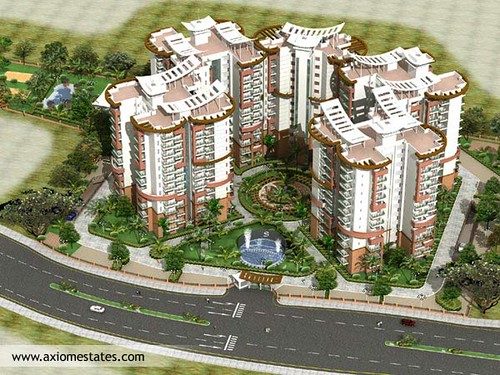
Image credit: Bangalore Properties - Real Estate India - Shriram Symphony by nancyarora2020 via flickr (BY-SA 2.0), sourced through Openverse.
Written by
Rajesh Tiwari
Real estate analyst covering property markets across Delhi NCR, Mumbai, and Bangalore. Rajesh tracks pricing trends, RERA compliance, and investment opportunities for residential and commercial buyers.
Looking for a technology partner?
From IT consulting to virtual office to custom software — eDarpan can help.
Continue reading
REITs in India 2026: How to Start Investing With Small Money
Want commercial real estate exposure without crores? Learn how to start REIT investing in India 2026 with under ₹500, plus taxes, top REITs, and mistakes to avoid.
Tier-2 City Property Investing 2026: Where Prices Are Rising Fast
Discover which tier-2 cities are seeing 60%+ price growth in 2026, plus a proven framework to invest smart without falling for broker hype.
Bengaluru vs Mumbai vs Delhi-NCR 2026: Where to Buy Now
Bengaluru, Mumbai, or Delhi-NCR? A data-driven breakdown of yields, prices, and growth to help you find the best city to buy property in 2026.