Metro Flyovers & Property Prices: How Infra Lifts NCR Values
Metro lines and flyovers move NCR property prices—but timing and location decide your gains. Learn how to read infra signals before you buy.

Here's a problem I see play out again and again with NCR property buyers: someone reads a news headline about a new metro corridor or flyover, gets excited, and rushes to book a flat near the announced route. Six months later they realise the actual station is 4 km away, the flyover ramp lands two sectors over, and the "premium" they paid has already been baked into the price. Meanwhile the smart money moved in before the tender was even awarded.
The infrastructure impact on property prices NCR is real and measurable, but the timing and geography are far more precise than most buyers assume. Consider the Kalindi Kunj corridor and the extension of the Magenta Line: micro-markets within roughly a kilometre of confirmed stations have historically seen 15–30% appreciation over a 24–36 month window around commissioning, while properties just a few sectors further out barely moved. The difference between a great buy and a mediocre one often comes down to which side of a flyover you're on.
I've advised families, MSME owners, and small investment syndicates on these decisions across Noida, Greater Noida, Gurugram, and Faridabad. In this post I'll show you how to read infrastructure signals early, a worked example of how the numbers actually play out, a comparison of infra types by price impact, and a practical checklist you can run before you commit a single rupee.
Key Takeaways
- The biggest price jumps happen before commissioning — typically from tender award to the point the structure becomes visible. Buying after the ribbon-cutting means you paid for the upside.
- Distance decays fast. Aim for property within 800m–1.2km of a confirmed station or interchange; beyond 2km the "metro premium" mostly evaporates.
- Metro lines and elevated corridors lift rental yields faster than sale prices in the first phase — good news for investors who want cash flow.
- Verify with primary sources: DMRC/NCRTC tenders, DPRs, and master plans — not WhatsApp forwards or builder brochures.
- Flyovers help commuters but can hurt frontage retail and ground-floor value if a ramp cuts off access. Position matters more than proximity.
- Budget for the full carrying cost: EMI, maintenance, and 12–36 months of construction disruption before the value shows up.
Why does infrastructure move NCR property prices at all?
The mechanism is simpler than the hype suggests. New connectivity does two things: it shrinks commute time and it expands the pool of people who can realistically live or work in an area. When a metro line or expressway cuts a 90-minute commute to 35 minutes, a buyer who previously wouldn't consider your sector suddenly will. More demand, fixed supply, prices rise.
But the effect is uneven. A metro station creates a walkable catchment, so residential and retail near it appreciate. An elevated expressway or flyover primarily benefits vehicular commuters, so it lifts value for gated townships and office parks that people drive to, while sometimes leaving street-level retail worse off if the road becomes a pass-through.
The three ingredients that reliably drive appreciation are time savings, access improvement, and new employment. When an infra project delivers all three — say, a metro line that also connects to a new commercial hub — you get compounding demand. The Noida–Greater Noida Aqua Line and the growth around the upcoming Jewar (Noida International) Airport are textbook examples of infra plus jobs pulling values together.
Metro versus flyover: they don't behave the same
Treat these as different asset classes for your analysis. A metro station is a magnet for footfall and household demand. A flyover is a throughput device. If you're buying a 2BHK to rent, metro proximity matters enormously. If you're buying a warehouse or a plotted commercial unit that depends on truck access, a new bridge or expressway interchange is your real driver. Don't apply metro logic to a road project.
How do I spot which NCR flyovers and metro lines will boost prices before values peak?
This is the part most buyers skip, and it's where the money is. The window you want to catch runs roughly from DPR approval to visible construction. By the time the structure is halfway up, the market has already priced in most of the gain.
Here's the signal ladder I use, from earliest and riskiest to latest and safest:
- Master plan / land-use notification. Earliest possible signal. Check the relevant authority's master plan (GNIDA, YEIDA, Noida Authority, HSVP for Haryana). Very early, so highest upside but also highest chance of delay or cancellation.
- DPR (Detailed Project Report) approval. A funded DPR is a serious commitment. This is my preferred entry point for most buyers — real enough to act on, early enough to still capture appreciation.
- Tender award. Once a contractor is appointed with a timeline, the project is very likely to proceed. Prices usually start their real climb here.
- Visible construction. Pillars going up. The market is now awake and pricing it in. You've missed the cheapest entry but the project risk is low.
- Commissioning / opening. The premium is largely already paid. This is when the naive buyer arrives. Only buy here for rental cash flow, not appreciation.
Pro Tip: Cross-check every claim against the actual authority document. Builders love to say "metro coming" for a line that's still at the wishlist stage. A funded DPR with a sanctioned budget line item is real. A "proposed corridor" in a decade-old master plan with no allocation is a marketing prop. If a sales agent can't name the executing agency and the current project stage, walk away.
Where to find the primary sources
- DMRC and NCRTC (for the RRTS / Namo Bharat corridors) publish project updates and tender notices.
- State authorities: Noida Authority, GNIDA, YEIDA (Yamuna Expressway), and HSVP/GMDA on the Haryana side.
- NHAI for expressways and major interchanges.
- The relevant city master plan documents, which show reserved land use for future corridors.
A worked example: buying near a metro extension before it opens
Let me make this concrete with a realistic scenario I've modelled for clients. Numbers are illustrative but built on the appreciation patterns we actually see in NCR.
A Delhi-based investor — call him Rajesh — wanted to put ₹65 lakh into a 2BHK for rental income and long-term appreciation. In early stage, he was looking at two options:
- Option A: A ready 2BHK in an established, well-connected sector already near a working metro station. Price: ₹68 lakh. Rent: ₹18,000/month. The metro premium was already fully priced in.
- Option B: A 2BHK in a developing sector where the DPR for a metro extension had just been approved, station roughly 900m away. Price: ₹52 lakh. Rent: ₹13,500/month at the time. Construction expected to complete in about 30 months.
Here's how the Option B math played out over three years:
- Entry: ₹52 lakh, plus ~₹3.5 lakh stamp duty and registration, plus ₹1.5 lakh interiors. Total in: ~₹57 lakh.
- Rent during construction: ₹13,500/month, nudging to ₹15,000 as the area developed. Roughly ₹5.1 lakh collected over the period.
- On commissioning: The sector re-rated. Comparable units traded around ₹68–72 lakh. Rents moved to ₹20,000–22,000/month as the station opened and demand from commuters arrived.
Rajesh captured roughly ₹16–20 lakh of appreciation plus rising rental yield, precisely because he bought at the DPR stage rather than after opening. Option A would have given him steady rent but almost no re-rating, because he'd have paid for connectivity that already existed.
The risk, of course, is delay. Had the extension slipped by two years, Rajesh's returns would compress and he'd carry a lower-rent asset longer. That's the trade: earlier entry, higher upside, higher execution risk. This is exactly why stage verification matters. For a deeper look at the appreciation dynamics, our analysis of Noida home prices and whether to buy now or wait is worth reading alongside this.
Which infrastructure types give the best price impact on property prices in NCR?
Not all infra is equal. A road that shaves 10 minutes off a drive won't move prices like a metro interchange that connects you to three job hubs. Here's how the main categories compare on the factors that actually matter to a buyer or investor.
| Infra Type | Typical Price Impact Radius | Appreciation Window | Best For | Key Risk |
|---|---|---|---|---|
| Metro line / station | 800m–1.5km (walkable) | DPR to ~12 months post-opening | Residential rentals, retail near station | Route or station location changes |
| RRTS / Namo Bharat corridor | 1–3km around stations | Tender award to opening | Long-commute townships, mixed-use | Long build timelines, phasing delays |
| Expressway / new interchange | 2–6km (drive-based catchment) | Construction to opening | Plots, warehousing, office parks | Toll costs; benefits the region, not the exact plot |
| Flyover / grade separator | Local, 500m–2km | Short, around completion | Gated communities, reduced congestion | Ramp placement can hurt frontage retail |
| New airport (e.g. Jewar) | Region-wide, 10km+ | Multi-year, front-loaded on announcement | Land banking, long-hold investors | Very long horizon; speculative pricing |
Common mistake: Buying ground-floor retail on a road that's about to get a flyover, assuming more traffic means more customers. In practice, if a flyover ramp cuts off left turns or the road becomes a high-speed pass-through, footfall to your shop can drop. Always look at the detailed alignment drawing — where the ramps land, where the service road runs, and whether pedestrians can still reach the frontage.
How do I run due diligence before buying near an upcoming corridor?
This is the checklist I hand clients before they sign anything. Work through it in order. If a step fails, that's your answer.
- Confirm the project stage from the primary source. Get the executing agency, DPR status, budget allocation, and expected timeline in writing. A screenshot of a news article is not verification.
- Map the exact station or ramp location. Measure the real walking or driving distance from the property, not the straight-line distance. A station 700m away across an uncrossable expressway is functionally far.
- Check the property's own titles and approvals. RERA registration number, approved building plan, completion/occupancy certificate for ready units. Infra upside means nothing if the property itself is legally shaky.
- Model the carrying cost. EMI plus maintenance plus a realistic vacancy assumption for the construction period. Can you hold for 24–36 months without stress?
- Study the rental comps now, not the projected ones. Base your downside case on today's rent. Treat future rent as upside, not a promise.
- Plan the tax angle. If you'll sell after appreciation, understand holding periods and exemptions. Our guide on saving capital gains tax on a property sale in India covers the 2026 rules and reinvestment options.
- Reassess yield. Compare the expected rental yield against alternatives. See where the numbers currently favour investors in our breakdown of rental yields across Indian cities.
If you're buying as an investment vehicle or through a company — for instance an MSME parking surplus into real estate — factor in the GST and registration angle too. If your entity needs a registered address in a new city to complete formalities, a compliant virtual office address for GST and company registration can be far cheaper than leasing physical space you don't yet need.
Investors versus end-users: does infra change your buying strategy?
Yes, quite a lot. An end-user optimises for lifestyle and can afford to buy closer to commissioning because they're going to live there anyway; the connectivity is a benefit they'll use daily, not just a resale lever. An investor optimises for entry price and exit timing, so they should be hunting the DPR-to-tender window and be willing to hold through disruption.
For end-users
- Prioritise walkability to a station over raw price. You'll feel the difference every single day.
- Amenities and liveability still matter — infra is a bonus, not a substitute. Our piece on whether wellness amenities in NCR homes justify the premium is a useful companion read.
For investors
- Buy early, hold through construction, exit within a year of commissioning when the re-rating peaks.
- Consider rental yield as your safety net if appreciation is slow — a well-let unit near a coming station de-risks the wait.
- If you're eyeing commercial, understand the office market dynamics. Our comparison of Grade A versus Grade B office space in India helps you judge which corridors will attract quality tenants.
How eDarpan helps you act on infra-driven opportunities
Spotting the corridor is half the job; executing the buy or rent cleanly is the other half. Through eDarpan Properties you can browse and compare listings across NCR and beyond, whether you're looking at properties for sale in India for a long-hold investment or rental properties to test-live a corridor before committing capital.
Beyond property, if you're setting up or scaling a business around these growth corridors, the wider eDarpan services stack is designed for Indian SMBs — from IT consulting and custom software to communication tools like WhatsApp Business API and bulk SMS for tenant and lead outreach. It's the same practitioner-first approach: figure out what actually moves the needle, then build only that.
Want a second opinion on a specific corridor or listing before you commit? Talk to the eDarpan team — a short conversation now can save you lakhs in a misjudged entry.
Frequently asked questions
How much does a metro station increase property prices in NCR?
Historically, residential property within roughly 800m–1.2km of a confirmed NCR metro station has appreciated 15–30% over the 24–36 month window around commissioning, with rents rising in step. The effect fades quickly beyond 2km. Actual numbers depend on the sector, the base price, and how much upside was already priced in when you bought.
Is it better to buy before or after a metro line opens?
For appreciation, buy earlier — ideally after the DPR is approved and tenders are awarded but before construction is visible. By the time the line opens, most of the price gain has already happened. Buying after opening makes sense mainly if you want stable rental income rather than capital appreciation.
Do flyovers always increase nearby property value?
No. Flyovers help drive-based demand and reduce congestion, which benefits gated townships and office parks. But if a ramp cuts off access or turns a street into a high-speed pass-through, ground-floor retail and frontage properties can actually lose value. Always study the detailed alignment before buying near a flyover.
How do I verify that a metro or corridor project is actually going to happen?
Go to the primary source: DMRC or NCRTC for metro and RRTS, and the relevant state authority (Noida Authority, GNIDA, YEIDA, HSVP) for other projects. Look for a funded DPR, a budget allocation, and an awarded tender with a contractor and timeline. Ignore builder brochures and forwarded messages that only cite "proposed" corridors.
What is the safest infra-linked property bet for a first-time NCR investor?
A residential 2BHK within walking distance of a metro station where the tender is already awarded and construction has started. You accept slightly higher entry pricing in exchange for much lower project risk, and you get rental income while you wait. Model your downside using today's rent, not projected rent.
Will the Jewar (Noida International) Airport keep pushing property prices up?
The airport is a region-wide, long-horizon driver that has already pulled land and plotted-development prices up along the Yamuna Expressway. Much of the announcement premium is already priced in, so this is best suited to long-hold investors and land bankers, not those seeking quick flips or immediate rental yield.
Should I set up a company or virtual office to invest in NCR property?
It depends on scale and structure. Individuals typically buy in their own name, but syndicates and MSMEs sometimes route investments through an entity for tax and governance reasons. If you need a registered address in a new location to complete GST or company formalities, a virtual office is a cost-effective option — and a tax consultant should confirm the structure before you commit.
The bottom line on the infrastructure impact on property prices NCR: the gains are real, but they reward the buyer who verifies the project stage, measures the true distance to the station or ramp, and enters before the market wakes up. Do the due diligence, respect the timing window, and let the concrete do the work while you hold. When you're ready to compare specific listings along a growth corridor, start with eDarpan Properties and reach out if you want a practitioner's read on the numbers.
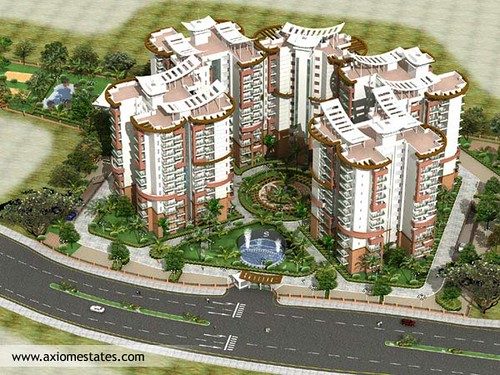
Image credit: Delhi Properties - Real Estate India - Unitech Grande by nancyarora2020 via flickr (BY-SA 2.0), sourced through Openverse.
Written by
Rajesh Tiwari
Real estate analyst covering property markets across Delhi NCR, Mumbai, and Bangalore. Rajesh tracks pricing trends, RERA compliance, and investment opportunities for residential and commercial buyers.
Looking for a technology partner?
From IT consulting to virtual office to custom software — eDarpan can help.
Continue reading
Festive Season Home Buying 2026: Deals Amid Unsold Inventory
With 10-11 lakh unsold units across metros, festive season home buying 2026 hands buyers real leverage. Here's your negotiation playbook.
Metro & Infra Projects Reshaping NCR Home Prices 2026
Learn how metro corridors, expressways, and Jewar Airport are reshaping NCR home prices in 2026, plus a framework to time your entry for maximum gains.
Greater Noida Property 2026: Is the Builder Rush a Buy Signal
Big builders are rushing to Greater Noida, but is it a buy signal or hype? A practical guide to reading the land rush before you invest in 2026.