Noida Home Prices Up 111% Since 2019: Buy Now or Wait?
Noida home prices jumped 111% since 2019. Should you buy now or wait for a correction? Here's a clear framework to decide in 2026.

If you've been tracking a flat in Noida for the last few years, you already know the sting. That 3BHK in Sector 150 that quoted ₹85 lakh in 2019 is now asking ₹1.8 crore, and the broker keeps telling you "sir, next month aur badhega." You're stuck in the worst position a buyer can be in: priced out of what you wanted, and scared that waiting will only make it worse.
Here's the number that's driving everyone's anxiety. Average residential prices across Noida and Greater Noida have climbed roughly 111% since 2019, according to consolidated data from Anarock and CREDAI trackers. Some micro-markets along the Noida Expressway and near the upcoming Jewar airport have done even better than that. A doubling of capital value in six years is not normal for Indian residential real estate, which historically compounds at 6-9% a year. So the real question isn't "did prices go up" — they obviously did — it's whether the surge has more room to run or whether you're walking into the tail end of a cycle.
This post decodes what actually pushed Noida property prices 2026 to these levels, which sectors still offer genuine value versus which ones are running on hype, and gives you a concrete framework to decide whether to buy now or hold. I've helped enough clients — including business owners parking company profits into real estate — evaluate these decisions to know the buy-vs-wait math is rarely as obvious as brokers make it sound.
Key Takeaways
- Noida's 111% price surge since 2019 was driven by real infrastructure (Jewar airport, expressway, metro), not pure speculation — which makes it more durable than the 2013-2016 crash-prone rally.
- Ready-to-move inventory is now scarce; the value has shifted to under-construction projects from RERA-compliant developers with completion timelines under 30 months.
- Sectors 150, 143, and the Yamuna Expressway belt near Jewar still have upside; overpriced central sectors (18, 62) offer weak rental yields near 2-2.5%.
- If you're buying to live in, buy now — waiting for a correction that infrastructure demand won't allow is a losing game. If you're a pure investor, be selective and stress-test yields.
- Always verify RERA registration, check the developer's delivery track record, and budget for the full cost stack (stamp duty, GST on under-construction, registration, brokerage).
Why did Noida property prices jump 111% since 2019?
This wasn't a bubble inflated by cheap money alone. Four structural forces stacked up at the same time, and that's rare.
The Noida International Airport at Jewar. This is the big one. When a greenfield airport of this scale gets funded, land within a 30-40 km radius reprices permanently. The first phase is slated to become operational in 2025, and every developer within reach has priced that in. The Yamuna Expressway corridor, which was sleepy farmland a decade ago, now commands rates that would have been laughable in 2019.
Infrastructure that actually got built. The Noida-Greater Noida metro extension, the widening of the expressway, and the film city announcement in Sector 21 all landed within a compressed window. Unlike a lot of Indian real estate promises, these largely materialized, which validated buyer confidence.
The post-COVID space upgrade. Work-from-home turned "we can manage in a 2BHK" into "we need a study and a balcony." Demand shifted decisively toward larger, better-ventilated units in gated townships, which are exactly what the Expressway sectors offer.
Supply consolidation after RERA. The Real Estate (Regulation and Development) Act cleaned out a lot of fly-by-night developers. Fewer launches meant less new supply hitting the market, and existing quality inventory got absorbed fast. Scarcity plus demand equals the price chart you're staring at.
Which Noida sectors still offer value in 2026?
Not every sector rose equally, and not every sector has the same runway left. Here's how I'd segment the market for a buyer walking in today.
| Micro-market | Indicative rate (₹/sq ft) | Rental yield | Upside outlook | Best for |
|---|---|---|---|---|
| Sector 150 (Expressway) | ₹9,500 – 12,500 | ~3% | Moderate-high | End-users, sports/greenery premium |
| Sector 143 / 143B | ₹8,500 – 11,000 | ~3.2% | High (metro adjacency) | Rental investors |
| Sector 18 / 62 (central) | ₹11,000 – 16,000 | ~2 – 2.5% | Low (mature) | Ready-to-move, low patience |
| Yamuna Expressway (near Jewar) | ₹5,500 – 8,500 | ~2.8% | Very high (long horizon) | Long-term speculators |
| Greater Noida West (Noida Ext.) | ₹6,000 – 8,000 | ~3.5% | Moderate | Value buyers, best yields |
A few honest observations from these numbers. The central, mature sectors like 18 and 62 have already delivered most of their appreciation. You're paying a premium for location and getting a thin 2-2.5% rental yield, which is barely better than a fixed deposit after you account for maintenance and vacancy. If you want ready-to-move and can't wait, fine, but don't expect these to double again.
Greater Noida West quietly offers the best rental yields in the region at around 3.5%, because purchase prices stayed reasonable while a young working population keeps rental demand strong. For an investor optimizing cash flow rather than capital gains, this is worth a serious look. If yield math is your priority, our breakdown of where rental yields are rising with home prices in 2026 pairs well with this section.
The Yamuna Expressway belt near Jewar is the highest-upside, highest-patience play. Prices are still low because the payoff is tied to airport-driven employment and commercial development that takes years to mature. Buy here only if you can hold for 7-10 years and don't need the money.
Buy now or wait: what does the actual math say?
Brokers frame this emotionally. Let's frame it with arithmetic instead.
The waiting bet only pays off if prices actually correct or stay flat. But three of the four drivers behind the 111% surge — the airport, the metro, the space-upgrade demand — are structural and not going away. When demand is tied to permanent infrastructure rather than speculative flipping, corrections are shallow and short. The 2013-2016 Noida crash happened because it was speculation-led with stalled projects; today's rally rests on delivered infrastructure. That's a meaningfully different foundation.
Then there's your cost of waiting. If you keep your down payment in a fixed deposit earning 7% while a target property appreciates even a conservative 8-10% a year, you fall behind every single month. And rent you pay while waiting is money that never comes back.
Pro Tip: Don't try to time the exact bottom or peak. In residential real estate, the transaction costs alone — stamp duty (7% in UP including registration), brokerage, and GST on under-construction property — mean you lose 8-10% the moment you transact. Buy when the fundamentals and your personal finances line up, not when a WhatsApp forward tells you prices will crash.
The exception: pure investors buying a fifth property
If you're an end-user buying a home to live in, the analysis is simple: buy when you can afford the EMI comfortably (keep it under 35% of monthly income) and stop trying to outsmart a market driven by an airport. For pure investors, though, be far more selective. A property at a 2.2% yield in Sector 18 is a bet purely on appreciation, and after a 111% run, that's a thinner bet than it was in 2019.
A worked example: how a Noida SMB owner evaluated a ₹1.4 crore purchase
Let me walk you through a real decision framework using a composite of clients I've advised.
A 22-person e-commerce fulfillment company in Noida Sector 63 had accumulated roughly ₹40 lakh in retained profit after a strong FY24-25. The founder wanted to park it in real estate — partly as a wealth store, partly with a vague plan to shift to a home office someday. He was looking at a ₹1.4 crore 3BHK in Sector 150, under construction, promising possession in 24 months.
Here's how we broke it down.
- Full cost stack, not just the sticker price. On ₹1.4 crore, we added: 5% GST on under-construction (₹7 lakh, since it was not an affordable-housing unit), stamp duty and registration at ~7% (₹9.8 lakh), and 1% brokerage (₹1.4 lakh). Real all-in cost: about ₹1.58 crore.
- Financing structure. The ₹40 lakh covered the down payment and closing costs. He financed ₹1.1 crore at 8.6% for 20 years, an EMI of roughly ₹96,000. We stress-tested this against a rate hike to 9.5% — EMI would climb to about ₹1.02 lakh. Uncomfortable but survivable given his business cash flow.
- RERA and developer verification. We pulled the project's UP-RERA registration number and cross-checked the promoter's past three deliveries. Two were delivered within six months of the promised date; one slipped 14 months. Amber flag, not red. We negotiated a possession-linked penalty clause into the builder-buyer agreement.
- Rental scenario during construction. Once delivered, comparable units in Sector 150 fetched ₹32,000-35,000 rent. That covers about a third of the EMI, meaning he'd carry a real monthly cost of ~₹60,000 until either rent rose or he moved in.
- The decision. He bought — but negotiated the price down to ₹1.32 crore by paying a larger upfront tranche, and put the possession penalty clause in writing. The reasoning: he genuinely intended to occupy it, his business could absorb the EMI, and Sector 150's fundamentals were sound.
The lesson isn't "always buy." It's that the decision only becomes clear after you build the full cost stack, stress-test the EMI, and verify the developer. Skip those steps and you're gambling.
Common Mistake: Buyers anchor on the per-sq-ft rate and forget GST on under-construction property (5% standard, 1% affordable), stamp duty, registration, and brokerage. That's another 12-13% on top of the quoted price. On a ₹1.4 crore flat, that's nearly ₹18 lakh most people don't budget for until the paperwork hits.
What's the outlook for Noida property prices 2026 and beyond?
My honest read: the pace slows, but the direction stays up. You will not see another 111% over the next six years — that kind of jump was a one-time repricing around the airport announcement. Expect something closer to 7-11% annual appreciation in the strong Expressway and Jewar-adjacent sectors, and 4-6% in the mature central sectors that have already run.
The catalysts to watch through 2026 are the phased opening of Jewar airport, commercial absorption in the film city zone, and whether the metro extensions hit their timelines. If Jewar's first phase opens smoothly and cargo operations begin, the Yamuna Expressway belt could see a second leg up. Delays would flatten it.
One risk factor: over-supply of under-construction launches. Developers have read the same tea leaves you have, and a flood of new projects in 2025-2026 could soften prices in specific over-built pockets. This is why developer selection and RERA diligence matter more than ever — you want scarcity value, not a sector with twenty identical towers launching at once.
Your buying checklist before you sign anything
Whether you buy now or in six months, run this list. It has saved my clients from expensive mistakes.
- Verify UP-RERA registration. Search the project and promoter on the official UP-RERA portal. No registration, no deal.
- Check the developer's last three deliveries. Ask former buyers, not the sales team. Delivery track record predicts your risk better than any brochure.
- Read the builder-buyer agreement for penalty clauses. Ensure a per-month delay penalty is written in, not just a vague "endeavour to deliver."
- Build the full cost stack. Quoted price + GST + stamp duty + registration + brokerage + interior budget. Know your true number.
- Stress-test your EMI. Model a 1% rate hike. If that breaks your budget, you're over-leveraged.
- Confirm clear title and encumbrance certificate. Get a lawyer to verify, especially on resale and Yamuna Expressway plots where land records can be messy.
- Check the possession timeline against your actual need. A 24-month project usually means 30-36 months in reality. Plan for it.
If you'd rather have someone shortlist RERA-verified projects, run the diligence, and negotiate on your behalf, that's exactly what eDarpan Properties does. You can browse current properties for sale across India or explore rental options if you'd rather rent while the market settles.
How eDarpan helps buyers and business owners decide
Real estate decisions rarely sit in isolation, especially for business owners parking company profits or setting up new premises. If you're a founder weighing whether to buy residential versus lease commercial space, our comparison of Grade A versus Grade B office space in 2026 is worth reading alongside this.
For business owners who need a registered address without committing to a full lease — say, to complete GST or company registration while you scout property — a virtual office address for GST and company registration gives you compliance-ready documentation at a fraction of the cost. And if you're structuring the tenancy side of an investment property, understand your TDS on rent obligations for 2026 before you sign your first rental agreement.
Beyond property, eDarpan runs the technology backbone many of these growing businesses need — from IT consulting and cloud migration and managed services to custom software development. If real estate is one part of your capital allocation, talk to us about the rest through our full services overview or just reach out directly.
Frequently asked questions
Is it a good time to buy property in Noida in 2026?
For end-users who can afford the EMI comfortably, yes — the demand drivers (Jewar airport, metro, expressway) are structural, so waiting for a large correction is unlikely to pay off. Pure investors should be more selective and prioritize sectors with strong rental yields over already-mature areas.
Which Noida sector is best for investment right now?
For rental yield, Greater Noida West and Sector 143 lead at roughly 3.2-3.5%. For long-term capital appreciation, the Yamuna Expressway belt near Jewar airport offers the most upside, though it requires a 7-10 year holding horizon.
Will Noida property prices crash after the 111% surge?
A sharp crash is unlikely because the rally is backed by delivered infrastructure rather than pure speculation, unlike the 2013-2016 downturn. The more probable scenario is slower appreciation of 7-11% annually in strong sectors, with softening only in over-built pockets flooded with new launches.
What are the extra costs beyond the quoted flat price in Noida?
Budget an additional 12-13%: 5% GST on under-construction property (1% for affordable housing), around 7% for stamp duty and registration in UP, and roughly 1% brokerage. On a ₹1 crore flat, that's an extra ₹12-13 lakh many buyers overlook.
How do I verify if a Noida developer is trustworthy?
Check the project and promoter on the official UP-RERA portal, review their last three completed projects for delivery timelines, and speak directly to past buyers rather than the sales team. Insist on a written per-month delay penalty clause in the builder-buyer agreement.
Should I buy ready-to-move or under-construction property in Noida?
Ready-to-move avoids delivery risk and GST but costs more per square foot and has less appreciation runway. Under-construction from a RERA-verified developer with a solid track record offers better value, provided you can wait 30-36 months and stress-test the delay risk.
Is Noida better than Gurgaon for property investment in 2026?
Noida generally offers lower entry prices and higher potential upside from the Jewar airport, while Gurgaon commands premium rates with more mature commercial demand. Your choice depends on budget and horizon: Noida for value and long-term growth, Gurgaon for established rental markets.
The bottom line
The 111% surge is real and it was largely earned by genuine infrastructure, not just hot money. That's precisely why sitting on the sidelines waiting for a dramatic crash is the wrong play for most buyers. The smarter move is to be selective: understand that Noida property prices 2026 will likely keep climbing but at a saner pace, target sectors where the math still works, run every project through a RERA and cost-stack check, and buy when your own finances line up rather than when a broker creates urgency.
If you want help shortlisting verified projects, decoding the true all-in cost, or deciding between buying residential and leasing commercial space for your business, eDarpan Properties and our advisory team are built exactly for that. Buy with a plan, not with FOMO — and you'll be on the right side of this market.
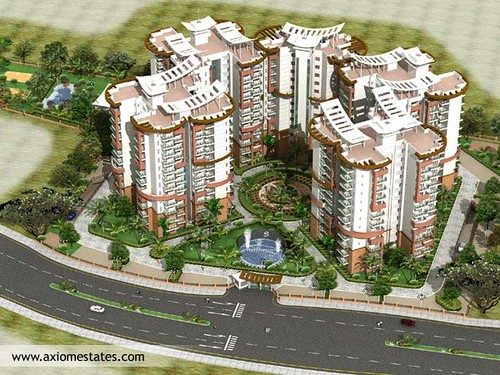
Image credit: Delhi Properties - Real Estate India - Unitech Grande by nancyarora2020 via flickr (BY-SA 2.0), sourced through Openverse.
Written by
Rajesh Tiwari
Real estate analyst covering property markets across Delhi NCR, Mumbai, and Bangalore. Rajesh tracks pricing trends, RERA compliance, and investment opportunities for residential and commercial buyers.
Looking for a technology partner?
From IT consulting to virtual office to custom software — eDarpan can help.
Continue reading
Metro & Infra Projects Reshaping NCR Home Prices 2026
Learn how metro corridors, expressways, and Jewar Airport are reshaping NCR home prices in 2026, plus a framework to time your entry for maximum gains.
Greater Noida Property 2026: Is the Builder Rush a Buy Signal
Big builders are rushing to Greater Noida, but is it a buy signal or hype? A practical guide to reading the land rush before you invest in 2026.
Construction Costs Up 34% in India 2026: Impact on Home Buyers
Construction input costs jumped 30-34% since 2024. Learn what's driving the construction cost rise in India 2026 and how home buyers can negotiate smarter.