Rent or Buy in Dwarka Under 2026 Rate Cuts? Break-Even Guide
Buying looks cheaper than renting only when you count the full cost of ownership. This break-even guide shows Dwarka buyers how to compare the real numbers.
A Dwarka couple we advised last year had spent eleven months comparing flats. Every spreadsheet they built ended the same way: a rent number that looked painfully high next to an EMI that looked deceptively low. Then they realised the EMI was only a fraction of what buying actually costs them, and the rent they were paying had quietly subsidised the years they spent deciding. Thousands of first-time buyers in Delhi-NCR make the same comparison with the wrong inputs, and the mistake is expensive in both directions.
This guide gives you a working break-even framework for rent vs buy Dwarka 2026, built around total cost of ownership rather than the EMI headline. We will cover the carrying costs most buyers forget, how the 2026 loan-rate environment shifts the maths, a worked example with real rupee figures, and the specific checks you should run before signing anything. Where we do not have verified current data, we say so and show you how to plug in your own numbers.
Key Takeaways
- Compare the full annual cost of owning (interest, property tax, maintenance, insurance-type costs, opportunity cost on your down payment) against the full annual cost of renting, not the EMI against the rent.
- The break-even horizon is usually 5 to 8 years in most Dwarka micro-markets, but it moves sharply with loan rate, rental yield, and how long you realistically stay.
- Stamp duty, registration, and brokerage can add roughly 7 to 8 per cent to your upfront cost in Delhi, which pushes break-even further out for short stays.
- Price-per-sq-ft trends matter less than the price-to-rent ratio of the specific society you are considering.
- A rate cut lowers EMIs but does not automatically make buying cheaper if prices adjust upward or your rent-equivalent yield stays thin.
- Run the numbers with a conservative appreciation assumption (3 to 5 per cent nominal) and a realistic holding period before you trust any "buy now" conclusion.
Is It Better to Rent or Buy in Dwarka in 2026?
The honest answer is that it depends on how long you will stay, what you can comfortably afford in cash flow terms, and whether the specific property is priced sensibly against the rent it could earn. Dwarka is not one market. Sector-level pricing, metro connectivity from the Dwarka Sector 21 station, proximity to the airport and the Dwarka Expressway, and the age and condition of societies all shift the result considerably. A four-bedroom in a mature Dwarka sector and a new high-rise near the expressway are not interchangeable inputs.
Start by deciding whether you are buying a home to live in for at least seven years, or buying an investment that you will rent out. Those are two different analyses. For owner-occupation, the question is whether the annual cost of living in your own flat is lower than renting a comparable one, adjusted for the upfront cost of getting in. For investment, the question is whether the rental yield covers the carrying cost plus a reasonable return on your capital.
What Is the Total Cost of Owning Versus Renting?
Most buyers compare the monthly EMI with the monthly rent. That comparison is incomplete in a way that systematically favours buying. A proper comparison includes the following on the buying side:
- Interest component of EMI. In the early years of a 20-year loan, most of your EMI is interest. Track principal and interest separately, not just the EMI total.
- Opportunity cost of your down payment. If you put ₹40 lakh of savings into a flat, that money could earn a return in fixed deposits, debt funds, or equity. Ignoring this cost makes buying look cheaper than it is.
- Upfront transaction costs. Stamp duty in Delhi is generally around 6 per cent for most buyers, with registration fees on top, and brokerage typically adds another 1 to 2 per cent. Budget for this as a sunk cost, not a rounding error.
- Maintenance charges. Society maintenance in Dwarka varies widely and rises over time. Build in annual increases.
- Property tax and utility charges. Municipal property tax, water and sewer charges, and any special assessments.
- Insurance and repairs. Home insurance is inexpensive but real. Major repairs (waterproofing, lift modernisation, plumbing renewal) are lumpy and deserve a reserve.
- Loan processing fees and prepayment penalties. Read the sanction letter, not just the rate.
On the renting side, the costs are simpler: annual rent with its escalation, security deposit (which is capital you have parked, so apply the same opportunity-cost logic), brokerage if paid, and any maintenance you are asked to contribute to.
Pro Tip: Use the Price-to-Rent Ratio First
Before running any loan calculation, divide the purchase price of the specific property by the annual rent for a comparable one in the same society or lane. If that ratio is above roughly 20 to 25, buying needs strong appreciation to make sense against renting, because you are paying a lot for every rupee of rent you avoid. Below 15, buying tends to win sooner. This single ratio does more to filter bad decisions than any price-per-sq-ft trend chart. Check it against actual listings on properties for sale in India and rental properties in India rather than relying on headline averages.
How Do 2026 Loan Rates Change the Break-Even Point?
Home loan rates have a direct and asymmetric effect on this decision. A lower rate reduces the interest portion of your EMI, which shifts the early-year cash flow in favour of buying. But it also tends to push up demand, which can lift prices, and that can cancel the gain. Buyers who only watch the rate and ignore price movement often overpay for the rate cut they thought they were getting.
The practical check: model your loan at the rate you can actually get today, with a 20-year tenure, and compare the year-one interest outflow with the rent you would otherwise pay. Then model a scenario where the rate falls by 0.5 percentage points and the property price rises by 5 per cent. In many Dwarka cases, the net effect on break-even is smaller than people expect, and sometimes negative. Keep current published rates from your lender, since rate-cut cycles change quickly and any figure in an article ages fast.
Worked Example: A Dwarka Two-Bedroom Over Ten Years
Consider a couple, both salaried, who are choosing between renting a two-bedroom flat in a Dwarka sector for ₹35,000 per month and buying a comparable flat for ₹95 lakh. We will use illustrative assumptions, which you should replace with actual quotes:
- Down payment of ₹19 lakh (20 per cent), with ₹76 lakh borrowed.
- Loan at 8.5 per cent for 20 years, giving an EMI of roughly ₹66,000 per month.
- Stamp duty, registration, and brokerage of around 8 per cent of purchase price, so about ₹7.6 lakh paid upfront from savings.
- Society maintenance of ₹4,500 per month, rising 5 per cent yearly.
- Rent rising 5 per cent yearly.
- Property appreciation of 4 per cent nominal per year.
- Opportunity return on savings of 7 per cent per year.
Under these assumptions, the monthly cash outflow of buying is well above renting in year one, because the EMI and maintenance together exceed the rent. The buying case only starts to pull ahead on a total-cost basis somewhere in the range of seven to nine years, depending on how the appreciation and opportunity-return assumptions play out. Change the appreciation to 2 per cent and the break-even moves out further. Change it to 7 per cent and it moves in. This sensitivity is the real lesson: the decision is highly sensitive to appreciation and holding period, which you cannot know in advance.
The couple in this example chose to rent for three more years, invested the difference between their rent and a hypothetical EMI in a debt-plus-equity mix, and bought when their expected tenure became clearer. That is a legitimate outcome, not a failure to decide.
Which Factors Matter Most for Dwarka Buyers?
Several Dwarka-specific variables deserve particular attention rather than generic advice:
- Connectivity. Proximity to Dwarka Sector 21 metro station, the airport, and the expressway has supported demand, but connectivity alone does not justify a price premium if rents do not follow.
- Society age and redevelopment risk. Older societies may face repair or redevelopment assessments. Ask for minutes of the last three managing committee meetings.
- Title and approvals. Verify the sale deed chain, occupancy or completion certificates for newer projects, and whether the builder has pending litigation.
- Cash-flow resilience. A rent-versus-buy decision that works on paper can still fail if an EMI consumes more than roughly 40 per cent of your take-home pay after existing commitments.
Step-by-Step: Running Your Own Break-Even Analysis
- Define your holding period. Write down the number of years you realistically expect to stay in the city. Be honest; most people underestimate job moves.
- Get three real quotes for each option. Two or three comparable rentals and two or three comparable properties for sale, with specific sector and floor details.
- Calculate the price-to-rent ratio for each property you are considering.
- Get a loan sanction estimate from at least two lenders, including processing fees and insurance riders.
- Total the upfront buying costs, including stamp duty, registration, brokerage, legal review, and interiors if needed.
- Model annual cash flows for both options over your holding period, including rent escalation, maintenance increases, and property tax.
- Add the opportunity cost of your down payment and deposit at a return you can actually earn.
- Run three scenarios: conservative (2 per cent appreciation), base (4 per cent), and optimistic (6 per cent). Note the break-even year in each.
- Stress-test your cash flow with a 2 per cent rate increase on the loan and a job-income dip of 15 per cent.
- Decide based on the range, not the single number. If buying wins only in the optimistic case, renting is probably the safer call.
Common Mistake: Treating the Down Payment as Free Money
The most frequent error we see is buyers who count their savings as costless because the cash is already there. It is not. Every rupee in the down payment has an alternative use, and when you ignore it, buying looks dramatically cheaper than it is. Put the down payment into a debt fund or a fixed deposit in your model and let it compound. You will often find the break-even moves out by two or three years, which may change the decision entirely.
How Do Compliance and Paperwork Affect the Decision?
If you plan to rent out a second property or treat your purchase as an investment, several compliance points affect the net yield. Rental income is taxable under the head "income from house property", with a standard deduction for municipal taxes paid and a 30 per cent standard deduction on net annual value, which you should confirm with a chartered accountant against the current year's rules. If you rent to a tenant, a rent agreement should be registered where the term exceeds eleven months, and stamp duty applies accordingly under Delhi rules. Keep records of all society charges, since these are deductible in the appropriate calculation.
For buyers who run a business and want the property registered to the company, the stamp duty, GST treatment on under-construction purchases, and the documentation requirements differ. Those are worth discussing with your accountant before you commit, not after. If your company is still deciding where to register, a virtual office address for GST and company registration can keep the paperwork clean while you decide on the physical location.
When Should You Wait Rather Than Buy?
Waiting is a legitimate strategy, and it is underrated. Buy when at least three of these are true: you expect to stay seven or more years, your price-to-rent ratio is comfortably below 20, your EMI fits within a conservative share of income even after a rate rise, you have a six-month emergency fund outside the down payment, and you have verified the title and society health. If most of these are false, rent, keep saving, and reassess in twelve months.
Buyers who want to compare Dwarka with other Delhi-NCR micro-markets before deciding may find our analysis of buying a home in Dwarka versus Gurugram in 2026 useful, and our wider rent vs buy in Delhi-NCR break-even calculator guide walks through the same logic with different inputs. For a broader national view, see whether to buy, rent or wait in India in 2026, and for the regional context Delhi-NCR home prices and the rent-or-buy question covers the price movements behind these numbers.
What Should You Check Before Signing Anything?
Before you commit, confirm each of the following in writing rather than by phone assurance:
- The carpet area, super area, and the loading factor used to compute your price, since these can differ materially from the brochure.
- All charges outside the base price: parking, power backup, club membership, preferential location charges, and maintenance deposits.
- The completion timeline and what remedies you have if it slips, including any interest-on-delay clauses.
- The lender's prepayment terms and whether floating-rate reset dates are clearly stated.
- Society minutes, dues certificates, and any pending redevelopment or assessment notices.
Working through these properly is the difference between a good decision and an expensive one, and it is exactly the sort of diligence a second set of eyes helps with. If you want a structured review of your numbers or help comparing specific properties, our team can build the break-even model with you and stress-test it against your actual income and holding period. You can contact eDarpan to discuss your situation, or read more about how we work on the about eDarpan page. If you are also evaluating the wider property market, our eDarpan Properties listings cover buying, renting, and investment options across India.
Frequently Asked Questions
Is it better to rent or buy in Dwarka in 2026?
It depends mainly on how long you will stay and the price-to-rent ratio of the specific property. If you expect to stay at least seven years and the property's price is reasonable against comparable rents, buying often makes sense. For shorter stays or expensive properties relative to rent, renting is usually the better financial choice.
What is the break-even point for buying a house in Dwarka?
In most Dwarka scenarios the break-even horizon falls somewhere between five and eight years, but it varies considerably with loan rate, appreciation, and upfront costs. Run a model with conservative, base, and optimistic appreciation assumptions to see the realistic range for your case.
How do home loan rate cuts affect rent vs buy decisions?
Lower rates reduce EMIs and improve early cash flow for buyers, but they can also push up demand and prices. The net effect is not always positive, so model both the rate change and possible price movement together rather than assuming a rate cut automatically favours buying.
What extra costs should I budget when buying a flat in Delhi-NCR?
Expect stamp duty and registration fees totalling roughly 6 to 7 per cent of the purchase price for most buyers, plus brokerage of about 1 to 2 per cent if you use an agent. Add legal review, loan processing fees, and any interiors or society deposits. These upfront costs materially extend the break-even period for shorter holding periods.
Should I count my down payment as a cost when comparing rent and buy?
Yes. The down payment has an opportunity cost because the money could earn a return in debt funds, fixed deposits, or other investments. Ignoring this makes buying look cheaper than it really is, and including it often moves the break-even point out by several years.
Is rental income from a Dwarka flat taxable in India?
Yes, rental income is generally taxable under the head "income from house property", with certain deductions including municipal taxes paid and a standard deduction on net annual value. Tax rules change, so confirm the current treatment with a chartered accountant before relying on any net yield estimate.
When is the best time to buy a home in Dwarka?
The best time is when your personal conditions line up, not when headlines suggest a bottom. Buy when you expect to stay long enough, your EMI fits comfortably within your income with room for a rate increase, your emergency fund is intact, and the specific property passes title and society checks. Otherwise, renting and investing the difference is a sound alternative.
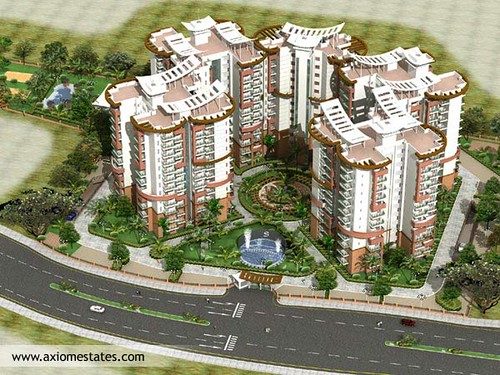
Image credit: Bangalore Properties - Real Estate India - Shriram Symphony by nancyarora2020 via flickr (BY-SA 2.0), sourced through Openverse.
Written by
Rajesh Tiwari
Real estate analyst covering property markets across Delhi NCR, Mumbai, and Bangalore. Rajesh tracks pricing trends, RERA compliance, and investment opportunities for residential and commercial buyers.
Looking for a technology partner?
From IT consulting to virtual office to custom software — eDarpan can help.
Continue reading
Delhi-NCR Home Prices Up 12%: Rent or Buy in 2026?
Delhi-NCR prices jumped 12%. Before you buy, run the real numbers: true ownership costs, break-even horizon, and when renting and investing wins.
Buying a Home in Dwarka vs Gurugram 2026: Where Your Money Goes Further
Dwarka or Gurugram in 2026? Compare true landed cost, rental yields and infrastructure timelines to see where your money actually goes further.
Senior Living in India 2026: Buying a Retirement Home in Tier-2 Cities
Choosing a retirement home in India means balancing healthcare access, accessibility and true costs. This guide covers buying vs renting and checks for Tier-2 cities.