RERA Complaint Process in India 2026: A Homebuyer's Guide
Stuck with a delayed flat? Learn the complete RERA complaint process in India for 2026, including documents, fees, timelines, and mistakes to avoid.

Here's a scenario that plays out in thousands of Indian households every year. You booked a 2BHK in a Pune or Noida project with a "possession in 36 months" promise. You paid your booking amount, took a home loan, and started paying EMIs. Three years pass. Then four. The developer keeps citing "labour shortage," "approval delays," and "GST transition issues." Your money is locked, you're paying both rent and EMI, and the builder's site office has stopped picking up calls.
If this sounds familiar, you're not alone. As of 2024, the Real Estate Regulatory Authority (RERA) tribunals across states had disposed of over 1.4 lakh complaints, and Maharashtra's MahaRERA alone crossed the 20,000-complaint mark. The good news is that RERA gives you real teeth against defaulting developers, including refunds with interest, delay compensation, and even penalties on the builder. The bad news is that most homebuyers either don't file, or file wrong, and their case gets stuck on a technicality.
This guide walks you through the complete RERA complaint process India in 2026: the documents you need, the fees, the timelines, the state-portal differences, and the mistakes that quietly kill otherwise strong cases. I've helped families in Gurgaon, Bengaluru, and Lucknow navigate this, and I'll share what actually works.
Key Takeaways
- You can file a RERA complaint online for a fee as low as ₹1,000 in most states, without a lawyer for straightforward cases.
- RERA covers refund with interest (usually SBI MCLR + 2%), delay compensation, and quality defects, but only for registered projects.
- Every state has its own portal and format. What works on MahaRERA does not directly apply to UP-RERA or Karnataka RERA.
- Complaints are typically expected to be disposed of within 60 days, though real timelines run 3 to 9 months.
- Keep every payment receipt, the allotment letter, and the builder-buyer agreement. Missing documents are the number one reason cases stall.
- If the builder ignores the RERA order, you escalate to the Adjudicating Officer and then recovery as arrears of land revenue.
What can you actually file a RERA complaint for?
RERA (the Real Estate Regulation and Development Act, 2016) was built to protect homebuyers from exactly the kind of games developers used to play. Before RERA, a builder could sell you 1,000 sq ft, deliver 850, delay by five years, and you had almost no recourse short of a slow civil suit.
You can file a RERA complaint against a promoter, agent, or even against yourself as an allottee (yes, the builder can complain too) for issues including:
- Delayed possession beyond the date promised in the agreement. This is the single most common complaint.
- Refund with interest when you want to exit a stalled project.
- Structural or quality defects reported within the defect liability period (usually 5 years from handover).
- Carpet area mismatch where the delivered area is less than promised.
- Diversion of funds or the developer not depositing 70% of collections in the mandated project escrow account.
- False advertising or amenities promised in the brochure but never delivered (clubhouse, swimming pool, parking).
- Illegal charges or demands not part of the original agreement.
One critical caveat: RERA only has jurisdiction over registered projects. If the project was launched before RERA came into force in your state and was substantially complete, or if the plot is below the size threshold (typically 500 sq m or 8 apartments), RERA may not apply. Always check the registration number on your state RERA portal before filing.
What documents do you need before you file?
The single biggest reason a strong case falls apart is incomplete documentation. RERA authorities are quasi-judicial bodies, and they decide on evidence, not emotion. Before you touch the portal, assemble a clean file.
Essential documents checklist
- Allotment letter and/or booking confirmation with the unit number.
- Builder-Buyer Agreement (BBA) or Agreement for Sale, signed and stamped. This document contains the promised possession date, which is your legal anchor.
- All payment receipts and bank statements showing every rupee paid, including the amount, date, and mode.
- Demand letters from the builder.
- Home loan sanction letter and EMI statements if you want to claim EMI-related losses.
- The project's RERA registration certificate and number, downloadable from your state portal.
- Written communication with the builder: emails, WhatsApp chats, letters where you demanded possession or a refund.
- Your ID proof (Aadhaar or PAN).
Pro Tip: Before filing, send the builder a formal legal notice by registered post or email demanding possession or refund within 15 days. It costs almost nothing but creates a documented "cause of action" and often prompts settlement talks. Many of my clients got refund offers the week after a notice landed, purely because the builder wanted to avoid a public RERA order.
The RERA complaint process India: a step-by-step walkthrough
Here's the actual filing sequence. I'll use the online route because nearly every state now supports it, and it saves you multiple trips to the RERA office.
- Verify the project registration. Go to your state RERA portal, search by project name or registration number, and confirm the developer is registered. Screenshot the registration page. This proves jurisdiction.
- Create your complainant account. Register on the portal with your mobile and email. You'll get an OTP-based login. Keep the credentials handy; you'll track your case here.
- Select the complaint type. Most portals ask whether the complaint is against a promoter (builder), agent, or authority. Choose "promoter" for a delay or refund case.
- Fill the complaint form. This is Form A or its state equivalent. Enter the project details, the relief you're seeking (refund, possession, compensation), and a clear chronology of events. Be factual and dated. "Booked on 12 March 2020, agreement dated 5 June 2020, promised possession 5 June 2023, no possession as of today."
- Attach all documents. Upload the BBA, receipts, notice, and registration proof. PDFs work best. Name your files clearly.
- State your prayer (relief sought) precisely. This matters enormously. If you want a refund, ask for "refund of ₹XX,XX,XXX with interest at the prescribed rate plus compensation." If you want possession, ask for "possession with delay interest from the promised date."
- Pay the filing fee. Fees vary by state (see the table below), usually ₹1,000 to ₹5,000. Pay online and save the receipt.
- Submit and note your complaint number. You'll get an acknowledgement. Track hearing dates through the portal or SMS alerts.
- Attend the hearings. These may be in person or over video. Present your case, respond to the builder's reply, and submit any additional evidence the bench asks for.
- Receive the order. The authority issues a written order. If it's in your favour, it will specify the refund/compensation amount and a deadline for the builder to comply.
For most delay and refund cases, families handle this without a lawyer. If your dispute involves complex carpet-area calculations, fund diversion, or a large sum, hiring a RERA-experienced advocate (typically ₹15,000 to ₹50,000 depending on the city and complexity) is money well spent.
How much does it cost and how long does RERA take?
Fees and timelines are where state differences bite hardest. The Act suggests a 60-day disposal target, but the real world is messier. Here's a comparison of major state portals as of early 2026.
| State RERA | Filing Fee (Complaint) | Portal | Typical Real Timeline |
|---|---|---|---|
| Maharashtra (MahaRERA) | ₹5,000 | maharera.mahaonline.gov.in | 4 to 9 months |
| Uttar Pradesh (UP-RERA) | ₹1,000 | up-rera.in | 3 to 6 months |
| Karnataka (K-RERA) | ₹1,000 | rera.karnataka.gov.in | 4 to 8 months |
| Haryana (HRERA Gurugram) | ₹1,000 | haryanarera.gov.in | 3 to 7 months |
| Tamil Nadu (TNRERA) | ₹1,000 | rera.tn.gov.in | 5 to 9 months |
The interest rate awarded on refunds is usually pegged to the State Bank of India's highest MCLR plus 2%, which lands around 10% to 11% per annum in the current cycle. That interest is applied from the date each payment was made or from the promised possession date, which can meaningfully add up on a delay of several years.
Common Mistake: Filing in the wrong forum. If your total claim (including compensation) is large and involves adjudication of compensation, it may need to go before the Adjudicating Officer rather than the Authority bench. Filing under the wrong section can cost you months. When in doubt, structure the complaint around the primary relief and let the RERA registry guide the routing, or get a quick consultation before submitting.
A real worked example: the Noida delay case
Let me walk you through a case that mirrors dozens I've seen. A salaried couple in Noida booked a 3BHK in a mid-segment project in 2019 for ₹62 lakh. They paid ₹48 lakh across construction-linked installments through 2021. The BBA promised possession by December 2022. By late 2024, the tower was at plinth level with no realistic handover in sight, and they were paying ₹32,000/month in EMI plus ₹18,000 rent.
Here's how it played out:
- Step 1: They downloaded the UP-RERA registration certificate, confirming the project was registered. Good, jurisdiction established.
- Step 2: They sent a registered-post legal notice demanding a full refund with interest. The builder offered a "revised possession by 2026" but no compensation. They rejected it.
- Step 3: They filed on the UP-RERA portal, paying the ₹1,000 fee, seeking refund of ₹48 lakh with prescribed interest.
- Step 4: Three hearings over about five months. The builder claimed force majeure. The bench rejected it because delays had begun well before any qualifying event.
- Outcome: RERA ordered a full refund of ₹48 lakh plus interest at SBI MCLR + 2% from each payment date. On roughly three years of delay, the interest component alone came to over ₹13 lakh.
The order didn't magically produce a cheque overnight. The builder dragged compliance, so the couple filed for recovery, and the amount was pursued as arrears of land revenue through the District Magistrate. It took patience, but they recovered their capital and exited a dead project. The lesson: a clean document trail and a precise prayer for relief did the heavy lifting.
What happens if the builder ignores the RERA order?
Winning the order is half the battle. Enforcement is the other half, and this is where many buyers give up prematurely. If the developer doesn't comply within the deadline, you have escalation paths:
- Non-compliance penalty: RERA can impose a penalty of up to 5% of the project cost on a promoter who fails to obey an order, plus daily penalties in some cases.
- Recovery as land revenue: The order can be executed through the District Collector/Magistrate, who can attach the builder's assets and recover your money as if it were unpaid land revenue. This is the most effective real-world lever.
- Appeal to the Appellate Tribunal: If either side is unhappy, they can appeal within 60 days. Note that a builder appealing a refund order must typically pre-deposit a large chunk of the awarded amount, which discourages frivolous appeals.
Keep pushing the recovery certificate. Persistent complainants who follow up with the DM's office consistently recover faster than those who file the order and wait.
Should you buy under-construction at all in 2026?
All of this raises a fair question: is the delay risk worth the discount on an under-construction flat? Sometimes yes, if the developer has a clean delivery record and the price gap over ready-to-move is genuinely large. But the tax and risk math matters. Ready-to-move flats carry no GST on purchase, while under-construction attracts GST, which changes the effective cost. If you're weighing this, our breakdown of GST on under-construction vs ready-to-move flats lays out the numbers.
It also pays to be sceptical of the "prices only go up so book early" pitch. That's not always true, as we argue in this buyer's reality check. And if affordability is your core constraint, the affordable housing options guide is worth a read before you commit.
When you're ready to actually search, you can browse verified properties for sale in India or rental properties through eDarpan Properties, where listings favour RERA-registered projects so you start on the right footing.
How eDarpan can help
eDarpan sits at the intersection of real estate and technology, and that's useful in more ways than one. If you're a developer or a housing society trying to stay RERA-compliant, our IT consulting team and custom software development group build project-tracking and buyer-communication systems that keep documentation clean and auditable, which is exactly what saves you during a dispute.
For homebuyer groups and RWAs coordinating a collective complaint, staying in sync matters. Tools like a WhatsApp Business API setup for structured updates, bulk SMS for hearing reminders, and even an AI voicebot to field member queries can turn a chaotic group of 200 flat-owners into an organised front. If you need a professional registered address for a society or a new venture, our virtual office for GST and company registration service is a practical option. Explore the full eDarpan services overview or reach out to us if you want a hand.
Frequently asked questions
Can I file a RERA complaint without a lawyer?
Yes. RERA was designed to be accessible, and for straightforward delay or refund cases many homebuyers file and argue their own complaints online. You only really need a lawyer for complex disputes involving large sums, carpet-area calculations, or appeals to the tribunal.
What is the time limit to file a RERA complaint?
There's no rigid statutory limitation period specified for filing under RERA, but you should file as soon as your cause of action arises, such as when the promised possession date passes. Delaying weakens your case and lets interest and losses pile up unaddressed, so act promptly once the builder defaults.
Can I get a refund with interest if my project is delayed?
Yes. If possession is delayed beyond the agreed date, you can either continue and claim delay interest, or exit and demand a full refund with interest at the prescribed rate, usually SBI's highest MCLR plus 2%. The choice is yours as the allottee.
Does RERA apply to old or unregistered projects?
RERA applies to ongoing and new projects that require registration, generally those above 500 sq m or with more than 8 units. Projects completed before your state's RERA came into force, or that fall below the size threshold, may be outside its jurisdiction. Check the registration status before filing.
What is the fee to file a RERA complaint?
It varies by state, typically between ₹1,000 and ₹5,000. Uttar Pradesh, Karnataka, and Haryana charge around ₹1,000, while Maharashtra charges ₹5,000. The fee is paid online at the time of submission.
How long does a RERA case take to resolve?
The Act sets a 60-day disposal target, but realistic timelines run from about 3 to 9 months depending on the state, the bench's backlog, and how the developer conducts itself. Enforcement of the order can add more time if the builder resists.
What if the builder appeals the RERA order?
Either party can appeal to the Real Estate Appellate Tribunal within 60 days. Importantly, a promoter appealing a monetary award usually must pre-deposit a substantial portion of the amount ordered, which discourages builders from filing appeals purely to delay your recovery.
Final word
The RERA complaint process India gives homebuyers a genuine, affordable path to hold defaulting developers accountable, but only if you treat it like the quasi-judicial process it is. Keep your documents pristine, verify the project's registration, phrase your relief precisely, and don't stop at the order. Follow the recovery through to the money.
If you're navigating a stalled project, comparing under-construction risk, or building compliance systems on the developer side, the right mix of information and tooling makes the difference. Browse listings through eDarpan Properties, read up on related topics like registered vs notarized rent agreements, or talk to the eDarpan team when you're ready to move forward with confidence.
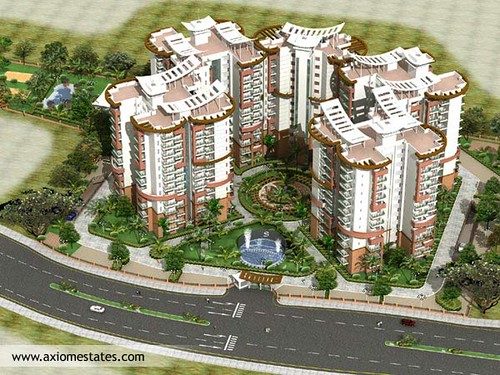
Image credit: Pune Properties - Real Estate India - Vilas Palash Interiors1 by nancyarora2020 via flickr (BY-SA 2.0), sourced through Openverse.
Written by
Rajesh Tiwari
Real estate analyst covering property markets across Delhi NCR, Mumbai, and Bangalore. Rajesh tracks pricing trends, RERA compliance, and investment opportunities for residential and commercial buyers.
Looking for a technology partner?
From IT consulting to virtual office to custom software — eDarpan can help.
Continue reading
RTO Mandates & Office Space Demand in India 2026: What to Know
RTO mandates and GCC expansion are driving up office rents in India. Here's what SMB founders need to know about leasing, flexible offices, and costs in 2026.
Fractional Ownership of Commercial Property in India 2026
SEBI now regulates fractional ownership via SM REITs. Learn how to own Grade-A commercial property in India from ₹10 lakh, plus returns, risks and a diligence checklist.
Capital Gains Tax on Property Sale in India 2026: Save Legally
A retiree saved ₹19 lakh legally by choosing the right method. Learn how capital gains tax on property sale in India works in 2026 and where the real savings hide.