South India Leads Real Estate in H1 2026: Where to Buy Now
South India's metros lead H1 2026 on launches and absorption. Here's where to buy in Hyderabad, Bengaluru, and Chennai — and how to avoid costly traps.
You've watched Bengaluru property prices climb for years, held off buying because "the market feels toppy," and now you're staring at a spreadsheet trying to figure out whether to commit ₹1.2 crore to a 2BHK in Whitefield or wait another quarter. Meanwhile a colleague who bought in Hyderabad's Kokapet in 2023 has seen paper gains of nearly 40%. That's the anxiety a lot of Indian homebuyers and investors are carrying into H1 2026.
Here's the surprising part. While the headlines obsess over Mumbai and Delhi NCR luxury launches, the three southern metros — Hyderabad, Bengaluru and Chennai — together accounted for a disproportionate share of new residential launches and absorption in the first half of 2026. In several micro-markets, absorption is outpacing supply, which is exactly the condition that pushes prices up. If you're trying to time an entry, understanding South India real estate 2026 dynamics isn't optional anymore.
This post breaks down why the south is leading, which cities and specific corridors deserve your attention, how to actually evaluate a project before you sign, and where the traps are. I've helped clients — from a Chennai-based MSME founder buying his first commercial floor to an NRI investor allocating across two cities — navigate exactly these decisions. What follows is the practical version, not the brochure version.
Key Takeaways
- South India's three metros are leading H1 2026 on both launches and absorption, driven by IT/GCC hiring, better infrastructure execution, and relatively saner pricing than Mumbai.
- Hyderabad offers the best price-to-infrastructure ratio; Bengaluru has the deepest rental demand; Chennai is the value play with strong end-user stability.
- Focus on RERA-registered projects near confirmed metro/ORR connectivity — not "proposed" infrastructure.
- Budget for the full cost stack: stamp duty, GST (on under-construction only), registration, and 1–2% brokerage, which adds roughly 8–12% on top of the sticker price.
- Rental yields in the south (2.8–3.8%) beat Mumbai, but capital appreciation is where the real returns sit in growth corridors.
- Verify RERA status, land title, and occupancy certificate before releasing any large payment. Skipping this is the single most expensive mistake buyers make.
Why is South India leading real estate in H1 2026?
The short answer: jobs and execution. The longer answer is worth understanding because it tells you whether this is a durable shift or a bubble.
First, the employment engine. Bengaluru and Hyderabad host the bulk of India's Global Capability Centres (GCCs) — the in-house offices of multinational firms. Chennai adds manufacturing, auto, and a growing IT base. When a GCC signs a 300,000 sq ft lease, that translates within 18 months into thousands of salaried professionals looking for homes to rent or buy. Demand for housing in these cities is downstream of corporate leasing, which is why watching commercial trends matters. If you want the SMB angle on that, our breakdown of office space leasing in India is a useful companion read.
Second, infrastructure that actually gets built. Hyderabad's Outer Ring Road and the airport metro, Bengaluru's Namma Metro Phase 2 extensions, and Chennai's peripheral road works have shifted demand toward previously "far" corridors. Physical infrastructure de-risks a location. A flat that was 90 minutes from the tech parks becomes 35 minutes, and its value re-rates.
Third, relative affordability. A working professional priced out of a Mumbai suburb can buy a larger, newer home in Hyderabad or Chennai for the same budget. That psychological "you get more for your rupee" effect drives migration and investment both.
The GCC and IT hiring signal
Here's a practical tip. Before buying in any corridor, check which companies have leased office space within a 10 km radius in the last 12–18 months. Salaried tenants and buyers follow their offices. If a corridor has no fresh commercial absorption, its residential demand is speculative, not real.
Hyderabad, Bengaluru or Chennai: which South Indian city should you buy in?
Each of the three cities rewards a different buyer profile. There is no universally "best" answer — there's a best answer for your goal.
| Criteria | Hyderabad | Bengaluru | Chennai |
|---|---|---|---|
| Typical 2BHK ticket (mid-segment) | ₹70L – ₹1.1 Cr | ₹90L – ₹1.4 Cr | ₹65L – ₹1 Cr |
| Gross rental yield | 3.0% – 3.8% | 3.2% – 3.8% | 2.8% – 3.4% |
| Capital appreciation potential (growth corridors) | High | Moderate-High | Moderate |
| Hot corridors | Kokapet, Financial District, Kollur, Tellapur | Whitefield, Sarjapur Road, North Bengaluru (Devanahalli) | OMR, Pallavaram, Perambur, Porur |
| Best for | Appreciation-focused investors | Rental income + long-term hold | End-users, value buyers, stability |
| Stamp duty + registration (approx) | ~7.5% | ~6.6% | ~11% (incl. registration) |
A quick note on stamp duty. Chennai's headline number looks high because Tamil Nadu bundles a higher registration charge. Always model the all-in cost, not just the base price. Duty rates change with state budgets, so confirm the current figure with the sub-registrar office before you commit.
If you're weighing the south against the traditional metros, our comparison of Bengaluru vs Mumbai vs Delhi NCR is worth reading alongside this one.
Hyderabad: the appreciation play
Hyderabad has been the standout for capital growth because supply expanded in an organized way along the ORR while demand from GCCs surged. Kokapet and the Financial District command premium pricing now, but Kollur and Tellapur still offer entry points with runway. The risk: some western corridors have seen aggressive launches, so oversupply in specific pockets is a real possibility. Stick to developers with a delivery track record.
Bengaluru: the rental income machine
Bengaluru's advantage is tenant depth. There are always professionals looking to rent, which keeps vacancy low and yields stable. North Bengaluru around Devanahalli and the airport is the current growth story, while Sarjapur and Whitefield remain reliable for end-user demand. Traffic and water are genuine concerns — evaluate the micro-location's civic infrastructure, not just the project.
Chennai: the value and stability play
Chennai buyers tend to be end-users, which makes the market less speculative and prices less volatile. The OMR IT corridor and areas like Porur offer good value. Appreciation is steadier rather than explosive. If you want a home to live in with modest downside risk, Chennai is arguably the safest of the three.
A worked example: how an NRI investor allocated ₹2 crore across two cities
Let me walk through a real decision framework using a composite of a client situation. An NRI professional based in Singapore had ₹2 crore to deploy and wanted a blend of appreciation and rental income, with an eye on eventually moving back to India.
The starting position: He was tempted to put the entire amount into one premium Bengaluru apartment. Emotionally appealing, but concentrated risk.
What we did instead:
- Split the capital. ₹1.1 crore into a ready-to-move 3BHK in North Bengaluru for rental income and personal use later. ₹90 lakh into an under-construction 2BHK in Hyderabad's Kollur for appreciation.
- Modelled the true cost. On the Bengaluru ready property (no GST, since it had an occupancy certificate), the all-in cost with ~6.6% stamp duty and registration plus brokerage came to about ₹1.18 crore. On the Hyderabad under-construction unit, GST at 5% (no input tax credit, since it's a residential sale) plus stamp duty pushed the effective cost to roughly ₹99 lakh.
- Set up rental readiness. The Bengaluru flat was listed within three weeks and rented at ₹34,000/month — a gross yield around 3.4%.
- Verified compliance before every payment. RERA registration numbers checked on the Karnataka and Telangana RERA portals, title verified by a local advocate, and payments released only against construction milestones for the under-construction unit.
The outcome after 14 months: The Hyderabad unit's builder revised launch prices upward twice, giving roughly 18% paper appreciation. The Bengaluru flat delivered steady rental income and modest appreciation. Diversifying across two cities and two strategies (income vs growth) gave him a smoother risk profile than a single concentrated bet.
The lesson isn't "always split." It's that matching each rupee to a specific goal — income, appreciation, or end-use — produces better decisions than buying on hype.
How do you evaluate a South India real estate 2026 project before buying?
This is where deals are won or lost. A great location with a bad developer is a bad investment. Here's the checklist I hand clients before they even schedule a site visit.
- RERA registration. Every project above the threshold must be RERA-registered. Search the number on the state RERA portal (TS-RERA, K-RERA, TN-RERA). No number, walk away.
- Land title and encumbrance certificate. Get an advocate to verify the chain of title and pull an EC for the last 13–30 years. This catches disputes and existing loans on the land.
- Approved building plan. Confirm sanctioned floors and layout match what's being sold. Unauthorized extra floors get demolished — buyers lose everything.
- Occupancy Certificate (OC). For ready properties, an OC is non-negotiable. Without it, the building is technically illegal to occupy and impossible to resell cleanly.
- Developer track record. How many projects delivered on time? Visit an older completed project and talk to residents about construction quality and maintenance.
- Payment linked to milestones. For under-construction, never front-load payments. Tie disbursements to verifiable construction stages.
Common Mistake: Buyers get seduced by "proposed" infrastructure — a metro line "coming soon," an expressway "planned." Proposed is not built. I've seen corridors sit flat for eight years waiting on a metro extension that kept slipping. Only pay a premium for infrastructure that has an active construction contract and a funded budget. Everything else is a bonus, not a basis for your valuation.
Understanding the full cost stack
The sticker price is never the real price. Budget for stamp duty (6.6–7.5% depending on state), registration, GST at 5% on under-construction residential (ready properties with OC have no GST), and 1–2% brokerage if you use an agent. Add clubhouse charges, parking, and corpus fund contributions. Realistically, add 8–12% on top of the base price to know your true outlay.
Should you buy under-construction or ready-to-move in 2026?
Both have a place. The decision comes down to your risk appetite and cash flow.
Under-construction is cheaper per square foot and can appreciate before you take possession, but you carry delivery risk and pay GST. It suits patient investors targeting appreciation who can tolerate a 2–3 year wait.
Ready-to-move costs more but eliminates delivery risk, has no GST, and can start earning rent immediately. It suits end-users and income-focused investors.
One caution rooted in hard experience: watch out for completed projects that stay unsold or empty. There's a real phenomenon of built inventory sitting idle for reasons that should worry you. Our piece on ghost flats in India and the buyer risks explains what to look for before you assume "ready" means "safe."
What about the premium and luxury segment in the south?
Premiumisation is a genuine trend across Indian metros, and the south is no exception. Buyers are trading up — bigger units, branded developers, amenity-heavy townships. This is partly aspiration and partly a flight to quality after years of delivery scares from smaller builders.
If you're considering a premium purchase, understand that the higher ticket doesn't automatically mean higher returns; it means lower risk and better liveability if you pick the right developer. We covered this shift in detail in why Indian homebuyers are going premium in 2026, and if your horizon includes the northern luxury market, the analysis of Delhi NCR luxury home prices heading into 2027 is a useful contrast.
How eDarpan can help you act on the shift
Finding the right property in a hot market is a search-and-verification problem, and that's where structured help pays off. Through eDarpan Properties, you can browse curated properties for sale in India across these southern corridors and, if you're not ready to buy yet, explore rental options to test-live a locality before committing crores.
If you're a business owner setting up or expanding in Hyderabad, Bengaluru or Chennai — say you're opening a branch office and need a compliant registered address without leasing a full floor — our virtual office address for GST and company registration is a practical, low-cost first step. And for founders relocating teams south, eDarpan's broader services cover the operational side of the move too.
Frequently Asked Questions
Is it a good time to buy property in South India in 2026?
For the growth corridors backed by real infrastructure and corporate hiring, yes — absorption is strong and demand is end-user driven rather than purely speculative. That said, "good time" depends on the specific micro-market and developer, so buy on fundamentals rather than headlines.
Which South Indian city has the best rental yield?
Bengaluru and Hyderabad both deliver gross yields in the 3.0–3.8% range, higher than Mumbai. Bengaluru edges ahead on tenant depth and low vacancy, thanks to its large salaried IT and GCC workforce.
Do I have to pay GST when buying a home in Hyderabad or Bengaluru?
GST at 5% (without input tax credit) applies only to under-construction residential properties. Ready-to-move homes that already have an Occupancy Certificate attract no GST, which is one reason ready inventory can be effectively cheaper than it looks.
What is RERA and why does it matter before I buy?
RERA is the Real Estate (Regulation and Development) Act, which requires developers to register projects, disclose timelines, and hold buyer funds in escrow. Always verify the RERA registration number on your state's RERA portal — an unregistered project offers you little legal protection.
Is Hyderabad property better than Bengaluru for investment?
Hyderabad has shown stronger capital appreciation in recent years due to organized supply along the ORR and heavy GCC demand, making it attractive for appreciation-focused investors. Bengaluru wins on rental stability and tenant demand. The better choice depends on whether your goal is capital growth or steady income.
How much extra should I budget beyond the property price?
Plan for roughly 8–12% on top of the base price. This covers stamp duty (6.6–7.5% depending on state), registration, GST if the property is under construction, brokerage of 1–2%, and one-time society charges like corpus fund and clubhouse.
Should I buy under-construction to save money?
Under-construction units are cheaper per square foot and can appreciate before possession, but you take on delivery risk and pay GST. Only choose this route with a developer that has a strong on-time delivery record, and always link payments to construction milestones.
The bottom line
The story of South India real estate 2026 is really a story about jobs, infrastructure that gets delivered, and pricing that still makes sense relative to income. Hyderabad rewards the appreciation seeker, Bengaluru the income investor, and Chennai the stability-minded end-user. None of these are guarantees, but all three sit on stronger fundamentals than the hype cycle in some northern luxury pockets.
Your move is to pick your goal first — income, growth, or end-use — then match a city, corridor, and property type to it, and verify every legal box before releasing serious money. If you'd like a hand shortlisting compliant, RERA-verified options or working through the numbers for your budget, get in touch with the eDarpan team or start browsing on eDarpan Properties. The market is moving; the buyers who do the homework first are the ones who win.
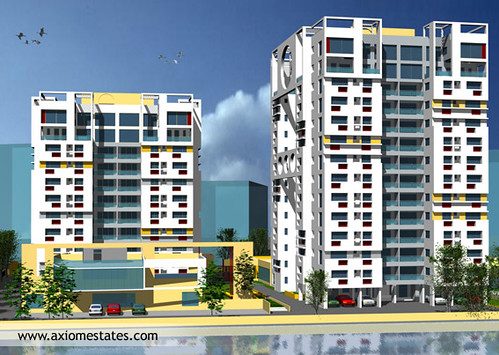
Image credit: Kolkata Properties - Real Estate India - Sunny Fort by nancyarora2020 via flickr (BY-SA 2.0), sourced through Openverse.
Written by
Rajesh Tiwari
Real estate analyst covering property markets across Delhi NCR, Mumbai, and Bangalore. Rajesh tracks pricing trends, RERA compliance, and investment opportunities for residential and commercial buyers.
Looking for a technology partner?
From IT consulting to virtual office to custom software — eDarpan can help.
Continue reading
Delhi-NCR Housing Prices Up 12%: Buy, Rent or Wait in Q4 2025?
Prices up 12% in Delhi-NCR? Learn the break-even math on buying vs renting, the hidden costs most buyers miss, and a checklist before you decide.

Delhi-NCR Luxury Housing Boom: Is a Premium Home Worth Buying Now?
Is a premium Delhi-NCR home worth buying now? We break down carrying costs, sub-market drivers, RERA checks and NRI considerations before you sign.

Rent or Buy in Dwarka 2026: Break-Even Math for Delhi-NCR Buyers
Should you rent or buy in Dwarka in 2026? This break-even guide walks through the full ownership cost, down-payment opportunity cost, and a worked example to find your real answer.