Senior Living Real Estate in India: A ₹1 Lakh Cr Buyer's Guide
A no-fluff buyer's guide to senior living real estate in India: ownership models, hidden costs, RERA checks, and whether returns hold up.

Here's a scenario I've watched play out at least a dozen times over the last five years. A family in Pune, both parents in their late 60s, decides it's time to move somewhere with medical support on call and a community that won't leave them isolated. Their son in the US is willing to fund it. They visit a glossy "senior living" project on the Mumbai-Pune corridor, fall for the marketing, and put down a booking amount of ₹10 lakh. Two years later they discover the project is registered as a regular residential development, the "assisted care" was a verbal promise, the monthly maintenance jumped from ₹8,000 to ₹22,000, and the resale market is nonexistent because nobody wants to buy a lease they don't understand.
Senior citizen housing India is one of the fastest-growing real estate segments in the country. Industry estimates peg the market at roughly ₹1 lakh crore in potential value, with demand driven by an ageing population that crosses 150 million people above 60 and a cultural shift where nuclear families and NRI children can no longer provide daily care. But the sector is barely regulated as a distinct category. Most projects piggyback on standard RERA registration, and the "senior" part often lives in the brochure, not the sale deed.
This guide is for families making an emotional, high-stakes purchase and for investors eyeing a genuine growth segment. I'll walk you through how these projects are actually structured, what to verify before you sign, the real pricing models (and their hidden costs), the RERA and legal checks that matter, and whether the returns hold up. No fluff. Just what I'd tell my own parents.
Key Takeaways
- Ownership model matters more than the flat. Confirm whether you're buying freehold, a long lease, or a refundable-deposit "usage right." Each has completely different resale and inheritance consequences.
- Care is a service contract, not a property feature. Get the assisted-living and medical service agreement in writing, with escalation clauses on monthly fees capped in percentage terms.
- RERA is your baseline, not your guarantee. Verify the registration number, check the project on your state RERA portal, and read the actual promoter obligations.
- Monthly running costs can dwarf the EMI. Budget ₹15,000 to ₹60,000 per month depending on the care tier, and get the escalation formula in writing.
- Resale liquidity is weak. Treat senior living as a use asset first and an investment second. Don't expect flat-appreciation like a mainstream 2BHK.
- GST and stamp duty apply differently to under-construction vs ready projects. Factor this into your total outflow, not just the headline price.
What exactly is senior living real estate in India?
The term gets thrown around loosely, so let's be precise. Senior living projects in India generally fall into three buckets, and the differences aren't cosmetic. They change your legal rights, your monthly bill, and your exit options.
- Active independent living: Age-restricted communities (usually 55+ or 60+) with senior-friendly design, common dining, clubhouses, and emergency response. Residents live independently. Think of it as a gated society optimised for older bodies.
- Assisted living: Adds daily support like housekeeping, meals, medication reminders, and attendant care. Suited for people who need help but aren't bedridden.
- Continuing care (CCRC): The full spectrum, from independent living to skilled nursing, on one campus, so a resident can move up care tiers without relocating. These are rare and expensive in India.
The big players you'll encounter include Antara (Max group), Ashiana Housing, Columbia Pacific Communities, Athulya, Serene by Shriram, and Primus. Ashiana, for example, has run its senior living format for years across Bhiwadi, Jaipur, Chennai, and Pune. That track record matters, because the operator's continuity is the single biggest risk in this segment. A builder who exits after handover leaves you with a beautiful campus and nobody to run the kitchen.
How are these projects priced, and what are the ownership models?
This is where most buyers get blindsided. The sticker price is only part of the story. There are three dominant commercial structures, and you must know which one you're signing into.
1. Outright sale (freehold or long lease)
You buy the unit like any apartment, either freehold or on a long lease (often 99 years for land held by a society or trust). You pay stamp duty and registration, GST if under construction, and then a monthly maintenance-plus-care charge. This gives you an asset you can theoretically sell or bequeath.
2. Refundable interest-free deposit
You pay a large lump sum (sometimes 70-90% of a comparable purchase price) that's refunded when you leave or pass away, minus deductions. You don't own the unit. This is common in some south Indian operators. The catch: read the refund clause carefully. Many deduct 20-30% and only refund when the unit is re-let, which can take months or years.
3. Rental / lease model
Straightforward monthly rent for a fully serviced unit. Lowest upfront cost, highest ongoing cost, zero asset creation. Good for shorter horizons or if you're testing whether the lifestyle suits you.
| Model | Typical upfront (2BHK, tier-1 metro periphery) | Monthly cost | Do you own an asset? | Exit liquidity |
|---|---|---|---|---|
| Outright sale (freehold/lease) | ₹60 lakh – ₹2.5 cr | ₹15,000 – ₹45,000 | Yes | Weak to moderate |
| Refundable deposit | ₹40 lakh – ₹1.2 cr (refundable) | ₹20,000 – ₹50,000 | No (right to reside) | Depends on re-let clause |
| Rental | ₹2 – ₹6 lakh (deposit) | ₹40,000 – ₹1,00,000 | No | N/A (just move out) |
Notice the ranges overlap on monthly cost. That's deliberate on the operators' part. The care component is where recurring revenue lives, and it's the number that quietly compounds. If you're comparing options across cities, our properties for sale in India and rental properties listings can help you benchmark local pricing before you talk to a specialist operator.
A real worked example: the Pune corridor decision
Let me make this concrete. A retired couple, call them the Deshpandes, both 68, wanted assisted-living-ready accommodation near Pune. Their daughter in Singapore was funding it. They shortlisted two options.
Option A — Outright purchase: A 900 sq ft 2BHK in a senior living project on the outskirts, priced at ₹72 lakh (ready-to-move, so no GST on the flat, but stamp duty at Maharashtra's ~6% plus 1% registration added roughly ₹5 lakh). Monthly charge started at ₹18,000, covering meals, housekeeping, and basic health monitoring. Assisted care, if needed later, was billed separately at ₹25,000 to ₹40,000/month.
Option B — Refundable deposit model: A comparable unit at another operator, ₹55 lakh refundable deposit, ₹28,000/month all-in for independent living. The refund clause: 25% retained by the operator, remainder paid within 90 days of re-letting.
Here's how we broke it down over a realistic 12-year horizon:
- Option A total outflow: ₹77 lakh upfront + roughly ₹32 lakh in escalating monthly charges over 12 years. But they end with a saleable asset worth, conservatively, ₹75-90 lakh. Net "cost of living there" was effectively the monthly charges plus opportunity cost on capital.
- Option B total outflow: ₹55 lakh deposit (of which ₹41 lakh eventually refundable) + ~₹48 lakh in monthly charges over 12 years. No appreciation, and the refund depended on someone else moving in.
The Deshpandes chose Option A, primarily because ownership gave their daughter a clean inheritable asset and no dependency on a re-let clause. The lesson isn't "always buy freehold." It's that you must model the full 10-15 year cost, including care escalation and exit mechanics, not just compare upfront numbers.
Common Mistake: Families anchor on the upfront price and ignore the monthly care escalation clause. I've seen agreements where maintenance can rise "as per actuals" with no cap. Over a decade, an uncapped ₹18,000 charge can become ₹40,000+. Always insist on a written escalation cap, ideally tied to a fixed percentage (say 8-10% per year) or a published index.
What RERA and legal checks are non-negotiable for senior citizen housing India?
Senior living has no separate central law. It's governed by the same RERA (Real Estate Regulation and Development Act) framework as any residential project, plus the specific care/service contracts the operator layers on top. That means you do standard RERA due diligence and extra checks for the care dimension.
- Verify RERA registration. Every under-construction project must be registered with the state RERA authority. Get the registration number and look it up on your state portal (MahaRERA, K-RERA, TN RERA, UP-RERA, etc.). Check the promoter details, project timeline, approved plans, and any complaints filed.
- Read the title and land documents. Confirm clear title, encumbrance certificate, and whether the land is freehold or leasehold. If it's on trust or society land, understand what you're actually buying, a unit or a right to reside.
- Scrutinise the care/service agreement separately. This is a contract distinct from the sale deed. It governs meals, medical support, staff ratios, and fee escalation. Get it vetted by a lawyer, not just the property paperwork.
- Check operator continuity clauses. What happens if the operator winds down or sells the management contract? Is there a residents' association or trust that can take over? This is the failure point nobody warns you about.
- Confirm medical tie-ups in writing. "Tie-up with a nearby hospital" is meaningless verbally. Get the hospital name, distance, ambulance response commitment, and whether emergency care is included or billed separately.
- Understand GST and stamp duty exposure. Under-construction units attract GST; ready-to-move don't. This alone can swing your outflow by lakhs. Our detailed breakdown on GST on under-construction vs ready-to-move flats is worth reading before you finalise.
If you're renting rather than buying into a serviced model, the same document rigour applies. A verbal or notarised arrangement won't protect you. See our guide on registered vs notarized rent agreements for why registration matters legally.
Do senior living properties make sense as an investment?
Short answer: sometimes, but not the way people assume. Let me separate the two buyer types.
If you're buying to live in it, stop thinking of it as an investment. It's a lifestyle and care decision. Appreciation is a bonus, not the point. The value is measured in dignity, safety, and community, not IRR.
If you're an investor, the thesis is real but nuanced. Demand is structurally rising, supply of quality operators is limited, and rental yields on serviced senior units can beat regular residential (I've seen 4-6% net versus 2-3% for standard flats in the same city). But resale liquidity is the weak link. The buyer pool is narrow, and the care-contract dependency scares off mainstream buyers.
A word of caution that applies to all Indian real estate: the assumption that prices only rise is dangerous, especially for a niche asset. Our reality check on the "property always goes up" myth is essential reading before you deploy capital into any specialised segment.
Pro Tip: If you're investing (not living in), buy in projects run by operators with a proven multi-city track record and a rental-management program. Ashiana and Columbia Pacific, for instance, have operated long enough to prove they won't abandon the campus. An orphaned senior living unit with no operator is nearly unsellable. Operator longevity is your real underwriting criterion, not location alone.
Special considerations for NRI families
A huge share of senior living demand comes from NRI children buying for parents who stayed back in India. If that's you, a few extra things apply.
- Payment routing: Funds should come through proper banking channels (NRE/NRO accounts) to keep repatriation clean later.
- Power of attorney: If you can't be present for registration, execute a properly attested PoA. Get it drafted by a lawyer familiar with cross-border property transactions.
- TDS and repatriation on resale: When you eventually sell, TDS rules for NRI sellers are stricter and repatriation has limits. Plan for this at purchase, not at exit. Our guide on NRI buying property in India: TDS, repatriation and rules covers this in depth.
The recurring theme with NRI purchases is remote coordination. You're managing paperwork, payments, and a care contract from another timezone. Getting an independent advisor on the ground, someone not on the builder's payroll, is worth every rupee.
Your step-by-step buying checklist
Here's the sequence I'd follow, in order, before committing a single rupee beyond a token amount.
- Define the care horizon. Independent now but may need assisted care in five years? Buy into a continuing-care campus, not a pure independent-living one. Retrofitting care is expensive and disruptive.
- Shortlist 3-4 operators with proven track records in your target city. Visit unannounced if possible. Talk to existing residents, not the sales team.
- Get all three documents: sale deed/lease deed, care service agreement, and maintenance/escalation schedule. Read all three together.
- Verify RERA on the state portal and pull the encumbrance certificate.
- Model the 12-15 year total cost, including care escalation, not just the upfront price.
- Get a lawyer to vet the care contract and operator-exit clauses. This is where the money is buried.
- Negotiate the escalation cap in writing before booking. It's far easier pre-signature.
- Confirm financing. Home loans are available for freehold senior living but trickier for deposit/lease models. Check with your bank early.
For families weighing this against mainstream housing on a budget, our piece on the affordable housing squeeze in India 2026 puts the pricing in broader context. And when you're ready to actively compare listings, eDarpan's property platform lets you filter, shortlist, and connect without the usual broker noise.
Frequently asked questions
Is there a minimum age to buy senior living property in India?
Most projects set a minimum resident age of 55 or 60, though the buyer (often an NRI child) can be younger. The age restriction applies to who lives in the unit, not who owns it. Confirm the exact rule in the project's bylaws, as it affects resale eligibility.
Can I get a home loan for a senior living apartment?
Yes, for freehold or clearly titled long-lease units, most major banks lend just as they would for a regular flat. Deposit-based and pure lease models are harder to finance because there's no ownership asset to mortgage. Check with your lender before booking.
What monthly costs should I budget beyond the purchase price?
Expect ₹15,000 to ₹45,000 per month for independent living covering meals, housekeeping, security, and basic health monitoring. Assisted or nursing care adds ₹25,000 to ₹60,000 more. Always get the fee escalation clause in writing with a percentage cap.
Is senior living property a good investment for appreciation?
Rental yields can be attractive (4-6% net in some cases), but capital appreciation and resale liquidity are weaker than mainstream residential because the buyer pool is narrow. Treat it primarily as a use asset. If investing, prioritise operators with proven multi-city longevity.
What happens if the operator shuts down the facility?
This is the biggest hidden risk. Check whether the project has a residents' association or trust that can take over management, and whether the sale documents include operator-exit and continuity clauses. Without these protections, an orphaned unit becomes hard to live in and harder to sell.
Do I pay GST on a senior living apartment?
GST applies to under-construction units (currently 5% for non-affordable residential without input credit) but not to ready-to-move properties where a completion certificate has been issued. This can swing your total cost by several lakhs, so factor it in early.
Can NRIs buy senior living property for their parents?
Yes. NRIs can buy residential property in India using NRE/NRO funds through banking channels. Use a properly attested power of attorney if you can't attend registration, and plan for TDS and repatriation rules at the time of eventual resale.
Final word
Senior citizen housing India is a genuinely important, fast-growing segment, and for many families it's the right answer to a hard question about care and dignity. But it's also under-regulated as a category, sold with emotion, and structured in ways that reward the informed buyer and punish the trusting one. The single most valuable thing you can do is separate the property from the service, read all three contracts together, and model the full decade of cost before the upfront number seduces you.
Do your RERA checks. Get the escalation cap in writing. Underwrite the operator, not just the location. And if you're an NRI coordinating this from abroad, get independent feet on the ground.
If you'd like help comparing projects, verifying paperwork, or shortlisting genuine listings without the broker runaround, the team at eDarpan Properties works with families and investors across Indian cities. You can reach out to us to talk through your specific situation, or learn more about how we work first. A high-stakes purchase deserves a clear head and good counsel.
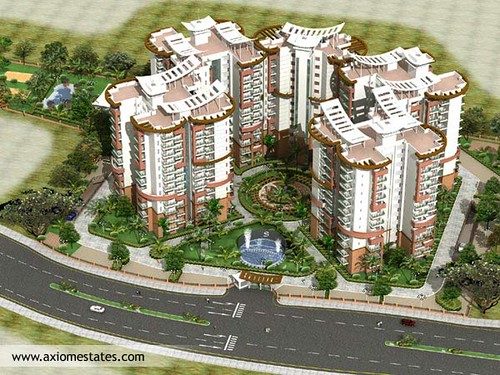
Image credit: Pune Properties - Real Estate India - Vilas Palash Interiors1 by nancyarora2020 via flickr (BY-SA 2.0), sourced through Openverse.
Written by
Rajesh Tiwari
Real estate analyst covering property markets across Delhi NCR, Mumbai, and Bangalore. Rajesh tracks pricing trends, RERA compliance, and investment opportunities for residential and commercial buyers.
Looking for a technology partner?
From IT consulting to virtual office to custom software — eDarpan can help.
Continue reading
RTO Mandates & Office Space Demand in India 2026: What to Know
RTO mandates and GCC expansion are driving up office rents in India. Here's what SMB founders need to know about leasing, flexible offices, and costs in 2026.
Fractional Ownership of Commercial Property in India 2026
SEBI now regulates fractional ownership via SM REITs. Learn how to own Grade-A commercial property in India from ₹10 lakh, plus returns, risks and a diligence checklist.
Capital Gains Tax on Property Sale in India 2026: Save Legally
A retiree saved ₹19 lakh legally by choosing the right method. Learn how capital gains tax on property sale in India works in 2026 and where the real savings hide.