GST on Under-Construction vs Ready-to-Move Flats in India 2026
Under-construction flats attract 5% GST while ready-to-move units pay zero. Learn the exact rates, rules, and a rupee-by-rupee example before you book.

Last month a client in Pune called me in a panic. He'd booked a flat for ₹78 lakh, agreement value on the builder's quote, and when the final demand letter landed there was an extra ₹4.68 lakh sitting on top as GST. Nobody had walked him through the numbers upfront. He assumed the price was the price. It wasn't.
This is the single most common mistake I see first-time buyers make, and it's entirely avoidable. The tax treatment on an under-construction flat is fundamentally different from a ready-to-move (RTM) unit, and that difference can swing your total outflow by anywhere between ₹3 lakh and ₹10 lakh on a mid-range property in a Tier-1 city. Understanding GST on under-construction property isn't tax trivia. It directly changes which flat you should buy and when.
In this post I'll break down exactly how GST applies, why ready-to-move flats escape it entirely, how the abolished input tax credit quietly changed builder pricing, and a worked example with real rupee figures so you can run the same math on your own deal before you sign anything.
Key Takeaways
- Under-construction flats attract GST — 5% for regular housing, 1% for affordable housing, with no input tax credit (ITC) benefit passed to you.
- Ready-to-move flats with a completion certificate carry zero GST. This is the biggest, most overlooked cost lever in the entire transaction.
- GST is calculated on the construction value, and there's a standard one-third deduction for land value, which is why the effective rate feels lower than the headline number.
- Affordable housing (up to ₹45 lakh and within carpet-area limits) gets the concessional 1% rate — confirm your unit qualifies in writing.
- Since ITC was removed in April 2019, builders bake input taxes into base prices. Compare all-in per-sq-ft costs, not headline rates.
- Always ask for a GST-inclusive total cost sheet before booking, and verify the completion certificate for RTM claims.
Why does GST apply to under-construction flats but not ready-to-move ones?
The logic is straightforward once you see it. GST is a tax on the supply of goods and services. When a builder is still constructing your flat, they're supplying you a service (construction). That's a taxable event. But once the building has received its completion certificate (CC) or occupancy certificate (OC) from the local authority, the transaction becomes a sale of immovable property, which sits outside GST entirely.
So the dividing line is not the physical state of the flat. It's the completion certificate. A flat can be 100% built, painted, and habitable, but if the CC hasn't been issued and possession hasn't happened, GST still applies. Conversely, a unit with a valid CC is GST-free even if you're the first buyer.
This is where I've seen buyers get burned. A builder markets a project as "ready to move" because the towers are done, but the CC is stuck in a municipal queue. Legally, that sale still triggers GST. Get the completion certificate number in writing before you accept any "no GST" claim.
What are the actual GST rates on residential property in 2026?
The rates that came into effect in April 2019 are still the framework we work with. There are two brackets for residential housing, and both come without input tax credit.
| Property Type | Effective GST Rate | Input Tax Credit | Conditions |
|---|---|---|---|
| Affordable housing (under-construction) | 1% | Not available | Value up to ₹45 lakh; carpet area up to 60 sq m (metros) / 90 sq m (non-metros) |
| Regular housing (under-construction) | 5% | Not available | Any residential unit above affordable limits |
| Ready-to-move with CC/OC | 0% (Nil) | Not applicable | Completion or occupancy certificate issued before sale |
| Resale property | 0% (Nil) | Not applicable | Sale of already-completed property between owners |
| Commercial units (under-construction) | 12% (effective, with ITC in most cases) | Available | Shops, offices in commercial projects |
Notice the headline residential rates: 12% for regular and 8% for affordable used to apply before 2019, but with ITC. The government then dropped these to 5% and 1% but removed ITC. Because of a standard one-third abatement for the land portion, the "12%" you sometimes still see quoted works out differently. In practice, for residential, the numbers on your demand letter will be 5% or 1% of the agreement value, so run your math on those.
The land value deduction most buyers don't understand
GST is meant to tax construction, not land. Since land value is hard to separate in an apartment sale, the law allows a deemed deduction of one-third of the total value toward land. That's already baked into the 5% and 1% effective rates. You won't see a separate line item. Just know that the effective rate has already been reduced to account for this.
How does the removal of input tax credit affect what you pay?
Here's the part nobody explains at the sales office. Before April 2019, builders could claim input tax credit on the GST they paid on cement, steel, tiles, contractor services, and so on. They were supposed to pass that benefit on to buyers as lower prices. In reality, many didn't, which is partly why the government scrapped ITC and lowered the rates.
The consequence for you today: builders now treat those input taxes as a cost. A developer paying 18% or 28% GST on materials can't recover it, so they load it into the base price of your flat. This means two things.
- The 5% you pay is genuinely additional, not offset by any credit you receive.
- Base prices on under-construction projects already have hidden input-tax padding, so a slightly cheaper ready-to-move flat may actually be the better all-in deal.
Pro Tip: When comparing two flats, never compare the GST rate. Compare the total landed cost per square foot, GST included, plus stamp duty and registration. I've seen ready-to-move units in Noida priced ₹300–₹400 per sq ft higher on base rate that still came out cheaper after the 5% GST on the under-construction competitor was added. The sticker doesn't tell the story.
A worked example: under-construction vs ready-to-move in Bengaluru
Let me put real numbers on this. Take a buyer looking at two comparable 2BHK flats in Whitefield, Bengaluru, each around 1,100 sq ft carpet, both priced at roughly ₹85 lakh agreement value. One is under construction with possession 18 months away. One is ready to move with a valid OC.
Option A: Under-construction flat
- Agreement value: ₹85,00,000
- GST at 5%: ₹4,25,000
- Stamp duty (Karnataka, ~5%): ₹4,25,000
- Registration (~1%): ₹85,000
- Total outflow: ₹94,35,000
Option B: Ready-to-move flat with OC
- Agreement value: ₹87,00,000 (₹2 lakh higher base price)
- GST: ₹0
- Stamp duty (~5%): ₹4,35,000
- Registration (~1%): ₹87,000
- Total outflow: ₹92,22,000
The ready-to-move flat here costs ₹2,13,000 less overall despite the higher sticker price, because it dodges ₹4.25 lakh of GST. On top of that, the buyer saves 18 months of rent (say ₹28,000/month, roughly ₹5 lakh) and starts building equity immediately with no construction-delay risk. That's a difference of over ₹7 lakh in real terms when you count everything.
Now flip it. If the under-construction project is genuinely priced ₹8–₹10 lakh below the RTM comparable — common in newly launched projects where developers discount early bookings to fund construction — the GST hit gets absorbed and the under-construction option wins. It's always a total-cost calculation, never a rule of thumb.
When does buying under-construction actually make sense?
I don't want to give the impression that ready-to-move always wins. It doesn't. Under-construction has real advantages when the discount is deep enough and the developer is credible.
- Early-launch pricing. Developers often price the first phase 15–25% below the eventual RTM rate. If that discount exceeds your GST plus interim rent, you come out ahead.
- Payment flexibility. Construction-linked plans spread payments over 2–3 years, which helps cash flow and lets you invest the un-deployed capital in the meantime.
- RERA protection. Registered projects give you legal recourse on delays and quality. Always check the project's RERA registration number on your state RERA portal before booking.
- Choice of unit. Better floor, view, and directional preferences are available early.
The risk, of course, is delay and non-completion. If you're buying for immediate occupation, or you can't stomach a 12–24 month wait, the GST-free ready-to-move route is usually the calmer choice. For a broader reality check on whether prices even justify the wait, our piece on why "property always goes up" is a myth is worth ten minutes.
How does GST interact with affordable housing schemes?
The 1% concessional rate is a meaningful saving, but developers and buyers routinely misclassify units. To qualify as affordable housing under GST, the flat must meet both a value cap and a carpet-area cap.
- Value up to ₹45 lakh.
- Carpet area up to 60 sq m (about 645 sq ft) in metro cities — Delhi NCR, Mumbai MMR, Chennai, Kolkata, Hyderabad, Bengaluru.
- Carpet area up to 90 sq m (about 968 sq ft) in non-metro cities.
Miss either cap and you're in the 5% bracket. A ₹46 lakh flat pays 5%, which is ₹2.3 lakh, versus ₹45,000 at 1% on a ₹45 lakh unit. That ₹1 lakh price difference on paper can cost you nearly ₹1.9 lakh more in tax. Sometimes negotiating the agreement value down to ₹45 lakh (with legitimate adjustments) is worth far more than it looks. If you're budget-constrained, our guide to the affordable housing squeeze in 2026 covers where these units are actually still available.
A step-by-step checklist before you book any flat
This is the process I walk every client through. Do these in order and you won't get surprised by a five-lakh GST line at the demand-letter stage.
- Ask whether the project has a completion or occupancy certificate. If yes, get the CC/OC number and verify it. RTM with a valid CC means zero GST — confirm this in writing on the cost sheet.
- Request a full GST-inclusive cost sheet. Base price, floor rise, PLC, parking, GST, stamp duty, registration, maintenance deposit — the works. Vague "all-inclusive" verbal figures are worthless.
- Confirm the applicable GST rate — 1% or 5% — and check the unit's value and carpet area against affordable-housing caps.
- Verify RERA registration on your state portal for under-construction projects. Note the promised possession date; delays trigger your compensation rights.
- Compute total landed cost for each shortlisted flat and compare per-sq-ft, GST and stamp duty included. This is the only apples-to-apples number.
- Factor in interim rent if buying under-construction while you're renting elsewhere. Add the total rent till possession to the under-construction cost.
- Check TDS obligations. On property above ₹50 lakh you deduct 1% TDS on the seller's payment. NRI sellers have higher rates — see our NRI property TDS and repatriation guide.
- Get everything in the sale agreement. The GST rate, the base price, and the completion timeline should all be documented, not promised.
Common Mistake: Assuming stamp duty and GST are the same thing or that one replaces the other. They're completely separate. GST is a central tax on construction; stamp duty and registration are state charges on the property transfer. You pay both on an under-construction flat, and only stamp duty plus registration on a ready-to-move one. Budget for all three where they apply.
How eDarpan can help with your property decision
Working out the true landed cost across a shortlist of flats, verifying completion certificates, and checking RERA status is time-consuming, and builders aren't incentivised to make it easy. That's where a neutral advisor earns their keep.
At eDarpan we help buyers cut through the sales-office noise. Browse verified properties for sale across Indian cities and rental listings through eDarpan Properties, where cost breakdowns are presented cleanly. If you're deciding between renting a while longer and buying now, the timing math matters — read our breakdown of registered versus notarised rent agreements so your interim arrangement holds up legally.
And if you're a developer, agent, or landlord who needs a virtual office address for GST and company registration, or business tooling like WhatsApp Business API and bulk SMS for buyer follow-ups, our services team can set you up. For anything bespoke, our IT consulting practice builds property CRM and lead systems that actually get used.
Frequently asked questions
Is there GST on ready-to-move flats in India?
No. A ready-to-move flat that has received its completion certificate or occupancy certificate before the sale attracts zero GST. GST only applies while a property is under construction, because that's treated as a supply of construction services. Always confirm the CC/OC is genuinely issued.
What is the GST rate on under-construction property in 2026?
It's 5% for regular residential units and 1% for affordable housing (value up to ₹45 lakh within carpet-area limits), both without input tax credit. These rates have applied since April 2019 and remain the working framework. Commercial units are taxed differently, typically at 12% with ITC available.
Do I pay GST on resale property?
No. A resale flat — one already completed and being sold from one owner to another — is a sale of immovable property, which falls outside GST. You will still pay stamp duty and registration charges to the state, and deduct 1% TDS if the value exceeds ₹50 lakh.
Is stamp duty separate from GST on property?
Yes, completely. GST is a central tax on under-construction property. Stamp duty and registration are state-level charges on the property transfer and apply to almost every purchase, including ready-to-move and resale. On an under-construction flat you pay all three; on a ready-to-move flat you pay only stamp duty and registration.
Can I claim input tax credit as a home buyer?
No. Input tax credit was removed for residential buyers when the current rates came in during 2019. The 5% and 1% rates are the trade-off for that removal. Builders can't pass ITC to you, and they typically absorb their own unrecoverable input tax into your base price.
How is GST calculated when the flat qualifies as affordable housing?
If your unit is priced up to ₹45 lakh and within the carpet-area cap (60 sq m in metros, 90 sq m elsewhere), GST is charged at 1% on the agreement value. On a ₹45 lakh flat that's ₹45,000. Cross either cap and you jump to the 5% regular rate, which is a substantial difference — verify your unit's classification in writing.
Should I buy under-construction or ready-to-move to save on tax?
Purely on tax, ready-to-move wins because it carries no GST. But you should compare total landed cost including GST, stamp duty, registration and interim rent. Under-construction can still win when early-launch discounts exceed the GST plus rent you'd pay while waiting. Run both numbers before deciding.
The bottom line
Understanding GST on under-construction property is not about becoming a tax expert. It's about running one honest comparison before you commit lakhs of rupees. The 5% rate feels small until it's ₹4–5 lakh on your demand letter, and the completion certificate is the one document that decides whether you pay it at all.
Get the full GST-inclusive cost sheet, verify the CC or OC, check the RERA status, and compute total landed cost across your shortlist. Do that and you'll never be the buyer blindsided by an extra five lakh. If you want a second set of eyes on a deal or a curated shortlist, get in touch with the eDarpan team or start browsing verified listings on eDarpan Properties.
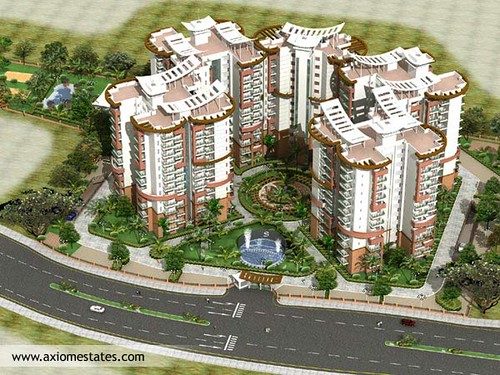
Image credit: Pune Properties - Real Estate India - Vilas Palash Interiors1 by nancyarora2020 via flickr (BY-SA 2.0), sourced through Openverse.
Written by
Rajesh Tiwari
Real estate analyst covering property markets across Delhi NCR, Mumbai, and Bangalore. Rajesh tracks pricing trends, RERA compliance, and investment opportunities for residential and commercial buyers.
Looking for a technology partner?
From IT consulting to virtual office to custom software — eDarpan can help.
Continue reading
RTO Mandates & Office Space Demand in India 2026: What to Know
RTO mandates and GCC expansion are driving up office rents in India. Here's what SMB founders need to know about leasing, flexible offices, and costs in 2026.
Fractional Ownership of Commercial Property in India 2026
SEBI now regulates fractional ownership via SM REITs. Learn how to own Grade-A commercial property in India from ₹10 lakh, plus returns, risks and a diligence checklist.
Capital Gains Tax on Property Sale in India 2026: Save Legally
A retiree saved ₹19 lakh legally by choosing the right method. Learn how capital gains tax on property sale in India works in 2026 and where the real savings hide.