Buying a Home in Dwarka vs Gurugram 2026: Where Your Money Goes Further
Dwarka or Gurugram in 2026? Compare true landed cost, rental yields and infrastructure timelines to see where your money actually goes further.
A two-bedroom flat in Dwarka that cost you ₹1.1 crore three years ago may now be quoted at ₹1.4 crore, while a comparable unit in Gurugram's Sector 103 has moved in the same window but from a lower base. If you are a first-time buyer or an investor trying to park surplus cash in Delhi-NCR, the question is no longer whether prices are rising. It is which micro-market will give you more square footage, better connectivity and a rental return that actually covers your EMI for the money you have. This guide walks through that comparison as someone who has sat across the table from enough buyers, builders and bank managers to know where the spreadsheets lie.
Most buyers compare headline price per square foot and stop there. That is the single most expensive shortcut in Indian residential property. The real cost includes stamp duty, registration, GST on under-construction units, maintenance charges, parking, power backup and the two years of commuting you will absorb before the metro or expressway you were promised actually opens. Dwarka and Gurugram look similar on a brochure and behave very differently on the ground. This article gives you the framework to tell them apart, with numbers you can check yourself. Where we talk about the 2026 price environment, treat figures as indicative ranges to verify against current listings and registry data, since the market moves quickly.
Key Takeaways
- Compare total landed cost, not quoted price per sq ft. Stamp duty, GST, parking and maintenance can add 8 to 12 percent to the sticker figure.
- Dwarka usually offers a lower entry ticket and faster access to IGI Airport and the Dwarka Expressway corridor, but a thinner rental market for mid-segment flats in some pockets.
- Gurugram gives deeper corporate rental demand, especially near Cyber City, Udyog Vihar and the Golf Course Road belt, which supports higher gross yields if you buy near offices.
- Rental yield, not appreciation, decides whether a purchase is self-funding. Model gross and net yield after property tax, society charges and vacancy.
- Infrastructure timelines slip. Price a delay of 18 to 24 months into your numbers before you buy on the strength of a promised metro or road.
- Verify RERA registration, the builder's project-specific RERA number and occupancy status before paying any token amount.
Buy Home Dwarka vs Gurugram 2026: Start With the Real Cost, Not the Brochure Price
When people ask whether to buy home Dwarka vs Gurugram 2026, the honest first answer is that the comparison only makes sense on a like-for-like landed cost. A ₹1.2 crore sticker in one sector can end up costing ₹1.35 crore once you add everything the builder or registry will ask of you. Start there, because it resets your budget before you fall in love with a floor plan.
The cost stack you must model
Build a simple sheet with these lines for each shortlisted unit. The numbers below are typical ranges for Delhi and Haryana, and your state government's current notification will govern the exact percentages.
- Agreement price: the carpet-to-super-area price the developer quotes. Confirm whether the figure is for super area or built-up area, because the gap can be 25 to 35 percent.
- GST on under-construction property: for affordable and other residential under-construction units, GST is applied at the concessional rates notified by the government, with the effective rate depending on the category and whether input tax credit is available to the builder. Ask the developer for the exact percentage in writing and check the figure with a chartered accountant. Ready-to-move flats from resale carry no GST, which can change the comparison entirely.
- Stamp duty: in Delhi it is generally collected at the registry at a rate in the region of 6 percent for men and 4 percent for women on many transactions, with registration fees on top. Haryana has its own schedule. Confirm current rates on the state registration portal before budgeting.
- Parking: often sold separately and sometimes priced at ₹3 to ₹8 lakh per covered slot in premium Gurugram societies. Dwarka pricing varies sharply by project.
- Club, power backup and preferential location charges (PLC): a corner or park-facing flat can carry a PLC of 5 to 10 percent. Negotiate it hard or skip it.
- Maintenance deposit and society formation charges: expect a one-time corpus that can run into lakhs.
- Home loan processing, legal and valuation fees: usually 0.5 to 1 percent of the loan, plus documentation.
Once you total this, divide by the super area you are actually buying and compare that all-in rate across Dwarka and Gurugram. That single number is more honest than any portal listing.
A worked example you can replicate
Consider a first-time buyer, a 32-year-old software professional earning ₹22 lakh a year, who has ₹25 lakh saved and wants a 2BHK of about 1,100 sq ft super area. She is weighing a Dwarka society near the Sector 19 metro against a Gurugram project in Sector 84 near the Dwarka Expressway.
Dwarka option: agreement value ₹1.12 crore for 1,100 sq ft (about ₹10,180 per sq ft). Add effective GST and stamp duty, one covered parking at ₹4 lakh, a corpus of ₹2.5 lakh and loan costs. The all-in figure lands near ₹1.31 crore. Her eligible loan at 80 percent of agreement value is comfortable within her income, leaving her a down payment gap she can close from savings.
Gurugram option: agreement value ₹1.22 crore for the same area (about ₹11,090 per sq ft), with GST treatment slightly different and a parking charge of ₹6 lakh. The all-in figure comes near ₹1.42 crore. Her loan is still serviceable, but her EMI-to-income ratio rises and she has almost no buffer left.
The Gurugram flat may appreciate faster if the Dwarka Expressway corridor delivers as planned. But for her, the Dwarka unit leaves a safety margin. That is the kind of trade-off a spreadsheet should expose before the emotional decision happens.
Connectivity, Commute and Infrastructure: What Actually Opens and When
Connectivity is where Dwarka and Gurugram diverge most, and where promises outrun delivery most often. Treat every infrastructure date as a claim to be tested, not a fact.
Dwarka: airport proximity and the metro spine
Dwarka's biggest structural advantage is its position beside IGI Airport and its access to the Delhi Metro Blue Line and the Dwarka sub-city stations. For anyone who travels, or who works in central Delhi or Aerocity, the commute to Dwarka Mor, Dwarka Sector 21 or the airport is shorter than most Gurugram localities. The sub-city also has a well-planned road grid, which helps with traffic flow on weekdays.
The weak point is the last mile into some pockets and the reliance on a handful of arterial roads. Test the route at 9 a.m. on a working day, not on a Sunday when every route looks empty.
Gurugram: expressways and the corporate core
Gurugram's connectivity story is about jobs rather than transport hubs. The Golf Course Road and Golf Course Extension belt, Cyber City, Udyog Vihar and Sohna Road cluster a huge share of the region's office stock. The Dwarka Expressway, once fully connected through its stretches, is designed to tie the western periphery to NH-48 and the IGI corridor. The Rapid Metro in Gurugram serves only parts of the city, so most residents still depend on cabs, two-wheelers or company shuttles.
Here is the practical rule. If your income depends on a Gurugram office, buy close to the office belt and accept the traffic. If your work is in South or Central Delhi, Gurugram's far sectors can cost you two hours a day that no price discount will repay.
Infrastructure you should verify, not assume
Before you pay a token amount on any project, check these items against official sources such as the DMRC and HMRL announcements, NHAI project pages and the state urban development department.
- Whether the metro or expressway section is open to traffic, not merely under construction or "approved."
- The current completion status of the road or interchange serving your specific sector, since a neighbouring stretch may be finished while the link you need is pending.
- Whether the promised date appears in a government tender or contract award notice, which is a stronger signal than a press release.
- Water and sewerage supply status, which can lag far behind roads in newer sectors.
Pro Tip: Ask the builder for a written statement of which infrastructure they are relying on and what happens to their pricing if that infrastructure is delayed. Most will decline, which tells you how much weight the promise deserves. Price the delay of 18 to 24 months into your rental and resale assumptions regardless.
Rental Yields and Demand: Which Market Pays You Back
If you are an investor, or a buyer who wants the flat to pay its own way while you are abroad or relocating, rental yield matters more than the price per square foot. Gross yield is annual rent divided by property value. Net yield subtracts property tax, society maintenance, insurance and vacancy. In Indian residential markets, gross yields have commonly sat in the low single digits, and net yields are often lower still, so run the numbers rather than trusting broker claims.
Demand drivers in each micro-market
Gurugram's rental demand is anchored by corporate tenants and expatriates. Flats within a few kilometres of Cyber City and the Golf Course belt tend to find tenants quickly, often in short cycles because of job mobility. That liquidity is valuable, but it also means you may face frequent vacancy gaps.
Dwarka's rental base leans toward government employees, airline and airport staff, and families who value schools and wide roads. Tenancies can run longer and be stickier, which reduces churn but may cap the rent you can charge. Proximity to the airport helps for short-term and corporate lets in select buildings.
A simple yield model
Take the ₹1.31 crore Dwarka all-in figure and assume a monthly rent of ₹28,000 for a 2BHK. Annual gross rent is ₹3.36 lakh, a gross yield of about 2.6 percent on all-in cost. Subtract property tax, maintenance and an allowance for two months of vacancy, and the net yield falls further. That is not a bad place to park money if your target is capital growth and you can carry the EMI, but it is not a cash-flow asset.
Run the same model for a Gurugram unit near the office belt, assuming a rent of ₹38,000 on an all-in cost of ₹1.42 crore. The gross figure looks better, but the cost base is higher and vacancy may be shorter. The better choice depends on whether you prize higher rent or lower capital at risk.
Which Micro-Market Fits Your Budget and Goal?
The right answer depends on three inputs: your budget ceiling after the all-in cost, your job location and your time horizon. Compare the options directly on the criteria that matter for your situation.
| Criterion | Dwarka | Gurugram (Golf Course / Dwarka Expwy belt) | Gurugram (Far sectors, e.g. Sohna Road) |
|---|---|---|---|
| Typical all-in cost for 1,100 sq ft (indicative) | ₹1.2 to 1.35 crore | ₹1.35 to 1.6 crore | ₹1.1 to 1.3 crore |
| Access to airport and central Delhi | Strong | Moderate, traffic-dependent | Weaker |
| Proximity to corporate offices | Limited | Strong | Moderate, depends on sub-location |
| Rental demand profile | Steady, family and government tenants | Fast-moving, corporate and expat | Mixed, price-sensitive |
| Infrastructure dependency | Metro and roads largely in place | Expressway completion and metro extensions | Higher, more pending works |
| Best suited to | First-time buyers, airport-linked workers, steadier tenants | Corporate professionals, higher rent investors | Budget-constrained buyers willing to accept delay risk |
Figures in the table are indicative and should be validated against live listings and registry transactions in your target sector before you decide. Treat any single column as a starting hypothesis, not a verdict.
A Practical Buying Process for Delhi-NCR in 2026
Whichever micro-market you choose, the process matters as much as the location. Here is the sequence we recommend to clients, and it works for resale and under-construction purchases alike.
- Fix your ceiling. Calculate the maximum all-in cost you can carry, leaving at least six months of EMI and expenses as a reserve. Do not size the loan to the maximum the bank offers.
- Shortlist by commute, then by price. Map the realistic daily route from each candidate sector to your workplace at peak hour, and eliminate options that break your sanity before you compare numbers.
- Verify the project. Check the RERA registration number on the state portal for both the project and the promoter, confirm the approved layout and completion date, and read the carpet area declaration.
- Get the all-in quote in writing. Ask for a statement covering agreement value, GST, parking, PLC, maintenance corpus and any other charges, signed by the builder.
- Check title and encumbrances. For resale, get a title search done by a lawyer, confirm there are no pending dues, and verify society NOC and occupancy certificate status.
- Negotiate on the all-in figure. Waiving PLC or parking is often easier than cutting the headline price, and the saving is real.
- Model the rent and the exit. Before signing, write down the rent you expect, the vacancy you can tolerate and the resale value under a flat-price scenario.
Common Mistake: Buyers often treat a builder's "possession by" date as the date they will move in or start earning rent. In practice, delays of a year or more are common, and in the meantime you may be paying a pre-EMI on the loan plus rent where you live now. Add that overlap to your cash-flow model, not just the EMI after handover.
If you are weighing whether this is the right moment to buy at all, or want to compare against renting, our analysis of whether to buy, rent or wait in 2026 sets out the decision logic in more depth. For a numerical version of that question specifically in Delhi-NCR, the rent vs buy break-even guide walks through how to find the year your purchase starts paying off.
Regulation also shifts the picture. Changes to building rules in neighbouring states can affect what gets built and how fast, and the implications for Noida and Greater Noida are covered in our piece on UP model building rules and their impact on Noida and Greater Noida properties. Broader market splits between segments are discussed in India's real estate market split and what it means for investors.
Frequently Asked Questions
Is Dwarka or Gurugram better for first-time homebuyers in 2026?
For most first-time buyers with a fixed budget, Dwarka usually offers a lower all-in cost and a shorter commute to central Delhi and the airport, which leaves more room for EMI safety. Gurugram makes sense if your job is in the office belt and you can absorb a higher price. Run the all-in cost comparison before deciding.
How do I calculate the true cost of a flat in Dwarka or Gurugram?
Add agreement value, applicable GST for under-construction units, stamp duty and registration, parking, PLC, maintenance corpus and loan processing fees. Divide the total by the super area. This all-in rate is far more useful than the quoted price per square foot for comparing sectors.
Which area gives better rental yield, Dwarka or Gurugram?
Gurugram near the corporate belt often commands higher rents and turns over tenants faster, which can lift gross yield but adds vacancy risk. Dwarka tends to attract steadier, family-oriented tenants at somewhat lower rents. Net yield depends on your cost base and vacancy assumptions, so model both for the specific project.
Are the Dwarka Expressway and metro extensions reliable?
Some sections are operational while others remain under construction, and timelines have slipped in the past. Confirm the status of the exact road or metro link serving your sector with official authorities and plan for delays of 18 to 24 months in your financial model.
Do I need RERA registration before buying an under-construction flat?
Yes, you should confirm that both the project and the promoter are registered under the applicable RERA authority, and that the registration number matches the one the builder quotes. RERA registration gives you recourse on carpet area, timelines and fund use, which matters for a purchase of this size.
What is the stamp duty on a flat in Delhi versus Haryana?
Stamp duty and registration rates differ between Delhi and Haryana and change through state notifications. Check the current schedule on the relevant state registration portal before budgeting, and confirm whether a concession applies to the buyer category you fall into.
Should I buy now or wait for prices to settle?
No one reliably predicts short-term price moves, so decide on whether the all-in cost fits your budget with a safety margin, and whether the rent covers your carrying cost if you plan to let the property. If the numbers work only if prices keep rising, that is a warning sign.
Next Steps and How eDarpan Can Help
Buying in Dwarka or Gurugram is a decision that deserves the same rigour you would bring to a major business investment. Build the all-in cost sheet, test the commute at peak hours, verify RERA and title, and model the rent under conservative assumptions before you sign. Those four steps will eliminate most bad purchases.
If you want help narrowing the shortlist, browse properties for sale in India through eDarpan Properties, or explore rental properties if you are testing the market before committing. For a conversation about your specific budget, business plans or whether an investment property makes sense inside a broader financial picture, contact the eDarpan team. You can also learn more about how we work on the about eDarpan page, and if your property plans involve company registration or a registered business address, our virtual office service covers GST and registration needs. Our full range of services is listed on the services overview.
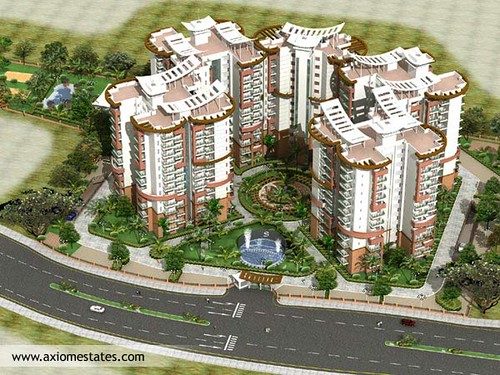
Image credit: Bangalore Properties - Real Estate India - Shriram Symphony by nancyarora2020 via flickr (BY-SA 2.0), sourced through Openverse.
Written by
Rajesh Tiwari
Real estate analyst covering property markets across Delhi NCR, Mumbai, and Bangalore. Rajesh tracks pricing trends, RERA compliance, and investment opportunities for residential and commercial buyers.
Looking for a technology partner?
From IT consulting to virtual office to custom software — eDarpan can help.
Continue reading
Delhi-NCR Home Prices Up 12%: Rent or Buy in 2026?
Delhi-NCR prices jumped 12%. Before you buy, run the real numbers: true ownership costs, break-even horizon, and when renting and investing wins.
Senior Living in India 2026: Buying a Retirement Home in Tier-2 Cities
Choosing a retirement home in India means balancing healthcare access, accessibility and true costs. This guide covers buying vs renting and checks for Tier-2 cities.
Housing Sales Fall in 7 Cities: Should You Buy, Rent or Wait in 2026?
Housing sales are softening across seven Indian cities. Here's how to read the slowdown, weigh total ownership cost, and decide whether to buy, rent, or wait.