Delhi-NCR Home Prices Up 12%: Rent or Buy in 2026?
Delhi-NCR prices jumped 12%. Before you buy, run the real numbers: true ownership costs, break-even horizon, and when renting and investing wins.
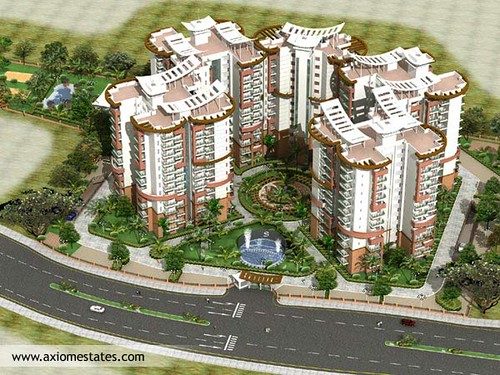
Delhi-NCR home prices climbed roughly 12% in the most recent quarter, and if you are a first-time buyer in Dwarka, Gurugram, Noida, or Greater Noida, you have probably heard two contradictory pieces of advice this week. One friend says buy now before it runs away. Another says prices are overheated and you should keep paying rent. Both sound confident. Neither is useful until you run the numbers for your own situation.
The real pain point is not whether prices will rise or fall. Nobody reliable can tell you that. The problem is that a home purchase locks up a large share of your savings, adds EMI obligations for 15 to 20 years, and carries hidden costs that most listings never mention. A renter, meanwhile, pays out cash every month with nothing to show for it, which feels wasteful even when it is financially sound. This post gives you a framework to make the rent or buy Delhi NCR 2026 decision on arithmetic rather than anxiety, with a worked example, a comparison of the financing routes available to you, and a checklist you can take to a broker or a banker.
By the end you will know how to calculate your true cost of ownership, how to estimate a break-even horizon, what the stamp duty and registration numbers look like in Delhi and UP, where RERA protection actually helps you, and which mistakes cost buyers lakhs of rupees. We will also cover when renting and investing the difference is the smarter move.
Key Takeaways
- A 12% price jump does not automatically make buying a bad decision, but it raises the break-even horizon you need to justify. Compare the total cost of owning against renting, not the sticker price against the rent.
- Budget 7 to 9% of the property value on top of the down payment for stamp duty, registration, brokerage, legal fees, and interiors. These are not optional and they are often underestimated by a lakh or more.
- Your EMI should ideally stay under 35 to 40% of take-home income, with at least six months of expenses held in liquid savings after the down payment.
- If you expect to stay in the same city for fewer than five to seven years, renting and investing the difference usually wins in Delhi-NCR.
- Check RERA registration, the builder's track record on possession timelines, and the approved layout before you pay any token amount.
- Run the numbers with your own inputs. Generic calculators hide the variables that matter most, including your expected rent escalation and the return you can realistically earn on invested savings.
Is it still smart to rent or buy Delhi NCR 2026 when prices have jumped?
The honest answer is that it depends on how long you will stay and what the monthly carrying cost looks like compared with rent. A sharp price rise does two things at once. It increases the capital you tie up, and it raises the appreciation you need just to break even against renting. It also tends to push rents up with a lag, which partly offsets the effect. The arithmetic matters more than the headline.
Consider the rent-yield relationship. In much of Delhi-NCR, annual rent is often in the range of 2 to 3% of the property value, sometimes lower in premium micro-markets. If you buy a flat worth ₹1 crore and it rents for ₹25,000 a month, your gross rental yield is about 3%. Your home loan interest, at prevailing rates, is typically well above that. So in cash-flow terms, owning costs more every month than renting, and you are betting on capital appreciation plus the forced-savings effect of paying down principal to make up the gap.
That bet can pay off, but only over a reasonable horizon. Short-term buyers who need to sell within three years often lose money after transaction costs, even in a rising market. This is why the break-even horizon is the single most useful number in the whole decision.
How do I calculate the true cost of buying versus renting?
Start with the total cash you will spend over your holding period on each option, then compare the net position at the end. Most people only compare the EMI to the rent, which ignores the down payment, transaction costs, maintenance, and the opportunity cost of the money you would otherwise have invested. Here is a structured way to think about it.
The buying side
- Down payment: Typically 20 to 25% of the property value for most lenders, plus the 7 to 9% transaction costs described below. This money does not earn anything while it sits in a house.
- Loan interest: The interest component of your EMI over the holding period. In early years this is the bulk of each payment.
- Maintenance and society charges: Monthly maintenance, property tax, and any repair or renovation spend.
- Opportunity cost: What your down payment and transaction costs would have earned if invested instead.
- Exit costs: Brokerage and tax on sale, if you sell.
The renting side
- Rent paid, including annual escalations, which in NCR commonly run 5 to 10% a year in active markets.
- Security deposit, which is returned but ties up cash.
- Investment of the difference: Whatever you would have paid as an EMI plus the upfront costs, invested in a diversified portfolio. This is the piece most comparisons forget, and it is where renters either win or lose the argument.
The break-even point is the year in which the cumulative net cost of buying (including what you give up by not investing that money) falls below the cumulative net cost of renting, adjusted for the property value you hold at the time. Plug in your own assumptions for property appreciation, rent growth, interest rate, and investment return. Small changes in the appreciation assumption swing the result dramatically, so run three scenarios: pessimistic, base, and optimistic.
What does a real buying decision look like? A worked example
Consider a couple, Ankit and Priya, who both work in Gurugram and want to settle in Dwarka Expressway or Sector 102 region. They are weighing a 2 BHK at ₹1.1 crore against renting a comparable flat for ₹38,000 a month. Their take-home income is ₹2.4 lakh a month combined, and they have ₹28 lakh saved.
Their buying numbers look like this. Down payment at 20% is ₹22 lakh. Transaction costs, including stamp duty, registration, brokerage, legal fees, and interiors, come to roughly 8% or about ₹8.8 lakh. That leaves them needing around ₹30.8 lakh in total cash, which exceeds their savings, so they would need to stretch the down payment or find more money. This is the first red flag, and it is common. Many buyers discover at this stage that the true entry cost is well above the number in their head.
Suppose they resolve it by taking a loan of ₹88 lakh over 20 years at a plausible rate, with an EMI in the region of ₹75,000 to ₹80,000 a month. Add maintenance of around ₹6,000 a month. Their total monthly outflow is roughly ₹83,000 to ₹86,000, against rent of ₹38,000. The gap of about ₹45,000 a month is what they would need to invest from their surplus if they chose to rent instead.
Now the decision. If Ankit and Priya plan to stay for 10 years, the property appreciates at a steady rate, and rents rise at 7% annually, buying usually edges ahead after the early years once principal repayment and appreciation accumulate. If they plan to move in four years, renting almost certainly wins, because the transaction costs alone eat a large share of any gain. The worked example shows why the holding period dominates everything else. Run it with your own numbers and the answer usually becomes obvious.
For a more detailed walkthrough of the same logic applied to Delhi-NCR specifically, see our guide on rent vs buy in Delhi-NCR 2026: a break-even calculator guide.
Which financing and purchase route should I compare?
The question is rarely "buy or rent" in isolation. It is also which financing structure and property type suit you. The table below compares the routes most first-time buyers in NCR actually consider.
| Option | Upfront cash needed | Monthly outflow (indicative) | Best if | Main risk |
|---|---|---|---|---|
| Ready-to-move flat (resale) | 20 to 25% down plus 7 to 9% costs | EMI plus maintenance, starts immediately | You want to move in soon and see the property | Older stock may need repairs; fewer modern amenities |
| Under-construction flat (builder) | Lower initial payments in schedule; costs still apply | Pay rent elsewhere until possession, then EMI | You can wait and accept a longer horizon | Possession delays; check RERA registration and track record closely |
| Plot or independent house | Higher, often 30%+ of value; approvals add time | Construction cost and EMI during build | You want control and have a clear budget for build cost | Cost overruns, approvals delays, and title complexity |
| Rent and invest the difference | Security deposit only | Rent plus disciplined investing of savings | Short horizon, job mobility, or uncertainty about staying | Requires discipline; you must actually invest the surplus |
| Co-buying with a family member | Shared down payment and costs | Shared EMI and maintenance | Income alone won't stretch to the EMI | Disputes over exit; document ownership shares in writing |
If you are considering a builder purchase, the questions you ask before paying a token amount matter more than the brochure. This is where many first-time buyers get hurt. For a deeper comparison of two popular micro-markets, our post on buying a home in Dwarka vs Gurugram 2026 walks through where your money stretches furthest.
What are the hidden costs of buying in Delhi and UP?
The sticker price is the beginning of the cost, not the end. Stamp duty and registration charges vary by state and sometimes by buyer category, so verify the current rates with your state registration authority before you finalise a budget. In Delhi, stamp duty and registration together are a meaningful share of the value, and women buyers have historically been offered a concessional rate, which is worth checking. In Uttar Pradesh, which covers Noida and Greater Noida, the stamp duty structure differs and has been revised over time, so confirm with a local advocate rather than relying on a figure from a friend's experience two years ago.
Beyond statutory charges, budget for the following. Brokerage on resale is commonly around 1 to 2% of the price, sometimes negotiable. Legal due diligence, which should always be done, typically costs a few tens of thousands of rupees depending on complexity. Interiors can easily run to ₹3 to ₹8 lakh for a 2 BHK, and home loan processing fees and insurance add more. Put these together and an 8% allowance is not paranoid; it is realistic.
GST also applies to under-construction purchases from builders, at rates that have been modified over the years and differ between affordable and other categories. Ask the builder for the exact GST component in writing and confirm whether it is included in the quoted price or added on top. Not every quote is comparable until you do this.
How do I check a builder and property before I commit?
Due diligence protects you from the single most expensive buyer mistake in NCR: committing money to a project that is delayed, unapproved, or stuck in litigation. Start with RERA. Under the Real Estate (Regulation and Development) Act, most residential projects above the applicable threshold must register with the relevant RERA authority. Check the project's registration number on the authority's website, confirm the approved layout and possession date, and read the declared timelines. RERA gives you recourse against delay and misrepresentation that you do not get in an unregistered deal.
Then verify the title and approvals. Ask for the title chain, the sanctioned building plan, the occupancy or completion certificate where applicable, and encumbrance details. A reasonable advocate can review these documents in a few days for a modest fee, and it is money well spent.
Finally, look at the builder's delivery history. Ask existing residents in a completed project by the same developer how many years they waited against the promised possession date. A builder with a long record of delay is a risk regardless of what the brochure says.
Pro Tip: Most buyers negotiate the price and forget the payment schedule. Ask for a construction-linked plan where each instalment is tied to verified progress, and never accept a plan where a large share is due before the structure is visibly underway. Also, pay only through traceable banking channels to the project's designated account. Cash deals and payments to individuals are where fraud usually starts.
How much EMI can I afford, and how much cash should I keep?
The conventional guideline is to keep total EMIs, including the home loan, at or below roughly 35 to 40% of take-home income. Lenders may approve you for more, but approval is not the same as affordability. Mortgage approval is based on your repayment capacity on paper. What you can comfortably live with is a different question, especially when your income depends on a volatile sector or you support parents or dependants.
Equally important is the cash buffer. After paying the down payment and transaction costs, keep at least six months of essential expenses, including the EMI, in an accessible form. Buyers who drain their savings to close a deal and then face a job loss or a medical emergency are the ones who end up forced sellers at a bad moment. A property with no liquid reserve behind it is a fragile asset.
When does renting and investing the difference make more sense?
Renting usually wins when your horizon is short, your career may move you, or you are uncertain about where you want to live in five years. It also wins when the EMI would consume so much of your income that you would have to cut back on savings and insurance. Renting preserves flexibility, and in a high-price market, flexibility has real value.
The condition is discipline. Renting only beats buying if you genuinely invest the monthly difference rather than spending it. Set up an automatic SIP into a diversified equity or hybrid fund for the amount you would otherwise have paid toward an EMI, review it annually, and resist the urge to treat it as spending money. Renters who do not invest the difference almost always lose the comparison.
Common mistake: comparing the EMI to the rent and stopping there
This is the most frequent error we see. A buyer sees a ₹80,000 EMI against ₹38,000 rent, concludes renting is cheaper, and walks away, or sees a loan that "costs about the same as rent" and buys without considering the down payment, the opportunity cost, or the transaction costs. Both conclusions skip the lifetime view. The right comparison is cumulative net cost over your realistic holding period, including what your upfront cash would have earned. Build that model, even in a simple spreadsheet, before you decide.
Frequently asked questions
Is it a good time to buy a flat in Delhi NCR in 2026?
There is no reliable way to time the market. Whether it is a good time depends on your holding period, your income stability, and whether the monthly cost of owning is comfortable compared with renting. Run a break-even analysis with conservative assumptions rather than relying on the recent price trend.
How long should I stay in a property to make buying worthwhile?
In most Delhi-NCR scenarios, a holding period of roughly seven or more years is needed for buying to justify the transaction costs and the early-year interest burden. Shorter periods often favour renting, though this varies with the specific property and loan terms.
What is the minimum down payment for a home loan in India?
Most lenders require at least 20% of the property value for a standard home loan, though the exact requirement depends on the loan amount, your profile, and the lender's policy. Remember that transaction costs must be paid separately on top of the down payment.
Should I buy under construction or ready-to-move in Gurugram or Noida?
Ready-to-move properties give you certainty and let you start living in the home immediately, at a higher price. Under-construction properties can cost less upfront but carry delay risk. Choose based on your timeline and tolerance for risk, and always verify RERA registration first.
How much stamp duty do I pay on a property in Delhi?
Stamp duty and registration charges in Delhi are set by the state and can change, and some categories of buyers may receive concessions. Check the current rates with the Delhi registration authority or a qualified advocate before you finalise your budget, as figures quoted in older articles may be outdated.
Can I claim tax benefits on a home loan?
Yes, principal repayment and interest on a home loan may qualify for deductions under the Income Tax Act, subject to conditions and limits that change from time to time. Confirm the current provisions with a tax professional, since the benefit depends on your overall tax position and whether you opt for the old or new regime.
What should I do before paying a token amount to a builder?
Verify RERA registration, review the approved layout and sanctioned plan, check the title chain with an advocate, and confirm the payment schedule and GST treatment in writing. Only pay through traceable banking channels to the project's designated account.
Next steps and how eDarpan can help
The fastest way to move forward is to write down your real numbers: take-home income, savings, expected stay, and the rent you pay today. Then build the two-column model described above and test it against three scenarios. If the result is close, that tells you the choice matters less than you think, and you can decide on lifestyle grounds.
If you want a second pair of eyes, eDarpan Properties can help you explore properties for sale across India or find rental properties that fit your budget and timeline. Our team can also connect you with the right advisory conversation on the numbers; you can contact eDarpan to discuss your situation. To learn more about who we are and how we work, see our about page.
Whichever way you lean, make the decision on the arithmetic for your own life, not the headline. Prices will keep moving. Your cash flow, your stability, and your holding period are the things you actually control.
Image credit: Bangalore Properties - Real Estate India - Shriram Symphony by nancyarora2020 via flickr (BY-SA 2.0), sourced through Openverse.
Written by
Rajesh Tiwari
Real estate analyst covering property markets across Delhi NCR, Mumbai, and Bangalore. Rajesh tracks pricing trends, RERA compliance, and investment opportunities for residential and commercial buyers.
Looking for a technology partner?
From IT consulting to virtual office to custom software — eDarpan can help.
Continue reading
Buying a Home in Dwarka vs Gurugram 2026: Where Your Money Goes Further
Dwarka or Gurugram in 2026? Compare true landed cost, rental yields and infrastructure timelines to see where your money actually goes further.
Senior Living in India 2026: Buying a Retirement Home in Tier-2 Cities
Choosing a retirement home in India means balancing healthcare access, accessibility and true costs. This guide covers buying vs renting and checks for Tier-2 cities.
Housing Sales Fall in 7 Cities: Should You Buy, Rent or Wait in 2026?
Housing sales are softening across seven Indian cities. Here's how to read the slowdown, weigh total ownership cost, and decide whether to buy, rent, or wait.