Goa, Bhopal, Lucknow: Top Tier-2 Cities for Property Investment 2026
Move beyond expensive metros. Discover why Goa, Bhopal & Lucknow are the top tier-2 cities for high-yield property investment in 2026, backed by data & infrastructure growth.
If you've spent the last few years watching property prices in Mumbai, Bangalore, or Delhi NCR double and then double again, you're not alone. The frustration is palpable among Indian investors and NRIs alike: the entry ticket to the metro game is now prohibitively high, rental yields have compressed to 2-3%, and the growth story feels like it's already been written. Chasing yesterday's winners is a poor strategy. The real question isn't about buying in a Tier-1 city; it's about identifying which Tier-2 city will become the next growth engine before everyone else does. Based on infrastructure pipelines, policy tailwinds, and migration data, a clear pattern is emerging. This guide cuts through the noise to focus on three specific urban centers—Goa, Bhopal, and Lucknow—that represent distinct, data-backed opportunities for 2026 and beyond.
Key Takeaways
- Goa is transitioning from a pure holiday destination to a premium workation and luxury second-home hub, driven by high-speed connectivity and a new wave of affluent remote professionals.
- Bhopal's growth is systemic, fueled by massive government and private investment in education, healthcare, and manufacturing, creating a stable, demand-driven rental and purchase market.
- Lucknow is a direct beneficiary of infrastructure explosion (Expressways, Metro, International Airport) and its status as a political-administrative capital, leading to consistent commercial and residential demand.
- Investment horizons differ: Goa for high-capital, low-yield lifestyle assets; Bhopal for steady, high-yield rental portfolios; Lucknow for balanced capital appreciation and rental income.
- Due diligence is non-negotiable. Always verify land titles, check for approved layouts and OC/CC, and factor in GST (12% on under-construction) and local municipal taxes.
- Leverage platforms like eDarpan Properties to access vetted listings, understand local compliance, and manage assets remotely, which is crucial for NRIs and out-of-state investors.
Why Tier-2 Cities Are the Logical Next Step for Smart Capital
The math is simple. When a 2BHK in a decent Bangalore suburb costs ₹1.8 crore, yielding a monthly rent of ₹40,000, your gross yield is 2.66%. After society maintenance, property tax, and periods of vacancy, the net yield dips below 2%. Contrast this with a well-located 3BHK in a city like Bhopal, costing ₹65 lakh, fetching ₹25,000 per month. That's a gross yield of 4.6%. The capital outlay is lower, the yield is higher, and the potential for appreciation as the city develops is significant. This isn't speculation; it's a capital efficiency play. The government's push for infrastructure development under schemes like the Smart Cities Mission and PM Gati Shakti is deliberately creating these new nodes of economic activity. The growth is moving from the saturated cores to the emerging peripheries.
The NRI Advantage in Tier-2 Markets
For the NRI investor, this shift is even more pertinent. Managing a property in Mumbai from Dubai or New York is a logistical headache involving multiple intermediaries. A property in a Tier-2 city, often in a newer, professionally managed project, can be simpler to handle. Furthermore, your rupee goes much further. The ₹50 lakh you might allocate for a down payment in Pune can buy you a fully-furnished, ready-to-move apartment outright in Lucknow's emerging sectors, providing immediate rental income without the burden of a large loan. Platforms that cater specifically to this need, like eDarpan Properties, are becoming essential for remote discovery, verification, and management.
Goa: Beyond Beaches, Building a Premium Lifestyle Economy
Forget the Goa of just shack holidays and seasonal rentals. The pandemic-induced remote work culture has permanently altered its real estate landscape. We're now seeing a sustained demand for high-quality, year-round residences from senior professionals, entrepreneurs, and digital nomads who can work from anywhere. This isn't about buying a small flat; it's about investing in a lifestyle product.
A client of ours, an IT consultant based in London, exemplifies this. In 2021, he purchased a 3BHK villa in a gated community in Porvorim for ₹2.2 crore. His goal wasn't high rental yield, but a combination of personal use for 2-3 months a year and asset preservation. He listed it as a premium "workation" rental for the remaining months. In 2023, the property's value was appraised at ₹3.1 crore. More tellingly, his annual rental income from 9 months of occupancy was ₹9 lakh, giving him a yield of 4.1% on his purchase price—a figure that rivals commercial real estate in some metros. This was possible because he targeted a property with robust fiber internet, a co-working space within the society, and professional property management.
Pro Tip: The Infrastructure Litmus Test
Don't just buy near a beach. In Goa, the new gold is connectivity. Focus on areas with seamless access to the Manohar International Airport (Mopa) and the upcoming Mumbai-Goa Expressway. Locations like North Goa's Socorro, Porvorim, and even parts of South Goa like Margao are benefiting from improved roads and bridges. These areas are seeing the development of integrated townships with amenities tailored for the new resident, not just the tourist.
Bhopal: The Understated Performer with Institutional Backing
Bhopal often flies under the radar, which is precisely its advantage. While others chase hype, Bhopal's growth is built on a rock-solid foundation of institutional investment. The city is home to AIIMS, IIIT, and the National Judicial Academy, creating a constant influx of students, medical professionals, and government officials. This translates into a resilient rental market with low vacancy rates.
The data tells a compelling story. Take the Hoshangabad Road corridor. In 2019, the average rate for a residential plot was ₹25,000 per sq yd. Today, that figure sits between ₹45,000-55,000 per sq yd. Why? The completion of the Bhopal-Indore Economic Corridor, the expansion of the Bhopal airport, and the establishment of several pharmaceutical and manufacturing MSMEs have supercharged this belt. For an investor, this presents a clear opportunity: invest in developing areas on the periphery of established institutional zones. The appreciation in the plot itself over a 3-5 year horizon can be substantial, after which you can choose to build or sell.
| City | Typical Investment (3BHK Apartment) | Expected Gross Rental Yield | Primary Growth Driver | Ideal Investor Profile |
|---|---|---|---|---|
| Goa (Porvorim) | ₹2.5 Cr - ₹3.5 Cr | 3.5% - 4.5% | Lifestyle Migration, Premium Workation | High-net-worth individual, NRI seeking lifestyle asset + appreciation. |
| Bhopal (Hoshangabad Rd) | ₹65 Lakh - ₹90 Lakh | 4.5% - 5.5% | Institutional & Infrastructure Development | Income-focused investor, someone building a rental portfolio. |
| Lucknow (Gomti Nagar Ext.) | ₹80 Lakh - ₹1.2 Cr | 4.0% - 4.8% | Political Capital & Transport Hub | Balanced investor seeking both growth and steady income. |
Lucknow: The Capital's Methodical March
Lucknow's growth is neither chaotic nor speculative. It's a direct function of its role as Uttar Pradesh's capital and a strategic node in the Delhi-Kanpur economic axis. The completion of the Purvanchal Expressway, the ongoing Lucknow Metro expansion, and the development of the Lucknow International Airport have drastically improved intra-city and interstate connectivity. This has a multiplier effect on commercial real estate, which in turn fuels demand for quality residential spaces for executives and professionals.
The play here is to follow the extension of the city's master plan. Gomti Nagar is now established and pricey. The next wave is in its extensions—areas like Shaheed Path—and along the Lucknow-Ayodhya highway. These zones offer larger unit sizes, better amenities at a lower price per square foot, and are attracting a mix of nuclear families and young professionals. For an investor, purchasing in a reputed builder's project in these emerging sectors before major social infrastructure (malls, hospitals, schools) is fully operational is the key to capturing maximum appreciation. The commercial office demand in Lucknow also presents an interesting opportunity for those considering fractional ownership of commercial property.
A Step-by-Step Due Diligence Framework for Tier-2 Investment
Here is a practical, 7-step checklist I advise all my clients to follow before committing funds. This is where most investors, eager to jump on a "good deal," falter.
- Title Verification & Encumbrance: Engage a local lawyer (not just the builder's recommended one) to do a complete title search at the registrar's office for at least the last 30 years. Ensure the land is conversion-approved (if agricultural) and there are no liens.
- RERA Check: Confirm the project is registered with UP-RERA, MP-RERA, or Goa's respective authority. Verify the displayed registration number on the authority's website. This is your primary legal shield.
- Financial & Builder Track Record: Scrutinize the builder's last 3-5 completed projects. Physically visit them, talk to existing residents about construction quality, adherence to deadlines, and society management. Check for any ongoing litigation.
- Total Cost Calculation: Move beyond the "per sq ft" rate. Calculate the final outflow: Basic Cost + GST (12% on under-construction, 5% on ready-to-move) + Stamp Duty & Registration (varies by state, ~5-7%) + Society Corpus + Parking + Other charges. A ₹75 lakh apartment can easily become ₹90 lakh.
- Loan In-Principle Approval: Especially for NRIs, get an in-principle approval from a bank or NBFC. Understand their valuation of the project/area, as their loan amount will be based on that, not your agreement value.
- Agreement for Sale Scrutiny: Pay specific attention to the penalty clauses for delay, the specifications clause, and the force majeure clause. Ensure all verbal promises (brand of fittings, club membership) are included in writing.
- Exit Strategy Clarity: Before buying, know your exit options. Is the secondary market active in that locality? What is the typical holding period for similar properties? This is crucial for planning capital gains tax implications later.
Common Mistake: Underestimating Holding Costs
Investors often calculate EMIs but forget about the carrying costs during construction or vacancy. Property tax, municipal charges, and society maintenance (even if vacant) can add up to ₹30,000-₹50,000 annually for a mid-size apartment. Factor this into your cash flow projections from day one.
How Technology is Bridging the Distance for Remote Investment
Gone are the days when investing in a Tier-2 city required endless site visits and reliance on dubious local contacts. Today, a structured, tech-enabled approach can de-risk the process significantly.
- Virtual Tours & Drone Footage: Reputable builders now offer comprehensive 360-degree virtual tours and high-resolution drone videos of the project site and surroundings. Use these to assess neighborhood development, access roads, and potential obstructions.
- Digital Document Vaults: Platforms are emerging that provide a secure, centralized repository for all property documents—title deeds, approvals, agreements, payment receipts. This is invaluable for NRIs for both verification and future sale.
- Professional Remote Management: If you're not planning to self-manage rentals, hire a professional property management firm. Their fee (typically 10-15% of monthly rent) is worth it for tenant screening, rent collection, maintenance, and ensuring compliance with local rental laws. This is a service where a partner with a national footprint, like eDarpan, can provide trusted local connections through its consulting network.
FAQs: Your Top Tier-2 Investment Questions Answered
Are property prices in Tier-2 cities like Goa, Bhopal, and Lucknow overvalued right now?
Not relative to their growth potential and Tier-1 city prices. While selective overheating can occur in micro-markets, the fundamental drivers—infrastructure spending, job creation, and urban migration—remain strong. The key is to avoid "flipped" properties in hype zones and focus on projects in the path of proven development.
What is the minimum investment horizon for Tier-2 city property?
A minimum of 5-7 years is prudent. This allows you to ride out any short-term market volatility and benefit from the full execution of infrastructure projects (metros, expressways) that drive appreciation. Short-term flipping in these markets carries higher risk and transaction costs.
How can NRIs handle power of attorney and property management effectively?
Appoint a trusted family member or a professionally managed corporate trustee as your Power of Attorney (PoA). The PoA must be specific, not general, and registered. For management, either use a bank's NRI property management service or a registered real estate management company. Ensure all income is credited to your NRO account and taxes are filed annually.
Should I buy under-construction or ready-to-move property?
Under-construction offers lower entry prices and staged payments, but carries completion risk. Ready-to-move is more expensive but provides immediate rental yield and no GST (only stamp duty). For Tier-2 cities, if you have verified the builder's track record thoroughly, under-construction can offer better value. Otherwise, opt for ready-to-move for peace of mind.
What are the tax benefits for NRIs on home loans for property in India?
NRIs can claim deductions under Section 24(b) for interest paid on a home loan (up to ₹2 lakh per year) and under Section 80C for principal repayment (up to ₹1.5 lakh per year). The property must be financed through an NRI home loan from an Indian bank or HFC, and the deductions can be claimed against Indian rental income or other Indian income.
Is commercial property a better investment than residential in these cities?
It depends on risk appetite. Commercial property (office, retail) in cities like Lucknow and Bhopal offers higher yields (7-9%) but also higher vacancy risk and requires more active management. Residential is more liquid and has a broader tenant base. For most individual investors, residential is a simpler starting point. Explore fractional ownership models for lower-entry commercial exposure.
How do I verify the legal status of a plot in a Tier-2 city layout?
Obtain the survey number and visit the local Tehsil or Taluka office to check the 7/12 extract (in Maharashtra) or its equivalent (Khasra/Khatauni in MP/UP). Confirm the land is designated for residential use and the layout is approved by the local planning authority (e.g., Bhopal Municipal Corporation, Lucknow Development Authority). Always cross-reference with the RERA website.
Conclusion: Positioning Your Portfolio for the Next Decade
The search for the best tier 2 cities for property investment India 2026 isn't about finding a single winner; it's about matching a city's growth narrative with your investment goals. Goa offers a lifestyle premium, Bhopal delivers institutional stability and high yields, and Lucknow provides balanced growth fueled by its capital status. The common thread is that all three are moving past nascent development into a phase of tangible, infrastructure-led expansion.
Success in these markets will not come from speculative punts. It will come from the disciplined application of due diligence, a clear understanding of local dynamics, and the use of technology to manage investments remotely. For investors, both domestic and NRI, who are willing to do this work, the Tier-2 landscape presents the most compelling wealth-creation opportunity in Indian real estate today. Begin your research with a clear framework, leverage professional platforms for discovery and verification like eDarpan Properties, and consider building a phased portfolio across these cities to diversify risk and capture different growth waves.
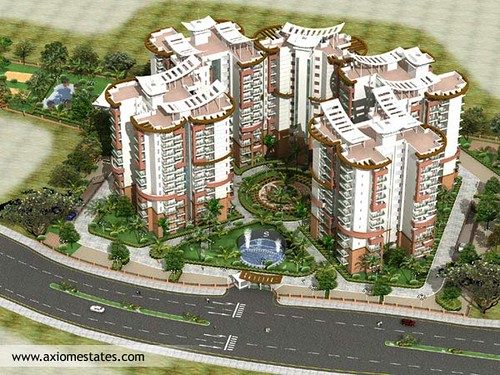
Image credit: Bangalore Properties - Real Estate India - Shriram Symphony by nancyarora2020 via flickr (BY-SA 2.0), sourced through Openverse.
Written by
Rajesh Tiwari
Real estate analyst covering property markets across Delhi NCR, Mumbai, and Bangalore. Rajesh tracks pricing trends, RERA compliance, and investment opportunities for residential and commercial buyers.
Looking for a technology partner?
From IT consulting to virtual office to custom software — eDarpan can help.
Continue reading
How AI Infrastructure Growth is Reshaping Delhi NCR Office Demand
AI infrastructure growth is reshaping office demand in Delhi NCR, making power and connectivity as crucial as location for future-proof investments.

Branded Residences in India 2026: Luxury Living or Smart Investment?
Is the premium for branded homes in India justified by returns? We analyze rental yields, capital appreciation, and tax pitfalls for the savvy investor.
RTO Mandates & Office Space Demand in India 2026: What to Know
RTO mandates and GCC expansion are driving up office rents in India. Here's what SMB founders need to know about leasing, flexible offices, and costs in 2026.