How AI Infrastructure Growth is Reshaping Delhi NCR Office Demand
AI infrastructure growth is reshaping office demand in Delhi NCR, making power and connectivity as crucial as location for future-proof investments.
You’re likely reading this because you own, manage, or are considering investing in commercial property in Delhi NCR. For years, the calculus was straightforward: proximity to the metro, quality of construction, and tenant profiles dominated the conversation. But over the last 18 months, a new, powerful force has entered the equation, one that is fundamentally reshaping what tenants want, what they’re willing to pay for, and where they want to be located. That force is the explosive, government-backed growth of artificial intelligence infrastructure.
Consider this: India's data centre capacity is projected to more than double from around 1,000 MW in 2024 to over 2,300 MW by 2026, with a significant chunk concentrated in the NCR-Mumbai corridors. This isn't just about hyperscalers like AWS and Microsoft building massive facilities on the outskirts. The real story, and the one that impacts your office building in Gurgaon, Noida, or Delhi, is the downstream effect. Every AI model deployed, every SaaS platform adopted by Indian MSMEs, and every logistics company automating its warehouse creates demand for a specific type of operational nerve center—a modern, connected, and resilient office. The old Class A office specs are no longer sufficient. The AI infrastructure impact on office real estate Delhi NCR is moving from a niche trend to the primary market driver.
In this post, I’ll cut through the hype. Drawing from two decades of building IT systems for Indian businesses—from a 15-person garment exporter in Okhla to a 300-employee auto components manufacturer in Manesar—I’ll translate what this AI infrastructure boom means for you. We’ll cover the specific property features now in demand, the new tenant profiles emerging, and most importantly, how to future-proof your investment or your business’s operational base. This isn't theoretical; it's a practical guide to navigating a market that is changing faster than most realize.
Key Takeaways:
- The AI boom is not just creating data centres; it's driving demand for "Edge Office" spaces with superior power, cooling, and connectivity in NCR.
- Tenant profiles are shifting from pure headcount density to a mix of technical staff, hybrid work models, and critical on-site infrastructure.
- Power reliability (with dual feeds and UPS/generator specs) and fiber redundancy are now as important as location and floor plate efficiency.
- Compliance needs (GST, IT Act, data localization) are pushing businesses to seek offices that can formally support their digital footprint.
- Investors must look beyond carpet area rates; operational expenditure (OPEX) resilience of a building is becoming a key valuation metric.
- Business owners can leverage this shift to negotiate better terms by aligning their tech roadmap with their real estate strategy.
Why Your Office’s Electrical Panel is Now a Selling Point
Ten years ago, when I’d consult on an office setup, the IT discussion started with internet bandwidth and ended with server room air conditioning. Today, it starts at the mains. The reason is simple: the density of compute per square foot inside an office has skyrocketed. It’s no longer just about laptops and a Wi-Fi router.
Let me give you a real example. A client of ours, a fintech startup originally operating from a co-working space in Cyber City, Gurgaon, decided to lease a dedicated 3,000 sq. ft. office. Their core product relied on a proprietary AI model for fraud detection. While the model was trained in the cloud, the inference engine—the part that makes real-time decisions—needed to be hosted on-premises for latency and data sovereignty reasons. Their initial fit-out plan included a small server rack. After our assessment, we had to tell them their chosen floor wouldn’t work. The building’s standard office power provision was 5 watts per sq. ft. They needed a dedicated 3-phase, 32A line just for their IT load, plus redundant cooling for that rack. The building management couldn't guarantee the stable voltage or the heat dissipation.
This is the new reality. The AI infrastructure impact on office real estate Delhi NCR manifests first in the demand for electrical and cooling resilience. Tenants are looking for:
- Power Density: Standard is 5-7 W/sq.ft. Tech-forward tenants now ask for 10-15 W/sq.ft. or provisions for dedicated feeder lines.
- Redundancy: Dual power feeds from different substations are a huge plus. Uninterrupted Power Supply (UPS) coverage for entire floors, not just common areas, is a question we now regularly field.
- Cooling Capacity: Precision air conditioning for server rooms or even high-density work zones (like teams of AI trainers) is becoming common. Raised floors for better air circulation are a valued feature.
For a property owner, upgrading these systems is a capital expenditure, but it directly translates into higher rental yields, lower vacancy, and a more future-proof asset. For a business owner, signing a lease without verifying these specs can lead to massive unplanned CapEx later.
Pro Tip: The Hidden Cost of Inadequate Power
Don't just look at the tariff per unit from DISCOM. Calculate the cost of downtime. A voltage fluctuation that crashes your on-prem AI inference server during peak transaction hours can cost a fintech or e-commerce company lakhs in lost revenue and customer trust per hour. Investing in a building with superior power infrastructure is cheaper than deploying and maintaining a massive, building-level UPS system yourself.
Fiber, Latency, and the Rise of the Network-Centric Office
If power is the blood, fiber connectivity is the central nervous system of the modern AI-enabled business. The days of choosing an office based on which ISP "covers the area" are over. The nature of work now involves constant, high-volume data exchange with cloud AI services (like OpenAI's APIs, AWS Bedrock, or Google's Vertex AI), video collaboration, and real-time data sync across locations.
Latency—the delay in data reaching its destination—is critical. A 100-millisecond delay might be fine for email, but it can ruin the user experience of an AI-powered customer service voicebot or a real-time analytics dashboard. Offices in NCR that are "fiber-rich"—served by multiple, diverse fiber providers with their own last-mile infrastructure—are commanding a premium. Tenants are actively asking for Service Level Agreements (SLAs) from building management that guarantee uptime and fix-time for building-level network paths.
| Connectivity Feature | Traditional Office Demand | AI/ Tech-Intensive Office Demand | Impact on Rental/Value |
|---|---|---|---|
| Primary Internet Line | 100 Mbps leased line, 99.5% SLA | 1 Gbps+ dedicated fiber, 99.9% SLA with financial penalties | Can support 10-15% premium |
| Redundancy | Optional; often a 4G dongle backup | Mandatory diverse-path fiber from different provider, automatic failover | Major differentiator; reduces vacancy risk |
| Intra-building Cabling | Standard CAT-6 | CAT-6A or fiber to the desk for specific tenants, dedicated conduits | Adds to building's tech credibility |
| Peering & Data Centre Proximity | Not a consideration | Proximity to internet exchanges (like NIXI) or edge data centres reduces latency | Locations near major network hubs (e.g., specific sectors in Noida, Gurgaon) seeing increased demand |
A Case Study: From On-Premises Struggle to Hybrid Cloud Efficiency
Let's talk about a real migration I led last year. "Apex Logistics," a 40-person freight forwarding company based in a standalone building in Udyog Vihar, Phase IV, was running its entire operation—CRM, tracking, customs documentation—on an aging on-premises server cluster. They were spending approximately ₹85,000 per month on electricity (for AC and servers), annual hardware maintenance contracts (₹3 lakh), and two full-time IT staff. Downtime during power cuts or hardware failures was common, hurting customer service.
Their goal wasn't to become an AI company, but to use AI-powered tools (like automated document processing and predictive delay alerts) to stay competitive. Their old setup couldn't support it. We moved them to a hybrid cloud model:
- Assessment & Planning (Weeks 1-2): We cataloged all applications. Critical, legacy customs software remained on a new, smaller on-prem server (for latency). Customer-facing and operational apps were targeted for cloud migration.
- Infrastructure Upgrade (Week 3): We installed a 10 KVA online UPS for the server and core networking, funded partly by the capex they saved from not replacing old hardware. We brought in a second fiber line from a different provider.
- Migration (Weeks 4-8): We migrated their core database and applications to a cloud VM. We integrated a cloud-based AI document processing service, eliminating manual data entry. We implemented a cloud-managed SD-WAN to securely connect their office to the cloud.
- Result: Their monthly IT OPEX dropped to ~₹42,000 (cloud bills + connectivity). They redeployed one IT staff to business analysis. They now had a stable, scalable base to subscribe to SaaS AI tools. Their office space requirement didn't change dramatically, but the quality of that space's infrastructure became the foundation of their efficiency.
This is the pattern: businesses may not all build AI, but they will all consume AI services, and that requires a modern, cloud-ready office backbone. This is a core part of our IT consulting practice—aligning technology with business goals and physical infrastructure.
New Tenant Profiles: Who is Actually Leasing the Space?
The tenant mix in NCR is evolving. Beyond the traditional IT services and banking captives, we now see:
- AI Model Development & Training Units: Often teams from large corporates or funded startups, they need powerful workstations (which draw more power and emit more heat) and robust data transfer capabilities. They prefer smaller, high-spec floors rather than vast open plans.
- Edge Computing Hubs: For companies in manufacturing, retail, or IoT, the office may host small edge data centers to process data locally before sending insights to the cloud. This demands superior cooling and security.
- Hybrid Work Hubs: Companies adopting a 3-days-in-office model are opting for slightly less space but higher quality. The office becomes a collaboration and tech hub, not a rows-of-desks setup. This increases demand for meeting rooms, video-conferencing suites, and reliable connectivity—all of which rely on the building's core infrastructure.
- Compliance & Back-Office Centers: With GST, IT Act, and potential data localization rules, many businesses need a formal, addressable location for their digital operations. A virtual office address might suffice for registration, but the actual server or compliance operation needs a physical, secure, and audit-ready location.
Future-Proofing Your Property Investment: A 5-Point Checklist
If you own or are evaluating a commercial property in NCR, here’s what you should be assessing today:
- Conduct a Power & Cooling Audit: Hire an electrical consultant to assess your building's maximum load capacity, stability of supply, and potential for upgrades. Can you offer dedicated metered power to tenants? Is your DG/UPS capacity adequate for today's density?
- Diversify Your Fiber Providers: Actively invite at least two non-competing fiber providers to install their infrastructure in your building. This is a capital-light way to massively increase attractiveness.
- Re-evaluate Common Area Amenities: High-speed building-wide Wi-Fi, video-conferencing booths, and even designated secure delivery zones for IT hardware are now value-adds.
- Review Security Protocols: Tech tenants are concerned about physical access to their racks and data. 24/7 biometric access logs, CCTV coverage of utility areas, and secure storage for shipments should be standard.
- Document Everything: Create a clear, technical datasheet for your property. Include floor load capacity, exact power specs per floor, available fiber providers with SLAs, and cooling capacities. Transparency builds trust with sophisticated tenants.
For investors, partnering with a firm that understands both real estate and technology is crucial. At eDarpan, our Properties division works closely with our tech consultants to evaluate assets through this exact lens.
Common Mistake: Signing a Lease Without an IT Infrastructure Clause
I've seen too many business owners, thrilled with a good rental rate, sign a 3-year lease only to discover the building management won't allow them to run a dedicated fiber line or install a necessary external cooling unit for their server room. This can stall your business growth entirely.
Always negotiate: Include a schedule in your lease agreement that specifies your right to install specific IT infrastructure, subject to reasonable safety and aesthetic guidelines. Specify who bears the cost for increased power load or structural reinforcements. This upfront clarity prevents costly disputes later. This is where having an advisor who’s been through these negotiations, like our team at eDarpan Consulting, can save you significant time and money.
FAQ: AI Infrastructure and NCR Office Real Estate
How is AI specifically increasing demand for office space? Isn't AI about remote work?
AI is driving demand for a different type of office. While some tasks can be remote, developing, managing, and integrating AI systems often requires collaborative technical teams, secure infrastructure, and high-performance connectivity that is more reliably provided in a dedicated office. The office becomes a "lab" or "hub," not just a collection of desks.
Which micro-markets in Delhi NCR are benefiting most from this trend?
Sectors with established fiber backbones and reliable power are leading. In Gurgaon, Cyber City/Golf Course Road remain strong, but newer developments in Sector 72-74 are being built to higher specs. In Noida, sectors along the expressway and near the upcoming Noida International Airport are seeing demand from tech logistics and AI-driven firms. Always assess the infrastructure, not just the postal address.
What is the minimum internet speed a modern office should have?
For any business planning to use cloud services effectively, a 100 Mbps dedicated fiber connection is the bare minimum starting point today. For teams of 20-50 using video and AI tools, 300-500 Mbps is recommended. The key is the SLA and redundancy, not just the headline speed.
Can my old building in South Delhi compete with new builds in Gurgaon for tech tenants?
Yes, but with strategic upgrades. A characterful building in a prime location can attract boutique AI firms or creative tech teams. Your investment should focus on delivering flawless, redundant power (perhaps with a building-wide UPS upgrade) and bringing in multiple fiber lines. Your unique location can be the draw, but the infrastructure must meet the non-negotiable baseline.
As a business owner, should I buy or lease office space in this market?
This depends heavily on your capital and growth trajectory. Leasing offers flexibility, which is valuable in a fast-changing tech landscape. Buying builds equity and locks in costs, but ties you to a location. Given the pace of change in both AI and infrastructure, for most growing tech businesses, leasing a high-spec space is the more prudent option, allowing you to scale or adapt your footprint every 3-5 years. Explore options on eDarpan Properties for rentals or properties for sale to see what aligns with your strategy.
What are the top 3 questions I should ask a landlord before leasing?
1. "Can you provide the electrical load calculation for this floor, and is there capacity for a dedicated 3-phase line?" 2. "Which fiber providers have physically diverse entry points into the building, and can I see their SLAs?" 3. "What is the process and any associated costs for me to install additional cooling or security for a server room?"
How does this relate to the RTO (Return to Office) mandates we're seeing?
They are interconnected. As discussed in our previous post on RTO mandates and office space demand, companies are demanding offices that justify the commute. A bland, poorly connected office will struggle with RTO compliance. An office designed as a high-productivity, tech-enabled hub becomes an asset that employees want to use and that directly enables business growth, making RTO easier to implement.
Conclusion: Positioning for the Next Decade
The growth of AI is not a bubble; it is a fundamental shift in how business is done. For the Delhi NCR real estate market, this shift is crystallizing into a clear divergence. Properties that offer twentieth-century utilities will see demand stagnate and tenant churn increase. Properties that proactively adapt to the power, cooling, and connectivity needs of a data-driven business will become the high-yield, low-vacancy assets of the coming decade.
Whether you are an investor seeking resilient returns or a business owner building a competitive operation, understanding this AI infrastructure impact on office real estate Delhi NCR is no longer optional. It is the critical path to making informed, profitable decisions. The time to audit, upgrade, and position is now, while the market is still internalizing this new reality.
If you're looking to evaluate your property's tech readiness or plan your business's next office move with these factors in mind, our integrated team of property and technology consultants is here to help. Start the conversation by contacting us for a no-obligation assessment. Let's build not just for today, but for the intelligent future that is already taking shape.
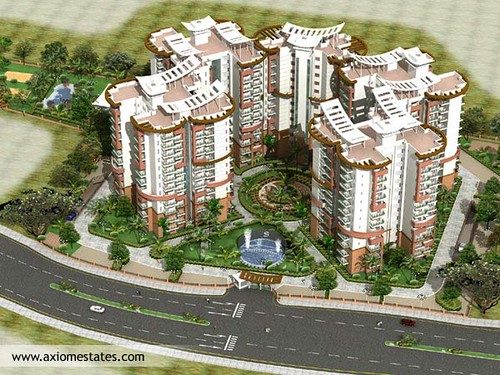
Image credit: Bangalore Properties - Real Estate India - Shriram Symphony by nancyarora2020 via flickr (BY-SA 2.0), sourced through Openverse.
Written by
Rajesh Tiwari
Real estate analyst covering property markets across Delhi NCR, Mumbai, and Bangalore. Rajesh tracks pricing trends, RERA compliance, and investment opportunities for residential and commercial buyers.
Looking for a technology partner?
From IT consulting to virtual office to custom software — eDarpan can help.
Continue reading
Branded Residences in India 2026: Luxury Living or Smart Investment?
Is the premium for branded homes in India justified by returns? We analyze rental yields, capital appreciation, and tax pitfalls for the savvy investor.
RTO Mandates & Office Space Demand in India 2026: What to Know
RTO mandates and GCC expansion are driving up office rents in India. Here's what SMB founders need to know about leasing, flexible offices, and costs in 2026.
Fractional Ownership of Commercial Property in India 2026
SEBI now regulates fractional ownership via SM REITs. Learn how to own Grade-A commercial property in India from ₹10 lakh, plus returns, risks and a diligence checklist.