Rent or Buy in Delhi-NCR 2026: Which Option Wins for Your Budget?
Rent or buy in Delhi-NCR in 2026? Learn the break-even framework, hidden costs and time horizon that decide whether buying really beats renting for your budget.

Here is a number that should make any Delhi-NCR household pause: if you bought a 2BHK in Gurgaon's Sector 50 or Noida's Sector 137 at the start of 2023 and did nothing else, your paper wealth probably moved faster than your salary did. Prices in the region have been climbing at a double-digit clip, and the 12% annual price growth recorded in Q3 has pushed many first-time buyers to ask whether they are already too late. The fear is real. So is the opposite fear, that a monthly EMI commits you to a city you may not be living in five years from now.
This post is for the person who has to answer the question rent or buy Delhi NCR 2026 with actual numbers, not vibes. You will get a break-even framework tied to your monthly budget and time horizon, a worked example from a real-world style scenario, a comparison of the financing and transaction costs that people routinely underestimate, a step-by-step method to run the math yourself, and the mistakes I see most often when people brief a broker or a bank. By the end, you should know whether buying beats renting for your specific situation, and roughly how long you need to stay put for it to make sense.
Key Takeaways
- Buying only wins if you stay long enough to recover transaction costs (stamp duty, registration, brokerage, GST on under-construction properties) and the interest you pay in the early EMI years. In most Delhi-NCR cases that means roughly 5 to 7 years, not 2.
- Price appreciation is not the same as return. Compare the rent you avoid paying against the EMI, the down payment's opportunity cost, and maintenance, not just the sale price.
- Your monthly budget sets the ceiling, but your time horizon decides the answer. A job that may move in 24 months is a renter's signal regardless of how the market looks.
- Under-construction purchases carry GST, delayed possession risk and different tax treatment. Ready-to-move properties are often the cleaner comparison against rent.
- Run the break-even with a spreadsheet, stress-test interest rates at plus or minus 1.5 percentage points, and assume appreciation far below the recent headline figure.
Why does the rent or buy decision feel harder in Delhi NCR in 2026?
The decision is harder here than in most Indian cities because the region is not one market. Dwarka Expressway, Noida Extension, Gurgaon's peripheral sectors and inner-city Delhi neighbourhoods each behave differently on rents, yields and appreciation. A single headline growth figure hides enormous variation. Some micro-markets have seen rents move sharply upward as new office clusters arrived, while others have held flat because supply of rental units grew faster than demand.
There is also a timing problem. Buyers who entered during quieter periods feel vindicated, while those who waited are anxious that the window is closing. Renters, meanwhile, sometimes assume rent is "dead money" when, in reality, a well-chosen rental can be the cheaper option for years. Neither instinct is reliable. You need the arithmetic.
If you want a closer look at how this plays out in one micro-market, our earlier analysis of Dwarka buyer vs renter math for 2026 walks through similar numbers, and the Noida break-even breakdown covers the affordability picture across the Noida corridor.
How do you build a break-even framework that actually reflects your budget?
Start with the only number that matters most: what you would realistically pay each month in each scenario, plus what you give up by committing capital. A break-even analysis compares the total cost of owning against the total cost of renting over the same period, then adjusts for what your down payment could have earned elsewhere.
The four cost buckets
Most people forget at least two of these buckets. Include all four.
- Ownership carrying costs: EMI interest portion (the principal portion builds equity, so count it separately), society maintenance, property tax, and insurance if you take it.
- One-time transaction costs: stamp duty (which varies by state and category, and in Delhi and Haryana it is a meaningful chunk of the purchase), registration fee, brokerage, legal and valuation fees, and home loan processing charges.
- Opportunity cost of the down payment: the money you tie up could have been invested. If you put ₹40 lakh into a property rather than a diversified investment earning, say, 8% after tax, that foregone return is a real cost.
- Rental alternative: the rent you pay, plus its own annual escalation, and any security deposit that is locked up.
The break-even formula, in plain terms
Calculate the total outflow for each path over your planned time horizon. For renting, add up rent paid, adjusting for annual increments. For buying, add up EMIs paid (interest and principal combined is fine for cash-outflow comparison), maintenance, property tax, one-time costs and the opportunity cost of your down payment. Then subtract the expected sale value of the property at the end of the horizon, net of selling costs. The path with the lower net outflow wins over that period.
Repeat the calculation for different horizons: 3 years, 5 years, 7 years, 10 years. The horizon where buying starts beating renting is your break-even point. For most Delhi-NCR buyers using a typical home loan, that point lands in the five-to-seven-year range once transaction costs are properly included.
What does a real break-even look like? A worked example.
Consider a 34-year-old IT professional in Noida earning ₹1.6 lakh per month, with ₹25 lakh in savings. She is weighing a ₹1.1 crore ready-to-move 2BHK in a Noida Extension society against renting a comparable 2BHK for ₹35,000 per month with an annual rent escalation of 5%. Her home loan would be ₹85 lakh at 8.5% for 20 years, requiring an EMI of roughly ₹74,000. Her down payment is ₹25 lakh, which covers the balance of the purchase, stamp duty, registration and brokerage.
Her one-time costs are substantial. Stamp duty and registration together may run to several lakh rupees depending on the applicable rate and the category of the buyer, plus brokerage and legal fees. Maintenance and property tax add a recurring monthly load on top of the EMI.
Run the comparison with these assumptions. Over five years, she pays rent totalling roughly ₹24 lakh once the escalation is applied. Her ownership path involves five years of EMIs (around ₹44 lakh), plus one-time costs, plus maintenance, minus the eventual sale value after assuming modest appreciation. The opportunity cost on the ₹25 lakh she has tied up is significant in its own right. Over five years the buy option is usually slightly worse, and only pulls ahead once the horizon stretches toward seven or more years, and only if appreciation is decent.
The lesson is not that she should rent. It is that the decision depends on whether she intends to stay, and on how much appreciation she assumes. Change her assumed appreciation from 4% to 10% per year and the answer flips. That sensitivity is exactly why you should build the model yourself rather than trust a single projection.
What are the real options and how do they compare?
Renting and buying are not the only paths. Buyers in Delhi NCR increasingly choose between ready-to-move and under-construction, and between outright purchase and fractional or structured alternatives. The table below compares the main options on the criteria that actually drive the decision.
| Option | Upfront cash needed | Recurring monthly outflow | Transaction cost burden | Best suited for |
|---|---|---|---|---|
| Long-term rental (2 to 3 year lease) | Deposit of 2 to 6 months' rent | Rent plus escalation | Low (brokerage, agreement stamp duty) | Uncertain job location, short horizon |
| Ready-to-move purchase | 20 to 25% of price plus costs | EMI, maintenance, property tax | High (stamp duty, registration, brokerage) | Stable 5+ year horizon, want possession now |
| Under-construction purchase | Staged payments over construction | Pre-EMI then full EMI, plus rent if you still rent | High, plus GST on the under-construction component | Buyers who can carry overlap and accept delay risk |
| Fractional or structured commercial exposure | Lower ticket size | Usually no personal EMI | Varies by structure | Investors diversifying, not seeking a home |
For a closer look at the investor-side alternative, see our piece on fractional ownership of commercial property in India, which explains when that route is worth the complexity and when it is not.
How should you run the break-even model step by step?
If you want to do this yourself or brief an advisor with confidence, follow this sequence. It takes an afternoon in a spreadsheet and will tell you more than most property portal calculators.
- Fix your time horizon. Write down the number of years you realistically expect to stay in the city and in this type of home. Be honest. If there is a meaningful chance of a transfer or a job change within three years, use a three-year horizon as your base case.
- Get the real purchase price and the real rent. Use recent transaction data and at least three comparable listings for each. Negotiate-worthy asking prices should be discounted toward realised transaction values, not headline numbers.
- Calculate one-time purchase costs exactly. Look up the stamp duty and registration rates applicable in your state and for your buyer category, add brokerage, legal fees and loan processing charges. Do not estimate these as a round percentage without checking.
- Model the loan. Use your realistic loan amount, interest rate and tenure. Split each year's EMI into interest and principal. Track the outstanding balance, because that determines what you actually owe if you sell.
- Add recurring ownership costs. Society maintenance, property tax, and a reserve for repairs. Many first-time buyers forget the repair reserve, which becomes material in older buildings.
- Model rent with escalation. Use a realistic annual increase, often in the 4 to 6% range for stable areas, but test lower and higher figures.
- Calculate opportunity cost on your down payment. Pick a conservative post-tax return for alternative investments and apply it to the cash you commit.
- Run three appreciation scenarios. Model flat prices, moderate growth, and optimistic growth. Do not anchor on the recent 12% figure. Long-run appreciation in most localities is far lower and more uneven.
- Stress-test interest rates. Rerun the model at plus and minus 1.5 percentage points. A loan that is comfortable at 8.5% can become painful if rates rise.
- Find the crossover point. Identify the year in which cumulative buying costs fall below cumulative renting costs, under each scenario. That is your practical break-even.
Pro Tip: the number that most often tips the decision
Most buyers focus on the EMI versus rent comparison. The variable that quietly decides outcomes is the size of your down payment relative to your opportunity cost. A buyer who could comfortably earn a decent post-tax return on that capital, and who has few other uses for it, will often find renting plus investing competes strongly with buying for the first decade. Conversely, if your money is sitting idle in a savings account, the opportunity cost is low and buying looks better. Run this one line in your model explicitly before deciding.
What mistakes do Delhi-NCR buyers make most often?
Across the buyers and renters I have advised, a handful of errors recur. Avoiding them is worth more than any clever financial trick.
Ignoring GST and possession timelines on under-construction homes
Under-construction purchases attract GST on the applicable portion of the price, and that cost is often misunderstood or discovered late. Equally, delayed possession is common enough that buyers need to plan for paying rent for longer than expected while also servicing a pre-EMI. Build a buffer of at least six to nine months of overlap into your model, and verify the builder's track record and RERA registration before you pay anything.
Confusing a lower EMI with a cheaper home
Stretching tenure to 30 years lowers the EMI but dramatically raises total interest. Check the total interest cost over the full loan, not just the monthly figure. A lower EMI is only a better deal if the total cost is acceptable and you can prepay without penalty.
Assuming you will sell at the headline price
Selling costs, brokerage, capital gains tax (which depends on holding period and your circumstances, so verify with a tax professional) and the discount you will likely accept in a negotiated sale all reduce what you pocket. Model the net proceeds, not the listing price.
Treating the decision as permanent
The choice is not irreversible in one direction. A renter can buy later, and a buyer can sell or rent out. What matters is matching the decision to your likely horizon and cash position, and avoiding commitments you cannot reverse without heavy losses.
What should a first-time buyer check before committing?
Before signing an agreement, confirm the following. This checklist is short on purpose.
- Your emergency fund covers at least six months of EMI plus maintenance after the down payment is paid.
- Your total EMIs, including any existing loans, stay within a sustainable share of your take-home pay, commonly kept under about 40 to 50% by most lenders' underwriting logic and by prudent household budgeting.
- The property has clear title, approved plans, and, for under-construction projects, RERA registration and a verifiable completion schedule.
- You have computed stamp duty and registration for your state and buyer category, not estimated them.
- You have compared at least two loan offers on total cost, prepayment terms and processing fees.
- Your break-even horizon is shorter than the period you realistically expect to stay.
If you are running a business as well as a household, the same discipline applies. Many founders in Gurgaon and Noida hold property through a company structure or for office use, and that brings its own GST, registration and tax considerations. Our guide to IT and business consulting covers how we help small companies think through these operational and compliance decisions alongside their infrastructure planning.
Is it better to rent or buy in Delhi NCR in 2026 for someone who may relocate?
If there is a meaningful chance you will move within four to five years, renting is usually the stronger choice in Delhi NCR. The transaction costs of buying are front-loaded and substantial, and they will not be recovered quickly. Renting preserves flexibility and lets you keep your capital working elsewhere. If your career is stable and you expect to be in the region for seven years or more, buying is more likely to win, particularly if you can secure a reasonable rate and a property in a micro-market with dependable rental demand.
How can eDarpan help with the decision?
If you are weighing a purchase, browse properties for sale across Delhi NCR, or if you prefer to keep flexibility, explore rental properties in the same micro-markets to compare real costs on your shortlist. Our property team at eDarpan Properties can help you pull comparable transaction data and rental yields so your break-even model starts from actual numbers. For broader context on the region, our analysis of buyer strategy in a softening market explains why the pace of registrations matters when you negotiate. And if you are considering a city outside the NCR, our review of tier-2 cities for property investment provides a useful alternative benchmark. You can always contact eDarpan to talk through your specific numbers, and you can read more about who we are and how we work.
Frequently asked questions
Is it better to rent or buy in Delhi NCR in 2026?
It depends on your time horizon and cash position rather than on headline price growth. Buying generally starts to beat renting only once you stay long enough to recover transaction costs and early interest, often five to seven years in this region. If your job or family plans may change sooner, renting is usually the safer choice.
How do I calculate break-even between renting and buying a house?
Add up the full cost of each path over the same period. For renting, include rent and its annual increase. For buying, include EMI interest, maintenance, property tax, one-time costs and the opportunity cost of your down payment, then subtract the net sale value at the end. The horizon where buying becomes cheaper is your break-even point.
What is the stamp duty for buying a flat in Noida or Gurgaon?
Stamp duty and registration rates differ between Uttar Pradesh (where Noida sits) and Haryana (where Gurgaon sits), and they can also vary by buyer category and property type. Check the current schedule with the relevant state registration department or a qualified property lawyer before budgeting, since these are among the largest one-time costs.
Should I buy under-construction or ready-to-move property in Delhi NCR?
Ready-to-move homes give you possession, a clearer cost picture and no pre-EMI period, which makes them easier to compare with rent. Under-construction homes can be cheaper upfront but add GST, delay risk and overlap costs while you still pay rent. Choose under-construction only if you can carry the overlap and have verified the builder and RERA registration.
How much down payment do I need to buy a home in Delhi NCR?
Lenders typically expect a meaningful down payment, and in practice you should plan for the down payment plus stamp duty, registration, brokerage and legal costs, which together can add a significant amount on top of the deposit. Keep an emergency fund of several months' EMI after paying these, so a job disruption does not force a distressed sale.
Does a home loan interest rate change the rent or buy answer?
Yes, materially. A small change in interest rate shifts the EMI and the total interest over the loan, which moves your break-even point. Stress-test your model at rates about 1.5 percentage points above and below your expected rate before deciding, and compare total cost across loan offers, not just the monthly figure.
Is rent wasted money if I plan to stay in Delhi NCR long term?
Not necessarily. Rent buys housing services, and if the rent you avoid paying through ownership is less than the full cost of owning (including the opportunity cost of your down payment), renting can be the cheaper path even over a long period. Over longer horizons, buying tends to gain ground, so the question is how long you truly stay and what your capital could earn elsewhere.
Image credit: Innovate Maryland Emerging Technology Center by MDGovpics via flickr (BY 2.0), sourced through Openverse.
Written by
Rajesh Tiwari
Real estate analyst covering property markets across Delhi NCR, Mumbai, and Bangalore. Rajesh tracks pricing trends, RERA compliance, and investment opportunities for residential and commercial buyers.
Looking for a technology partner?
From IT consulting to virtual office to custom software — eDarpan can help.
Continue reading

Fractional Ownership of Commercial Property in India 2026: Is It Worth It?
Can you own a slice of an Indian office, warehouse or retail unit without a ₹1 crore cheque? We break down the structures, real net returns and legal risks.
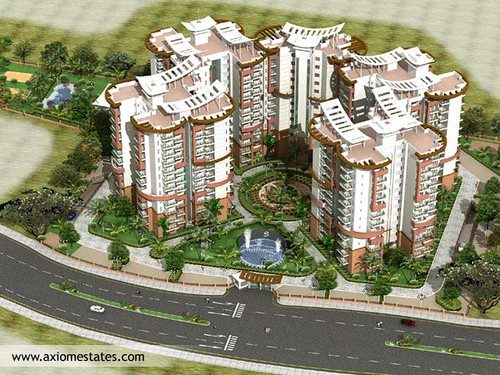
Home Prices Up, Rents Steady: Dwarka Buyer vs Renter Math for 2026
Home prices are outpacing salaries in Dwarka. Here's a break-even framework to work out whether renting or buying wins for your numbers, with worked examples and hidden costs.
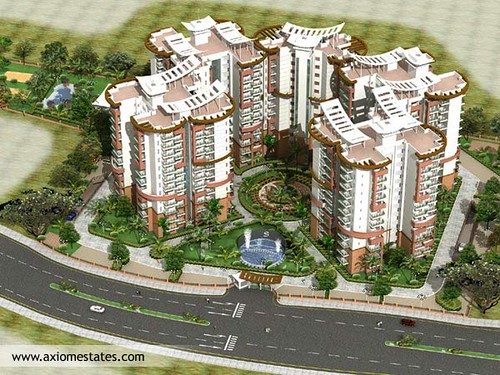
Tier-2 Cities Up 63% in 5 Years: Where Should You Invest in 2026?
Tier-2 cities have grown up to 63% in five years. Here's how to separate real rental-backed growth from hype before you put ₹80 lakh into property.