Property Registration in India 2026: Stamp Duty & Charges
Discover true property registration charges India 2026: state-wise stamp duty, women's rebates, hidden costs, and a worked example to budget your real cost.
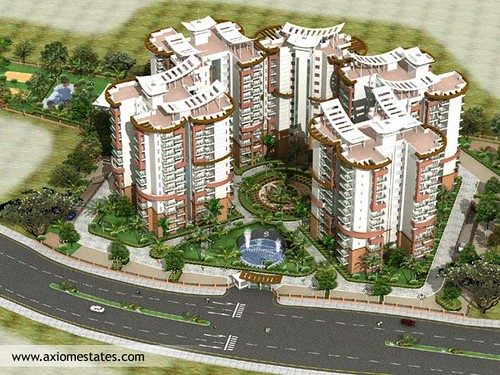
Here's the scene that plays out in registrar offices across India every single week: a couple has saved for eight years, negotiated hard, and locked a flat at ₹80 lakh. They think they're done. Then the paperwork lands and they discover they need another ₹5.6 lakh in cash for stamp duty, ₹80,000 for registration, plus a lawyer, a facilitation fee, and a "society transfer charge" nobody mentioned. Suddenly the deal they budgeted at ₹80 lakh is a ₹87 lakh commitment, and the shortfall gets funded on a credit card or a panicked call to a relative.
I've sat across the table from enough first-time buyers to know that the sticker price of a property is one of the least reliable numbers in the entire transaction. Stamp duty alone ranges from roughly 3% to 8% depending on which state you're buying in and, in many places, whether the buyer is a woman. On an ₹80 lakh purchase that difference is worth ₹4 lakh. That's not a rounding error. That's a car.
This guide breaks down property registration charges India 2026 state by state, walks through a real worked example so you can see where every rupee goes, and flags the "hidden" line items that consistently blow up buyer budgets. By the end you'll be able to calculate your true out-the-door cost before you sign anything.
Key Takeaways
- Budget 7% to 10% over the property price for stamp duty, registration, and incidental charges. Anything less and you're likely underprepared.
- Stamp duty is charged on the higher of the agreement value or the government circle/ready-reckoner rate — not just what you pay the seller.
- Several states, including Delhi, UP, Maharashtra, and Rajasthan, offer 1% to 2% stamp duty rebates when the property is registered in a woman's name.
- Registration fees are usually 1% of value, often capped (₹30,000 cap in Maharashtra, for instance).
- Hidden costs — GST on under-construction property, TDS, society transfer, legal, and mutation charges — can add ₹2–5 lakh that buyers routinely forget.
- You can save meaningfully by registering during a state stamp duty concession window and by using the correct valuation, not an inflated one.
What exactly are stamp duty and registration charges?
Two separate government levies, often confused. Stamp duty is a tax the state government charges on the transfer of property, paid to make your sale deed legally valid. Registration charges are the fee for recording that transaction in the government's official land records at the sub-registrar's office. Both are mandatory. Skip either and your ownership isn't legally enforceable.
The critical thing most buyers miss: stamp duty is calculated on the higher of two numbers — the actual consideration (what you're paying) or the government-notified valuation, known as the circle rate in North India, ready reckoner rate in Maharashtra, and guidance value in Karnataka. If you negotiate a great deal below circle rate, congratulations on the price, but you'll still pay stamp duty on the higher circle rate figure. And buying below circle rate triggers income tax implications for both parties under Section 56(2)(x).
State-wise stamp duty and registration charges in 2026
Rates change through state budgets and notifications, so always confirm on your state's registration department portal before you transact. That said, here's a realistic snapshot of the major markets. Where women get a concession, I've noted it because it's genuine money.
| State / City | Stamp Duty (Male / General) | Stamp Duty (Female) | Registration Fee |
|---|---|---|---|
| Maharashtra (Mumbai) | 6% (incl. metro cess) | 5% | 1% (capped ₹30,000) |
| Delhi (NCT) | 6% | 4% | 1% |
| Karnataka (Bengaluru) | 5% (above ₹45L) | 5% | 1% |
| Telangana (Hyderabad) | 7.5% (incl. transfer duty) | 7.5% | 0.5% (min ₹0.5% / ₹20,000) |
| Tamil Nadu (Chennai) | 7% | 7% | 4% |
| Uttar Pradesh (Noida) | 7% | 6% (rebate up to ₹10L value) | 1% |
| Haryana (Gurgaon) | 7% (urban) | 5% (urban) | Up to ₹50,000 |
| West Bengal (Kolkata) | 6% (+1% above ₹1 cr) | 6% | 1% |
Notice how Tamil Nadu stacks a 7% stamp duty with a punishing 4% registration fee — an 11% total that quietly makes Chennai one of the most expensive places in India to actually close a deal. Karnataka, by contrast, keeps registration at 1%, so Bengaluru's headline 5% is far more manageable. This is exactly the kind of detail that changes which city makes sense for an investor. If you're weighing markets, our breakdown of India's top rental yield cities for 2026 pairs well with these registration costs.
A real worked example: the true cost of an ₹80 lakh flat in Pune
Let me make this concrete. A software engineer couple I advised last year bought a 2BHK in Kharadi, Pune. The negotiated price was ₹80 lakh. Here's how the actual outflow broke down once we mapped everything.
- Agreement value: ₹80,00,000
- Ready reckoner check: the government valuation came to ₹78 lakh, so stamp duty applied on the higher ₹80 lakh.
- Stamp duty (registered in wife's name at 5%): ₹4,00,000 — saving ₹80,000 versus the 6% male rate.
- Registration fee (1%, capped ₹30,000): ₹30,000
- GST (property was under construction, so 5% on price with no ITC): ₹4,00,000
- Legal verification and drafting: ₹25,000
- Society / builder documentation and khata: ₹18,000
- Facilitation and franking charges: ₹6,000
Total incidental cost: ₹8.99 lakh on top of the ₹80 lakh headline. That's roughly 11.2% over the sticker price, and the GST component alone (₹4 lakh) shocked them because the builder had verbally described the price as "all-inclusive." It wasn't. Ready-to-move-in and completed properties with an occupancy certificate carry no GST; under-construction attracts 1% (affordable) or 5% (others). That single distinction moved their real budget by four lakh.
Common Mistake: Buyers assume "all-inclusive" from a builder means inclusive of GST, stamp duty, and registration. It almost never does. Get a written cost sheet that itemises the base price, GST, floor rise, PLC (preferential location charge), parking, club membership, and maintenance advance before you pay any booking amount. If a builder resists putting numbers in writing, treat it as a red flag.
What hidden charges do first-time homebuyers forget?
The stamp duty and registration are the loud costs. The quiet ones are where budgets go to die. Here's the full list I run through with every client.
GST on under-construction property
5% for standard homes, 1% for affordable housing (up to ₹45 lakh with area limits), both without input tax credit. Zero GST on completed properties with an occupancy certificate. Always confirm the OC status.
TDS on property purchase
If the property value is ₹50 lakh or more, the buyer must deduct 1% TDS and deposit it via Form 26QB within 30 days of the transaction. Miss it and you face interest plus penalty. It's a buyer obligation, not the seller's, and it catches people out constantly. We wrote a full TDS on property purchase checklist for 2026 that covers this end to end.
Society transfer and formation charges
In resale flats, housing societies levy transfer charges. In Maharashtra these are capped at ₹25,000 for cooperative societies, but many demand a "voluntary donation" on top. Push back — the cap is legal.
Mutation / khata transfer
Updating the municipal record so property tax bills come in your name. Usually a few thousand rupees, but skipping it creates headaches at resale and for utility connections.
Legal due diligence
Budget ₹15,000–₹40,000 for a proper title search, encumbrance certificate check, and deed drafting. This is the cheapest insurance you'll ever buy against a disputed title.
Home loan processing and mortgage stamp duty
Lenders charge 0.25%–1% processing. Several states also levy a smaller stamp duty on the mortgage deed itself — often overlooked in the loan sanction excitement.
Step-by-step: how the property registration process actually works
If you've never done this, the sub-registrar's office can feel opaque. Here's the sequence so you can walk in prepared or brief your lawyer precisely.
- Verify title and encumbrance. Obtain a 13–30 year title chain and an encumbrance certificate (EC) confirming no pending loans or disputes on the property.
- Confirm the valuation. Check the circle/ready reckoner/guidance value online and compare against your agreement value. Stamp duty applies to the higher figure.
- Draft the sale deed. Get it prepared by a lawyer with correct buyer/seller details, property schedule, and consideration.
- Pay stamp duty. Via e-stamping (SHCIL), franking, or the state's online portal. Keep the challan.
- Deduct and deposit TDS if value is ₹50 lakh+, using Form 26QB, and hand the seller Form 16B.
- Book a registration slot. Most states now require an online appointment at the sub-registrar's office.
- Appear for registration. Buyer, seller, and two witnesses attend with originals and PAN/Aadhaar. Biometrics and photographs are captured.
- Pay the registration fee and receive the registered deed, usually within a few days to two weeks depending on the state.
- Apply for mutation at the municipal office to update property tax records in your name.
Pro Tip: Register the property in a woman's name where your state offers a concession, but only if she is genuinely a co-owner or sole owner and the funds trail supports it. On an ₹80 lakh flat in Delhi that's a real ₹1.6 lakh saving (6% versus 4%). Don't do it purely as a paper exercise if the money and ownership don't align — it can create tax and succession complications later that dwarf the saving.
How much should you budget over the sticker price in 2026?
My rule of thumb for buyers: for a ready-to-move-in resale property, add 8–9% to the base price to cover stamp duty, registration, legal, and society charges. For an under-construction property, add 12–14% because GST enters the picture. NRIs should factor in higher TDS (20%+ surcharge on the seller side when they're selling) and repatriation rules — our guide on NRI property investment in India for 2026 covers those specifics.
If you're deliberately shopping for value, understanding these charges lets you negotiate smarter — sometimes a completed property priced slightly higher beats an under-construction one once you add GST. Our post on buying a home below your budget in India uses exactly this logic. And if Hyderabad is on your radar despite its 7.5% duty, our Hyderabad property boom analysis for 2026 weighs whether the price appreciation justifies the higher closing cost.
Where eDarpan fits in your property journey
Registration charges are only part of the picture. Getting the property right in the first place matters more. On the eDarpan Properties platform you can browse verified listings, whether you're looking at properties for sale across India or comparing rental options before you commit to a purchase. We surface circle-rate-relevant pricing so you're not blindsided at the registrar's window.
Beyond real estate, eDarpan works with SMBs on the operational side of setting up and running a business — from a virtual office address for GST and company registration when you're establishing a legal entity to IT consulting for the systems behind your operations. If you're a developer, broker, or property firm looking to build buyer-facing tools, our custom software development and mobile app development teams have shipped exactly these platforms. Have a question about a purchase or a project? Reach out to the eDarpan team.
Frequently asked questions
Is stamp duty calculated on the property price or the circle rate?
On whichever is higher. If you pay ₹80 lakh but the government circle/ready reckoner rate values the property at ₹85 lakh, stamp duty is charged on ₹85 lakh. Buying below circle rate also creates income tax exposure for both parties under Section 56(2)(x).
Do women get a discount on stamp duty in India?
In several states, yes. Delhi charges 4% for women versus 6% for men, Maharashtra offers 5% versus 6%, and Rajasthan and UP have similar concessions. Karnataka and Tamil Nadu currently apply the same rate regardless of gender. Always confirm on your state portal.
Is GST applicable on all property purchases?
No. GST applies only to under-construction properties — 1% for affordable housing and 5% for others, both without input tax credit. Completed properties that have received their occupancy certificate attract no GST, which is a major reason ready-to-move-in resale can be cheaper overall.
How much are total registration charges in 2026 as a percentage?
Combined stamp duty plus registration fee typically ranges from about 5% to 11% of property value depending on the state. Tamil Nadu is among the highest at roughly 11%, while Karnataka sits closer to 6%. Add legal, GST, and society costs on top for the true figure.
Can I pay stamp duty online?
Yes, most states support e-stamping through SHCIL or their own registration department portals, alongside franking at authorised banks. You'll still need to physically appear at the sub-registrar's office for biometric verification during registration.
What happens if I don't register my property?
An unregistered sale deed for immovable property worth over ₹100 is not legally valid as evidence of ownership and cannot be enforced in court. You also can't get a home loan, mutation, or clean resale. Registration is not optional.
Who pays TDS on a property purchase, the buyer or seller?
The buyer. For properties valued at ₹50 lakh or more, the buyer deducts 1% TDS, deposits it via Form 26QB within 30 days, and issues Form 16B to the seller. Non-compliance attracts interest and penalties on the buyer.
The bottom line
The sticker price is a starting point, not the finish line. Once you factor in stamp duty, registration fees, GST where it applies, TDS, and the quiet incidentals, your real commitment on property registration charges India 2026 lands 7% to 14% above the number on the brochure. Buyers who model this upfront never get ambushed at the registrar's office; those who don't end up funding a six-figure gap in a hurry.
Run the numbers before you negotiate, confirm your state's exact rates and any woman-buyer concession, and get every builder cost in writing. When you're ready to find the right property with pricing you can actually trust, start with eDarpan Properties — and if your business needs the tools and infrastructure to grow alongside your first big asset, our full range of services is here to help.
Image credit: Bangalore Properties - Real Estate India - Shriram Symphony by nancyarora2020 via flickr (BY-SA 2.0), sourced through Openverse.
Written by
Rajesh Tiwari
Real estate analyst covering property markets across Delhi NCR, Mumbai, and Bangalore. Rajesh tracks pricing trends, RERA compliance, and investment opportunities for residential and commercial buyers.
Looking for a technology partner?
From IT consulting to virtual office to custom software — eDarpan can help.
Continue reading
Buying a Home in Dwarka vs Gurugram 2026: Where Your Money Goes Further
Dwarka or Gurugram in 2026? Compare true landed cost, rental yields and infrastructure timelines to see where your money actually goes further.
Senior Living in India 2026: Buying a Retirement Home in Tier-2 Cities
Choosing a retirement home in India means balancing healthcare access, accessibility and true costs. This guide covers buying vs renting and checks for Tier-2 cities.
Housing Sales Fall in 7 Cities: Should You Buy, Rent or Wait in 2026?
Housing sales are softening across seven Indian cities. Here's how to read the slowdown, weigh total ownership cost, and decide whether to buy, rent, or wait.