Gurugram vs Noida 2026: Where Your Home Budget Stretches Furthest
Gurugram or Noida for your first flat? We compare price per sq ft, rental yield, hidden costs and infrastructure to show where your budget stretches furthest in 2026.
Your first flat in Delhi-NCR is probably the biggest financial decision you will make before 40. Yet most first-time buyers pick a micro-market based on a broker's WhatsApp forward, a developer's glossy brochure, or the vague sense that "Noida is cheaper." After Delhi-NCR residential prices climbed roughly 12% over the past year, that guesswork is getting expensive. A ₹1.2 crore budget that buys you a 1,100 sq ft apartment with a decent metro connection in one micro-market can get you a noticeably smaller unit, or a longer commute, in the next.
The question most readers are really asking is not "is Gurugram better than Noida?" It is "where does my money go furthest once I account for price per square foot, rental yield, stamp duty, maintenance, and how the infrastructure will actually look in three to five years?" That is a different question, and it has a different answer depending on whether you are buying to live in, buying to rent out, or buying a second home for appreciation.
This guide compares Gurugram and Noida on the numbers and on the ground. You will get the price bands I am seeing in current transactions, a worked example for a specific budget, a comparison table, a step-by-step due diligence checklist, and a few non-obvious traps. Where a figure is a market estimate rather than a verified transaction, I say so. Check every number against your own broker's recent registered deals and the Stamp and Registration Department's circle rates before you sign anything.
Key Takeaways
- Noida usually gives you more square feet per rupee, but Gurugram generally commands higher rents and resale liquidity. Decide which of those you are buying.
- Price per sq ft is only the starting figure. Add stamp duty, registration, GST on under-construction flats, maintenance deposits, and parking charges to get the true cost of entry.
- Rental yield in both cities usually lands well below home loan interest rates, so a buy-to-rent case depends on appreciation, not cash flow.
- Check infrastructure timelines against sanctioned, funded projects only. Announced metro lines and expressways slip, and a flat's value can hinge on a station that opens three years late.
- Verify RERA registration, the developer's track record on possession, and the title chain before comparing any two projects. A cheap flat with a litigated title is the most expensive option you can buy.
Gurugram vs Noida property 2026: Which market offers better value per rupee?
Start with the blunt comparison. Gurugram, particularly the Sohna Road, Golf Course Extension and Dwarka Expressway belt, has priced at a premium for most of the last decade because of its corporate base, its concentration of multinational offices, and its position as the default address for senior professionals. Noida, especially the Expressway corridor and the sectors along the Yamuna Expressway, has historically offered more built-up area for the same outlay, though the gap has narrowed sharply in the best-connected pockets.
In practical terms, a buyer targeting a 3 BHK in the ₹1.2 to ₹1.5 crore range will typically find more space in Noida, while the same budget in Gurugram tends to buy a smaller unit closer to the office corridors. That is a generalisation, not a rule. A 2 BHK on a prime Golf Course Extension tower can cost more than a 3 BHK in a quieter Noida sector, and the price difference often reflects lifestyle and liquidity rather than build quality.
The other axis is who pays the rent. Gurugram draws a large tenant pool of corporate employees, which supports higher rents and faster re-letting. Noida's tenant base is more mixed, with a strong presence of IT and BPO workers near the Sector 62 to 63 belt and a growing number of families attracted by schools and hospitals. If you plan to rent out your flat, the tenant profile in your chosen sector matters as much as its sticker price.
Price bands to expect in 2026
The figures below are indicative ranges I am seeing in recent quotes and registered deals. They vary by floor, tower quality, possession status and view. Treat them as a starting screen, not a valuation.
- Gurugram, Dwarka Expressway and Sohna Road: roughly ₹9,000 to ₹14,000 per sq ft for new launches, with ready-to-move resale often higher in the best societies.
- Gurugram, Golf Course Extension and premium pockets: commonly ₹16,000 to ₹25,000 per sq ft and above, depending on the developer and amenities.
- Noida, Expressway corridor (Sectors 150, 128, 135 area): roughly ₹6,000 to ₹10,000 per sq ft for new projects, with a wide spread between developers.
- Noida, established sectors close to Sector 62 and the metro: often ₹7,500 to ₹12,000 per sq ft for resale, depending on age and society condition.
Worked example: what a ₹1.3 crore budget actually buys
Consider a family of three, a salaried couple with a combined take-home of about ₹2.4 lakh a month, who want to buy their first home and have a ₹1.3 crore all-in budget. Their two constraints are a commute of under 45 minutes to a Cyber City or Sector 62 office, and a reasonable school within walking or auto distance.
On the Gurugram side, a ₹1.3 crore budget in the Dwarka Expressway belt, after accounting for stamp duty and registration, might secure a 2 BHK of roughly 1,100 to 1,250 sq ft in a newer tower, or a smaller 1,000 sq ft unit in a more established society. The drive to Cyber City is shorter on the Expressway, but the peak-hour traffic on Sohna Road and the NH-48 approach is unforgiving, and the school options are thinner outside the core.
On the Noida side, the same budget often stretches to a 3 BHK of around 1,500 to 1,700 sq ft in an Expressway project, with a wider choice of schools and a larger common area. The trade-off is a longer commute for anyone heading into central Gurugram, and a slower resale in the more remote sectors if the metro extension does not arrive on schedule.
Neither answer is objectively right. The couple in this example chose Noida because the extra bedroom mattered more to them than the Cyber City commute, and because a Blue Line extension near their shortlisted sector was already under construction. Had they worked in central Gurugram, the calculation would have flipped.
Comparison table: Gurugram vs Noida on the criteria that matter
| Criterion | Gurugram (Dwarka Expressway / Sohna Road) | Gurugram (Golf Course Extension) | Noida (Expressway corridor) | Noida (established sectors near metro) |
|---|---|---|---|---|
| Typical price per sq ft (new) | ₹9,000 to ₹14,000 | ₹16,000 to ₹25,000+ | ₹6,000 to ₹10,000 | ₹7,500 to ₹12,000 (resale) |
| Built-up area for ₹1.3 crore | About 1,000 to 1,250 sq ft | About 700 to 900 sq ft | About 1,400 to 1,700 sq ft | About 1,100 to 1,400 sq ft |
| Commute to central corporate hubs | Good to moderate, peak traffic risk | Good, but premium pricing | Longer, depends on route | Moderate, metro-linked |
| Rental demand | Strong, corporate tenants | Very strong, premium tenants | Moderate, mixed tenants | Steady, family-oriented |
| Resale liquidity (indicative) | Good | Strong in prime societies | Variable by sector | Good near metro |
| Infrastructure risk | Moderate, expressway-dependent | Low, mature | Higher, depends on metro and expressway timelines | Moderate, depends on Aqua Line progress |
Treat the table as a framework for your own shortlist. Fill in the numbers from actual registered transactions for your specific projects rather than relying on the ranges above.
What does stamp duty and registration add to the true cost?
This is where first-time buyers most often get surprised. The price you negotiate is not the price you pay. In Uttar Pradesh, stamp duty on residential property has generally been around 7 percent for men, with a lower rate for women buyers in many transactions, plus registration charges that are typically around 1 percent. Haryana's rates differ and have been revised over the years, so confirm the current figures with a registered advocate or your sub-registrar's office before you finalise your budget.
On an under-construction flat, GST also applies. Under the current framework for affordable and other residential projects, the effective GST rate is considerably lower than the headline 12 percent for affordable housing, but the rules depend on the project's classification and the stage of construction. Ask the builder for a written statement of the exact GST component and how it is computed on the agreement value.
Add maintenance deposits, society formation charges, electricity and water connection fees, parking, power backup, and a legal and valuation fee for the title check. On a ₹1.3 crore purchase these often add ₹8 to ₹15 lakh in total, depending on the project and state. Budget for it from day one, or your loan sanction will leave you short at possession.
How do I build a due diligence checklist before choosing Gurugram or Noida?
Whichever city you pick, run every shortlisted project through the same steps. The sequence below is how I would brief a first-time buyer who has never handled a property purchase.
- Confirm RERA registration. Check the project on the Haryana RERA or UP RERA portal and note the registration number. Verify that the carpet area and possession date in the portal match what the sales team is promising.
- Pull the developer's possession history. Look at completed projects, their delivery dates against the promised dates, and any pending litigation on consumer forums or in the High Court.
- Check the title chain. Ask for the land records and the chain of ownership back at least thirty years. Get an advocate to certify the title and confirm there are no encumbrances or pending mortgages on the land.
- Verify the approvals. Confirm the building plan sanction, environment clearance where applicable, and fire NOC. A missing approval can stall your possession for years.
- Read the agreement for clauses on delay compensation. Know exactly what the builder owes you if possession slips and how that compensation is calculated.
- Map infrastructure against sanctioned timelines. Check the metro, expressway and road projects against official notifications and tender progress, not just press announcements.
- Run the numbers with your loan. Model your EMI at the current rate and at a rate two points higher. If the higher figure breaks your monthly budget, the flat is too big.
Steps 1 to 3 are non-negotiable. Teams I have worked with that tried to shortcut the title check on a "bargain" project in Noida ended up with a possession date that moved by over two years while the dispute was resolved. The price discount barely covered the cost of waiting.
Pro Tip: Ask the builder for the project's escrow bank details and the percentage of collections deposited into the designated project account under RERA. Then ask your bank whether it will disburse the home loan directly to that account in construction-linked tranches. A builder who resists this is telling you something about the project's cash flow.
Is buying to rent a viable option in Gurugram or Noida?
Rental yield in both cities has historically been modest, typically in the low single digits on gross rent against purchase price. That is below the interest rate on most home loans, which means a rent-to-EMI cash flow is rarely positive in the early years. A buy-to-rent case works only if you expect meaningful capital appreciation, you can carry the negative cash flow comfortably, and you can keep the property occupied.
The sector choice matters more than the city. A flat near a corporate cluster with consistent tenant demand will hold its rent during a slow market, while a flat in an oversupplied sector can sit empty for months. Before you buy for rent, check current listings for comparable units on the major portals and talk to two or three local property managers about actual occupancy, not asking rents.
If you are weighing whether to keep renting and invest the difference, the trade-off depends on your rate, your tax position and your discipline. Our walkthrough of rent vs buy in Dwarka after stamp duty, EMIs and real yields works through the same logic for a specific micro-market, and the principles carry over to Gurugram and Noida.
How should I think about loan structure and interest rate risk?
Your loan structure can matter as much as your choice of city. A floating-rate loan benefits when rates fall and hurts when they rise, while a fixed-rate loan trades flexibility for predictability. Our analysis of fixed vs floating home loan rates in India after recent RBI moves covers the mechanics. For a Delhi-NCR buyer, the practical advice is to model the EMI at a rate two points above today's offer, because that is the number your budget must survive.
If you have surplus cash, weigh prepaying the loan against investing it. The answer depends on your loan rate and the return you can realistically earn elsewhere. Our home loan prepayment vs SIP guide runs the numbers, and it is worth reading before you commit a lump sum to either.
Common mistake: buying on the sales office's price sheet
The mistake I see most often is buyers comparing projects on the price per sq ft quoted in the sales brochure. Brochure prices usually use super built-up area, which includes common areas, lobbies, lifts and balconies. Two projects quoting the same price per sq ft can deliver very different usable space once you compare carpet area. Always convert to carpet area and recalculate the effective price per usable sq ft before deciding. A project that looks ₹500 per sq ft cheaper on the brochure can end up dearer once you do the conversion.
Where should a first-time buyer start?
Start with the commute and school constraints, because those narrow the micro-market before any price comparison. Then set your all-in budget including stamp duty and charges, and build a shortlist of three to five projects in one or two sectors. Run the due diligence checklist on each, and only then compare the numbers. Buyers who do it in this order rarely regret the choice.
If you are working through the logistics of the purchase itself, whether that means documentation for a company-owned property, setting up a registered address for an office-based investment, or handling the compliance side of a larger real estate portfolio, you can talk to the eDarpan team. For a business buying commercial or leased space, our virtual office address service can cover GST and company registration needs while you work out the property decision. Browsing current inventory is easier on properties for sale in India, and if you are renting first, rental properties in India is a useful place to test a sector before you commit. More on our property services is at eDarpan Properties, and about eDarpan explains how we work with buyers and investors.
For a broader view of timing and pricing, our piece on whether buying a luxury flat in NCR is smart in 2026 and the analysis of whether festive season developer discounts beat waiting both help you judge whether the timing of your purchase is working for you or against you.
Frequently asked questions
Is Gurugram or Noida better for property investment in 2026?
Neither city is better in general. Gurugram tends to offer stronger rental demand and resale liquidity, while Noida often gives more space for the same budget and can appreciate strongly in sectors linked to new metro and expressway infrastructure. Your choice depends on whether you prioritise rent and liquidity or space and long-term upside.
How much extra should I budget beyond the flat price in Noida or Gurugram?
Plan for roughly 8 to 12 percent of the agreement value to cover stamp duty, registration, GST where applicable, society charges, parking, power and legal fees. The exact figure depends on the state, the project and whether the flat is under construction or ready to move in. Confirm each component in writing before you finalise your loan.
Is it safe to buy an under-construction flat in Gurugram or Noida?
It can be safe if the project is RERA registered, the developer has a clean delivery record, the title is certified, and the approvals are in place. Use a construction-linked payment plan and check the escrow account arrangement. Skipping these checks is where most buyer losses come from.
Which area has better rental yields, Gurugram or Noida?
Rental yields in both cities are generally modest, and they vary far more by micro-market than by city. Corporate-heavy areas in Gurugram tend to support higher rents, while certain Noida sectors near employment hubs and metro stations can match them. Verify current asking and achieved rents for comparable units before you rely on any yield figure.
Do metro extensions really increase property prices in Noida and Gurugram?
They can, but usually only once the line is operational and the station is accessible. Prices often rise on the announcement and then correct when timelines slip. Buy based on the sanctioned and funded timeline, and be cautious about paying a premium for a station that is still years from opening.
How do I verify a developer's RERA registration and track record?
Search the project on the relevant state RERA portal, which is Haryana RERA for Gurugram and UP RERA for Noida, and check the registration number, approved layout, and promised possession date. Then review the developer's past projects, their delivery history, and any consumer or High Court cases. Cross-check the details with an independent advocate rather than relying only on the sales team's assurances.
Should a first-time buyer prepay the home loan or invest the surplus?
It depends on your interest rate, your tax position, your emergency reserves, and how much risk you can accept. Compare the after-tax cost of your loan with the realistic return you can earn on investments, and do not ignore liquidity. A reserve of several months' expenses should come before any prepayment.
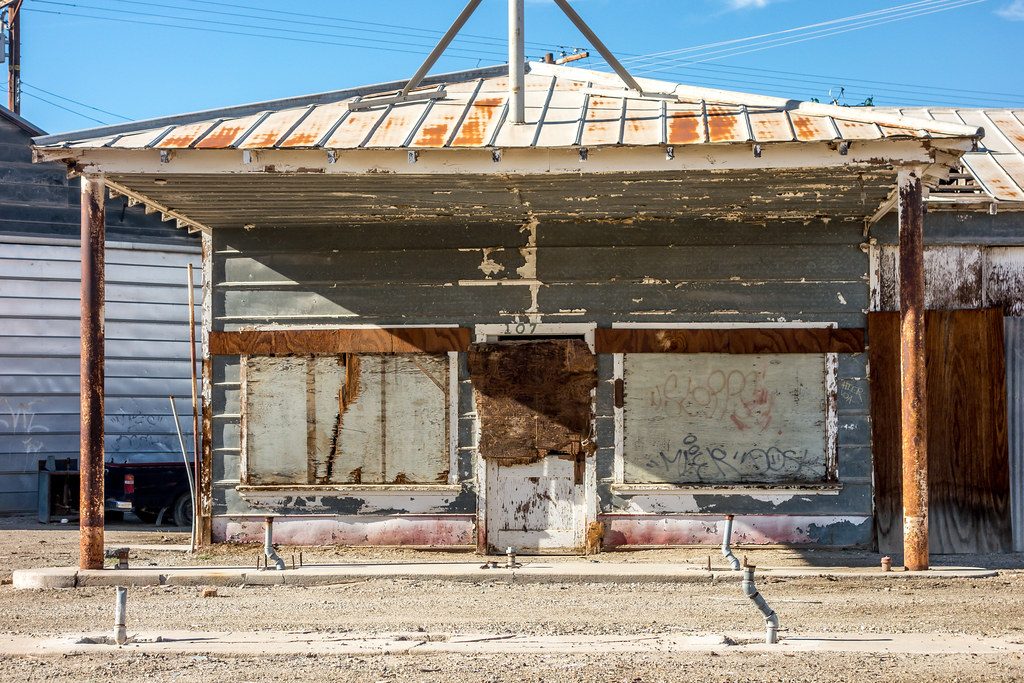
Image credit: Out of business by kevin dooley via flickr (BY 2.0), sourced through Openverse.
Written by
Rajesh Tiwari
Real estate analyst covering property markets across Delhi NCR, Mumbai, and Bangalore. Rajesh tracks pricing trends, RERA compliance, and investment opportunities for residential and commercial buyers.
Looking for a technology partner?
From IT consulting to virtual office to custom software — eDarpan can help.
Continue reading
Dwarka Flat vs Dwarka Plot: Which Gives Better Returns in 2026?
Flat or plot in Dwarka? We break down entry costs, rental yield, appreciation and title risk so you can compare true net returns before you sign.
Premium Housing Sales Up 2026: Is Buying a Luxury Flat in NCR Smart?
Premium homes are carrying Delhi-NCR's sales value in 2026. Here's a practical framework to test whether a luxury flat makes financial sense for you.
Home Loan Prepayment vs Investing SIP in Delhi-NCR 2026: Math Guide
Should extra cash prepay your home loan or fund an equity SIP? Break-even maths, tax notes and a checklist for Delhi-NCR borrowers in 2026.