Premium Housing Sales Up 2026: Is Buying a Luxury Flat in NCR Smart?
Premium homes are carrying Delhi-NCR's sales value in 2026. Here's a practical framework to test whether a luxury flat makes financial sense for you.
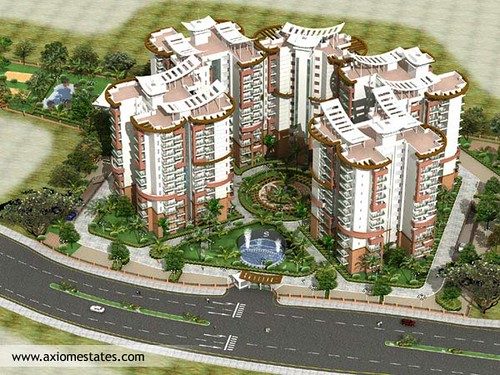
Your neighbour bought a 3BHK in Gurugram's Golf Course Extension two years ago for ₹2.4 crore. Last month she was quoted ₹3.1 crore for the same unit, and she is now wondering whether she should have bought a second one. That kind of story is exactly why premium housing has become the centre of conversation in Delhi-NCR this year. Reports and registration data for January to September 2026 show the premium segment, roughly homes priced above ₹1.5 crore, carrying a disproportionate share of sales value even where unit volumes are flat. For a buyer with a fixed budget, the question is no longer whether prices are rising. It is whether a specific premium purchase makes financial sense once you account for EMIs, rental yield, transaction costs and the realistic resale path. This article is a practical framework for answering that question. We will look at why premium demand is strong right now, what the real all-in cost of a luxury flat looks like, how to test rental yield honestly, and where the resale story tends to break down. There is a worked example, a comparison of purchase routes, a checklist you can take to a developer or a broker, and a short FAQ. If you are evaluating luxury flats Delhi NCR 2026 options for end use, rental, or as an investment, the steps below should help you separate a good deal from a pretty brochure.
Key Takeaways
- Premium sales growth in 2026 is largely a value story: fewer units are moving, but high-ticket units are carrying a bigger share of rupee value.
- Your all-in cost is typically 8 to 12 percent above the quoted price once stamp duty, registration, GST on under-construction units, maintenance deposits and interiors are added.
- Gross rental yield on premium NCR flats is often 2 to 3 percent; net yield after vacancy, society charges, tax and maintenance is frequently under 2 percent. Model it before you assume rental income covers EMI.
- Resale gains depend on micro-location, possession status and the developer's delivery record, not just the city's average price trend.
- Run three scenarios (base, flat, and a 10 percent price correction) before you decide. If the purchase only works in the best case, it is a bet, not a plan.
- Get your loan, tax and title checks done in parallel with negotiation, not after.
Why are premium homes driving housing sales growth in 2026?
Three forces are pulling premium demand forward. The first is income concentration. Salaried professionals in IT, BFSI, pharma and senior management, plus founders of funded startups, have seen their earnings rise faster than the middle-income band. Those households can absorb a ₹2 crore-plus ticket without stretching into a 25-year loan at the edge of eligibility, so the premium buyer is less rate-sensitive than the first-time buyer.
The second force is NRI and HNI capital. Many NRI buyers from the Gulf, the US and the UK prefer large, branded projects with clear title and developer accountability, and they often buy for family use or as a long-horizon asset. Their purchases concentrate in Gurugram's Sohna and Golf Course Extension belts, South and Central Delhi, and selected Noida Expressway projects.
The third force is supply. Developers have shifted launch mix toward larger units because margins per square foot are better and because the mid-segment is crowded and price-competitive. The result is that the premium sub-market has more inventory on offer, which is one reason sales value holds up even when total unit volume is modest.
None of this means every premium project will outperform. Strong aggregate numbers hide wide dispersion. A 4BHK in a well-planned society with a reliable developer behaves very differently from a similarly priced unit in a project still waiting on approvals.
What does a luxury flat really cost once you add everything up?
Buyers routinely anchor on the basic sale price and forget the layers on top. Here is a realistic breakdown for a ₹2.5 crore under-construction 3BHK in Gurugram. Exact figures vary by state rules and developer, so treat these as planning numbers and confirm them with your advocate.
- Basic sale price: ₹2,50,00,000
- Stamp duty (Haryana, around 7 percent for women buyers in many cases, and around 7 percent generally, confirm current rate): roughly ₹17,50,000
- Registration fee (around 1 percent, capped as per state rules): roughly ₹2,50,000 or the applicable cap
- GST on under-construction property: the effective rate for affordable and non-affordable housing differs and has been revised over time, so verify the rate applicable to your agreement and whether it is charged on the base price or the value after land component. Budget a provision of 1 to 5 percent depending on the scheme and the developer's billing.
- Club membership, parking and power backup charges: ₹5 lakh to ₹15 lakh, often non-refundable and sometimes billed separately
- Maintenance deposit and first-year society charges: ₹3 lakh to ₹8 lakh
- Interiors, modular kitchen and fittings: ₹15 lakh to ₹40 lakh, depending on specification
Adding these up, a headline ₹2.5 crore flat often costs ₹2.8 to ₹2.95 crore in cash and commitments before you move in. That gap is the first thing to model, because it changes your loan-to-value and your yield calculation.
On the financing side, most banks lend up to 75 to 80 percent of the property value for properties above ₹75 lakh, but the loan is disbursed in stages tied to construction. You will pay pre-EMI interest on the disbursed amount until possession, which can add meaningful cost on a long-construction project. If you are comparing fixed and floating structures, our piece on Delhi-NCR home loan rates in 2026 and fixed versus floating after RBI cuts walks through how rate choice interacts with pre-EMI exposure.
How do you test whether rental yield makes sense?
This is where most investment cases quietly fall apart. Brokers quote gross yield, which is annual rent divided by purchase price. For a ₹2.5 crore flat renting at ₹1.8 lakh per month, gross yield is about 0.86 percent, which already looks weak. Many premium listings in Gurugram rent at higher numbers, but the point stands: the rent-to-price ratio in this segment is low, and the owner's return is mostly a bet on capital appreciation.
The correct test is net yield after everything the owner actually pays:
- Start with realistic annual rent, not the best-case listing. Check comparable leases in the same tower or the immediate neighbourhood, and assume at least 15 to 20 percent of the year is vacant or in transition.
- Deduct society maintenance and any property tax that applies.
- Deduct the cost of repairs and periodic repainting, which for premium interiors is not trivial. A reasonable planning figure is 0.5 to 1 percent of property value per year.
- Deduct the income tax on rental income. You can claim a standard deduction of 30 percent on net annual value and interest on the home loan under the applicable sections, but get your chartered accountant to model the actual outcome for your tax slab.
- Compare the resulting net yield with your loan interest rate. If the interest on your loan is 8.5 percent and your net yield is 1.8 percent, the rental income covers only a fraction of the interest. The rest is funded from your salary, which is fine if you planned for it, but it is not "passive income."
Run this for both rent and no-rent scenarios. If the purchase only makes sense when the flat is rented at a premium rent and the loan is cheap, you do not have a robust case.
What should you check on the resale and appreciation side?
Resale value in premium NCR is shaped by four things, roughly in order of importance: micro-location (distance to metro, schools, healthcare and office clusters), developer reputation and on-time delivery history, the project's actual amenity delivery, and the quality of the society's management once people move in. City-wide price charts are a weak guide because they average across very different sub-markets.
Look at the last three resale transactions in the same project or tower, not just the asking prices listed online. Ask the broker for registered sale deed values where you can verify them through the sub-registrar's public records. Listing prices often run 5 to 10 percent above what a buyer actually pays.
Be cautious about under-construction purchases tied to a "premium launch" pitch. Your returns depend on the developer delivering on time. Check the project's RERA registration on the Haryana RERA portal (or the relevant state's RERA), review the approved layout and completion timeline, and read the complaints history. Post-2017, RERA gives buyers real recourse, but recourse is slow. It is cheaper to avoid the problem project than to litigate it.
Which purchase route fits your situation?
Not every premium buyer should go down the same path. The table below compares the common routes for someone deciding in 2026.
| Route | Typical upfront cost | Price certainty | Delivery risk | Liquidity on resale | Best fit |
|---|---|---|---|---|---|
| Ready-to-move, resale from owner | Full price plus 7 to 8 percent in transfer costs | High, you see the unit | Low | Good if society is well run | End-use buyers who want to move in fast |
| Ready-to-move, from developer (leftover inventory) | Full price, sometimes with negotiated discount | High | Low | Moderate | Buyers who can negotiate and want certainty |
| Under-construction, RERA-registered, established developer | Booking amount then staged payments plus GST | Medium, price escalation clauses vary | Medium | Moderate, improves after possession | Long-horizon buyers with stable income |
| Under-construction, new developer or low-visibility project | Lower headline price, similar staged payments | Low | High | Weak until delivered | Only for buyers with high risk tolerance and strong legal review |
| Pre-launch or early-bird scheme | Lowest headline, often with heavy payment front-loading | Low to medium | High | Weak | Rarely recommended for first-time premium buyers |
If you are weighing a premium purchase against a festive-season offer or waiting for better terms, our analysis of whether developer discounts in the festive season beat waiting covers the trade-off in detail.
How do you run a practical scenario analysis before you commit?
Here is a worked example. A 15-person consulting firm's founder, who we will call Rohan, was considering a ₹2.6 crore 4BHK in Gurugram. He had ₹80 lakh in liquid savings, a household income of ₹38 lakh per year, and a plan to rent the flat after two years when his family relocated to a larger house he also owned elsewhere. The question was whether this made sense or whether he was stretching.
We built three scenarios over a seven-year horizon:
- Base case: property appreciates 7 percent per year, rent is ₹2.1 lakh per month from year three, loan at 8.6 percent for 20 years, 20 percent vacancy assumed.
- Flat case: property stays flat in nominal terms, rent grows only 3 percent, loan rate unchanged.
- Correction case: property drops 10 percent in year three and recovers slowly, rent falls 8 percent, and Rohan has a six-month job gap in year four.
In the base case, Rohan's total cash outflow over seven years, including the upfront costs, EMIs above net rent and maintenance, came to roughly ₹1.1 crore against a resale value of around ₹3.3 crore before transfer costs. That looks attractive. In the flat case, the net position was close to zero after transfer costs. In the correction case, he would have been forced to sell at a loss or fund a shortfall from savings during the job gap.
The decision was to buy only if he could keep at least nine months of EMI and expenses in reserve after the down payment. He did not have that cushion, so he chose a ₹1.9 crore 3BHK in a more liquid micro-market instead. The lesson is not that the big flat was a bad purchase. It is that the scenario that broke it was foreseeable, and the reserve requirement is what separated a sound plan from a fragile one.
Step-by-step: how to evaluate a premium flat in NCR
- Define your purpose. End use, rental income, or capital appreciation. Each implies a different micro-location and a different acceptable return.
- Set a reserve rule. Decide the minimum cash buffer you will keep after the down payment and transaction costs. Nine months of EMI and household expenses is a common, defensible floor for a salaried buyer.
- Calculate the all-in cost, including stamp duty, registration, GST where applicable, club and parking, maintenance deposit and interiors.
- Verify RERA registration for the project and the specific phase. Download the approved plan and the completion timeline.
- Pull three comparable transactions from registered deed values and at least five current rental listings in the same tower or immediate cluster.
- Model net yield and three scenarios as shown above. Share the spreadsheet with your accountant and a fee-only financial planner if you have one.
- Get a loan pre-approval and ask the bank for its disbursement schedule, pre-EMI estimate and prepayment terms.
- Negotiate on the things that move the total cost: waiver or cap on club and parking charges, locked GST treatment, possession penalty clauses and the escalation formula.
- Have an advocate review the agreement for sale and check title, encumbrances and the developer's land-use approvals before you pay the booking amount.
Pro Tip: negotiate the non-price items first
Most buyers spend their energy haggling on the headline price and accept the ancillary charges as fixed. In premium projects, the club membership, parking allocation, power backup and preferred-location charges are where a lot of negotiable money sits. Developers often have more flexibility there than on the base rate, and a waiver of ₹8 lakh in charges is worth more to you than a ₹2 lakh cut on the headline. Ask for those figures in writing before you sign the booking form.
Common mistake: treating rent as a substitute for salary
A frequent error is buying a premium flat on the assumption that rent will cover the EMI from the first year. In most premium NCR projects, rent covers a modest share of the interest, and the remaining gap is paid from income for years. If your household savings rate drops below what your financial goals require, the flat becomes the reason you cannot invest elsewhere. Before buying, write down what you will stop doing if the EMI runs above rent for three years, and check whether you are willing to live with that trade-off.
Where eDarpan can help
If you are running this analysis for a business purchase, for a company-owned residence, or for a portfolio that also includes commercial space, the paperwork gets heavier fast. At eDarpan, we help small and mid-sized Indian businesses structure their administrative and technology side of these decisions, including setting up the right entity, getting a registered address through our virtual office service for GST and company registration, and building simple internal tools to track EMIs, rental receipts and tax provisions. For buyers and investors who want to see listings across the region, our eDarpan Properties section covers buying, renting and investing in Indian real estate, and you can browse properties for sale in India or rental properties in India. If you want to talk through your numbers with someone who works with business clients every day, you can contact eDarpan or read more about who we are and how we work.
Frequently asked questions
Is buying a luxury flat in Delhi NCR a good investment in 2026?
It can be, but the return depends heavily on micro-location, developer delivery and your holding period. Premium flats usually produce modest rental yields, so most of the return comes from capital appreciation over five to ten years. Model net yield and at least one downside scenario before deciding.
How much extra do I pay over the quoted price for a flat in Gurugram?
Typically 8 to 12 percent once stamp duty, registration, applicable GST, club and parking charges, maintenance deposits and interiors are included. The exact figure depends on the project, the developer's billing structure and your state's current rates.
What is a good rental yield for a premium flat in NCR?
Gross yields are often in the range of 2 to 3 percent, and net yields after vacancy, maintenance, repairs and tax are frequently below 2 percent. Treat anything above that as an outlier that needs verification against actual lease data.
Should I buy under-construction or ready-to-move in premium NCR?
Ready-to-move gives you price certainty and faster rental income, but you pay the full price upfront. Under-construction can offer better staged payments and possibly lower headline pricing, but it carries delivery risk. Choose based on your cash position, timeline and tolerance for delay.
How do I verify that a project is RERA registered?
Check the project's registration number on the relevant state RERA portal, such as Haryana RERA for Gurugram projects, and confirm that the phase you are buying is covered. Compare the sale agreement's terms with the RERA-approved plan and timeline.
Can I claim home loan tax benefits on a premium flat I rent out?
Yes, for let-out property interest is generally claimable subject to the applicable limits and conditions, and rental income is taxable after the permitted deductions. Rules change, so confirm the current treatment with your chartered accountant for your specific situation.
What reserve should I keep after buying a luxury flat?
A common planning floor for a salaried buyer is at least nine months of EMI and household expenses in liquid savings after the down payment and transaction costs. Self-employed or variable-income buyers should keep more.
Premium housing in NCR can be a sound part of a household's wealth plan, but only when the numbers hold up under pressure, not just in the brochure. Run the all-in cost, test the rent honestly, check the developer and RERA record, and build the scenario that would hurt you before you sign. If the purchase survives that exercise, you are buying a home or an asset you understand. If it does not, a smaller unit or a later entry is usually the better decision.
Image credit: Bangalore Properties - Real Estate India - Shriram Symphony by nancyarora2020 via flickr (BY-SA 2.0), sourced through Openverse.
Written by
Rajesh Tiwari
Real estate analyst covering property markets across Delhi NCR, Mumbai, and Bangalore. Rajesh tracks pricing trends, RERA compliance, and investment opportunities for residential and commercial buyers.
Looking for a technology partner?
From IT consulting to virtual office to custom software — eDarpan can help.
Continue reading
Home Loan Prepayment vs Investing SIP in Delhi-NCR 2026: Math Guide
Should extra cash prepay your home loan or fund an equity SIP? Break-even maths, tax notes and a checklist for Delhi-NCR borrowers in 2026.
Delhi-NCR Home Loan Rates 2026: Fixed vs Floating After RBI Cuts
Repo cuts have made the fixed-vs-floating choice urgent for Delhi-NCR borrowers. Here's how each structure really behaves, with EMI numbers on a Dwarka flat.

Rent vs Buy in Dwarka 2026: Stamp Duty, Loan EMIs & Real Yields Compared
Is renting or buying in Dwarka smarter in 2026? We compare stamp duty, loan EMIs and real rental yields to show which path fits your holding period.