Dwarka Flat vs Dwarka Plot: Which Gives Better Returns in 2026?
Flat or plot in Dwarka? We break down entry costs, rental yield, appreciation and title risk so you can compare true net returns before you sign.
Walk into any Dwarka property broker's office and you will hear two pitches in the same breath: "Buy a flat, it's liquid and rents well" and "Buy a plot, it appreciates like nothing else." Both sound convincing. Both cannot be the full story. If you are an NCR investor trying to decide between them, the real question is not which asset is better in the abstract, but which one produces more net, risk-adjusted return once you account for the rupees that actually leave your pocket: stamp duty, registration, GST on under-construction flats, society maintenance, loan interest, the cost of holding idle land, and the months you spend waiting for a title to clear.
This guide is for the investor who wants to run the numbers properly before signing anything. The core comparison is Dwarka flat vs plot investment 2026, and we will work through it using price trends, buyer math, and the compliance details that quietly move the outcome by lakhs. We will cover cost of entry, liquidity, appreciation, rental yield, and the mistakes we see investors repeat every season.
Key Takeaways
- A flat wins on rental yield and exit speed, typically yielding 2 to 3 percent gross on a well-located Dwarka unit, while a plot yields nothing until you build or sell.
- A plot wins on capital appreciation potential and carries lower ongoing carrying cost, but it demands far more patience and due diligence on title.
- Under-construction flats attract GST and deferred possession risk; ready-to-move flats cost more upfront but reduce uncertainty and timeline risk.
- Plot investments fail most often on title, zoning, and mutation issues, not on price. Verify before you pay a token amount.
- Model your return over a 7 to 10 year holding period including all transaction costs, not on headline price appreciation alone.
- Your personal liquidity needs and tax position should decide the winner more than any broker's forecast.
How Do You Calculate the True Entry Cost of a Dwarka Flat vs a Plot?
Most first-time investors compare the quoted price per square foot and stop there. That is the first mistake. The quoted rate is the starting line, and the all-in cost can run 8 to 12 percent higher depending on the asset type and how you finance it.
For a flat, the main add-ons are stamp duty and registration in Delhi, which for a registered sale deed is paid on the circle rate or the agreed price, whichever is higher. Registration is capped in the rupee range, but stamp duty is a percentage and it adds up fast on a large ticket. If you buy under construction from a builder, you will also pay GST on the under-construction component (the rate and treatment changed over recent years, so confirm the current effective rate and whether the builder has passed input credit benefits to you in writing before paying). Society formation charges, club membership, power backup, and the corpus fund are also one-time costs that brokers rarely volunteer up front.
For a plot, the add-ons look different. Stamp duty and registration still apply on the sale deed. But you will also face costs for land-use verification, a title search through an advocate, a mutation entry in the revenue records, and if the plot is in an unauthorised or semi-authorised colony, the cost of regularisation whenever it becomes available. None of these is large individually, but together they can run into several lakhs on a mid-sized plot.
Worked Example: A 150 Square Yard Plot vs a 1,500 Square Foot Flat
Consider a hypothetical investor, Ritu, who is choosing between two options in Dwarka. Figures here are illustrative; check current rates with a registered broker and the Delhi revenue department before deciding.
- Option A, a 1,500 sq ft ready flat at an illustrative ₹1.1 crore all-in price, with stamp duty and registration around ₹7 to 8 lakh, society charges and furnishing-independent one-time costs around ₹1.5 lakh, giving a total entry cost near ₹1.2 crore.
- Option B, a 150 sq yard plot at an illustrative ₹1.0 crore price, with stamp duty and registration of similar percentage terms, plus title verification, mutation and legal fees of roughly ₹1.5 to 2.5 lakh, giving a total entry near ₹1.1 crore.
On headline numbers the plot looks cheaper by about ₹10 lakh. But Ritu's flat starts earning rent from month one, while her plot earns nothing. That difference, plus the carrying cost of the flat (maintenance and property tax) versus the plot (generally minimal but not zero, and boundary and encroachment risk), is what the next sections unpack.
Which Gives Better Liquidity and Exit Speed?
Liquidity is where flats usually win, and it is more nuanced than most brokers admit. A ready flat in a well-known Dwarka sector with clean papers can usually be sold in a few months to a broad buyer pool, including end-users who want a home and do not need an institutional loan structure. Banks will lend against it, which means your buyer can finance it, which widens the market.
A plot has a narrower buyer pool. Many banks are cautious about lending against plots, particularly those with incomplete approvals, and a large share of buyers are cash or semi-cash investors. When you need to exit quickly, you may accept a discount. We have seen plots in partially developed sectors take well over a year to close, with the seller forced to cut the price to meet a buyer who was ready to pay.
Pro Tip: Check Loan Eligibility of the Exit Asset Before You Buy
Here is a non-obvious point that experienced investors check and first-timers miss. Before buying either asset, ask a bank how it would treat the property as collateral or as a buyer's loan base. If a flat is comfortably loan-eligible and a plot is not, your effective exit pool is far smaller than the listing suggests, because a large portion of resale buyers depend on a home loan. Liquidity is not what the asset is; it is who can pay for it.
How Do Appreciation Rates Compare in Dwarka?
Capital appreciation is the plot's strongest argument, and it is also where the most misleading claims originate. Land in developing peripheral areas can outpace built property in certain cycles, but that is not guaranteed and it depends heavily on infrastructure timing. Dwarka's appreciation has been tied to metro connectivity, the Dwarka Expressway corridor, and the expansion of commercial hubs nearby, and these drivers do not move in a straight line.
Flats appreciate more steadily but often more modestly in percentage terms, and they face depreciation from building age. A plot does not depreciate physically, which is its quiet advantage over a long horizon. The catch is that a plot's appreciation is realised only when you sell, and only if the surrounding development actually arrives.
Be sceptical of any projection that promises a fixed annual percentage. Instead, model three scenarios: a base case with modest appreciation, a slow case where infrastructure is delayed by several years, and an upside case tied to a specific project with a confirmed completion date. If your investment only works in the upside case, it is a bet, not an investment.
What Rental Yield Can You Actually Expect?
This is where flats clearly dominate, and it is the number that matters most if you need the asset to pay its own way. Gross rental yield on a Dwarka flat is typically in the range of roughly 2 to 3 percent of property value per year, though this varies by sector, floor, condition, and furnishing. Net yield after property tax, maintenance, vacancy months, and any agency commission is lower, often closer to 1.5 to 2.5 percent.
A plot yields nothing unless you lease it for parking, storage, or a commercial use, which requires zoning permission and careful contracts. So for income, the plot is effectively zero, and its return depends entirely on the eventual sale.
For a deeper look at whether renting or owning makes more sense for your situation, our analysis of rent vs buy in Dwarka 2026, covering stamp duty, loan EMIs and real yields, works through the same arithmetic from the tenant's side.
What Are the Compliance Steps Before Buying a Plot?
Because plots carry the most title and zoning risk, this is where disciplined investors separate themselves. The following sequence is the one we recommend to clients, and it should be completed before any money beyond a refundable booking amount changes hands.
- Get the khasra and khatauni numbers from the seller and verify them against the revenue records at the relevant patwari or tehsil office. Do not rely on photocopies supplied by the seller.
- Commission a title search from a qualified advocate covering at least the last 30 years of chain of title. Ask for a written opinion, not a verbal assurance.
- Confirm the land-use classification and whether the plot falls within an authorised, unauthorised, or regularised colony. This determines whether you can build, get water and sewer connections, and get future regularisation.
- Check for pending litigation through the relevant courts and the Delhi Development Authority records where applicable, and ask the seller for a declaration on encumbrances.
- Verify the mutation status so that the revenue record reflects the current owner, and understand the timeline and cost to complete mutation after purchase.
- Use an escrow or staged payment structure tied to documentation milestones, not a lump sum on signing.
- Register the sale deed only after the title opinion is clean and the stamp duty is paid on the correct valuation.
Common Mistake: Trusting a Booking Receipt as Ownership
We see this repeatedly. An investor pays a token amount, receives a receipt from an intermediary or a developer's agent, and considers the plot theirs. A booking receipt is a contractual promise, not a registered title. If the seller cannot produce clean papers, your money is at risk and your recourse is a civil suit that can take years. Never let the excitement of a booking override the sequence above.
What Are the Compliance Requirements for an Under-Construction Flat?
If you choose a flat under construction, your risks shift from title to timeline and builder solvency. Check that the project is registered under RERA, verify the RERA registration number on the authority's portal, and read the agreement for the possession date, the delay compensation clause, and the payment schedule tied to construction milestones. Confirm the GST treatment in writing. Ask how the builder will handle the completion certificate and occupancy certificate, since without these you may face difficulty with utility connections and resale.
For most investors who need predictable outcomes, a ready-to-move flat from a builder with a track record is the lower-risk path, even though it costs more up front. The premium you pay buys you certainty on possession, which is worth real money when you are paying rent elsewhere while waiting.
Which Option Fits Which Investor?
Here is how the trade-off plays out for three common profiles, using the mechanics above.
| Criterion | Ready Dwarka Flat | Dwarka Plot (Authorised Colony) | Under-Construction Flat (RERA) |
|---|---|---|---|
| Entry cost (all-in) | Higher, with stamp duty and one-time charges | Often lower headline, plus title and mutation costs | Moderate, with GST and staged payments |
| Rental income | Yes, roughly 2 to 3 percent gross | None unless leased for non-residential use | None until possession |
| Liquidity | Good, with broad loan-eligible buyer pool | Moderate to weak, narrower buyer pool | Moderate, depends on possession status |
| Appreciation potential | Steady, modest, subject to age depreciation | Higher upside, tied to infrastructure timing | Steady, with pre-possession price uplift possible |
| Key risk | Maintenance and tenant turnover | Title, zoning, and extended holding time | Possession delay and builder solvency |
The income-focused investor who needs cash flow to service a loan will usually be better served by a ready flat. The yield is modest but real, and the exit is faster.
The long-horizon investor with a 10-year or longer view, no need for current income, and the patience to do thorough title work may find the plot's appreciation more attractive. The plot's zero carrying cost and lack of physical depreciation compound in its favour over time.
The first-time buyer who wants a home and an investment at once often finds the flat more practical, since they can live in it, rent it when they move, or sell it to an end-user.
Frequently Asked Questions
Is a Dwarka flat or a plot better for investment in 2026?
It depends on your goal. A flat is generally better if you want rental income and a faster exit, while a plot can offer higher long-term appreciation if the area's infrastructure develops as expected. Model both over 7 to 10 years including all transaction costs before deciding.
What is the rental yield on a Dwarka flat?
Gross rental yield on a Dwarka flat is typically around 2 to 3 percent of property value per year, varying by sector and condition. Net yield after property tax, maintenance, and vacancy is usually lower. Check current listings in your specific sector for accurate figures.
Can I get a home loan for a plot in Dwarka?
Loan availability for plots is more restricted than for flats, particularly for plots that lack full approvals or clean title. Speak with your bank early about eligibility for the specific plot before committing, since this affects both your financing and your future exit buyer pool.
What documents should I verify before buying a plot in Dwarka?
Verify the khasra and khatauni records, obtain a title search covering the chain of ownership, confirm the land-use and colony status, check for pending litigation, and verify the mutation status. Get a written legal opinion from a qualified advocate before paying anything beyond a refundable token.
Is GST applicable on under-construction flats in Dwarka?
GST applies to the under-construction component of a flat purchase from a builder, and the effective rate and treatment have changed over recent years. Confirm the applicable rate and how input credit benefits are passed to you in writing with the builder before you pay.
How long does it take to sell a plot in Dwarka compared to a flat?
A ready flat with clean papers can often sell within a few months to a broad pool of buyers. A plot in a partially developed area may take considerably longer, sometimes over a year, and you may need to accept a lower price to close. Timelines vary widely with market conditions and the specific property.
Should I hire an agent or a lawyer for a Dwarka property purchase?
Both have roles. A registered broker helps with sourcing and negotiation, but the title verification and sale deed review should be done by an independent advocate who works for you, not the seller or broker. Keeping legal due diligence separate from sales commission is one of the simplest ways to reduce risk.
Where eDarpan Can Help
If you are weighing a Dwarka flat against a plot and want the numbers modelled against your own budget and horizon, eDarpan's advisory team can run the comparison with you. You can browse current options through our eDarpan Properties listings, including properties for sale in India and rental properties in India to test the yield assumptions in your own sector. For broader context on the NCR market, read our analysis of Gurugram vs Noida 2026 and where your home budget stretches furthest, and if you are weighing financing, our guide to Delhi-NCR home loan rates after RBI cuts covers the rate choice that will shape your monthly cash flow.
Business owners who are also buying property for company use should note that the registered office address and GST registration can be handled separately from the asset decision. Our virtual office address service for GST and company registration can help you set up a compliant address without tying up the property itself, and our team background and contact details are there if you want to talk through your situation.
The right answer for a Dwarka flat vs plot investment in 2026 is the one that survives your own numbers, your own timeline, and your own honest view of how much paperwork you are willing to chase. Run the all-in cost, stress the exit, verify the title before the money moves, and let the math, not the sales pitch, make the call.
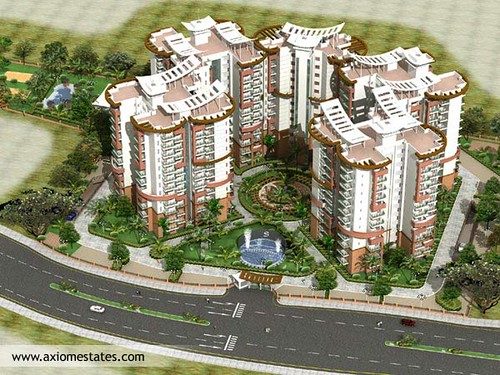
Image credit: Bangalore Properties - Real Estate India - Shriram Symphony by nancyarora2020 via flickr (BY-SA 2.0), sourced through Openverse.
Written by
Rajesh Tiwari
Real estate analyst covering property markets across Delhi NCR, Mumbai, and Bangalore. Rajesh tracks pricing trends, RERA compliance, and investment opportunities for residential and commercial buyers.
Looking for a technology partner?
From IT consulting to virtual office to custom software — eDarpan can help.
Continue reading
Gurugram vs Noida 2026: Where Your Home Budget Stretches Furthest
Gurugram or Noida for your first flat? We compare price per sq ft, rental yield, hidden costs and infrastructure to show where your budget stretches furthest in 2026.
Premium Housing Sales Up 2026: Is Buying a Luxury Flat in NCR Smart?
Premium homes are carrying Delhi-NCR's sales value in 2026. Here's a practical framework to test whether a luxury flat makes financial sense for you.
Home Loan Prepayment vs Investing SIP in Delhi-NCR 2026: Math Guide
Should extra cash prepay your home loan or fund an equity SIP? Break-even maths, tax notes and a checklist for Delhi-NCR borrowers in 2026.