Namo Bharat Corridor & Dwarka Property: Where NCR Buyers Gain
Namo Bharat station news moves prices fast. Learn how to tell whether a corridor locality still offers real value or if the market has already priced in the upside.
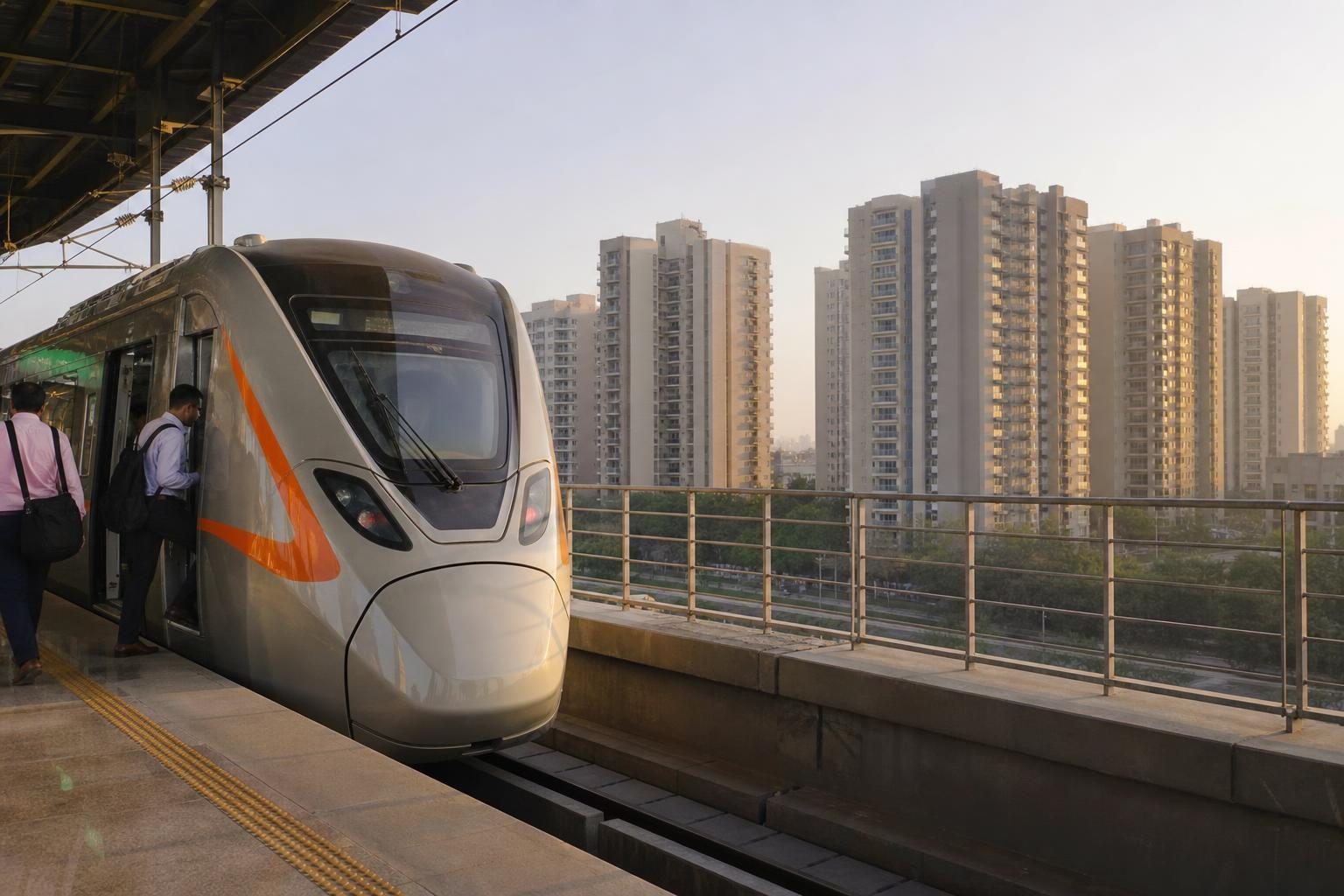
Every few months, a buyer in Gurgaon or Noida tells us the same story. They saw a listing near a new Namo Bharat station, the broker promised "appreciation that will double in three years," and they paid a premium that already reflected the rumour. Eighteen months later, the station opened, the price bump had been absorbed a year earlier, and their rental yield was lower than a fixed deposit. The corridor was real. The timing was not. This guide is about separating the two: how to judge whether a Namo Bharat-linked locality still offers value at today's prices, or whether the market has already done your thinking for you.
The short version: connectivity matters, but it is a lagging signal that the market front-runs. A station announcement moves prices within weeks of the first news story. The station opening itself often moves them again. By the time commuters are using the line daily, a large chunk of the upside is usually gone. The buyers who still make money are the ones who model what is left, not what was promised.
Key Takeaways
- Price in the announcement, not the opening. Compare current listing prices against pre-announcement benchmarks in the same micro-market before deciding how much upside remains.
- Walk to the station. Measure actual walking time, check footpath and road condition, and test the last-mile auto or e-rickshaw cost during peak hours.
- Rental yield is the honest test. If gross yield in a corridor locality is well below 2.5 to 3 percent, you are paying for the story, not the cash flow.
- Check registry and approval status for every project. Namo Bharat impact is meaningless if the building lacks an occupancy certificate or RERA registration.
- Use the loan structure to reduce regret. A floating-rate loan with a prepayment option is usually safer than locking into a high fixed rate on a speculative purchase.
- Budget for the all-in cost: stamp duty, registration, GST on under-construction units, maintenance deposits, and brokerage. Many "cheap" corridor deals stop being cheap once these are added.
Namo Bharat corridor property prices NCR: what the line actually changes
The Namo Bharat regional rapid transit system, built by NCRTC, runs on the Delhi to Meerut corridor and is designed for high-frequency, high-capacity travel between Delhi and the Meerut region, with stations in Sahibabad, Ghaziabad, Modinagar, Meerut South and Meerut. Its effect on Namo Bharat corridor property prices in NCR is real, but uneven. A station changes the time-to-CBD calculation for specific pockets, usually within a few kilometres of the platform. It does not lift an entire district evenly.
The question to ask is not "is this near the line?" but "does this specific pocket gain a meaningful commute reduction, and is that gain already in the price?" A locality that cuts a daily commute from 80 minutes to 40 minutes is a different proposition from one that gains 8 minutes against the existing road network.
Where the gains are usually strongest
- Plots and apartments within a walkable radius of a station, typically 500 metres to 1.5 kilometres depending on the quality of the pedestrian route.
- Locations where the station replaces a long road commute to a major employment node, not just a short auto ride to the local market.
- Pockets with cheaper land baseline and limited prior infrastructure, where a single improvement moves the needle more.
- Projects that include a feeder bus or e-rickshaw stand, reducing the last-mile friction that otherwise erodes the station premium.
Where the gains are usually weakest
- Localities already well-served by the Delhi Metro, where the marginal commute gain is small.
- Pockets more than 2 kilometres from the station with poor road access, where residents still drive or take shared autos.
- Projects whose price is set primarily by a builder brand premium rather than location.
How do I check if a Namo Bharat locality is already overpriced?
This is the question that matters most, and most buyers answer it badly. They look at the current asking price, compare it to a broker's quoted "three years ago" number, and conclude that appreciation has been strong. That is survivorship bias in a spreadsheet. What you need is a controlled comparison.
- Establish a pre-announcement baseline. Find listing or registry data for the same micro-market from before the station was announced. Registry transactions are more reliable than listings. Use at least 8 to 10 transactions, not one or two.
- Adjust for like-for-like. Compare 2BHK to 2BHK, same floor range, same age of building, same amenity set. A 2018 project and a 2025 project are not the same asset.
- Calculate the percentage move. Compare the median price per square foot in the baseline period with the current median. Do the same for the wider district, not just the station pocket, so you can see the premium the station itself has created.
- Estimate remaining upside. If the station pocket has risen 35 percent while the broader district has risen 15 percent, the station premium is roughly 20 percentage points. Ask whether that premium is still growing or has plateaued. Plateau is the signal to be careful.
Once you have that, you can decide whether you are buying a commute improvement that is still undervalued, or buying a premium that already reflects everything the line will deliver. Both are legitimate choices. Only one of them is what the broker is pitching.
Pro Tip: walk the last mile at 8:30 a.m.
Most buyers visit a station on a Sunday afternoon. Go on a weekday at peak hour instead. Time the walk from the proposed property gate to the station entrance. Then time the auto or e-rickshaw queue. Note whether the footpath is continuous or broken by drains, parked vehicles, and construction. A station that is 900 metres away on a map can be a 25-minute trudge in practice, and that difference shows up in what tenants will pay and what resale buyers will discount.
Rental yield versus price appreciation: which one should drive the decision?
For end-users, the answer is mostly lifestyle and commute. For investors, it should be yield first and appreciation second. A corridor property that rises 10 percent a year but yields 1.8 percent gross is, after holding costs and tax, a bet that you will sell at the right time. That is not a rental income strategy.
Work through the numbers yourself. Suppose a 2BHK in a station pocket costs ₹85 lakh all-in and rents for ₹28,000 a month. Annual rent is ₹3.36 lakh, a gross yield of about 3.95 percent. Subtract property tax, society maintenance, and a vacancy allowance of two months a year, and your net yield drops to roughly 2.8 to 3.0 percent. Compare that with a 7 to 7.5 percent home loan rate and the carry is negative. You are relying on capital growth to make the trade work.
If the same pocket shows gross yields of 2.5 percent and the rent you can realistically achieve is much lower than the rent the broker quotes, be sceptical. Ask for three recent rental agreements in the same building, not in the broader area.
Case study: a three-person design studio in Noida
A small design studio based in Sector 62, Noida, with three full-time staff and a shared office, wanted to buy a second property as an investment and to house a relative relocating from Lucknow. They had ₹60 lakh in liquid savings and were choosing between a flat near a proposed transit station in Ghaziabad and a resale unit closer to their existing office.
Their first instinct was the Ghaziabad flat, priced at ₹52 lakh with a broker promising strong appreciation. When they rebuilt the numbers, the Ghaziabad unit's expected rent was ₹19,000 a month against a monthly loan EMI of roughly ₹42,000 on a 70 percent loan. The gap of ₹23,000 a month was the cost of holding the asset, and nothing in the rental market supported closing it.
They switched to a resale 2BHK near their office, priced at ₹68 lakh, renting at ₹32,000 a month. The gross yield was lower on paper but the net cash position was far better, and the relative could live near the studio. Two years later, the Ghaziabad pocket had appreciated, but so had the resale unit, and the studio was not forced to sell into a weak market to cover the carry. The lesson was not that Ghaziabad was a bad bet. It was that the buyer was paying for a future that their own cash flow could not afford to wait for.
Which Namo Bharat-linked project types suit which buyer?
Not every corridor property is the same asset class. The right choice depends on whether you are an end-user, a yield-seeking investor, or someone speculating on resale.
| Option | Typical entry ticket (2BHK, NCR corridor) | Best for | Main risk | Liquidity |
|---|---|---|---|---|
| Under-construction apartment near station | ₹45 to 70 lakh plus GST and charges | Long-horizon buyers with 3+ year hold | Possessions delayed, RERA dispute risk, premium already priced in | Low until possession |
| Ready-to-move resale apartment | ₹55 to 80 lakh | End-users, yield-focused investors | Older stock, maintenance and repair costs | Medium |
| Plotted development or individual plot | ₹40 lakh and up depending on size | Builders, long-term holders, self-construction | Approval and title complexity, slow resale | Low to medium |
| Commercial or shop space near station | ₹60 lakh and up | Retail operators, rental-yield investors | Tenant concentration, footfall uncertainty | Low |
| Builder floor or independent unit | ₹50 to 75 lakh | Families wanting space, lower density | Structural quality, mixed approvals | Medium |
Under-construction units carry the most upside and the most risk. You are paying in instalments, usually with GST applicable at the concessional rate on affordable housing and at the standard rate otherwise, and you are exposed to the builder's execution. Ready-to-move units let you see the building, the road, and the neighbours. You pay more upfront but you know what you are buying.
What compliance checks protect your money before you pay?
Infrastructure news is seductive, and it is the reason buyers skip the boring paperwork. Do not. Every project near a corridor should pass the following before you transfer a rupee beyond token.
- RERA registration. Check the project's registration number on the state RERA portal. For Uttar Pradesh, that is UP-RERA; for Haryana, HRERA. Confirm the registered completion date and the phase you are buying into.
- Approved layout and building plan. Ask for the sanctioned plan from the local development authority. Compare it with the brochure. Discrepancies in floor count, setbacks, or open space are serious.
- Title chain. Get a title search done by a qualified advocate for at least 30 years. Check for encumbrances, pending litigation, and whether the land has been converted for residential use.
- Occupancy certificate for ready units. Without an OC, you may not get a home loan at favourable rates and the utility connections can be disputed.
- Escrow and payment schedule. Under RERA, a large share of instalments must be kept in a designated account. Ask the builder to confirm the escrow arrangement in writing.
Common Mistake: trusting the brochure station map
Brochures often show a dotted line from the project to the station and label it "five minutes away." The line is drawn to the station's planned location, which may shift during construction, and the walking route is rarely shown. Before you pay, check the latest NCRTC alignment and station location on official sources, and verify the access road. A station whose entrance faces a highway with no pedestrian crossing is worth far less to residents than one with a planned feeder road.
How should you structure the loan and the purchase?
Financing decides whether a good purchase stays good. The rate you lock in, the loan-to-value ratio, and the prepayment terms can matter more than a 3 percent difference in price appreciation. If you are choosing between fixed and floating rates, our guide on fixed vs floating home loans in India for NCR buyers walks through the trade-offs in detail.
A practical approach for most buyers: keep the loan-to-value at or below 75 percent so that a 15 to 20 percent price correction does not leave you underwater. Choose a floating rate with no prepayment penalty if you expect to refinance or part-prepay. Budget for the all-in cost, which typically adds 8 to 10 percent to the headline price once you include stamp duty (which varies by state), registration fees, GST where applicable, legal fees, society deposits, and brokerage.
If you are an NRI or planning to buy from abroad, the rupee and currency-transfer math changes. Our article on NRI property investment in Noida and the rupee math for 2026 covers remittance, tax treatment, and exchange-rate exposure. For a wider comparison of international options, see whether Dubai still makes sense for Indian NRIs in 2026.
Step-by-step: a buyer's workflow for a Namo Bharat-linked purchase
- Define your purpose. Write down whether this is for living, renting, or resale in 3 to 5 years. Your answer changes which metric matters.
- Set your all-in budget. Include the full transaction cost and a 6-month emergency EMI reserve. Do not stretch your EMI to the maximum your bank will approve.
- Build the micro-market baseline. Collect 8 to 10 registry transactions from before the station announcement, adjusted for size and age.
- Measure the commute. Walk, time, and cost the last mile at peak hour.
- Run the yield test. Calculate gross and net yield using rents from actual agreements, not broker estimates.
- Verify compliance. RERA, approved plan, title, OC, escrow.
- Stress-test the loan. Model a 2 percentage point rise in rate and a 15 percent fall in resale price. Can you still carry the asset without selling?
- Negotiate and document. Get the payment schedule, possession date, and penalty clauses in writing. Have an advocate review the agreement for sale before you sign.
Many buyers find this process tedious, and it is. But it is also the difference between buying a corridor asset and buying a corridor story. If you would rather have someone handle the legwork, eDarpan's IT and business consulting team can help structure the due diligence and cash-flow model, and our property team can source verified listings in the NCR corridor. You can browse properties for sale in India or rental properties in India to compare current inventory and rent levels before committing.
Pro Tip: ask the broker for the last three rental agreements, not the last three sales
Sales data is easy for brokers to cherry-pick. Rental agreements are harder to fake and tell you what tenants actually pay. Ask for redacted copies of recent agreements in the same building, check the rent start dates, and note whether any landlord is offering free months or deposit concessions. Those concessions are the early signal that yield is weakening, long before it shows up in the price index.
Frequently asked questions about Namo Bharat corridor property
Will property prices near Namo Bharat stations keep rising?
Prices in station-adjacent pockets will likely keep rising where the commute gain is substantial and supply is constrained, but the pace is unlikely to match the early announcement phase. Much of the initial premium has already been priced in. Treat future appreciation as uncertain and test whether the property still works if prices stay flat for three years.
Is it better to buy near the station or a few kilometres away?
Closer is generally better for resale and rental demand, provided the walking route is safe and continuous. Beyond about 1.5 kilometres, residents depend on feeder transport, and that dependence reduces the premium. A slightly cheaper unit with a good feeder bus connection can outperform a closer unit with a poor walking route.
Do I need RERA registration for a ready-to-move flat?
Ready-to-move projects that are completed may not require fresh RERA registration, but you should still verify the occupancy certificate and check whether the project was registered earlier. A RERA registration number and an OC are both useful indicators of compliance, and the absence of either should prompt more questions.
What is the typical gross rental yield in NCR corridor localities?
Yields vary widely by micro-market, but many NCR residential pockets have historically delivered gross yields in the range of roughly 2.5 to 4 percent. Yields near new stations can be lower because prices have risen faster than rents. Always calculate yield from actual rental agreements rather than advertised rents.
Should I buy under-construction or ready-to-move near a new station?
Under-construction units usually cost less per square foot and offer more upside, but they carry delivery, RERA, and execution risk. Ready-to-move units cost more but let you verify the building and start earning rent immediately. For end-users with limited tolerance for delay, ready-to-move is usually the safer choice.
How much stamp duty and registration will I pay in NCR?
Stamp duty and registration charges differ between Uttar Pradesh and Haryana and can change with state policy, so check current rates with your advocate or the sub-registrar's office before budgeting. Include these, along with GST where applicable, legal fees, and society charges, in your all-in cost calculation.
Is a Namo Bharat-linked property a good investment for a first-time buyer?
It can be, if the purchase fits your budget with a comfortable EMI margin and you have verified the commute, yield, and compliance. First-time buyers often over-extend on the assumption of rapid appreciation. Keep the loan conservative, prioritise a property you could live in if the rental market disappoints, and treat any appreciation as a bonus rather than the plan.
The honest bottom line
Namo Bharat is a genuine infrastructure gain for specific NCR localities, and some buyers will do well from it. But the upside is concentrated in pockets with a real commute improvement, limited prior supply, and a last-mile route that residents can actually use. For many other listings, the premium is already the price. Measure the baseline, walk the route, test the yield, verify the paperwork, and stress-test the loan. If the deal still works after those steps, you are buying a property. If it only works on the broker's projection, you are buying a story, and the story is usually the part that has already been paid for.
Written by
Rajesh Tiwari
Real estate analyst covering property markets across Delhi NCR, Mumbai, and Bangalore. Rajesh tracks pricing trends, RERA compliance, and investment opportunities for residential and commercial buyers.
Looking for a technology partner?
From IT consulting to virtual office to custom software — eDarpan can help.
Continue reading

Dubai Home Prices Up 18%: Should Indian NRIs Still Buy There in 2026?
Dubai home prices rose 18%, but gross appreciation misleads. Learn how NRIs should judge net yield, currency, repatriation and tax before buying in 2026.
Metro Flyovers & NCR Property Prices: Which Corridors Still Offer Value
Metro announcement, construction, and opening each move prices differently. Learn how to spot which NCR corridors still offer value before the re-rating happens.
Metro Corridors Lifting NCR Home Prices: Buyer Checklist for 2026
Metro corridors lift NCR home prices unevenly. Use this buyer checklist to test connectivity, priced-in uplift, net rental yield and EMI risk before you buy.