Delhi-NCR Luxury Housing Boom: Is a Premium Home Worth Buying Now?
Is a premium Delhi-NCR home worth buying now? We break down carrying costs, sub-market drivers, RERA checks and NRI considerations before you sign.
Here is a number that should stop any HNI or NRI buyer mid-scroll: a ₹4 crore apartment in Gurgaon's Sector 65 can carry a carrying cost, once you add interest on a home loan, maintenance, property tax, and the opportunity cost of the down payment, that quietly runs past ₹35 lakh over a five-year hold before you have earned a single rupee of capital gain. Many buyers discover this math only after signing the builder buyer agreement. The luxury segment in Delhi-NCR has been rising, and the momentum is real, but a premium ticket magnifies every assumption you make. This guide walks through how to evaluate luxury homes Delhi NCR 2026 offers, sub-market by sub-market, so you can decide whether now is the right entry point or whether the price story has already been priced in.
You will learn how to separate genuine demand from builder-driven hype, how to model resale potential against rental yield, what compliance and documentation traps catch premium buyers, and how to structure the purchase across rupee, dollar, and tax considerations if you are an NRI. We will also work through a real-style case of a buyer who nearly overpaid and what changed their decision.
Key Takeaways
- Price momentum in luxury segments is not the same as liquidity. Check transaction velocity and the ratio of ready-to-move inventory before assuming resale will be easy.
- Model total cost of ownership over your intended hold, not the sticker price. Carrying cost, GST on under-construction property, stamp duty, and registration can add 9 to 12 percent on top of the base price.
- Sub-market selection matters more than the city label. Golf Course Road, Sohna Road, Dwarka Expressway, and Noida's Sector 150 move on very different drivers.
- Verify RERA registration, title chain, approved plan status, and the escrow arrangement before paying beyond the booking amount.
- NRI buyers should plan for repatriation rules, TDS on sale, and rupee-denominated exposure from day one.
- If you cannot hold for at least five years, the entry math usually fails. Be honest about your horizon before you negotiate.
Why Are Luxury Homes in Delhi NCR Attracting Serious Attention in 2026?
Demand in the premium band has been pulled by three forces that rarely align this cleanly. First, a steady flow of business owners and senior professionals who want larger floor plates, better security, and social infrastructure close to offices. Second, NRI capital that treats Gurgaon and Noida as a dollar-hedge or a retirement anchor. Third, infrastructure that has finally started to change commute times, most visibly the Dwarka Expressway and the extensions of the Delhi Metro's Pink and Magenta lines into peripheral clusters.
The honest counterpoint is that a large share of the premium supply is launched on expectations rather than end-user absorption. When you walk into a sales gallery, you are seeing the developer's best inventory and best financing offer. Ask for the project's sold-versus-unsold data from the RERA portal, which every registered project must publish quarterly. Compare the number of units booked against the number of units completed. A project that is 70 percent booked but only 15 percent completed is a very different risk from one that is 70 percent completed and selling briskly.
What does "luxury" mean in this market?
Industry usage is loose. For this discussion, we are talking about residences priced at roughly ₹3.5 crore and above, typically 3,000 square feet or larger, in gated projects with a high ratio of open space and branded amenities. Above ₹8 to 10 crore, you are in ultra-premium territory with a much thinner buyer pool, and liquidity behaves differently. Keep that threshold in mind because the rules for resale change as you move up the ladder.
How Do Price Trends Differ Across Delhi-NCR Luxury Sub-Markets?
Treating "Delhi-NCR" as one market is the most expensive mistake a buyer can make. Each corridor has its own demand base, infrastructure timeline, and tenant profile. A useful way to think about it is by the driver each sub-market depends on.
Golf Course Road and the adjoining Gurgaon core are driven by corporate headquarters and an established expat and senior-executive base. Prices here are high and relatively stable, and resale liquidity is among the best in the region because the buyer pool is deep. The trade-off is that entry prices are steep and rental yields are modest, typically in the range of 2 to 3 percent on gross rent for premium units.
Sohna Road and the areas beyond the Golf Course Extension rely more on new infrastructure and the promise of connectivity. Prices have climbed faster in some pockets, which means the margin for error on timing is thinner. Dwarka Expressway, from the Delhi side through to the Gurgaon interchanges, has seen strong absorption from buyers who work near the IGI Airport and the Aerocity belt, and that corridor is worth a close look for both end-use and resale.
Noida's premium clusters, including the Sector 150 and Expressway-side projects, attract buyers priced out of the Gurgaon core who still want a branded address. Liquidity is improving but historically has been more uneven, so resale timing matters more. South Delhi premium pockets such as Vasant Vihar, Greater Kailash, and Chanakyapuri are a different category entirely. Supply is scarce and largely resale-driven, so price moves are slower but more defensible, and the buyer is often paying for location certainty rather than appreciation potential.
A quick sub-market comparison
| Sub-market | Primary demand driver | Indicative entry band (premium) | Typical gross rental yield | Resale liquidity | Main risk |
|---|---|---|---|---|---|
| Golf Course Road, Gurgaon | Corporate HQs, senior executives | ₹5 to 12 crore | 2 to 3% | High | Expensive entry, thin yield |
| Sohna Road, Gurgaon | New infrastructure, mid-career buyers | ₹2.5 to 5 crore | 2.5 to 3.5% | Medium | Dependence on delivery timelines |
| Dwarka Expressway | Airport belt employment, connectivity | ₹2 to 4.5 crore | 3 to 4% | Medium to high | Supply overhang in some pockets |
| Noida Expressway and Sector 150 | Branded address, value-seeking premium | ₹1.8 to 4 crore | 2.5 to 3.5% | Medium | Uneven resale depth |
| South Delhi premium pockets | Location scarcity, resale-driven | ₹6 crore and above | 2 to 2.5% | High but slow | Capital tied up for long periods |
These bands are indicative and shift with launch cycles, so verify against current registered transactions on the state registration portals and recent listings before using them in a decision.
What Does the Real Cost of a Premium Home Look Like?
The base price is the least important number in your model over a five-year horizon. A buyer who only compares per-square-foot rates across projects is comparing the wrong thing. You need the all-in cost of acquisition and the all-in cost of carrying the asset.
Start with acquisition. For under-construction property, GST applies at 5 percent on the under-construction value for affordable and non-affordable residential units where the input tax credit is not claimed, and the rate and treatment have specific conditions that you should confirm with your tax adviser for the particular project and date. Stamp duty in Haryana and Uttar Pradesh is levied on the registration value and differs by state and by whether the property is in a women's name, which can reduce duty in some cases. Registration fees and other charges add further. Once you combine these with brokerage, legal fees, and any club or infrastructure charges the developer levies, the buyer's acquisition overhead commonly lands between 9 and 12 percent of the base price. On a ₹4 crore unit, that is ₹36 to ₹48 lakh you have spent before the first month of ownership.
Carrying cost is where premium buyers consistently underestimate. Home loan interest on a 60 percent loan at current rates is substantial, and the opportunity cost of the equity you put in is real money you could have earned elsewhere. Add society maintenance, which in a large gated luxury project can run from ₹8 to ₹20 per square foot per month depending on the amenity set, plus property tax and insurance. For a 3,500 square foot unit, maintenance alone can exceed ₹60,000 a month in some projects.
Worked example: a buyer who almost overpaid
Consider a family-run engineering business in Gurugram with a founder in her late forties, let us call her Anjali, who was weighing a ₹4.2 crore apartment on Sohna Road against a ₹3.6 crore unit closer to the Golf Course Extension. The sales team at the first project pitched a 15 percent appreciation over three years, which sounded compelling.
When we modelled it with her numbers, the picture changed. Acquisition overhead on the first unit came to roughly ₹44 lakh. Loan interest over five years at her assumed rate, plus maintenance and property tax, added a carrying cost in the same order of magnitude again. To break even on a five-year sale, the unit needed to appreciate by roughly 28 to 30 percent in nominal terms, well above the developer's pitch and above what the sub-market had delivered historically. The second unit, closer to established infrastructure, required a more modest appreciation and carried lower absolute overhead because of the smaller base.
She did not walk away from the purchase entirely. She negotiated a longer payment plan tied to construction milestones, which reduced her interest exposure during construction, and chose the smaller unit with a stronger resale profile. The lesson is not that Sohna Road is a bad market. It is that the appreciation story was carrying more weight than the arithmetic could support.
How Should You Evaluate Resale Potential Before You Buy?
Resale is the part of the premium decision that most buyers treat as an afterthought, and it is where liquidity actually lives. A unit can appreciate on paper and still take eighteen months to sell at a price near the listed value if the buyer pool is thin.
Start by looking at the transaction record, not the listings. Listings tell you what sellers hope to get. Registered transactions tell you what buyers actually paid. Your local property consultant can pull recent registrations in the same project and the nearest comparable projects. Look at the spread between asking and transacted prices, and how many days units spent on the market where that data is available.
Next, examine the construction and completion pipeline in the immediate catchment. A premium project that will compete with three more launches of similar scale within two kilometres can see its resale premium compressed for years. Check the RERA portal for approved projects in the adjacent area and their expected completion dates.
Checklist: resale potential screen
- Pull at least 12 months of registered transactions in the same project and the two nearest comparable projects.
- Compare asking price against transacted price and note the median gap.
- Count the ready-to-move inventory in the catchment as a share of total stock. A high share of unsold completed units is a warning sign.
- Map the pipeline of projects with RERA numbers due for completion in the next 36 months within a reasonable radius.
- Check whether the unit's configuration is the most liquid one in its project. Four-bedroom units with four servant rooms may look impressive but can be harder to sell than a well-planned three-bedroom.
- Assess connectivity changes that are funded and under construction, not just announced.
Pro Tip: Ask the developer for the sales history of resold units in their own project, if they will share it. Many will not. The refusal itself tells you something. If a developer's own project has poor secondary liquidity, the buyer pool will feel that as soon as you try to sell.
What Documents and Compliance Checks Protect a Premium Buyer?
Premium buyers often assume that a well-known developer and a glossy brochure are enough protection. They are not. The compliance checks are mundane and they are where real losses happen.
Step-by-step verification before you pay beyond the booking amount
- Confirm RERA registration. Search the state RERA portal (HRERA for Haryana, UP-RERA for Noida, and the corresponding authority for Delhi) for the project's registration number. Check that the registered project details match what the sales team is selling, including the unit layout, tower count, and completion date.
- Read the approved plans. Ask for the sanctioned building plan from the local authority. Confirm the unit's carpet and built-up area against the sanctioned plan, not just the sales brochure.
- Check the title chain. Your lawyer should review the land title history for at least the last 30 years, including any mortgages, litigation, or pending acquisition notices.
- Verify the escrow arrangement. Under RERA, a defined portion of buyer payments must be held in a designated account for construction. Ask how it is structured and confirm the project's compliance on the portal.
- Review the buyer agreement carefully. Pay attention to delay compensation clauses, the force majeure definition, the maintenance charge escalation terms, and any clause that allows the developer to change the unit specification.
- Confirm environmental and fire clearances where relevant for large towers, particularly for projects above certain height thresholds.
For NRI buyers, add two steps. Confirm that the developer can accept payment through the correct banking channel under FEMA, typically via NRE or NRO accounts with the right documentation, and make sure any power of attorney you grant is drafted narrowly and executed in the correct format for your country of residence.
How Do NRI Buyers Structure Premium Purchases Without Surprises?
NRIs are a major part of luxury demand, and they face a set of questions that domestic buyers can mostly ignore. The first is funding. Remittances for property purchase are permitted under FEMA, but the source of funds must be documented and the bank will ask for it. Keep your remittance paperwork clean from the first transfer.
The second is tax on sale. Long-term capital gains tax applies to the sale of property held beyond the qualifying period, and tax deducted at source on the sale consideration is a separate compliance step that catches NRIs who expect the buyer to handle it. Work out the tax position with a chartered accountant who handles NRI cases before you sign, not after you have agreed a sale price.
The third is repatriation. Sale proceeds from a property bought with foreign-currency remittance can generally be repatriated within the limits set by the rules, subject to documentation. Plan your exit with this in mind. If you are relying on dollar-denominated returns, remember that the rupee can move against you on the way out as well as the way in, and that currency exposure can be a bigger driver of your realised return than the property price itself.
Common Mistake: Many NRI buyers appoint a relative in India as their attorney and give that person broad powers over the entire transaction. When the developer delays or the buyer wants to exit, the scope of that power becomes a dispute. Use a power of attorney limited to specific acts, such as signing the registration documents on a specific date, and keep final decisions on sale or payment with yourself.
Should You Buy Now or Wait? A Decision Framework
The timing question is not really answerable by looking at the market alone. It depends on your horizon, your cash position, and your need for the asset. A useful decision frame looks like this.
If you need a home for personal use and expect to stay for seven years or more, the buy case is strong provided the all-in cost is within your means and the sub-market has real end-user demand. Appreciation is a bonus, not the reason. If you are buying as an investment and your horizon is under four years, the acquisition overhead alone usually makes the numbers difficult unless you have a clear reason to expect a sharp price move that the market has not priced in.
If you are unsure, consider a staged approach. Rent in the target sub-market for six to twelve months, learn the micro-locations, and build your own transaction data before committing a large sum. You can also compare the rent-versus-buy math for specific micro-markets. Our earlier analysis on Delhi-NCR home prices and the rent-or-buy break-even walks through the method in detail, and the Dwarka break-even math under current rates shows how it applies to one corridor.
For a wider view on whether the current cycle favours entry, our piece on whether to buy property now or wait for 2027 looks at timing signals in a more general way, and the long-run case for Indian real estate covers the structural drivers that sit underneath any short-term call.
How Do You Put This Into Practice?
Start by writing down your horizon, your maximum all-in outlay including overhead, and your minimum acceptable liquidity. Those three numbers filter the sub-markets quickly. Then run the acquisition and carrying cost model for two or three shortlisted units, not one. Only after the arithmetic works should you spend time on the emotional side of the decision, which, for a premium home, matters too.
If you want help building that model or checking a specific project's compliance position, eDarpan Properties can help you browse premium listings across Delhi-NCR and compare the broader property options available for buy, rent, or investment. For a conversation about your specific numbers, you can reach our team directly, and you can read more about how we work on our About page. If you are weighing a rental in the meantime while you decide, our rental listings in India can help you test a neighbourhood before committing.
Frequently Asked Questions on Luxury Homes Delhi NCR 2026
Are luxury homes in Delhi NCR a good investment in 2026?
They can be, but the answer depends on your holding period and the specific sub-market. Premium units carry high acquisition overhead, typically 9 to 12 percent of the base price, and rental yields are often modest. Investment returns usually depend on holding for several years and buying in a corridor with genuine end-user demand and funded infrastructure.
Which sub-market in Delhi NCR has the best resale value for luxury homes?
Golf Course Road and established South Delhi premium pockets generally offer the strongest liquidity, though entry prices are high and appreciation is steadier rather than explosive. Dwarka Expressway and Noida's premium clusters have shown strong momentum but resale depth varies more by project. Check registered transactions in the specific project before deciding.
What is the total cost of buying a ₹4 crore apartment in Gurgaon?
Beyond the ₹4 crore base price, expect acquisition costs such as GST where applicable, stamp duty, registration, and legal and brokerage fees, which together often add roughly 9 to 12 percent. Monthly maintenance, property tax, and loan interest add significant carrying costs that you should model over your full holding period.
How do I verify a builder's RERA registration for a luxury project?
Search the relevant state RERA portal using the project's registration number, which the developer must display. Confirm that the unit configuration, completion timeline, and sanctioned plan match what is being sold. Also check the project's quarterly disclosures for sold and unsold inventory and any complaints recorded against it.
Can an NRI buy a luxury home in Delhi NCR without any restrictions?
NRIs and PIOs can generally purchase residential property in India under FEMA, but funding must come through permitted channels such as NRE or NRO accounts or documented remittance. Sale proceeds and repatriation are subject to conditions and tax rules, so plan the exit with a qualified adviser from the start.
Is it better to buy a luxury home under construction or ready-to-move?
Under-construction units usually cost less upfront and allow staged payments, but they carry delivery and delay risk and higher interest exposure during construction. Ready-to-move units cost more but let you see the product and start earning rent or using the home immediately. Choose based on your cash flow, risk tolerance, and how much you value certainty about delivery.
How long should I hold a luxury home before selling to make a profit?
Most buyers need a holding period of at least five years for the appreciation to clear the acquisition overhead and carrying costs, and longer in slower sub-markets. Run the break-even calculation with your specific numbers before deciding. If you cannot commit to that horizon, the numbers rarely work in your favour.
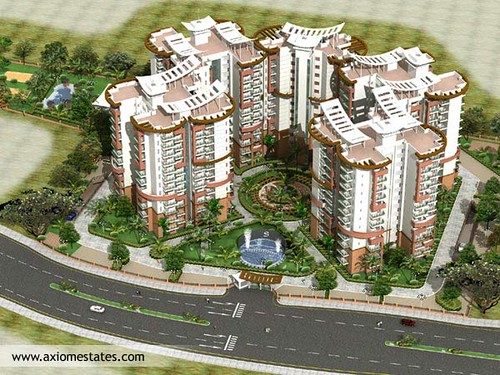
Image credit: Bangalore Properties - Real Estate India - Shriram Symphony by nancyarora2020 via flickr (BY-SA 2.0), sourced through Openverse.
Written by
Rajesh Tiwari
Real estate analyst covering property markets across Delhi NCR, Mumbai, and Bangalore. Rajesh tracks pricing trends, RERA compliance, and investment opportunities for residential and commercial buyers.
Looking for a technology partner?
From IT consulting to virtual office to custom software — eDarpan can help.
Continue reading
Rent or Buy in Dwarka 2026: Break-Even Math for Delhi-NCR Buyers
Should you rent or buy in Dwarka in 2026? This break-even guide walks through the full ownership cost, down-payment opportunity cost, and a worked example to find your real answer.
Delhi-NCR Home Prices Up 12%: Rent or Buy in 2026? A Break-Even Guide
Home prices are up 12%, but is buying still smarter than renting? A break-even guide to the real costs of owning in Delhi-NCR.
Property Prices Up in 2026: Should You Buy Now or Wait for 2027?
Property prices rose through 2026 while sales softened in some areas. Here's how to decide between buying now or waiting, using your own numbers rather than forecasts.